

Ground Support in Weak and Fractured Rock: How to Select Rock Bolt Systems for Mining and Tunneling

Dayang Yang
AuthorWith over 15 years of experience in the production and sales of ground anchoring and mining support products, we operate our own rock bolt and accessory manufacturing facility with stable large-scale production capacity. We are specialists in rock bolts, resin cartridges, anchor cables, bearing plates, and customized ground anchoring products for mining support and geotechnical anchoring solutions.
Introduction: Why Weak and Fractured Ground Requires a Different Support Strategy
In underground mining, tunneling, slope excavation, and foundation pit construction, ground stability does not depend only on the strength of an individual rock bolt. Where the ground contains developed joints and fractures, loose rock, unstable boreholes, significant groundwater, or strong excavation disturbance, a single rock bolt support measure may not provide every required support function.
A reliable ground support system must consider ground conditions, support objectives, equipment capacity, borehole stability, grouting procedures, system accessories, and long-term durability. Project teams can review the available systems in the CQ Rockbolt product center before selecting a solution that matches the actual site conditions, rather than choosing only by product name or rated capacity.
How to Define Weak and Fractured Ground Conditions
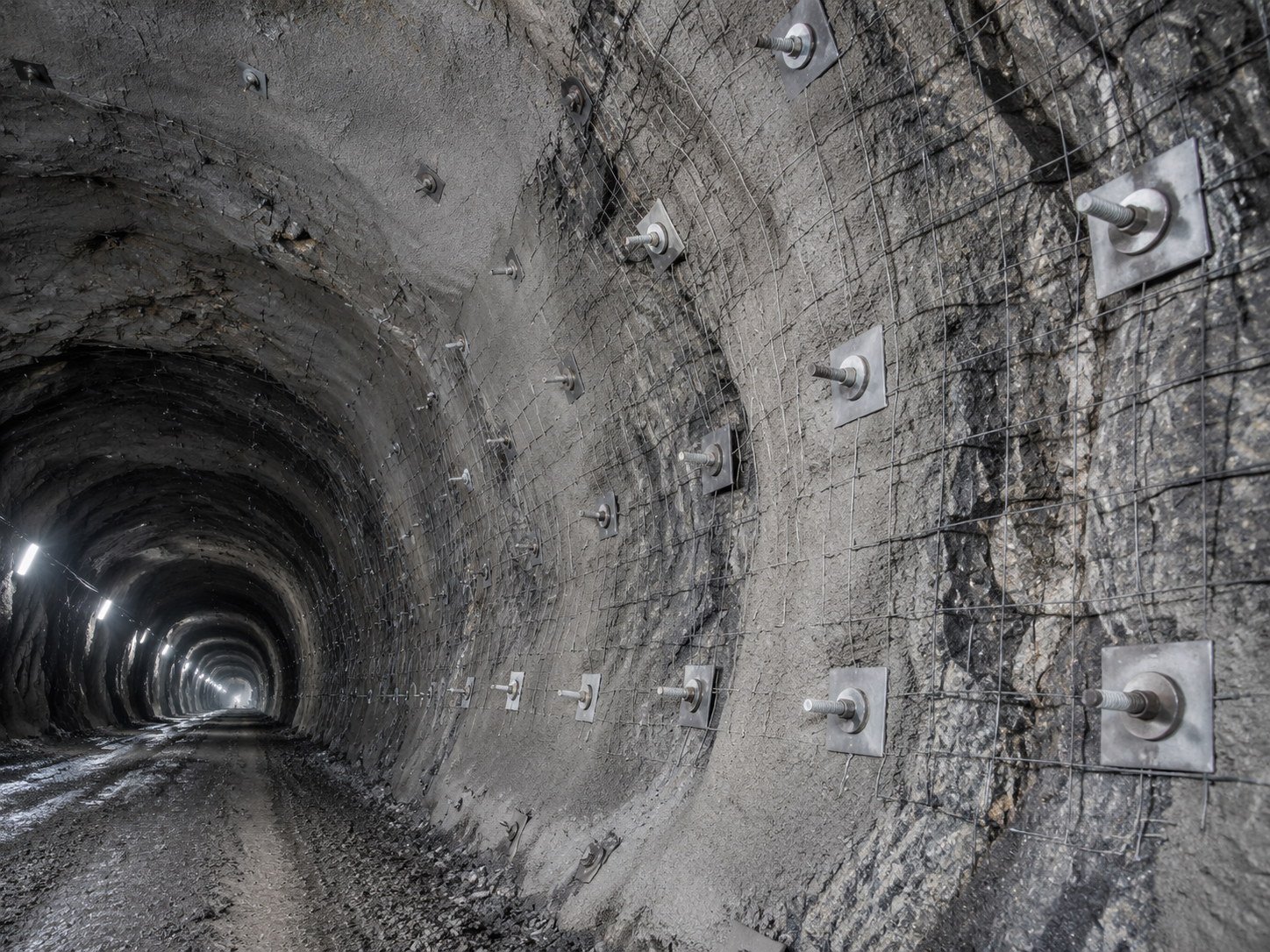
Weak ground generally refers to rock or soil with relatively low strength, high deformability, or a tendency to converge after excavation. Fractured rock commonly contains developed joints, discontinuities, faulted zones, or loose rock blocks with limited natural restraint between individual pieces.
During underground excavation, the original in-situ stress is redistributed. When this is combined with groundwater, blasting vibration, asymmetric loading, or continuing deformation, the ground may experience:
- Crown fall, sidewall failure, or localized collapse;
- Tunnel face instability;
- Mine roadway convergence;
- Borehole collapse, reduced borehole diameter, water inflow, or grout loss;
- Insufficient conditions for a stable anchorage zone and effective load transfer.
For this reason, the objective of weak-ground support is not simply to install more rock bolts. The project team must define the required functions of rock mass reinforcement, surface support, advance support, and water control.
Support Objectives to Define Before Rock Bolt Selection
Different locations require different functions from a rock bolt system. Common objectives include:
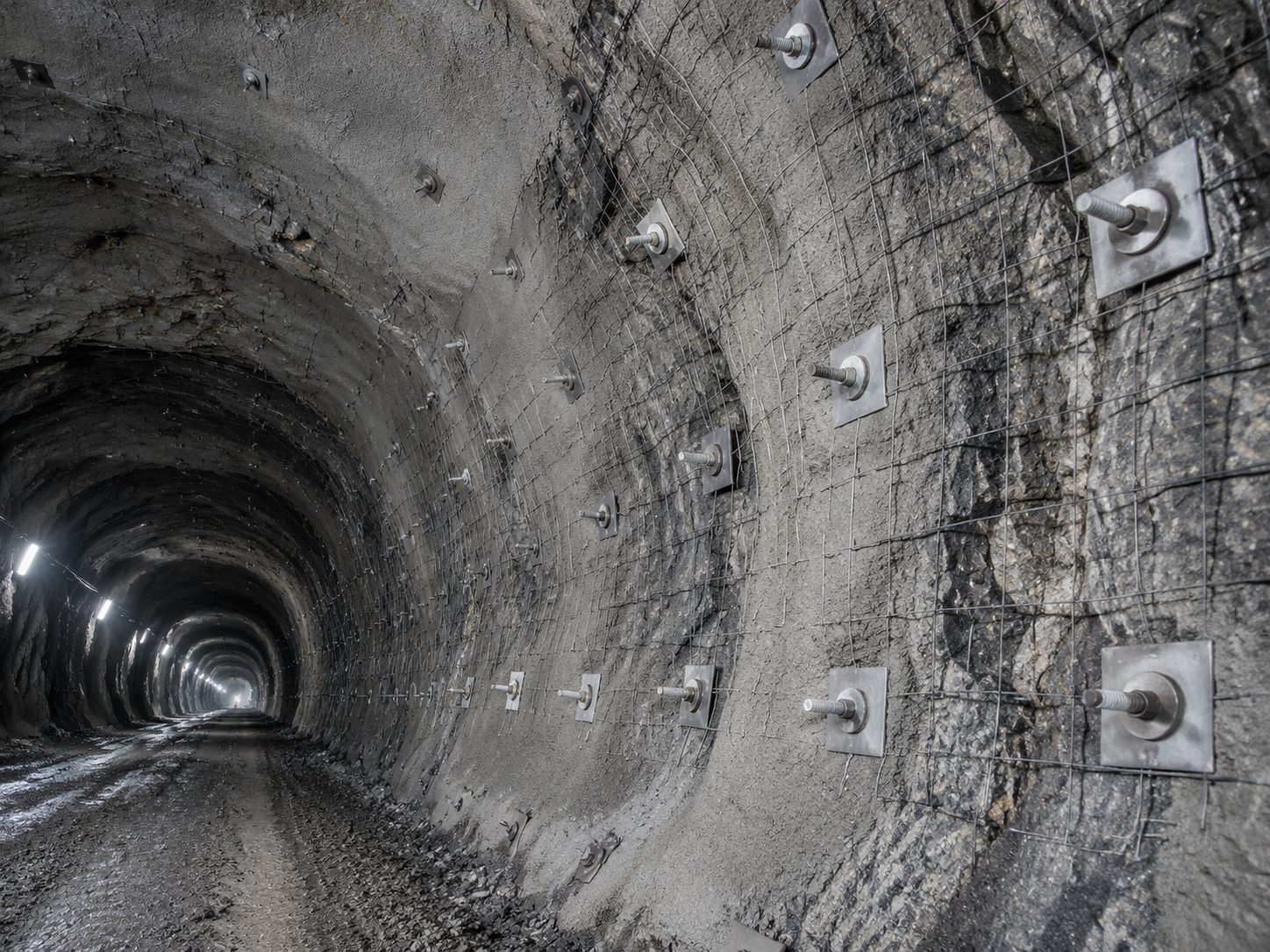
- Rock mass reinforcement: Using rock bolts, anchor cables, or grouted rock bolts to connect shallow loosened rock to more stable ground.
- Surface retention: Using mining wire mesh, steel mesh, shotcrete, and bearing plates to control rockfall and near-surface loosening.
- Face stabilization: Using self-drilling anchors, forepoling, or other advance reinforcement measures in weak, fractured, or water-bearing ground.
- Long-term durability: Considering corrosion protection, groundwater exposure, and maintenance requirements for long-life tunnel support and underground works.
For a broader explanation of support functions, failure modes, and monitoring, see Underground Mine Support Systems: Types, Selection, and Monitoring.
Ground Investigation and Geological Parameters: What to Collect Before Selecting Rock Bolts
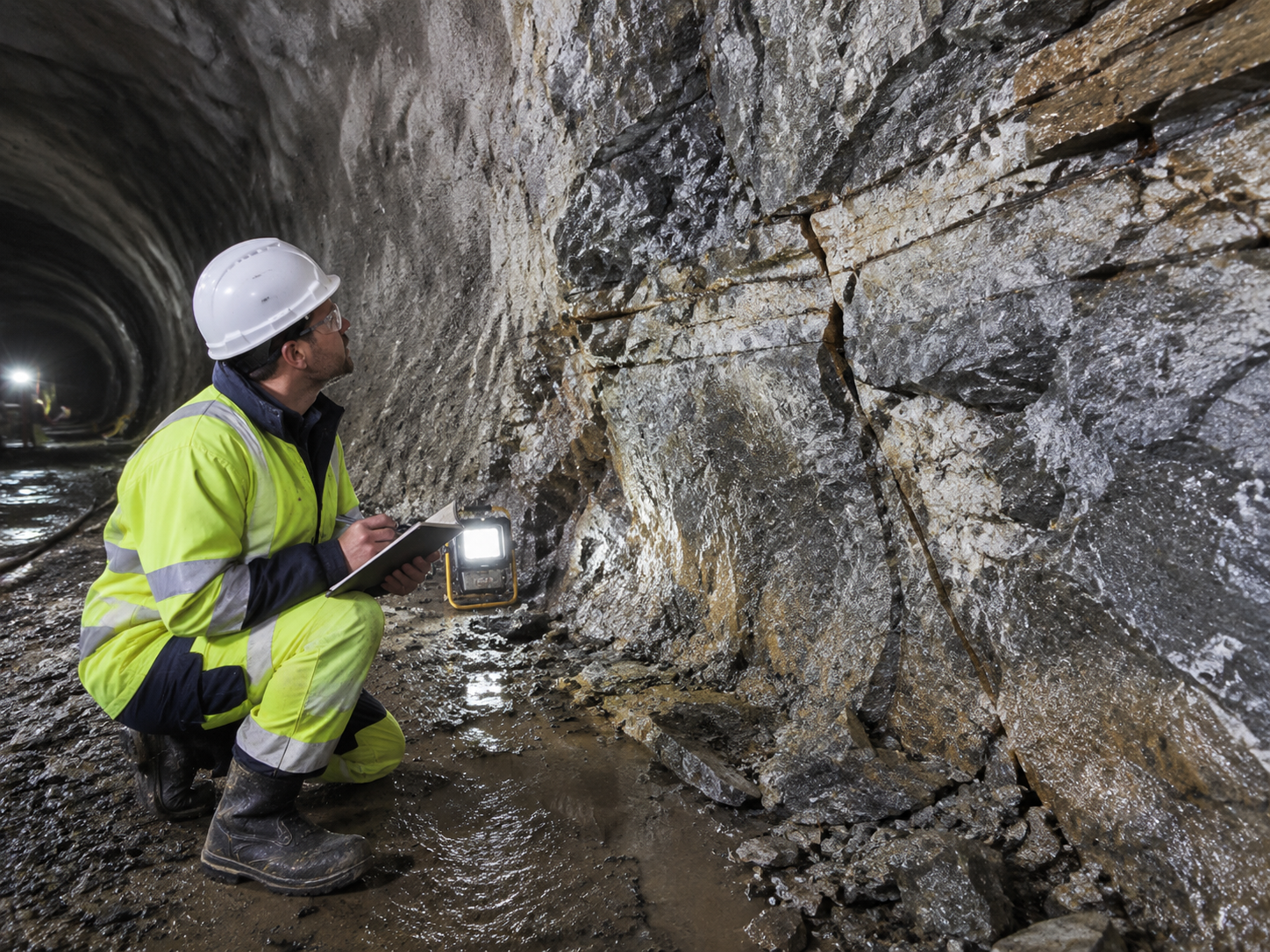
Rock bolt selection should be based on reliable engineering geological investigation. A limited site observation may not fully show whether the ground can provide a stable anchorage condition, or whether the support system must also address water control, surface retention, or deep reinforcement.
The following information should be reviewed during the evaluation stage:
| Investigation Item | Key Information | Effect on the Rock Bolt System |
|---|---|---|
| Rock mass integrity | Whether the rock is intact, blocky, fractured, or loose | Affects anchorage-zone reliability and support density |
| Joints and fractures | Orientation, spacing, persistence, and infilling | Affects block movement, rockfall risk, and load transfer |
| Faulted zones | Location, width, and degree of fracturing | May require stronger advance support or grouting reinforcement |
| Groundwater conditions | Inflow, seepage, water pressure, and drainage | Affects borehole stability, grouting, and corrosion protection |
| Stress and deformation | Convergence, stress concentration, and dynamic disturbance | Affects support stiffness, yielding requirements, and ground monitoring |
| Excavation geometry and method | Span, advance length, sequence, and equipment access | Affects bolt length, bolt pattern, and constructability |
For mine roadways, particular attention should be given to mining-induced disturbance, roof layering, stress concentration, and service life. For tunnels, crown, sidewall, face, shallow-cover, and portal conditions should be assessed separately. When the ground condition changes significantly along the excavation, the support arrangement should be adjustable as well.
Key Factors That Govern Rock Bolt System Selection
Ground Conditions and Effective Anchorage Zones
A rock bolt anchorage zone must extend into rock or soil that can provide sufficient stability. If the borehole perimeter remains highly fractured or loose, conventional predrilled rock bolts may be difficult to install and grout continuously.
Borehole Stability and Construction Window
Where the borehole remains stable long enough to complete bar insertion and grouting, predrilled grouted rock bolts can often be installed according to the approved method. If the borehole collapses, narrows, or is strongly affected by water, the use of a self-drilling hollow grouting rock bolt should be assessed.
Design Load, Deformation, and Service Life
Design load, ground deformation, excavation geometry, bolt spacing, and required service life all affect rock bolt type selection. Projects with high deformation, high stress, or a need for deep reinforcement may require a combination of rock bolts, anchor cables, shotcrete, and yielding support components.
System Accessories and Compatibility
The rock bolt bar, drill bit, coupler, nut, bearing plate, centralizer, and grouting equipment must work as a compatible system. Mismatched components may affect connection strength, grout delivery, load transfer, and construction continuity.
Rock Bolt System Selection for Different Ground Conditions
| Ground and Construction Condition | Support Systems to Assess | Main Considerations |
|---|---|---|
| Stable borehole; bar insertion can be completed | Predrilled grouted rock bolts, resin bolts, mechanical anchor bolts | Borehole quality, anchorage length, grout or resin installation quality |
| Borehole collapse; fractured rock or weak ground | Self-drilling anchors, self-drilling hollow bars | Drilling, grouting, connection method, and drill-bit compatibility |
| Need for rapid initial support | Friction rock bolts, Split Set bolts | Immediate support performance, borehole diameter, and long-term suitability |
| Need for deeper or wider reinforcement | Anchor cables, grouted anchor cables | Anchorage-zone location, tensioning requirements, and long-term loading |
| Significant deformation or dynamic loading | Combined support systems, yielding support components | Deformation compatibility, energy absorption, and monitoring requirements |
This table is intended for initial technical communication. Specific rock bolt specifications, borehole diameter, anchorage length, grouting parameters, and testing requirements must be determined from the project design, geological information, and applicable construction requirements.
When Should Self-Drilling Anchors Be Considered?
A self-drilling hollow grouting rock bolt, also called a self-drilling anchor or Self-Drilling Anchor Bolt, is suitable for conditions where conventional predrilling creates a significant installation risk. The system commonly includes a hollow threaded bar, sacrificial drill bit, couplers, nut, bearing plate, and grouting accessories.
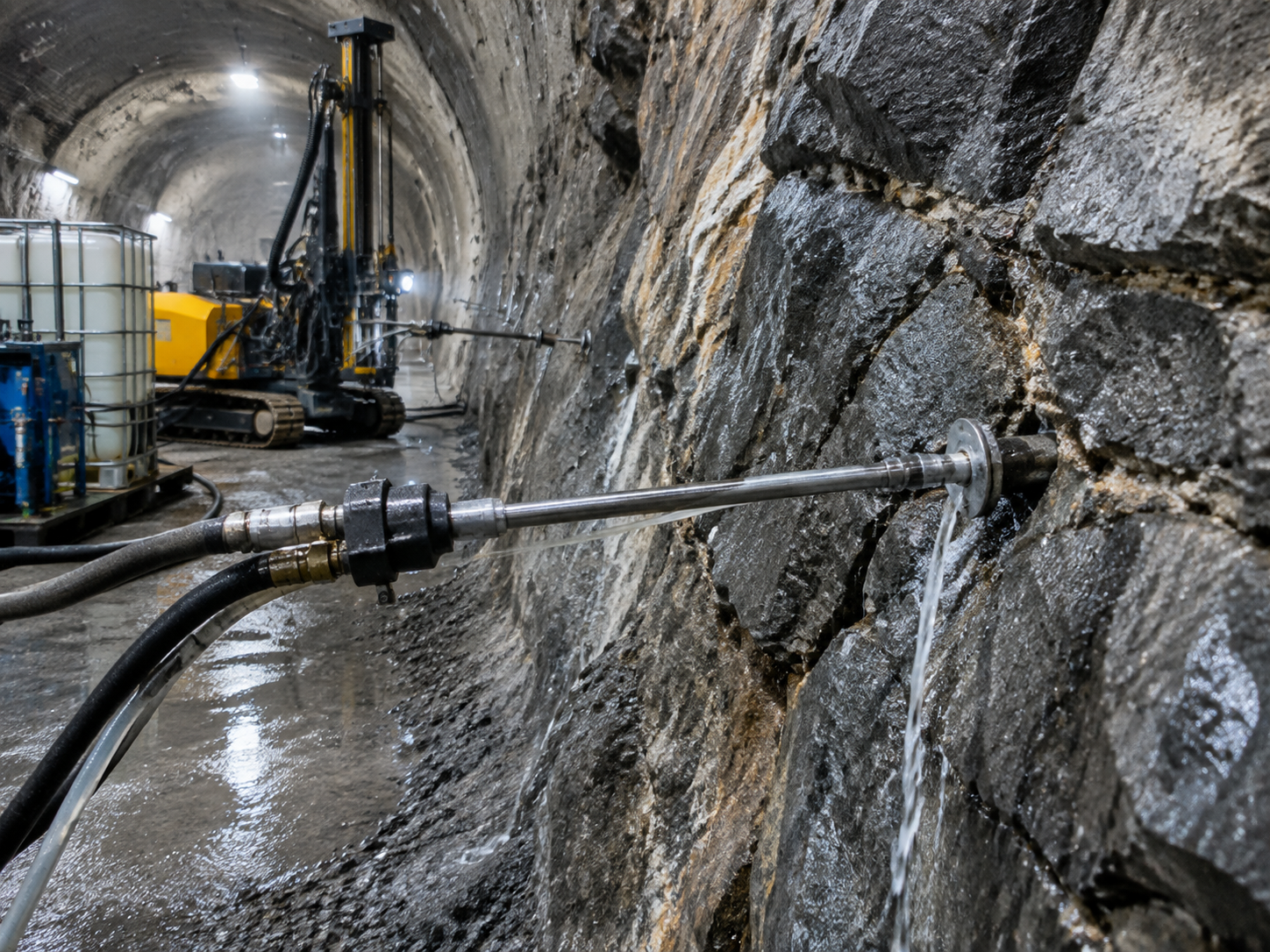
Unlike a conventional predrilled rock bolt, a self-drilling anchor advances as part of the drilling assembly. The bar remains in the ground as the reinforcement element and can provide an internal channel for grout injection. This reduces the transition between borehole completion and bar installation, making the system useful in fractured rock, weak ground, water-bearing ground, and other conditions with poor borehole stability.
For further information on system functions and tunnel applications, see Self-Drilling Anchors for Tunneling: Stability and Efficiency and How Hollow Threaded Bars Work in Self-Drilling Anchor Systems.
However, self-drilling anchors are not a universal answer for all difficult ground. Their suitability still depends on drill rig capacity, drill-bit selection, bar connections, grout pressure, grout properties, available workspace, and project design requirements.
System-Based Support: Rock Bolts Should Not Be Used in Isolation
A complete ground support system is usually more than a number of installed rock bolts. In mine roadway support and tunnel initial support, common combinations include:
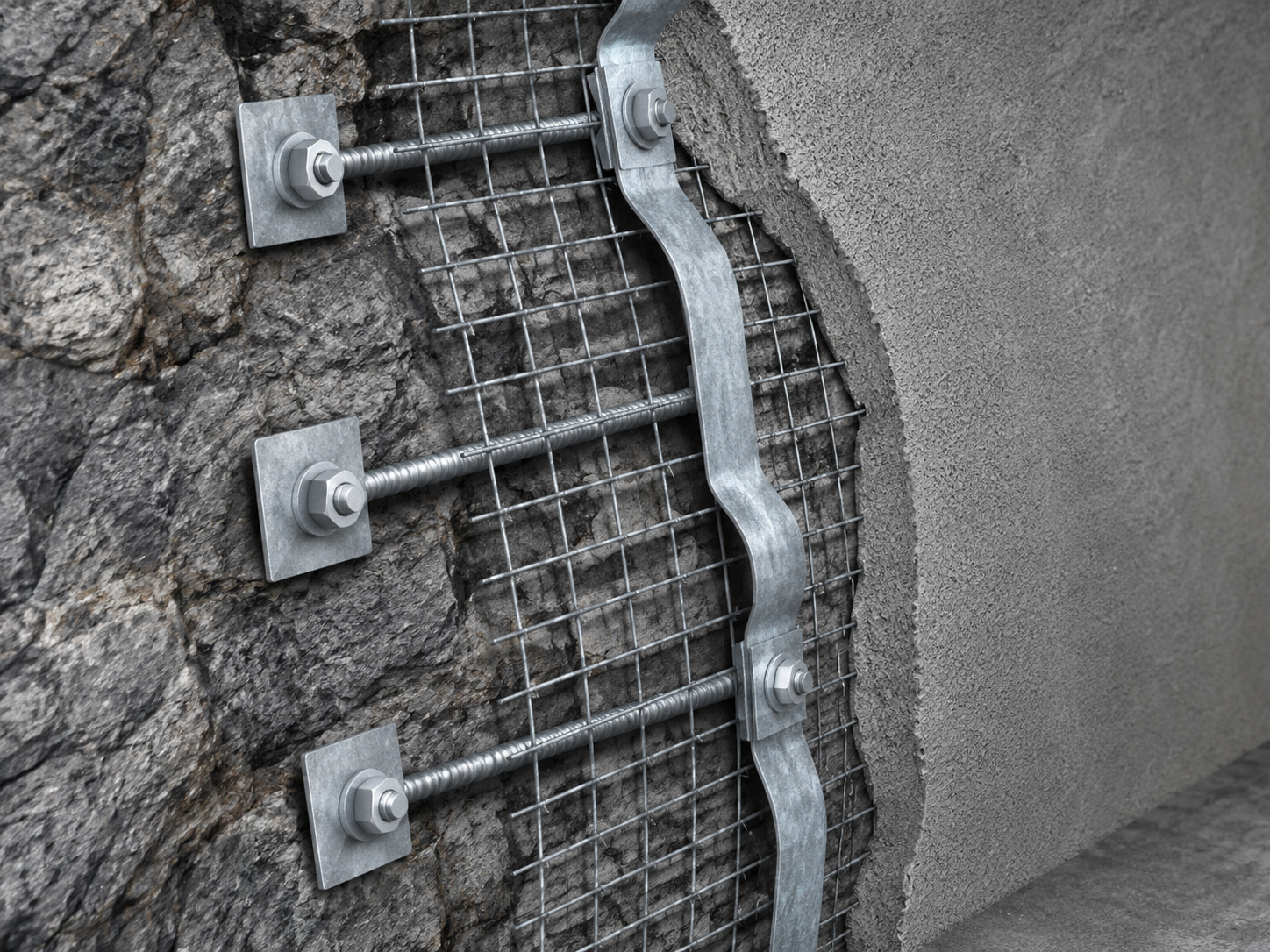
- Rock bolts used with bearing plates and mining nuts to provide surface restraint;
- Mining wire mesh or steel mesh to control loose blocks near the excavation surface;
- Shotcrete to provide continuous surface support and early confinement;
- Anchor cables for deeper or larger-scale rock mass reinforcement;
- Resin anchoring agents to improve the bond and load-transfer condition between the bolt and surrounding ground;
- Ground monitoring to identify support performance and abnormal deformation trends.
In complex conditions, the key issue is not simply choosing one type of rock bolt. It is establishing a combined support system that can meet the required engineering functions.
Application Differences: Mine Roadways and Tunneling Projects
In underground mine roadways, the support system commonly needs to address mining-induced disturbance, localized high stress, loose ground, and long-term operating conditions. Roof bolts, rib bolts, anchor cables, steel mesh, and shotcrete can be combined according to roadway geometry and ground conditions.
In tunneling projects, crown, sidewall, face, and portal zones have different loading and construction conditions. For tunnel face stabilization, weak ground, or water-bearing formations, self-drilling anchors and advance reinforcement may be evaluated. For portals and shallow-cover sections, surface settlement, slope stability, and drainage conditions must also be considered.
Installation Quality Control and Support Verification
Even when the correct rock bolt system has been selected, installation quality directly affects final anchorage performance. Key control points include:
- Borehole location, inclination, depth, and wall condition;
- Whether the rock bolt bar, coupler, bearing plate, and nut match the specified arrangement;
- Whether the grouting process is continuous and free from grout loss, interruptions, abnormal returns, or washout;
- Whether tensioning, torque checks, or pull-out tests are completed when required;
- Whether traceable rock bolt installation records and ground monitoring records are maintained.
The Complete Step-by-Step Guide to Rock Bolt Installation explains design confirmation, borehole conditions, accessory installation, grouting, inspection, and construction records. For projects using grouted rock bolts, see Grouted Bolts: Types, Applications, and Selection Basics.
Pull-out tests, installation inspections, and monitoring data do not replace design review. They can, however, help verify installation quality, identify abnormal conditions, and support later adjustments to the support arrangement.
Post-Support Inspection and Maintenance: How to Identify Ground Deformation and Support Abnormalities
Completing rock bolt installation does not mean that support work is finished. For underground projects with continuing deformation, groundwater activity, or long-term service requirements, support monitoring, routine inspection, and abnormal-condition response should be included in site management.
Field inspections can focus on the following warning signs:
- Continuing ground convergence, or a clear change in deformation rate;
- Loose, deformed, misaligned, or poorly seated bearing plates;
- Loose nuts, changes in exposed bar length, or damage to rock-bolt head components;
- Cracks, debonding, spalling, or local failure in shotcrete;
- Bulging, tearing, or separation of steel mesh from the supported surface;
- New water seepage, inflow, soil loss, or local ground softening;
- Ground monitoring data showing unusual displacement, stress, or deformation trends.
When abnormal conditions are identified, the project team should assess them against the ground conditions, construction records, monitoring data, and site safety requirements. Depending on the approved engineering approach, measures may include supplementary rock bolts, additional anchor cables, shotcrete repair, improved drainage, or changes to the construction sequence.
Common Rock Bolt Selection Errors in Weak and Fractured Ground
First, selecting only by rock bolt strength while ignoring whether the ground can form a reliable anchorage zone. Second, focusing only on borehole depth while ignoring borehole stability during bar insertion, grouting, and anchoring. Third, treating self-drilling anchors as the default solution for every complex geological condition. Fourth, overlooking the role of steel mesh, shotcrete, anchor cables, and ground monitoring in overall support performance. Fifth, applying general technical article parameters directly to a specific project without considering the geological data, design documents, and construction requirements.
Rock Bolt Selection Checklist for Project Teams
Before finalizing a rock bolt support system, project teams should verify:
- Whether the ground is intact rock, fractured rock, weak ground, or water-bearing ground;
- Whether the borehole can remain stable through bar insertion and grouting;
- Whether the project requires immediate support, long-term reinforcement, advance support, or deep reinforcement;
- Whether steel mesh, shotcrete, or anchor cables are required;
- Whether the construction equipment is compatible with the rock bolt system and accessories;
- Whether pull-out testing, installation inspections, and ground monitoring can be implemented;
- Whether corrosion protection, durability, and acceptance requirements are defined during the design stage.
Conclusion: Match the Support System to the Ground and Construction Method
The key to ground support in weak and fractured rock is matching the rock bolt system, ground conditions, construction sequence, and quality-control requirements. Predrilled grouted rock bolts, self-drilling anchors, friction rock bolts, resin bolts, and anchor cables each have their own applicable conditions and should not be substituted solely by product name or individual strength.
For mining ground support and tunnel support projects, a more reliable process is to identify ground instability risks first, define the required support functions, then evaluate the rock bolt system, surface support, grouting procedure, compatible accessories, and monitoring requirements. This provides a basis for a combined support solution that matches the project design and construction conditions.
For further discussion of ground conditions, rock bolt specifications, or support system accessories, submit project requirements through the CQ Rockbolt contact page.
Frequently Asked Questions
Which rock bolt is suitable for fractured rock? Where predrilled boreholes cannot remain stable, self-drilling anchors may be evaluated. Where boreholes remain stable and continuous grouting can be completed, predrilled grouted rock bolts may also be suitable. The final selection depends on ground conditions, design load, and construction conditions.
When should self-drilling anchors be used? A self-drilling anchor system may be appropriate where borehole collapse, reduced borehole diameter, groundwater, loose ground, or difficulty inserting a bar after drilling creates an installation risk.
Can friction bolts replace grouted rock bolts? Friction rock bolts and grouted rock bolts use different anchoring mechanisms and serve different construction purposes. Whether they can be substituted must be determined by the specific ground-support design.
How can rock bolt installation quality be verified? Quality can be assessed using drilling and installation records, accessory inspections, grouting quality control, tensioning or torque checks, pull-out tests, and ground monitoring.
How does groundwater affect rock bolt selection? Groundwater may affect borehole stability, grout distribution, grouting continuity, and component durability. In water-bearing ground, drainage measures, grouting procedures, corrosion protection, and the rock bolt system should be assessed together.
Related News
Other news you might be interested in

Why Does the Mining Industry Use Self-Drilling Anchors?
As underground mining moves into deeper and more complex areas, ground stability has become a critical factor affecting both safe production and development efficiency. Fractured rock, fault zones, high in-situ stress, groundwater, and ongoing mining-induced disturbance can all cause deformation or loosening at roadway roofs, sidewalls, and intersections. The objective of modern mining ground support is not simply to address local instability, but to create a stable working environment for mining, haulage, and ventilation through reliable rock reinforcement solutions.

How to Choose a Reliable Self-Drilling Anchor System Manufacturer
In underground mining, tunneling, slope stabilization, deep excavation support, and foundation reinforcement projects, complex ground conditions often determine the difficulty of the support solution. In soft ground, fractured rock, weathered rock masses, or water-bearing formations, conventional pre-drilled holes can collapse, jam, or lose borehole stability. By combining drilling, anchoring, and grouting into one process, a self-drilling anchor system has become an important solution in geotechnical engineering.However, selecting the right self-drilling anchor is only the first step. A manufacturer's ability to consistently supply compatible hollow threaded bars, sacrificial drill bits, couplers, bearing plates, nuts, and grouting accessories, while understanding actual ground support requirements, directly affects installation efficiency, anchorage quality, and project safety.
Want to know more?
Get in touch with us for more information about our services and products.