

Self-Drilling Anchors for Tunneling: Ensuring Stability and Efficiency

Dayang Yang
AuthorWith over 15 years of experience in the production and sales of ground anchoring and mining support products, we operate our own rock bolt and accessory manufacturing facility with stable large-scale production capacity. We are specialists in rock bolts, resin cartridges, anchor cables, bearing plates, and customized ground anchoring products for mining support and geotechnical anchoring solutions.
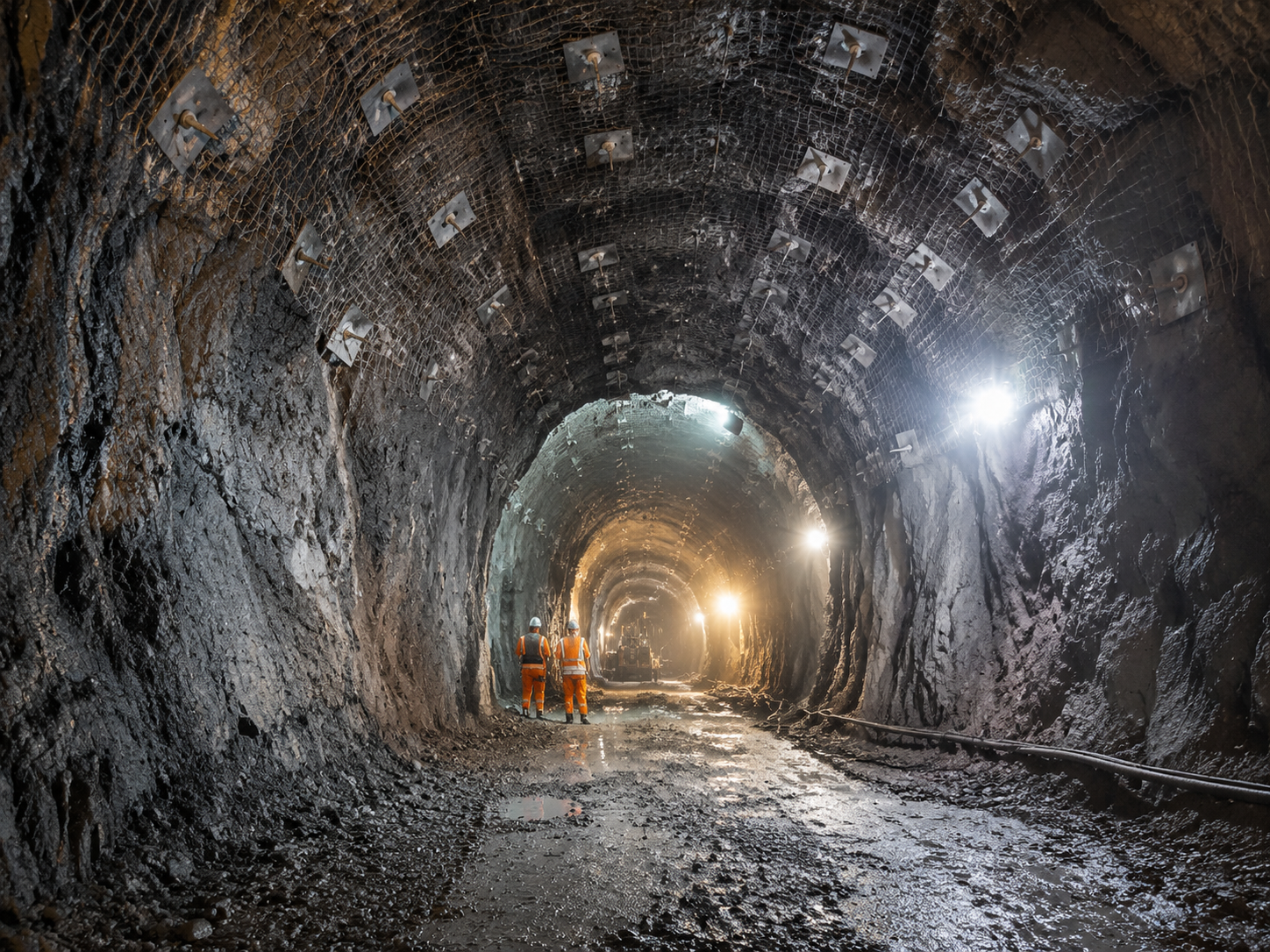
Tunneling projects often pass through soft soil, fractured rock, weathered ground, and water-bearing formations. These conditions can cause tunnel face instability, ground settlement, water ingress, and excavation deformation. Self-drilling anchor systems provide an effective ground reinforcement solution by combining drilling, anchoring, and grouting in one installation process.
For tunnel contractors and geotechnical engineers, this method can reduce installation stages while providing immediate ground support where conventional pre-drilling is difficult or unreliable.
What Is a Self-Drilling Anchor System?
A self-drilling anchor system typically includes a hollow threaded steel bar, sacrificial drill bit, couplers, nuts, bearing plates, and grouting accessories. The hollow bar functions first as a drill rod and then as a permanent reinforcement element.
During installation, cement grout is pumped through the hollow core and exits through the drill bit. The grout fills surrounding voids and fractures, creating a strong bond between the anchor and the surrounding soil or rock mass.
| Component | Function in Tunneling |
|---|---|
| Hollow anchor bar | Acts as a drill rod, grout conduit, and reinforcement member |
| Sacrificial drill bit | Penetrates soil, rock, and mixed ground |
| Grout | Bonds the anchor to the ground and fills fractures |
| Coupler | Extends anchor length where deeper reinforcement is required |
| Plate and nut | Transfers support loads to the anchor system |
Why Use Self-Drilling Anchors in Tunneling?
Traditional ground support methods may require drilling, borehole cleaning, bolt insertion, and grouting as separate steps. In loose ground, broken rock, or water-bearing ground, boreholes may collapse before reinforcement can be installed.
Self-drilling anchors solve this challenge by installing the reinforcement during drilling. Their main benefits include:
- Fewer installation stages in unstable ground
- Immediate ground reinforcement after grouting
- Suitability for soft soil, fractured rock, and mixed geology
- Reduced dependence on stable pre-drilled boreholes
- Efficient installation in constrained underground workspaces
Tunnel Face Stabilization
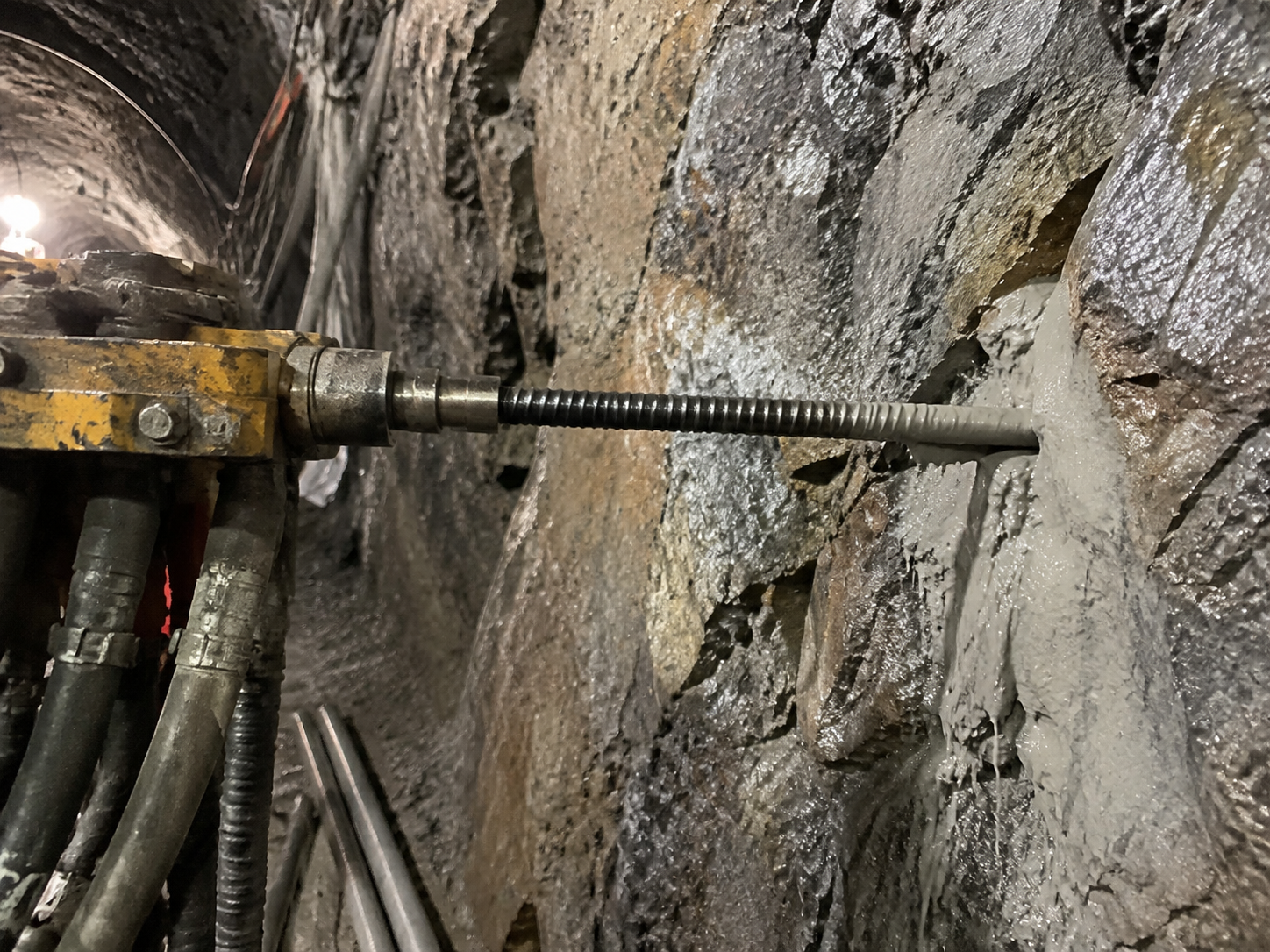
The tunnel face is one of the most vulnerable zones in an excavation. Weak soil or fractured rock at the excavation front can lead to overbreak, collapse, and sudden ground movement. Self-drilling anchors can be used as face bolts to reinforce the ground ahead of excavation.
How Self-Drilling Anchors Stabilize the Tunnel Face
Anchors are commonly installed horizontally or at a slight upward angle into the tunnel face. As drilling progresses, grout is injected through the hollow bar and penetrates nearby voids and fractures. This process creates a reinforced zone that improves ground cohesion before the next excavation round.
Key Benefits
- Supports weak material at the excavation front
- Reduces the risk of localized collapse and falling debris
- Helps control deformation during sequential excavation
- Enables reinforcement where open boreholes are difficult to maintain
Typical Applications
Tunnel face stabilization is widely used in soft-ground tunneling, urban underground projects, and sections with weathered or fractured rock. It is particularly valuable where nearby structures, utilities, or shallow cover make ground movement control essential.
Radial Rock Bolting for Tunnel Linings
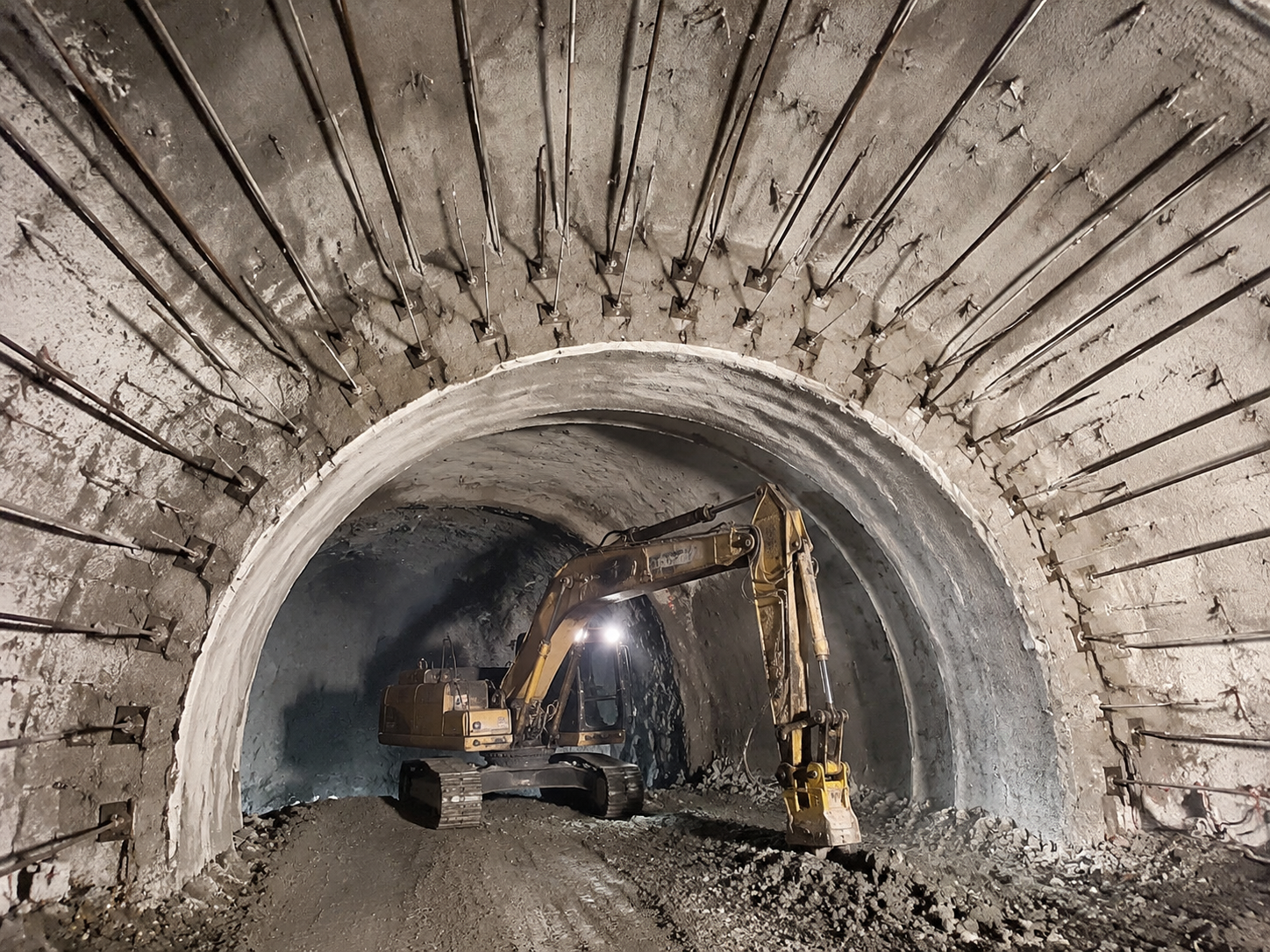
Radial rock bolting reinforces the tunnel perimeter by connecting loose or fractured material to more stable ground behind it. Rock bolts can be installed around the tunnel crown, sidewalls, and other locations identified in the support design.
How Self-Drilling Anchors Reinforce Tunnel Linings
The anchors are drilled radially into the surrounding rock mass. Grout injected through the anchor bar fills discontinuities and improves the bond between the anchor and the ground. Combined with shotcrete, wire mesh, lattice steel beams, or other tunnel support systems, radial bolting helps maintain the excavation profile.
Key Benefits
- Improves confinement of fractured ground around the tunnel
- Helps limit rock loosening and rockfall
- Supports temporary and permanent tunnel linings
- Reduces the need for separate casing or boreholes in difficult geology
Typical Applications
Radial self-drilling anchors are commonly used in transportation tunnels, hydropower tunnels, mining tunnels, and underground caverns where rock quality changes along the project alignment.
Forepoling (The Umbrella Arch Method) for Soft Ground Tunneling
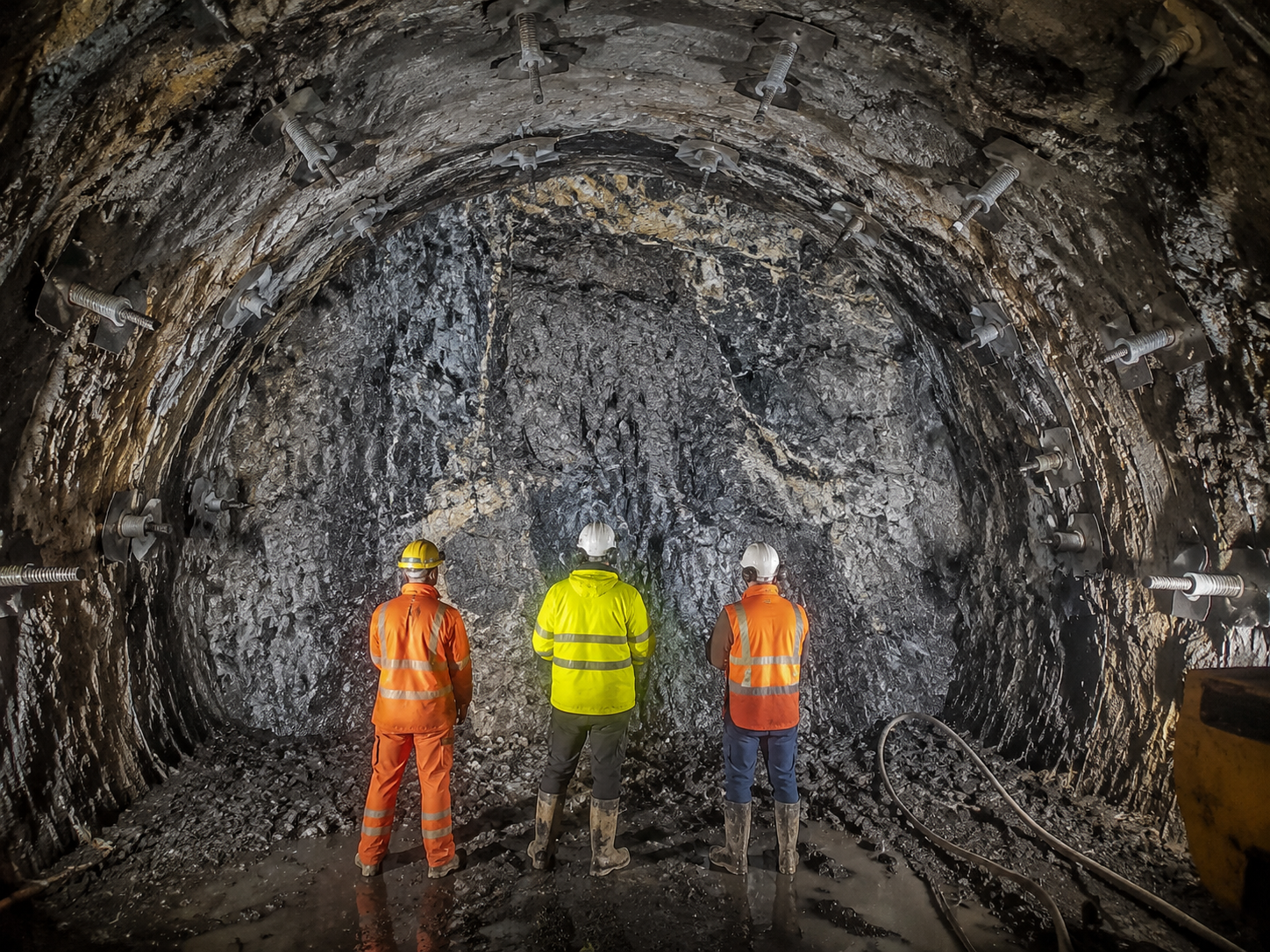
Forepoling, also called the umbrella arch method, reinforces the ground ahead of the tunnel face. A series of long anchors is installed above the tunnel crown to form a protective canopy before excavation proceeds underneath.
How Self-Drilling Anchors Strengthen the Umbrella Arch
Self-drilling anchors are installed at a shallow angle above the tunnel profile and extend into undisturbed ground ahead of the face. Grouting creates a reinforced arch that distributes loads and helps reduce settlement or collapse during the following excavation cycle.
Key Benefits
- Provides pre-support before excavation advances
- Helps control settlement in soft or loose ground
- Supports safe excavation beneath the reinforced canopy
- Suitable for NATM and other sequential excavation methods
Typical Applications
The umbrella arch method is frequently used in shallow urban tunnels, tunnel portals, fault zones, and soft-ground sections where the ground cannot safely remain unsupported.
Portal and Slope Protection
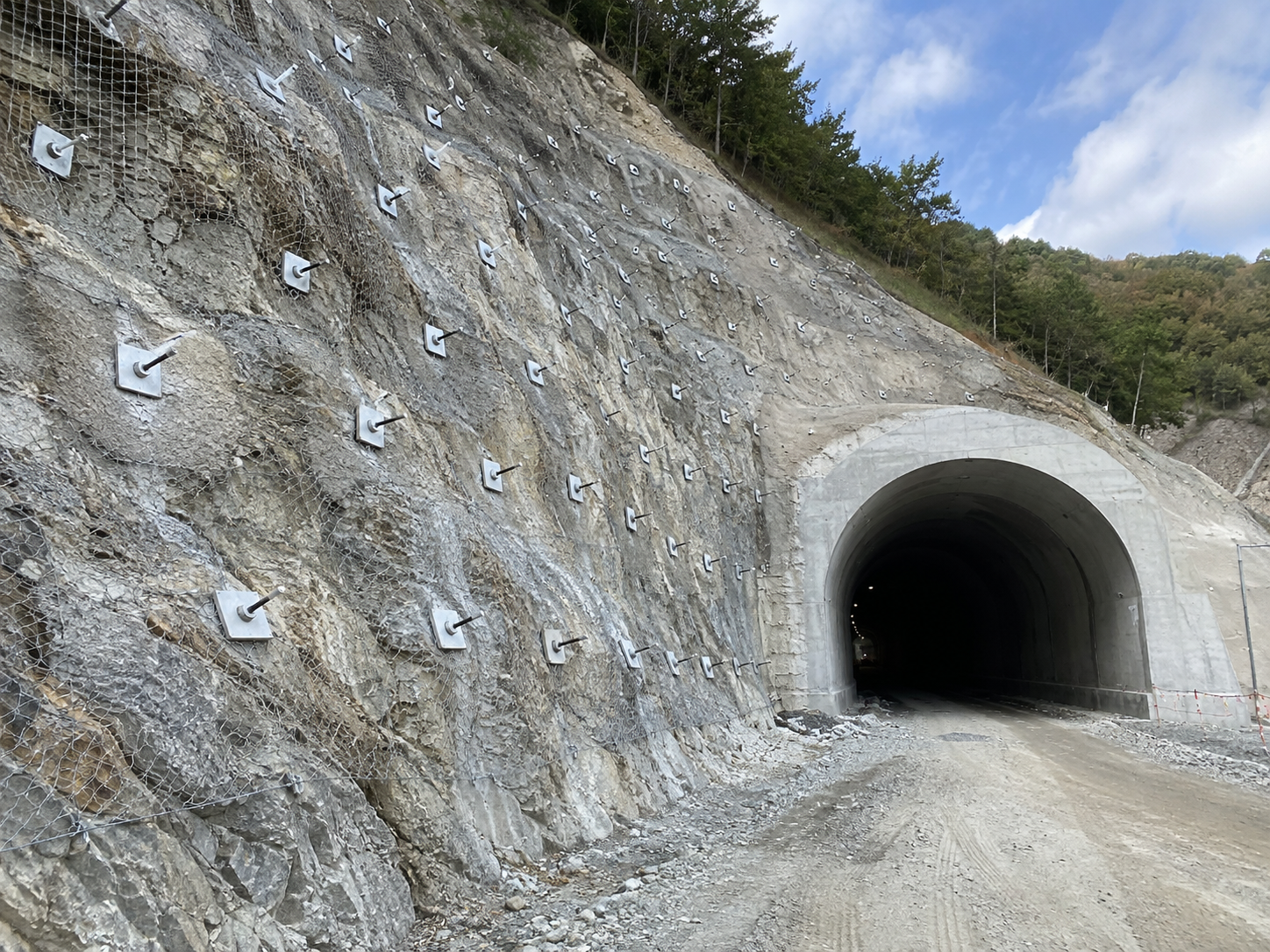
Tunnel portals are often located on natural or cut slopes exposed to weathering, erosion, groundwater, and changing surface loads. These areas may require slope stabilization before and during tunnel construction.
How Self-Drilling Anchors Reinforce Slopes and Portal Sections
Self-drilling anchors can function as soil nails or rock anchors for portal stabilization. Installed at designed angles, they reinforce potentially unstable material and connect it to more competent ground. Grouting improves load transfer and helps stabilize fractured zones near the tunnel entrance.
Key Benefits
- Supports slope stabilization near tunnel entrances
- Helps reduce landslide and localized failure risks
- Adapts to irregular or difficult terrain
- Suitable for temporary excavation and long-term protection
Typical Applications
This method is suitable for mountain tunnels, highway tunnels, railway tunnels, and portals located in weathered rock, colluvium, or landslide-prone areas.
Water Ingress Control in Tunneling
Groundwater can weaken soil and rock, increase tunnel face instability, delay construction, and complicate shotcrete or lining operations. Water ingress control should be planned together with the overall tunnel support and drainage strategy.
How Self-Drilling Anchors Control Water Ingress
In water-bearing formations, self-drilling anchors can deliver grout directly into fractures and voids around the tunnel perimeter. The grout reduces water pathways while reinforcing the surrounding ground. Final performance depends on the ground conditions, grout selection, drilling layout, and overall waterproofing design.
Key Benefits
- Helps reduce seepage through fractured or permeable ground
- Supports ground improvement around the excavation
- Improves underground working conditions
- Reduces repeated intervention caused by localized water inflow
Typical Applications
Grouted self-drilling anchor systems are used where tunnels encounter permeable soils, fractured rock, fault zones, or groundwater pressure that may affect excavation stability.
Versatile Uses of Self-Drilling Anchors
Beyond tunneling, self-drilling anchors are used in a broad range of geotechnical engineering applications:
- Slope stabilization and soil nailing
- Deep excavation support
- Foundation underpinning and reinforcement
- Mining ground support
- Landslide mitigation
- Dam, hydropower, and underground cavern projects
Their key advantage is the ability to install reinforcement and grout in a single operation, especially where geology is variable or conventional drilling methods are difficult to use.
Enhance Your Tunneling Projects with Reliable Anchoring Solutions
An effective self-drilling anchor solution begins with a clear understanding of ground conditions, tunnel support class, installation angle, anchor length, grout method, and required load capacity. Anchor selection should be coordinated with the project’s geotechnical investigation and support design.
Whether the requirement is tunnel face stabilization, radial rock bolting, umbrella arch pre-support, portal stabilization, or water ingress control, self-drilling anchors provide a flexible ground reinforcement solution for challenging underground conditions. Contact CQ Rockbolt to discuss suitable rock bolt systems, drilling accessories, and project-specific ground support requirements.
Related News
Other news you might be interested in

Resin Cartridges for Rock Bolts: Gel Time, Temperature and Storage Checks Before Ordering
A quotation for resin cartridges may list a diameter, length and setting-speed code. For a mining or tunneling buyer, those details leave several questions unanswered: Does the timing apply at the temperature underground? Does it fit the specified bolt and installation method? How much usable shelf life will remain when the shipment reaches the mine?When comparing resin cartridges for rock bolts, ask suppliers to identify the exact product, explain its timing conditions and document its storage requirements. This guide sets out the information to collect before ordering so that technical and commercial offers can be compared on the same basis.

Friction Rock Bolt Specifications: What Buyers Should Confirm Before Ordering
A friction rock bolt quotation is difficult to compare when it lists only a diameter, a length and a price. Buyers also need to know which product drawing applies, what is included, how the proposed bolt matches the drilling arrangement, and what the quoted performance figures actually describe.For mine engineers, technical buyers and ground-support distributors, the practical starting point is a clear specification package. This guide focuses on the slotted-tube friction bolt commonly described in product catalogues as a split set friction bolt. CQ Rockbolt lists this product family for underground mining and tunneling; the exact model and supply details should be confirmed against the current quotation.
Want to know more?
Get in touch with us for more information about our services and products.