

Threadbar Coupler Compatibility: Drawings, Threads and Test Evidence Before Ordering

Dayang Yang
AuthorWith over 15 years of experience in the production and sales of ground anchoring and mining support products, we operate our own rock bolt and accessory manufacturing facility with stable large-scale production capacity. We are specialists in rock bolts, resin cartridges, anchor cables, bearing plates, and customized ground anchoring products for mining support and geotechnical anchoring solutions.
The threaded rod coupling looks like a straight steel sleeve with threads on both ends. In practice, compatibility depends on the rod system, complete joint arrangement, and evidence provided for the exact product.
The matching nominal diameter is not enough. Couplings with similar appearance may use different thread forms, tolerances, joint lengths, or material conditions. They may also have different uses in prestressed anchors, mechanical steel bar joints, or other load-bearing components.
Before accepting the quotation, determine the content of the coupling connection, the drawings of the control joint, and the actual proof of the test report. These checks help buyers compare quotes on the same technical basis.
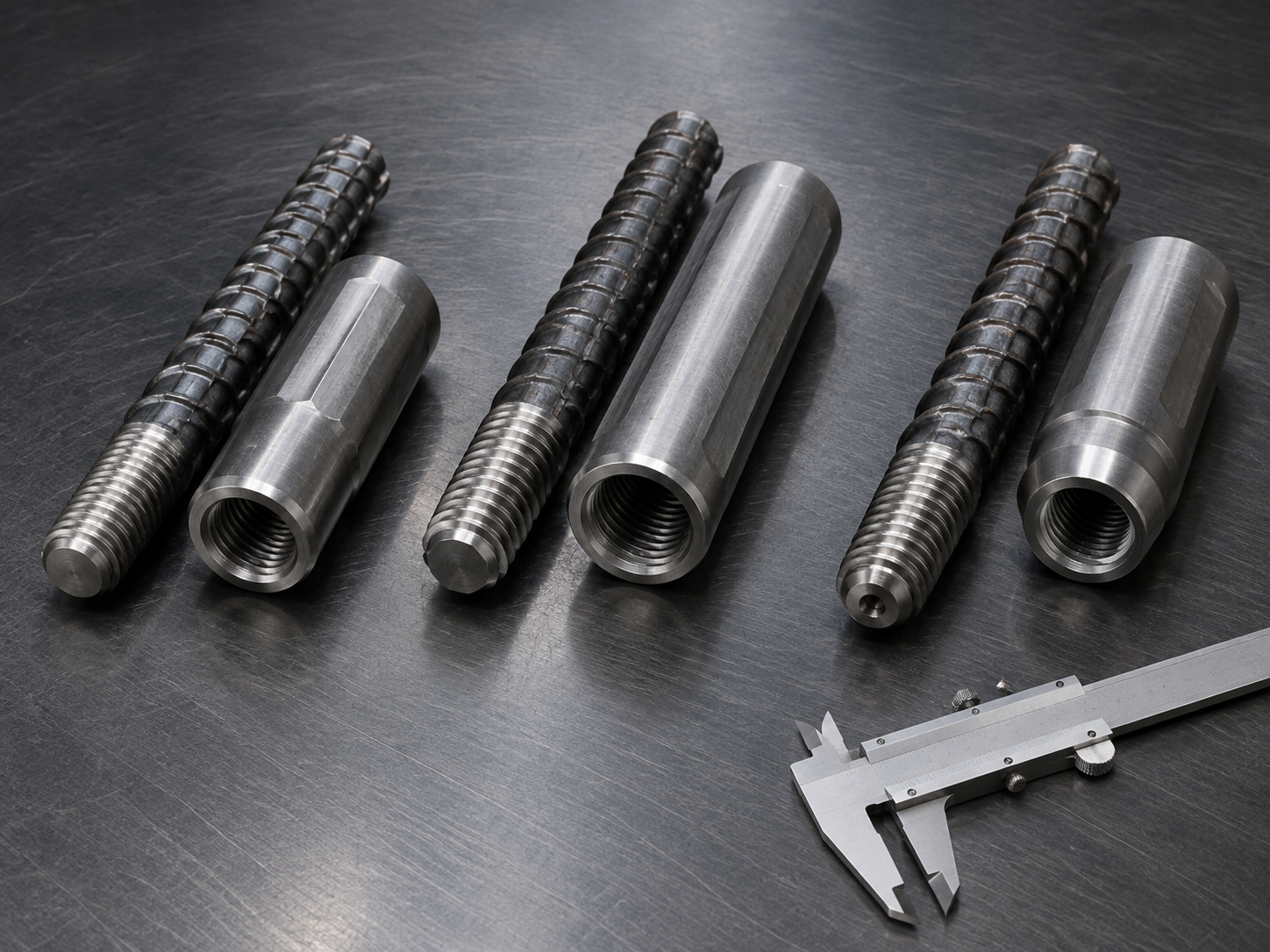
Which system is connected to the coupler?
The first question is not "What size of coupling do you have?" but "Which rod system and joint do you want to replicate"?
Threaded rod couplings may occur in various situations:
- A prestressed steel bar coupler used to connect various parts of tension anchors or steel bars.
- Mechanical couplings used for splicing steel bars.
- Connectors provided as part of documented anchor, return or ground support components.
- Replacement components for existing approved systems.
These applications may have different requirements for connectors. The coupler that performs mechanical splicing cannot be automatically interchanged with the prestressed steel bar coupler. Similarly, it should not be assumed that products described as steel bar couplings are suitable for every "threaded rod" system.
Record project applications, bar names, and existing system references. If the coupling is to be used as a force anchor, please determine if it is within the free stress length, bond length, or other parts of the component. This location may affect the required cover pipe, anti-corrosion, and installation details.
The term 'threaded rod' is not a universal size standard. It describes a series of threaded rods and systems, and does not guarantee that threads from different suppliers will match.
What should the drawing show?
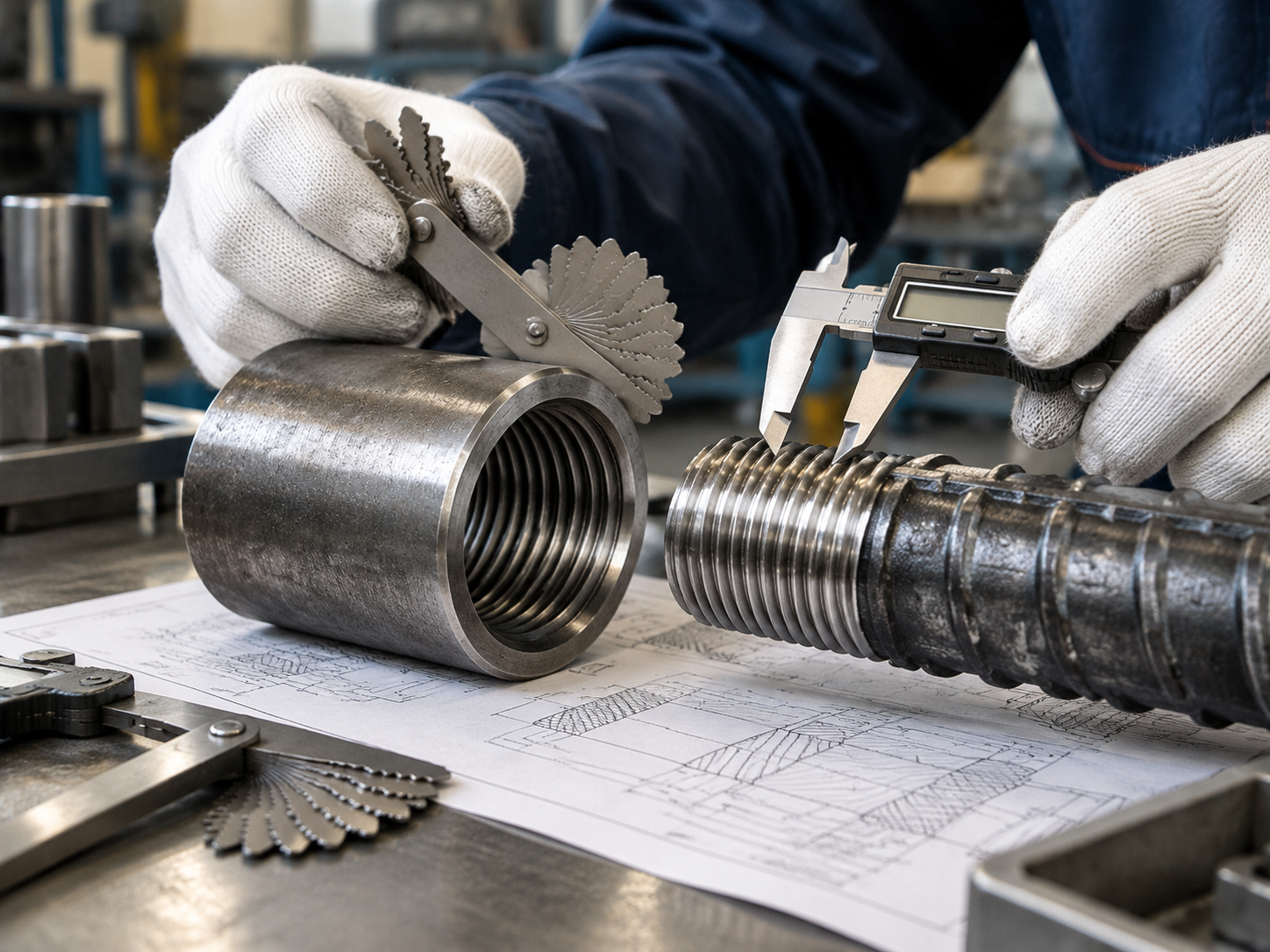
Simultaneously request the steel reinforcement diagram and coupling diagram. Compatibility cannot be established for coupling drawings without matching rod information.
The file set should determine:
- Accurate reference for rods and couplings, including drawing revisions.
- Complete joint layout and expected position of coupling.
- Thread form, nominal size, pitch, chirality, and effective engagement.
- Any limitations on the external dimensions and installation channels of the coupling.
- Materials, heat treatment requirements, and protective surface treatment.
- If specified, cover pipes, seals, covers, or anti-corrosion details.
- Installation instructions and any inspection requirements for the joint.
Check if the drawings describe the same configuration as the quotation. A common issue in procurement is that when the project drawings specify components with covers, specific thread directions, or defined surface treatments, the price for regular sleeves cannot be received.
When replacing an existing coupling, the original drawings, part numbers, and any available inspection records should be included. If there are no drawings, please provide labeled samples and measured thread details. Photos can help identify parts, but they cannot define tolerances or material conditions.
Require suppliers to list all differences between the proposed coupler and existing or specified components. Do not accept 'equivalence' as a substitute for recording comparisons.
Why is the thread matching larger than the diameter?

When using different thread geometries, two rods can share a nominal diameter. Therefore, compatibility requires more than just measuring the exterior of the rod or confirming that the coupler can be manually activated.
Thread review should include:
- Thread shape and contour.
- The nominal diameter and related primary, secondary, or effective dimensions.
- Pitch and thread direction.
- Thread length and available engagement.
- Tolerance requirements and inspection methods.
- Thread condition, surface treatment, and protection before assembly.
- The expected assembly position, including the distance each rod must enter the coupler.
Thread engagement should be defined by applicable drawings or product specifications. Unless the document explains what full participation means for the component, 'full participation' is not enough.
Couplings that are easily screwed on may still not have sufficient engagement. The tight coupling may have damaged threads or mismatched tolerances. Both of these situations require technical review, rather than making on-site decisions based on intuition.
For the existing system, inquire whether the proposed coupler is intended to be compatible with the original rod, a new rod from the same supplier, or a complete replacement component. Compatibility reviews with documented records are required for mixing rods, couplings, and anchor components of different systems, and should not be considered as replacements for conventional parts.
What testing evidence should be required?
The 'test report available' can describe several different files. Buyers should inquire about what was tested, which products were covered, and what the results showed.
| Evidence | What it can establish | What it does not establish by itself |
|---|---|---|
| Material certificate | The declared material or heat-treatment condition of the referenced batch | That the finished coupler matches the bar thread or performs as an assembly |
| Dimensional inspection record | Measured dimensions and conformity with the stated drawing or inspection plan | The load capacity of the joint |
| Coupler component test | A result for the tested coupler specimen under a defined method | That the result applies to the complete bar-and-coupler assembly |
| Bar-and-coupler assembly test | Performance of the tested bar, coupler and assembly configuration | That the result applies to every size, batch or project condition |
| Batch traceability record | A link between the delivered product and the referenced inspection or test documents | That the project acceptance criteria have been met |
For prestressed steel bar couplings, assembly configuration is crucial. The tested sample should be able to identify rods, couplings, thread engagement, cover components, and any other parts that affect the joint. A report about loose sleeves may not answer engineering questions.
Request actual reports instead of marketing summaries. Check its date, issuing laboratory, and specifications or methods used. Confirm whether the report is a type test, batch release test, project specific test, or other category.
How to read the test report of threaded rod connector?
Starting from the sample description. It should determine the steel reinforcement grade and size, coupling reference, and assembly layout. The report should specify the testing method, loading conditions, and results for each sample.
Then check the fault location and mode. Is the rod malfunctioning outside the joint, is the coupling broken, is the thread loose, or is another component malfunctioning? The answer is important because it displays the behavior of the tested assembly, not just whether a numerical value has been reached.
Check the standards or acceptance criteria used. Do not compare the results of different methods as if they were directly equivalent. If the sample, loading method, or acceptance criteria are different, a higher reported load will not automatically become better evidence.
Finally, connect the report to the provided product:
- Does the report cover the same coupling drawings and versions?
- Does it cover the same rod system and thread configuration?
- Does it cover the dimensions, grades, and material conditions quoted?
- Has the testing batch been determined, and how are the delivered batches tracked?
- Have sampling frequency, retesting rules, and inspection records been defined?
A sample size transfer report cannot automatically prove every size in the product series. Request suppliers to explain the scope of evidence and identify any gaps related to the project.
Do all couplers require the same acceptance?
No. The acceptance requirements should come from project specifications, anchor or reinforcement system design, and the responsible engineering department.
Some projects may require clear assembly testing, dimensional inspection, and material traceability. Others may place additional emphasis on corrosion prevention, fatigue, relaxation, or on-site installation records. Couplings used for temporary engineering may have different evidence packages than those used for permanent prestressing.
Suppliers can explain what their standard documents include and what they can provide for the project. It should not represent the project's decision on acceptance criteria. If the specifications are unclear, please refer the issue to the responsible designer or quality department before placing an order.
How should the quotation for threaded rod couplings be compared?
Comparing joints is not just about the price of sleeves. Require each threaded rod connector supplier to quote based on the same drawings and document list.
| Comparison point | Information to request |
|---|---|
| System | Bar reference, application and existing system details |
| Coupler | Drawing revision, dimensions, thread details and finish |
| Assembly | Included cover tubes, seals, caps and accessories |
| Compatibility | Written differences from the specified or existing arrangement |
| Inspection | Dimensional checks and batch identification |
| Test evidence | Report type, specimen, method, result and coverage |
| Commercial scope | Quantity, packaging, delivery point and validity |
Use the same units and revised drawings in each quotation. Inquire if the price includes any special protection required for inspection documents, test reports, packaging, and shipping.
If the supplier cannot confirm a certain point, please record it as an open item instead of letting the quotation imply compliance. A complete quotation should distinguish between confirmed information and assumptions.
What should you send with the threaded rod coupling RFQ?

A useful inquiry sheet allows suppliers to identify systems and review joints before pricing:
- Topic: Compatibility Review and Quotation Request for Threaded Rod Couplings
- Application: Prestressed anchor rod/mechanical steel bar joint/replacement parts/other.
- Bar system: manufacturer, bar name, grade, and drawing or part reference.
- Coupling requirements: existing coupling references, drawing revisions, or sample details.
- Thread information: nominal size, thread form, pitch, direction, engagement length, and tolerance (if any).
- Assembly: Required components such as cover tubes, seals, covers, and anti-corrosion materials.
- Project requirements: Applicable specifications, inspection requirements, and required testing evidence.
- Business information: quantity, delivery destination, required date, and packaging requirements.
Please confirm the proposed coupler reference, identify any differences from our drawings, provide available test evidence for the exact configuration, and list any information still needed for compatibility review.
When contacting CQ Rockbolt regarding precision rolling couplings or steel bar connection sleeves, please send the matching steel bar drawings, thread details, project acceptance requirements, and quantity. The product page describes the coupler as a matching connector for precision rolled steel bars; The final compatibility, documentation, and scope of supply still need to be confirmed based on the exact system.
The safest purchasing decision is not supported by the most confident wording. In this case, the rod, coupling, drawings, threads, and test evidence all point to the same recorded component.
Related News
Other news you might be interested in

Expansion Shell Rock Bolts: Shell, Bar and Borehole Checks Before Ordering
An order for expansion shell rock bolts needs more than a bar diameter, length and quantity. The shell must match the specified bar connection and the borehole conditions, while the quotation must make clear which components are included.This matters when replacing an existing bolt, sourcing shells separately or comparing a new supplier with an approved assembly. Similar-looking parts are not enough to establish compatibility.Before requesting a price, prepare the product drawings, project requirements and supply list. The following checks help buyers ask the right questions without turning a purchasing decision into an unsupported engineering assumption.

Expandable Rock Bolt Procurement: Pump, Connection and Equipment Checks
An expandable rock bolt quotation may look straightforward: a model, a length, a quantity and a unit price. For a mine or tunnel contractor using existing installation equipment, one question needs answering before the order is placed: can the proposed bolts be installed with the pump, inflation head and connections already on site?When comparing expandable rock bolt suppliers, send the equipment details alongside the bolt specification. A useful offer should identify the proposed product, explain the basis for equipment compatibility and state which accessories are included. This makes it easier to resolve missing information before it becomes a site problem.
Want to know more?
Get in touch with us for more information about our services and products.