

4 Methods of Tunnel Support: Ensuring Safety and Stability Underground

Dayang Yang
AuthorWith over 15 years of experience in the production and sales of ground anchoring and mining support products, we operate our own rock bolt and accessory manufacturing facility with stable large-scale production capacity. We are specialists in rock bolts, resin cartridges, anchor cables, bearing plates, and customized ground anchoring products for mining support and geotechnical anchoring solutions.
Safe underground construction depends on a coordinated tunnel support strategy, not on one material or product alone. Excavation changes the stress state of the surrounding rock mass; joints, fault zones, groundwater, weak soil, blasting vibration, and deformation can all reduce stability. A practical ground support system should combine internal reinforcement, surface retention, and structural capacity according to actual geology, excavation geometry, and construction sequence. For a general introduction, see Rock Bolt Overview: Working Principle, Types, and Applications.
The Importance of Tunnel Support
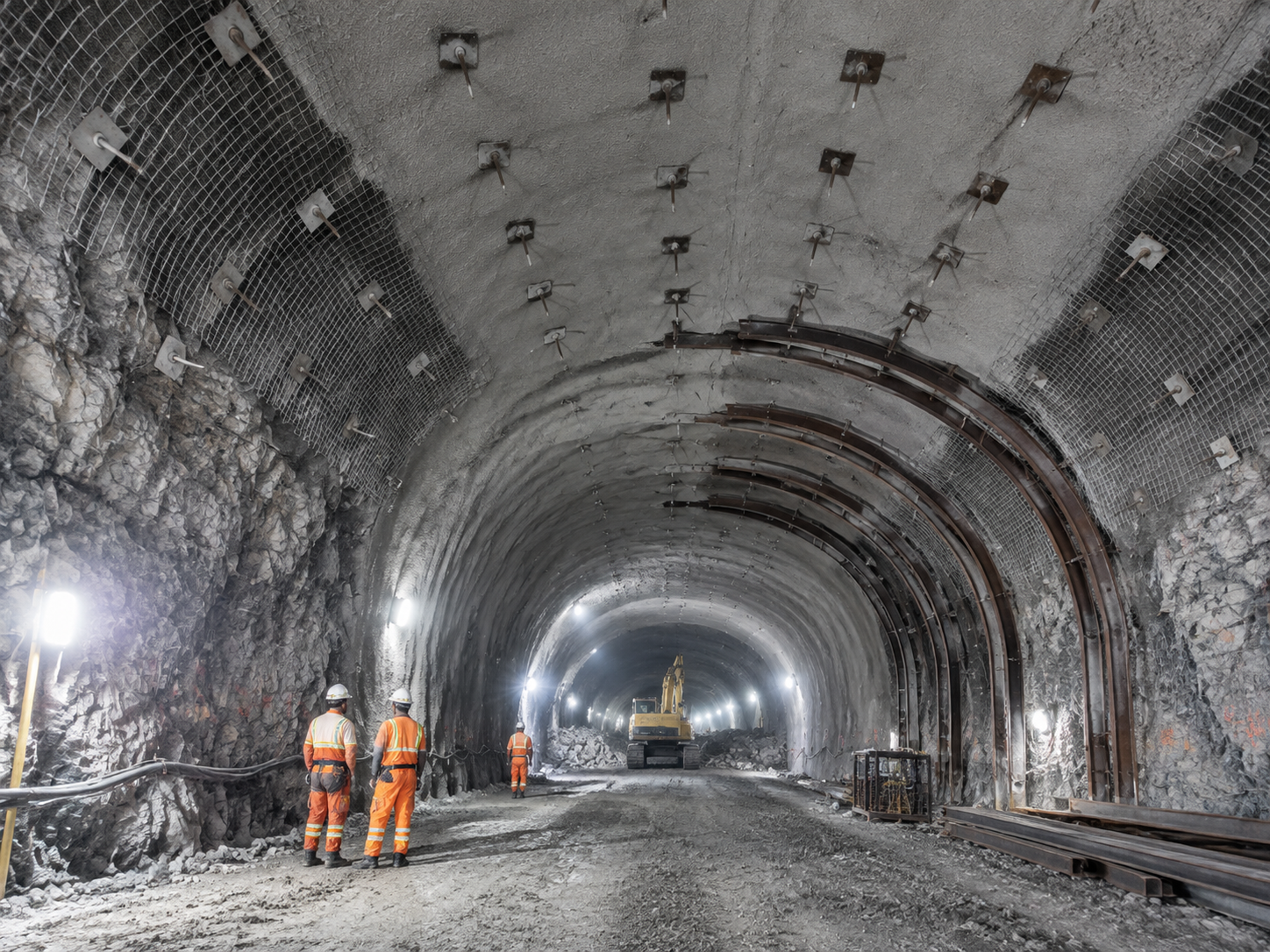
Effective tunnel support protects personnel and equipment while maintaining the long-term serviceability of an underground opening. It helps control rockfall, limit convergence, stabilize the tunnel face, manage deterioration caused by groundwater, and preserve the load-bearing capacity of the surrounding ground.
For underground mine support systems and civil tunnelling projects, selection should consider rock mass quality, expected deformation, in-situ stress, water conditions, excavation span, construction method, and required service life. Common methods include shotcrete support, metal mesh support, steel arch support, and rock bolts support. In many projects, these methods form a combined tunnel ground support system.
How to Choose the Right Tunnel Support Method?
Selecting the right tunnel support method should begin with actual ground conditions, not with a preferred product. Engineers should assess rock mass quality and structure, joint orientation, fault zones, groundwater, excavation span, in-situ stress, expected deformation, and the required service life of the opening. Competent rock with limited discontinuities may require a lighter combination of rock bolts support and shotcrete support. Fractured rock, weak ground, squeezing ground, or water-bearing formations may require a stronger tunnel ground support system incorporating metal mesh support, steel arch support, and self-drilling anchors.
The construction method also affects support selection. Conventional rock bolts can be suitable when the borehole remains stable throughout drilling, bar installation, and rock bolt grouting. Where borehole collapse, water ingress, or unstable ground makes this sequence unreliable, a self-drilling anchor bolt system can combine drilling, anchoring, and grouting in one operation. Its component and connection principles are explained in Hollow Threaded Bars: How They Work in Self-Drilling Anchor Systems. The final underground mining ground support or tunnel support design should therefore balance geological risk, installation equipment, working space, support capacity, and inspection requirements rather than treating different rock bolt types as interchangeable products.
Shotcrete Support
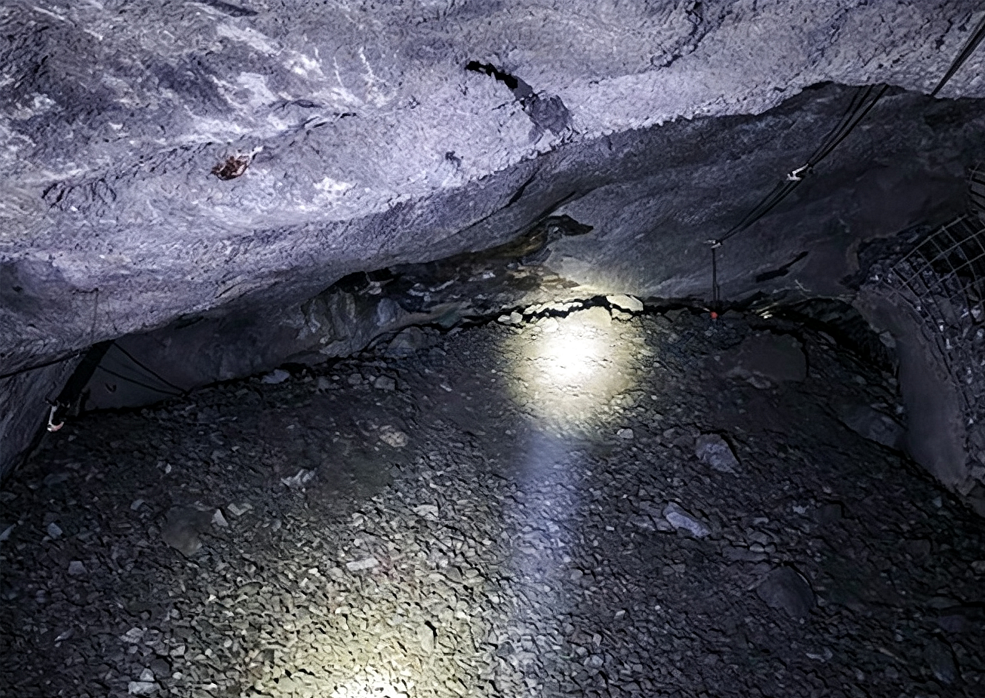
Shotcrete support is a sprayed concrete layer applied directly to an excavated rock or soil surface. It provides early surface confinement, bonds loose fragments, and reduces weathering or progressive raveling after excavation. In tunnel projects, early-strength shotcrete is often applied shortly after blasting or mechanical excavation to form an initial protective layer.
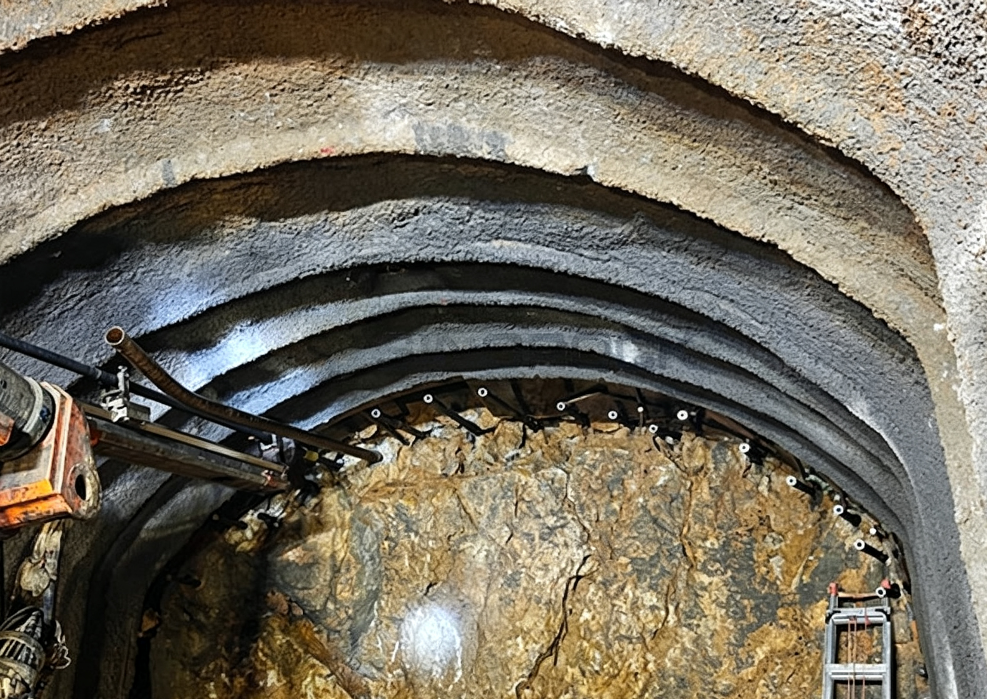
The principal role of shotcrete support is surface retention and confinement. It may not reinforce deep unstable zones within the rock mass, so it is frequently combined with rock bolt systems, metal mesh support, or steel arch support. Shotcrete thickness, steel reinforcement or fibre reinforcement, curing conditions, and installation quality should follow the project design rather than a universal rule.
In weak or fractured ground, reliable shotcrete support depends on proper surface preparation, rebound control, adequate early strength, drainage management, and suitable interface conditions. Where groundwater is present, uncontrolled seepage can reduce bonding quality and affect the overall tunnel support system.
Metal Mesh Support
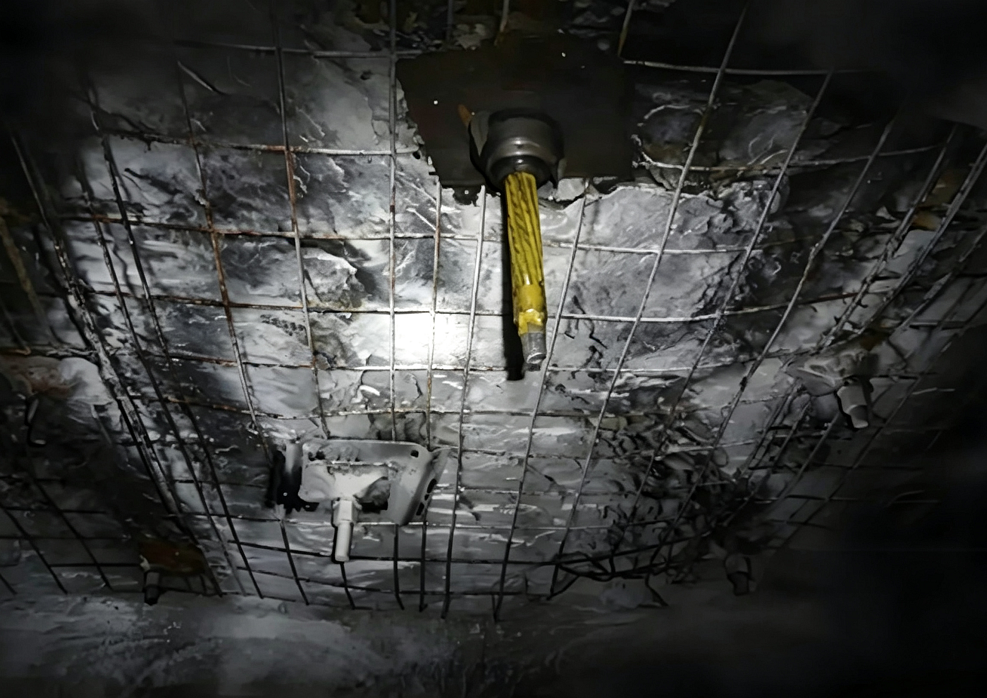
Metal mesh support retains small loose rock fragments and provides local confinement between reinforcement points. It is commonly placed against the excavation surface and secured with rock bolts, bearing plates, or other fixing components. The mesh helps prevent small blocks from falling between bolt locations and can reinforce a shotcrete support layer.
In underground mines and tunnels, metal mesh support is especially relevant for blocky, highly jointed, weathered, or ravelling rock surfaces. Mesh alone is usually a surface-control measure rather than a complete ground support system. Its effectiveness depends on overlap, fastening quality, contact with the rock surface, and compatibility with the rock bolt pattern.
When used with shotcrete, metal mesh can improve crack control and distribute local loads. When used with rock bolts, it helps transform individual reinforcement points into a more continuous surface-support arrangement. This combination is common in underground mining ground support, particularly in headings where local rockfall risk must be controlled before permanent support is completed.
Steel Arch Support
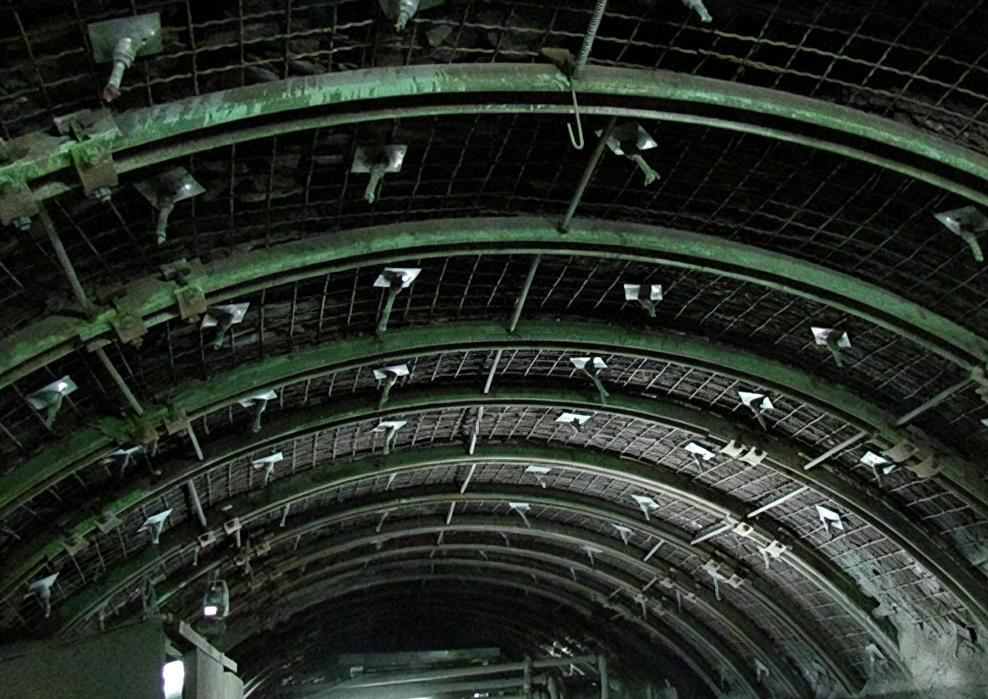
Steel arch support provides structural resistance where excavation loads, ground deformation, or weak conditions exceed the capacity of ordinary surface support and standard reinforcement. Steel ribs, lattice girders, or shaped steel sets can carry load around the tunnel profile and reduce excessive convergence.
This form of tunnel support is often considered in weak ground, fault zones, squeezing ground, large-span openings, or areas with poor stand-up time. It can also be installed together with shotcrete support, with sprayed concrete filling the space between steel members and the surrounding ground to form composite support action.
Unlike a single rock bolt, steel arch support has a direct structural role at the excavation boundary. It should still be integrated with drainage, surface protection, monitoring, and, where required, rock bolts or combination rock bolts. Poor contact, insufficient backfilling, incorrect spacing, or uncontrolled deformation can reduce the intended performance of the steel support system.
Rock Bolts Support
Rock bolts support reinforces the surrounding rock mass by connecting potentially unstable outer zones to more competent ground or by creating confinement across joints, bedding planes, and fractures. A properly designed rock bolt system can provide active or passive reinforcement depending on the anchoring mechanism, tensioning requirement, and installation sequence.
For users searching rock bolt mining, rock bolt in tunnel, or rock bolt types, the essential point is that a rock bolt is not one universal product. The correct system depends on geology, load demand, water conditions, installation equipment, and project acceptance requirements. Different mining ground support products can be reviewed through the CQ Rockbolt product center.
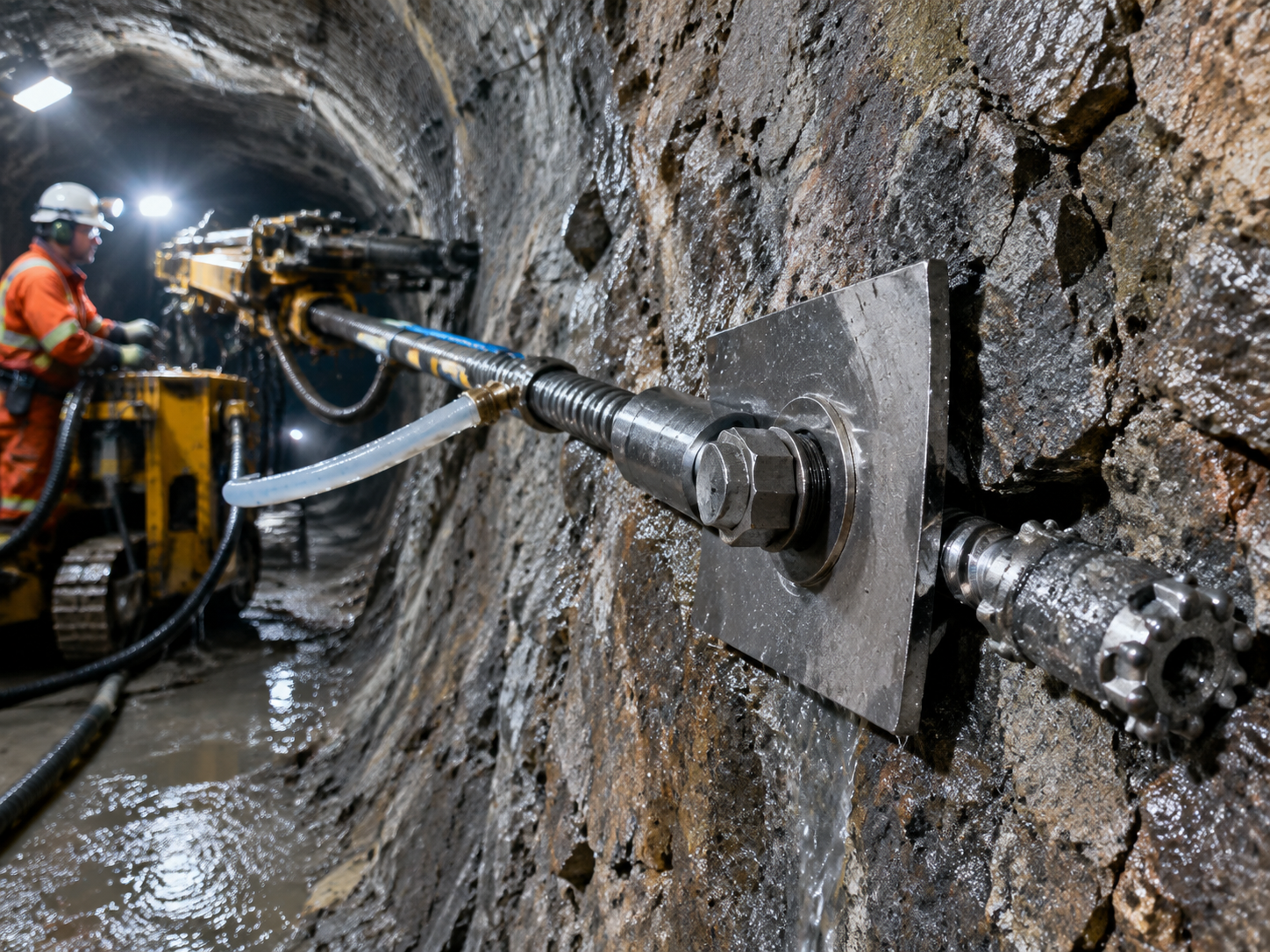
Ensuring Safety in Unstable Rock Conditions
In fractured rock, weak ground, or areas with local rockfall risk, rock bolts support improves stability by limiting separation and movement along discontinuities. Bolt pattern, length, spacing, installation angle, bearing plate arrangement, and anchoring mechanism should be determined by the support design and observed rock mass conditions.
In complex geology, self-drilling anchors for tunnelling can be valuable because drilling, anchoring, and grouting are integrated into one process. A self-drilling rock bolt uses a hollow threaded bar and sacrificial drill bit; after installation, the hollow bar can provide the grout path. This approach is particularly useful when a conventional borehole may collapse, close, hold water, or become unstable before bar installation.
However, a self drilling anchor bolt tunneling solution is not the default answer for every tunnel. Its selection should be based on borehole stability, rock mass condition, drilling capacity, grout delivery, required load capacity, and compatibility among couplers, drill bits, nuts, bearing plates, and other system components.
Support in Conjunction with Shotcrete
The combination of rock bolts support and shotcrete support is one of the most common forms of tunnel ground support. Rock bolts reinforce the rock internally, while shotcrete controls the excavation surface and retains smaller loose fragments. Metal mesh support can be added where the surface is especially blocky or where the sprayed concrete layer needs reinforcement.
Compared with a single support method, this combination can improve tunnel face stabilization, reduce local rockfall risk, and control ground deformation more effectively. Its performance depends on construction sequence: loose material must be removed safely, the rock surface assessed, bolts installed to the approved design, and shotcrete applied under controlled conditions.
A reliable rock bolt installation procedure includes verifying borehole position, drilling direction, bolt type, anchoring or rock bolt grouting method, bearing plates, nuts, tensioning requirements, and quality records. Installation quality is part of the ground support system, not a secondary site activity.
Types of Rock Bolts
Common rock bolt types include mechanical anchor bolts, resin anchors, fully grouted rock bolts, friction bolts, cable bolts, and self-drilling rock bolts. Each system uses a different load-transfer mechanism and installation method.
A mechanical rock bolt can provide rapid support where an anchor shell or expansion mechanism engages competent rock. Resin anchors use resin cartridges to bond the bar within the borehole, while grouted rock bolts rely on cementitious grout to transfer load between the bar, grout body, and surrounding ground. Friction bolts develop support through contact and friction with the borehole wall, while steel strand anchor cables are typically used for deeper or longer reinforcement requirements.
The distinction between rock bolt vs rock anchor should be considered carefully. In some projects, the terms overlap; however, post-tensioned anchors, cable anchor systems, and conventional tunnel rock bolts can have different design, testing, locking, and installation requirements. The project specification should define the system before construction begins.
Improved Tunnel Durability
Long-term tunnel support performance depends on more than initial load capacity. Groundwater, corrosion, ground movement, incomplete grout coverage, thread damage, poor bearing plate contact, and undocumented installation changes can all reduce durability. For this reason, rock bolt grouting, corrosion protection, drainage, inspection, and verification are essential parts of a complete ground support system.
Quality control can include torque checks, grouting records, bolt identification, installation logs, and rock bolt pull out test procedures where required by the design. For multi-section bar systems, connection components must also match the selected bar system; see the precision rolled rebar coupler. These checks help confirm that the installed rock bolts support arrangement matches the approved design and remains suitable for changing rock mass conditions.
Key Considerations for Tunnel Support Design, Installation, and Monitoring
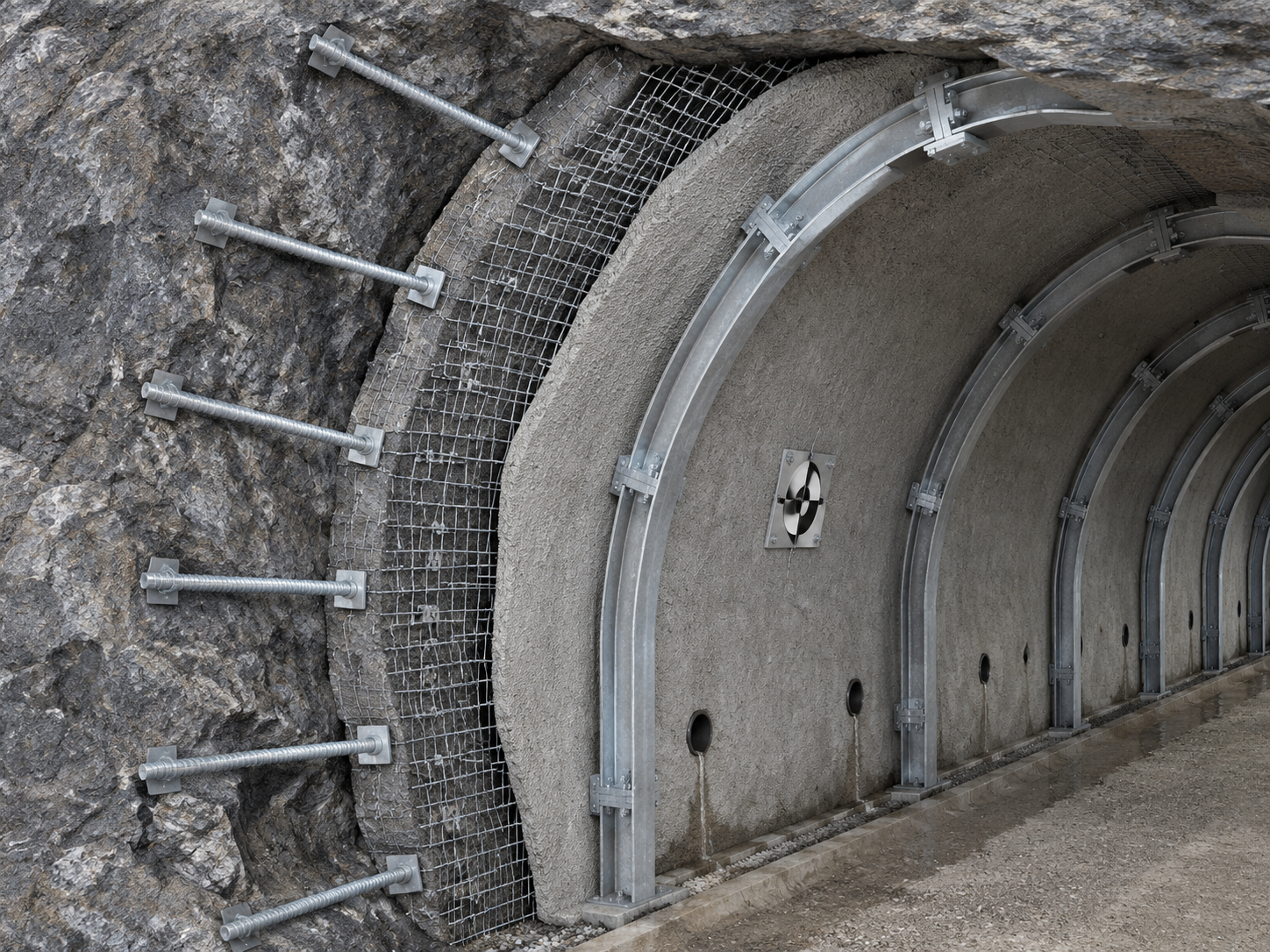
A reliable tunnel support design must be implemented through controlled installation and field verification. During every rock bolt installation procedure, crews should confirm the bolt type, borehole position, drilling angle, specified length, anchoring method, bearing plates, nuts, and required rock bolt grouting sequence. Hollow bars, drill bits, couplers, plates, and grout connections must be compatible; incomplete or mismatched components can weaken load transfer and reduce the intended performance of the ground support system.
Quality control should continue after installation. Depending on project requirements, this may include installation records, torque checks, grout logs, rock bolt pull out tests, and inspection of shotcrete support, metal mesh support, and steel arch support. In areas where ground conditions change, tunnel convergence monitoring, deformation measurement, groundwater observation, and regular inspection help determine whether the installed tunnel support remains effective. Monitoring does not replace design or construction control, but it provides the evidence needed for early action when actual rock mass behaviour differs from original assumptions.
Conclusion
The four principal tunnel support methods have different but complementary functions. Shotcrete support protects and confines the excavation surface; metal mesh support retains loose fragments; steel arch support provides structural capacity under demanding conditions; and rock bolts support reinforces the surrounding rock mass.
For tunnel projects and underground mining ground support, the most reliable solution is usually a designed combination of these methods. Support selection should be based on geology, deformation risk, groundwater, construction sequence, and verification requirements. Whether a project uses conventional rock bolts, grouted rock bolts, or self-drilling rock bolts, the goal remains the same: to provide stable, durable, and verifiable support for safe underground excavation. For project-specific conditions, product specifications, or technical assistance, contact CQ Rockbolt.
Related News
Other news you might be interested in

Coal Mine Roadway Support Systems: How Rock Bolts, W-Straps, Mesh and Cable Bolts Work Together
Coal mine roadways are essential to safe, continuous underground operations. Their stability can be affected by changing geological conditions, mining-induced stress and excavation activity. As ground-control research increasingly focuses on the overall coordination and monitoring of support systems, rock bolts, W-straps, mesh and cable bolts should not be viewed as isolated components, but as elements that work together under site-specific mine conditions. This article explores their complementary roles in coal mine roadway support, while recognizing that support designs must be based on the conditions of each mine.

Five Major Advantages of Self-Drilling Anchors in Engineering Applications
In weak ground, fractured rock, loose soil, or rock masses with numerous joints, boreholes may narrow, shed material, or collapse. This can make it difficult to insert the anchor bar and may also affect subsequent grouting. Groundwater and changing strata add further uncertainty to construction.
Want to know more?
Get in touch with us for more information about our services and products.