

Five Major Advantages of Self-Drilling Anchors in Engineering Applications

Dayang Yang
AuthorWith over 15 years of experience in the production and sales of ground anchoring and mining support products, we operate our own rock bolt and accessory manufacturing facility with stable large-scale production capacity. We are specialists in rock bolts, resin cartridges, anchor cables, bearing plates, and customized ground anchoring products for mining support and geotechnical anchoring solutions.
Why Are Self-Drilling Anchoring Systems Needed in Tunneling and Geotechnical Engineering?
Construction Challenges in Weak, Fractured, and Collapse-Prone Ground
In weak ground, fractured rock, loose soil, or rock masses with numerous joints, boreholes may narrow, shed material, or collapse. This can make it difficult to insert the anchor bar and may also affect subsequent grouting. Groundwater and changing strata add further uncertainty to construction.
Application Conditions and Construction Limitations of Conventional Pre-Drilled Anchors
With conventional pre-drilled anchoring, the hole is drilled first, then the bar is inserted and grouted. This method can be straightforward to organize where the ground can maintain a stable borehole and equipment and workspace are adequate. If the hole is unstable, however, temporary casing, cleaning, or other treatment may be needed, adding demands on construction sequencing.
The Basic Construction Process of Self-Drilling Anchors: Coordinating Drilling, Installation, and Grouting
A self-drilling anchor typically uses a hollow bar connected to a drill bit. During drilling, flushing media or grout is conveyed through the bar, coordinating drilling, bar advancement, and grouting. The exact procedure varies with the system, ground conditions, grout, and equipment; methods used on different projects should not be assumed to be identical. CQ Rockbolt guidance on hollow-bar soil nails also describes the coordinated drilling-and-grouting process and the need for specific design and construction considerations.
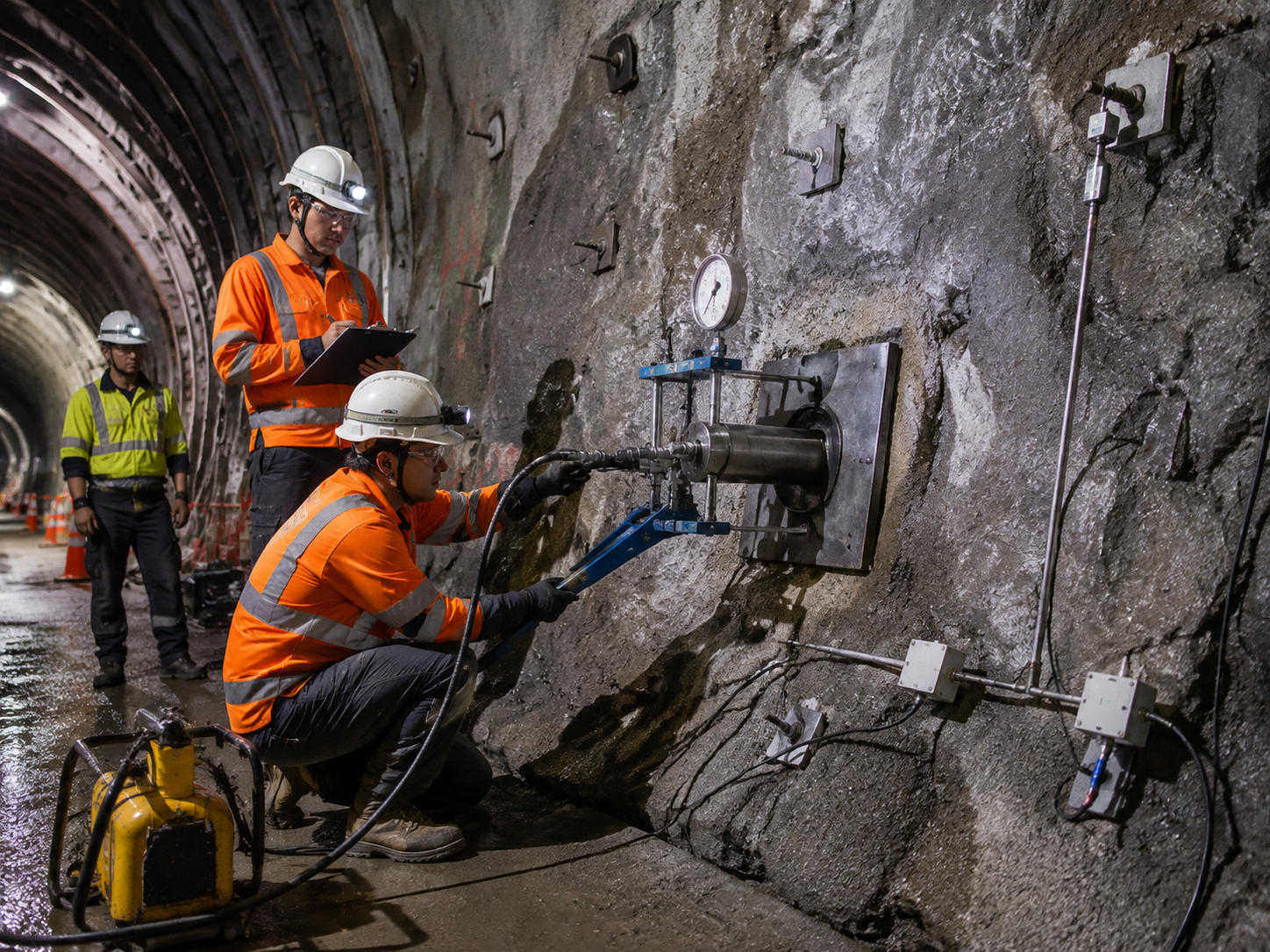
Self-Drilling Anchors Are Not Suitable for Every Ground Condition: Prerequisites for Engineering Selection
A project solution should be selected only after assessing geological conditions, support objectives, design loads, groundwater, durability requirements, and available construction equipment, then comparing self-drilling anchors with other options. Where the ground is stable and pre-drilling is well established—or where the project has specific anchoring or corrosion-protection requirements—another support method may be more appropriate.
Advantage One: Reducing Drilling and Installation Risks in Collapse-Prone Ground
Borehole Stability Issues in Loose Soil, Fractured Rock, and Weathered Rock
Where a borehole cannot remain stable, completing the drilling first and inserting the bar afterward may lead to borehole collapse or blockage. These are among the issues engineers often consider when searching for ground support in weak rock and support solutions for fractured ground.
How Advancing the Anchor During Drilling Can Reduce the Need for Separate Borehole Operations
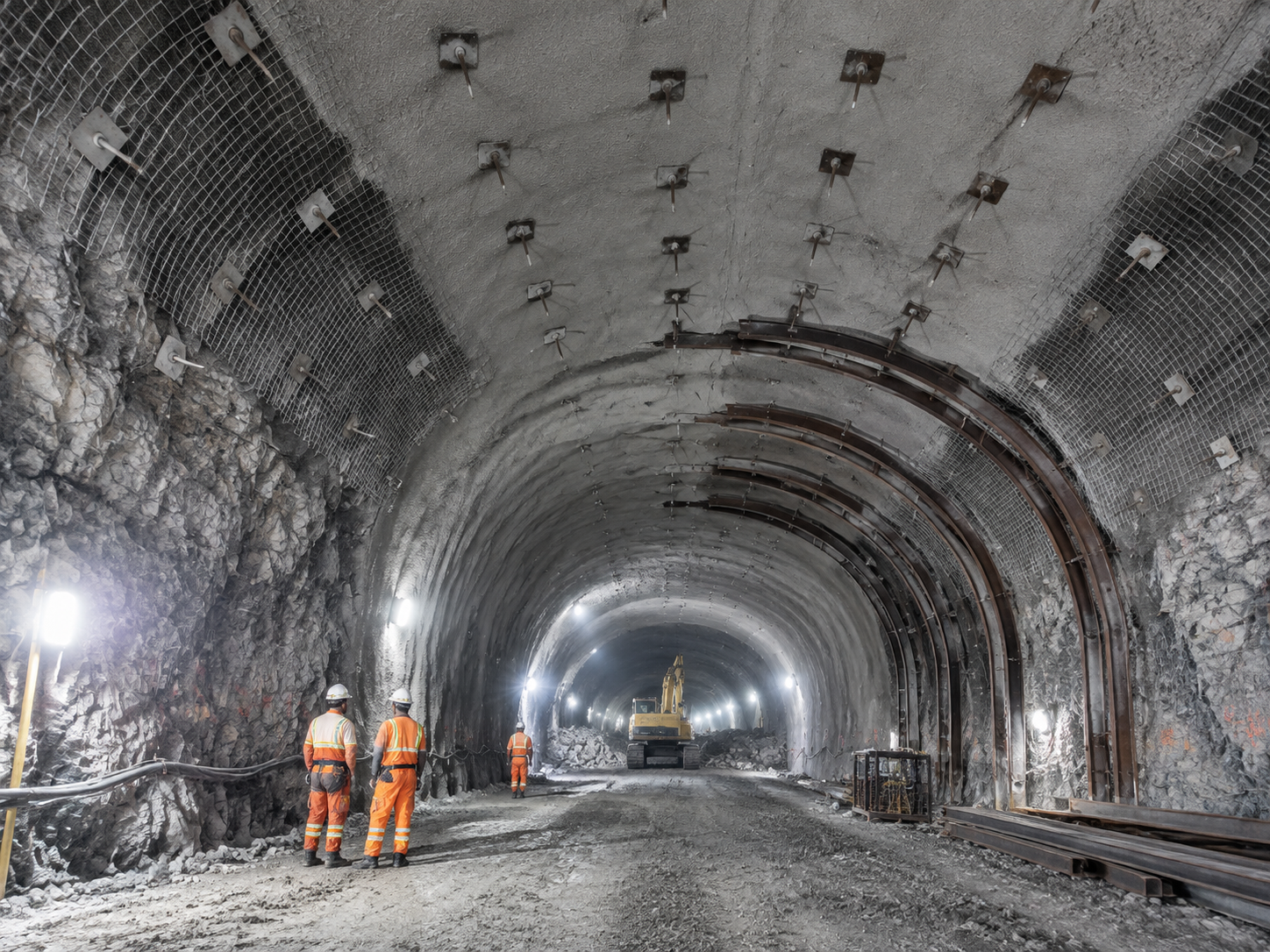
In some collapse-prone ground, a self-drilling system allows the bar to advance with the drill bit while grouting takes place during construction. This can reduce the time the borehole is exposed between drilling and bar insertion. CQ Rockbolt guidance notes that, in soils prone to collapse, simultaneous grouting in hollow-bar soil nail systems can help maintain borehole stability. The actual result still depends on ground conditions, construction parameters, and grout return.
Comparing Self-Drilling Anchors with Pre-Drilled Systems: Ground Conditions, Construction Planning, and Site Constraints
The choice of a self-drilling anchor should not be based solely on the number of construction steps. Borehole stability, equipment access, drilling efficiency, grouting quality, and the availability of site testing should also be assessed. In stable ground, pre-drilling may be more economical or easier to control; in ground where drilling is difficult, the project can evaluate whether a self-drilling approach reduces construction risk.
Other Factors to Assess: Groundwater, Obstructions, Drill Bits, and Changes in Ground Conditions
Groundwater, water inflow, boulders, interbedded layers, drill-bit wear, and grout loss may all affect construction. If grout return becomes abnormal, drilling speed changes sharply, or torque varies, the conditions should be recorded and assessed in accordance with the project method statement. The fact that the bar has been drilled into place is not, by itself, proof of anchorage quality.
Advantage Two: Reducing Process Changes and Improving Construction Continuity in Complex Conditions
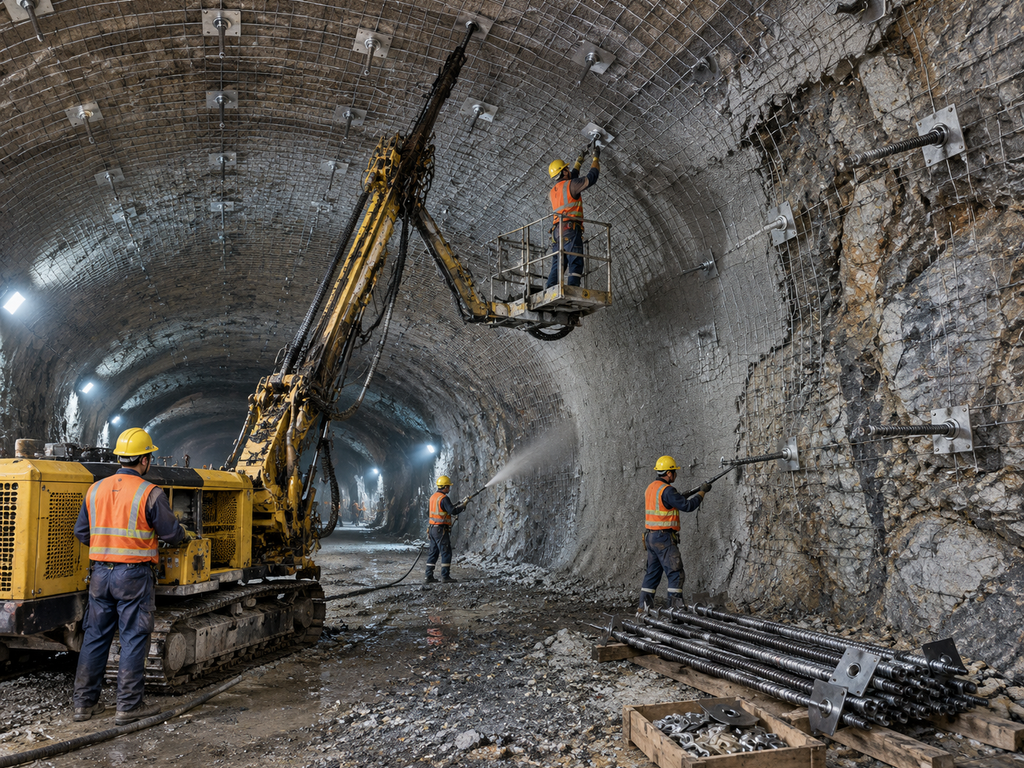
Coordinating Drilling, Anchor Installation, and Grouting
In a conventional sequence, drilling, hole cleaning, bar insertion, and grouting are generally coordinated as separate steps. A self-drilling system can combine some of these operations. This may reduce process changes, but it does not eliminate the need for setting-out, parameter control, grouting checks, or acceptance testing.
Construction-Planning Benefits in Restricted Work Areas, Tunnel Faces, and Rapid-Support Operations
In restricted work areas such as tunnel faces, underground caverns, and mine roadways, construction continuity and equipment layout can be important considerations. Whether the system improves overall site efficiency also depends on drill-rig compatibility, material supply, work-area organization, and ground response.
Effects on Construction Pace, Equipment Selection, and Waiting Time Between Operations
Combining operations may reduce waiting and repeated equipment positioning, but project duration should not be estimated based only on the drilling time for one anchor. Drilling, bar connections, grouting, surface support, inspection, and equipment relocation should all be included in the overall construction sequence.
Site Conditions That Determine Whether the Schedule Can Be Improved
Construction efficiency is influenced by ground conditions, drilling length, grout preparation and delivery, equipment maintenance, and operator experience. CQ Rockbolt identifies fewer installation steps as one potential construction benefit of hollow-bar soil nails, while also noting that their installation and corrosion protection require specific consideration.
Advantage Three: Improving Interaction Between the Anchorage Body and Surrounding Ground Through Grouting
The Role of Grouting in Anchorage, Void Filling, and Ground Improvement
Grout can fill the space between the bar and the borehole wall and transfer loads through the bond between the bar, grout, and ground. Actual load capacity depends on anchorage length, ground properties, grout performance, and construction quality; grouting alone does not establish that the required anchorage performance has been achieved.
How a Hollow Bar Provides a Pathway for Flushing Media and Grout
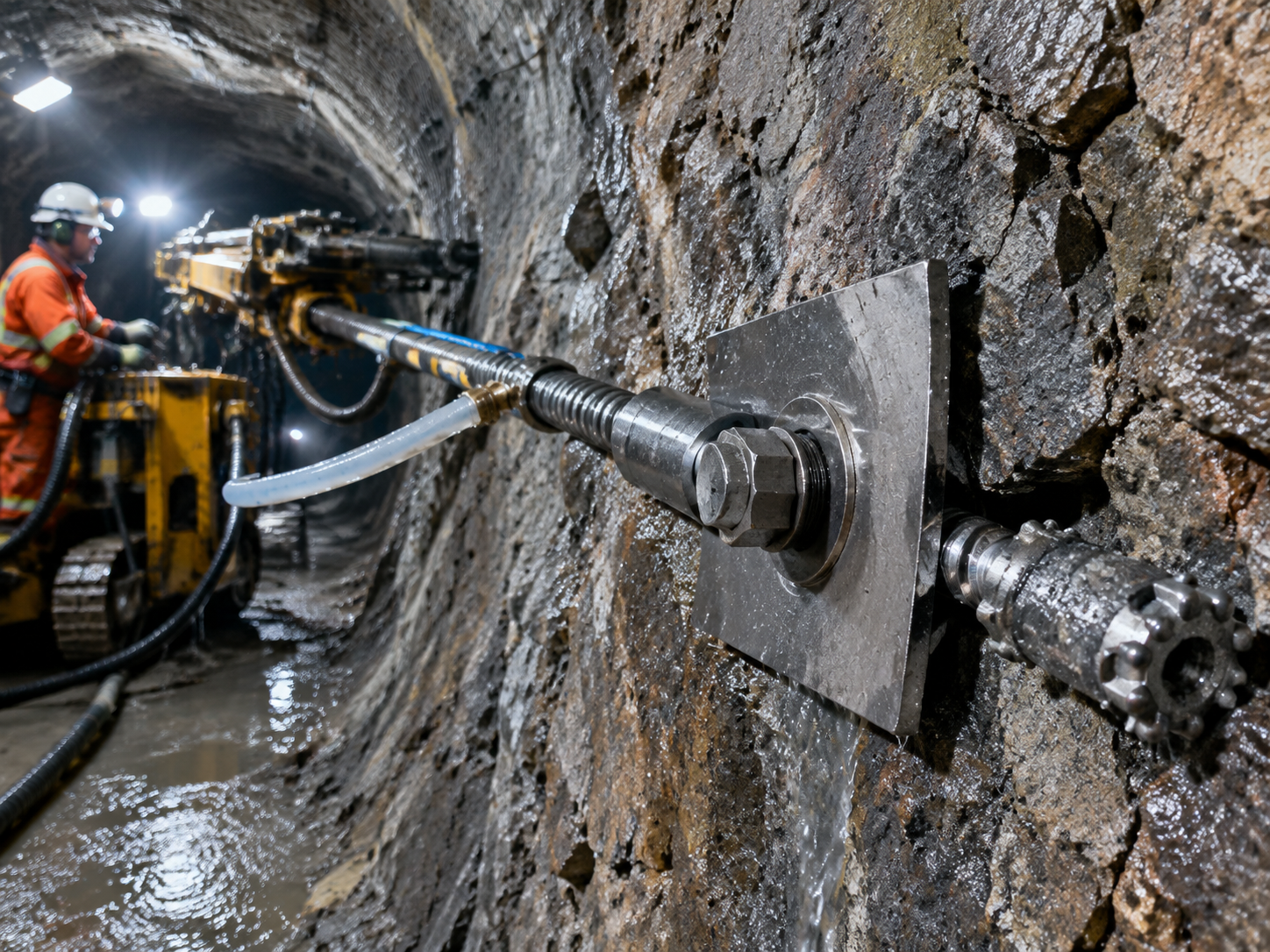
A hollow bar can act as a conduit for drilling media or grout. Grout is typically conveyed through the bar toward the drill bit and into the borehole. The condition of the flow path, compatibility of the bit outlet, and grout return all affect construction control.
How Grouting Pressure, Grout Properties, and Ground Permeability Affect Construction
Grouting pressure, grout water-cement ratio, setting properties, ground permeability, and the presence of fractures can all affect grout spread and the formation of the anchorage body. If pressure becomes excessive, grout is lost, or returns are abnormal, the condition should be assessed against the design and construction requirements. “Grouting completed” should not automatically be interpreted as “design anchorage performance achieved.”
How to Avoid Assuming That “Grouting Completed” Means “Design Support Performance Achieved”
Construction records should be assessed together with grout volume, pressure, return condition, bar installation length, and any required site tests. For critical projects, pull-out tests or other quality checks should be carried out as required by the design.
Advantage Four: Supporting a Range of Tunneling, Underground Engineering, and Slope-Stabilization Applications
Tunnel-Face Reinforcement and Forepoling in Weak Ground
Under specific designs, self-drilling anchors can be used for local reinforcement or forepoling in weak or fractured ground. For tunnel face stabilization, the design should account for the ground’s stand-up time, excavation advance, groundwater, and timing of support. Anchors should not be treated as a complete tunnel-face stabilization solution on their own.
Initial Tunnel Support and Rock-Mass Reinforcement
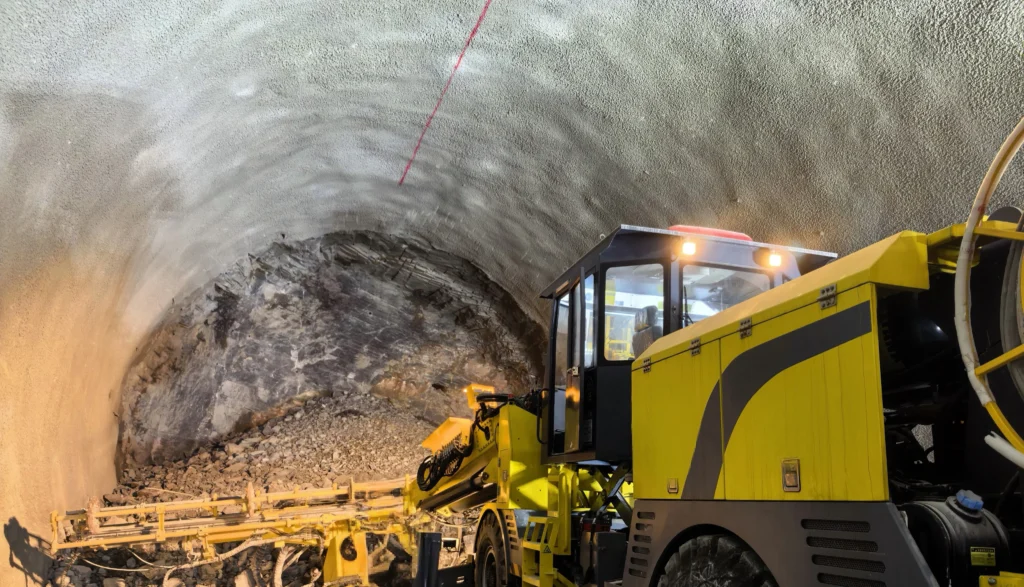
In tunneling, the anchoring system should be considered together with shotcrete, mesh, and steel sets, as well as monitoring measures. The function of the system should be determined based on the rock-mass structure, load-transfer path, and deformation-control objectives.
Support for Underground Mine Roadways and Caverns
An underground mine support system is generally designed in response to roof and rock-mass conditions, the stress environment, excavation geometry, and required service life. Self-drilling anchors may be one of the components considered, but should be assessed alongside other rock reinforcement and surface-support measures.
Applications in Slopes, Excavations, and Other Geotechnical Projects
In slope stabilization, excavation support, and ground improvement projects, hollow-bar systems may also be used where drilling and grouting need to be coordinated. CQ Rockbolt material focuses primarily on hollow-bar soil nails in applications such as soil-nailed walls; that guidance should not be treated as a substitute for project-specific design for tunnels or mines.
Design Objectives and Acceptance Requirements Differ Across Applications
Load mechanisms, deformation control, design life, and acceptance requirements differ between slopes, excavations, tunnels, and mines. The same type of bar may require different lengths, layouts, grouting procedures, and corrosion-protection measures in different projects.
Advantage Five: Modular Components Support Project-Specific Configuration and Quality Management
Coordination of Bars, Drill Bits, Couplers, Bearing Plates, and Nuts
A typical system may include a hollow bar, drill bit, couplers, bearing plate, and nut. Compatibility between components affects drilling, connection, load transfer, and installation quality, so the system should be checked against its design and manufacturing specifications.
Configuring Components Based on Anchorage Length, Load Requirements, and Construction Equipment
Configuration should account for design length, axial load, drilling-rig capacity, ground conditions, connection method, and whether sectional connections are required. Selection should be based on the engineering design rather than product-catalogue data alone.
Recording Grout Volume, Pressure, Drilling Parameters, and Installation Details
Recommended records include drilling depth, drilling parameters, grouting pressure and volume, grout returns, and connection locations, as well as how any abnormalities were addressed. These records support construction traceability and can inform subsequent monitoring and inspection.
The Role of Pull-Out Tests, Site Inspections, and Quality Acceptance
Pull-out tests, site inspections, and quality acceptance should be carried out in accordance with the project design and applicable requirements to verify that the construction method and anchorage performance meet the specified criteria. The CQ Rockbolt soil nail manual also identifies verification testing, construction inspection, and corrosion protection as important considerations.
Limitations of Self-Drilling Anchors: When Should Other Support Methods Be Compared?
Comparing Self-Drilling Anchors with Pre-Drilled Grouted Anchors, Friction Bolts, and Resin Bolts
Self-drilling anchors, pre-drilled grouted anchors, friction bolts, and resin bolts have different construction mechanisms and application conditions. They should be compared based on ground conditions, load requirements, constructability, quality control, and durability—not simply ranked by product category.
How Ground Conditions, Loads, Groundwater, and Durability Affect Method Selection
Rock-mass strength, degree of fracturing, groundwater, corrosive exposure, and design loads and service life all affect method selection. In environments with a corrosion risk, the corrosion-protection system and its installation and inspection should be included in the design.
Cost Evaluation Should Not Be Based on the Price of a Single Anchor
Project costs also include drilling and grouting equipment, consumption of drill bits and couplers, labor, inspection, rework risk, and durability-related maintenance. Cost comparisons are meaningful only when they use the same design objectives and project conditions.
Key Parameters That Need to Be Verified Through Design, Construction, and Monitoring
Key parameters include anchorage length, bar strength, grout-to-ground bond, grouting quality, support spacing, and allowable deformation. These should be verified through design, construction, and monitoring, with any adjustments made in accordance with the project procedures and site feedback.
Selection and Construction Checks for Engineering Applications
Define the Geological Conditions and Support Objectives
Before selection, review the geotechnical investigation, rock-mass classification, groundwater, construction geometry, loads, and deformation-control objectives. In complex ground, also identify potential failure modes and any required supplementary support.
Check Bar Specifications, Connection Methods, Drill Bits, and Compatible Equipment
Use the design to check the bar specifications, drill-bit type, couplers, bearing components, grouting equipment, and available workspace, making sure that all parts of the system are compatible.
Establish Control Requirements for Drilling, Flushing, Grouting, and Installation
The construction method statement should define drilling parameters, flushing method, grouting sequence and pressure, grout mix, and procedures for abnormal conditions, along with record-keeping requirements. Site work should follow the project’s approved design documents, construction plan, and applicable requirements.
Establish Site Testing, Acceptance, and Long-Term Monitoring
Depending on the project, arrange test anchors, pull-out testing, construction acceptance, and ground monitoring. Support performance should be assessed using construction data and the engineering response—not simply the number of installed bars or their appearance.
Conclusion: Translating the Advantages of Self-Drilling Anchors into Reliable Engineering Support
The value of self-drilling anchors lies mainly in their adaptability to collapse-prone ground, coordination of drilling and grouting, improved process continuity, use across different engineering settings, and support for quality management. These advantages depend on appropriate design, system compatibility, construction control, and site verification. For engineering questions such as rock bolt installation, rock bolt types, or underground mine support systems, the final solution should still be determined by the actual ground conditions and support objectives.
Related News
Other news you might be interested in

Coal Mine Roadway Support Systems: How Rock Bolts, W-Straps, Mesh and Cable Bolts Work Together
Coal mine roadways are essential to safe, continuous underground operations. Their stability can be affected by changing geological conditions, mining-induced stress and excavation activity. As ground-control research increasingly focuses on the overall coordination and monitoring of support systems, rock bolts, W-straps, mesh and cable bolts should not be viewed as isolated components, but as elements that work together under site-specific mine conditions. This article explores their complementary roles in coal mine roadway support, while recognizing that support designs must be based on the conditions of each mine.

What Is the Difference Between Rock Bolts and Cable Bolts, and When Is Each Used in Mining?
In underground mining, excavating a roadway or stope may cause the surrounding rock mass to loosen, separate, or deform. Both rock bolts and cable bolts can be used for ground support, but they differ in construction, load transfer, and engineering role. The key is not simply to ask “which one is stronger,” but to consider the extent of the rock that needs to be controlled, the available anchorage locations, and the conditions at the worksite.
Want to know more?
Get in touch with us for more information about our services and products.