

Rock Bolt Overview: Working Principle, Types, and Applications

Dayang Yang
AuthorWith over 15 years of experience in the production and sales of ground anchoring and mining support products, we operate our own rock bolt and accessory manufacturing facility with stable large-scale production capacity. We are specialists in rock bolts, resin cartridges, anchor cables, bearing plates, and customized ground anchoring products for mining support and geotechnical anchoring solutions.
In rock excavation and underground construction, instability often begins before any visible collapse occurs. Joints, fractures, bedding planes, groundwater, blasting vibration, or stress redistribution can weaken the rock mass and create risks for workers, equipment, and nearby structures.
In these conditions, rock bolting is often considered as a ground support method. But what exactly are rock bolts? What types are available? And how do rock bolts work to stabilize fractured rock, control deformation, and improve safety?
This article provides a practical overview of rock bolts, from basic working principles and common types to installation methods, materials,
corrosion protection, and applications in tunnels, mines, slopes, excavations, and infrastructure projects. For engineers, contractors, and procurement teams, this is essential background knowledge for understanding how rock bolting systems are selected and used in geotechnical projects.
What is a Rock Bolt? How does it work?
A rock bolt is a steel bar, threaded bar, hollow bar, or cable installed into a drilled hole in a rock mass to improve ground stability. It is commonly used in tunnels, mines, slopes, underground caverns, and excavation support works where fractured or loosened rock needs to be reinforced.
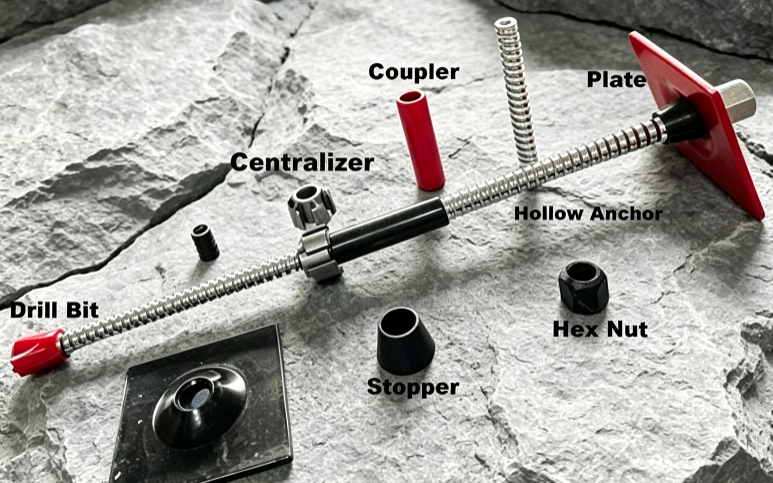
Basic Components of a Rock Bolt (Self-Drilling Anchor Bolt)
A typical rock bolt system includes the bolt body, an anchoring or bonding mechanism, a bearing plate, and a nut. Depending on the ground condition and project requirements, the bolt may be secured by a mechanical anchor, resin, cement grout, friction, or a self-drilling grouted system.
How do rock bolts work? And their advantages
Rock bolts work by crossing joints, fractures, bedding planes, or loosened zones and tying unstable rock back to more competent rock behind it. In tensioned systems, the plate and nut help apply clamping force to the rock surface. In fully grouted systems, load is transferred along the bolt through the grout-rock interface, helping the surrounding rock behave as a more stable reinforced mass.
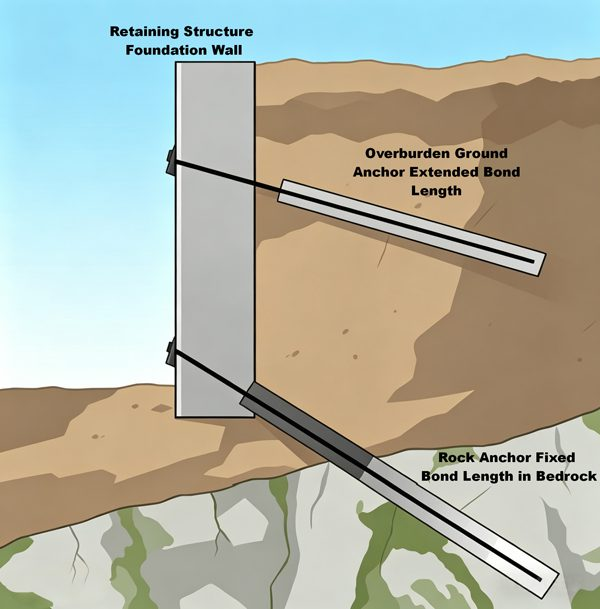
Diagram of a foundation wall stabilized with rock anchors extending into bedrock
The main advantage of rock bolting is that it reinforces the rock mass from within instead of only supporting it from the outside. This can reduce rockfall risk, limit deformation, improve excavation stability, and provide either temporary or long-term support depending on the bolt type, grout system, corrosion protection, and design requirements.
Common Types of Rock Bolts
Rock bolts are not a one-size-fits-all solution. Depending on the geological conditions, project requirements, and desired longevity, different types of rock bolts are used to achieve optimal ground support. Each category of rock bolt offers unique advantages, from rapid installation to enhanced corrosion resistance or adaptability in unstable ground.
The following table outlines the most common types of rock bolts, along with their key characteristics and typical applications:
| Category | Description | Examples |
|---|---|---|
| Grouted Rock Bolts | Installed using cement or resin grout to bond the bolt to the surrounding rock mass. Ideal for long-term support. | Grout-Anchored Rock Bolt, Dowel |
| Hollow and Self-Drilling Bolts | Feature a hollow core that allows simultaneous drilling and grouting. Ideal for unstable or soft ground. | Self-Drilling Rock Bolt, Hollow Rock Bolt |
| Mechanically Anchored Bolts | Use expansion shells or wedges to create a mechanical interlock within the rock. Suitable for immediate support. | Mechanically Anchored Rock Bolt |
| Friction-Anchored Bolts | Rely on continuous friction along the borehole for holding strength. Often used in mining and tunneling. | Friction Rock Bolt (e.g., Split Set, Swellex) |
| High-Tensile and Specialized Bolts | Designed for deep installations and high-load environments. Common in large-scale excavation projects. | Cable Bolts, MDX Bolt |
| Composite Rock Bolts | Made from fiber-reinforced polymers (FRP), offering corrosion resistance and non-conductive properties. | Fiber-Reinforced Polymer Composite Rock Bolt |
Common Rock Bolt Installation Methods
The three most widely used rock bolt installation techniques are mechanical anchoring and resin or grout anchoring. Each method offers specific advantages depending on the site’s geology and structural requirements.
1. Mechanical Anchoring
Mechanical anchoring, also known as point anchoring, is a widely used installation method that provides immediate support in rock reinforcement applications. This technique typically involves mechanical anchor bolts fitted with an expansion shell at one end.
During installation, a hole is drilled into the rock, and the bolt is inserted. Torque is then applied to expand the shell, pressing it firmly against the borehole walls to create a secure mechanical lock. Because the system offers instant load-bearing capacity, it’s especially useful when speed and early support are critical, such as during tunnelling operations or temporary excavation support.
Mechanical anchoring is best suited for hard, competent rock. In the softer or highly fractured ground, the expansion shell may not achieve a reliable grip, and long-term stability can be compromised, particularly in environments subject to vibration or dynamic loads.
2. Resin and Grout Anchoring
Resin and grout anchoring systems are commonly used to create a strong, full-length bond between the bolt and the surrounding rock, offering excellent long-term performance in challenging ground conditions. These anchoring methods are typically paired with rebar bolts, which are well-suited for fully bonded applications due to their ribbed surface and compatibility with bonding agents.
In resin anchoring, pre-packaged resin capsules are placed into the drill hole. As the rebar bolt is inserted and rotated, the capsules break and mix, allowing the resin to flow around the bolt and cure into a solid, load-transferring bond.
Grout anchoring follows a similar principle but uses cement-based grout. Depending on the method used, the grout can be pumped into the borehole before or after the bolt is placed. Once hardened, the grout forms a continuous bond along the bolt’s length, anchoring it securely.
Although resin and grout systems require more careful installation and longer curing times than mechanical anchors, they provide superior corrosion resistance, high load capacity, and reliable performance, especially in weak, fractured, or weathered rock masses.
3. One-Step Drilling and Grouting Anchoring
Simultaneous drilling and grouting is an efficient anchoring technique that combines the installation of the anchor with the injection of grout in a single, continuous operation. This method is especially effective in unstable or collapsing ground conditions, where it is crucial to stabilize the borehole immediately after drilling.
In this approach, hollow threaded bars are commonly used as the drill rod and the anchor. As drilling progresses, cementitious grout is continuously pumped through the hollow core of the bar, filling the annulus between the anchor and the surrounding ground. This real-time grouting process not only flushes out loose material but also ensures full encapsulation of the anchor as drilling advances.
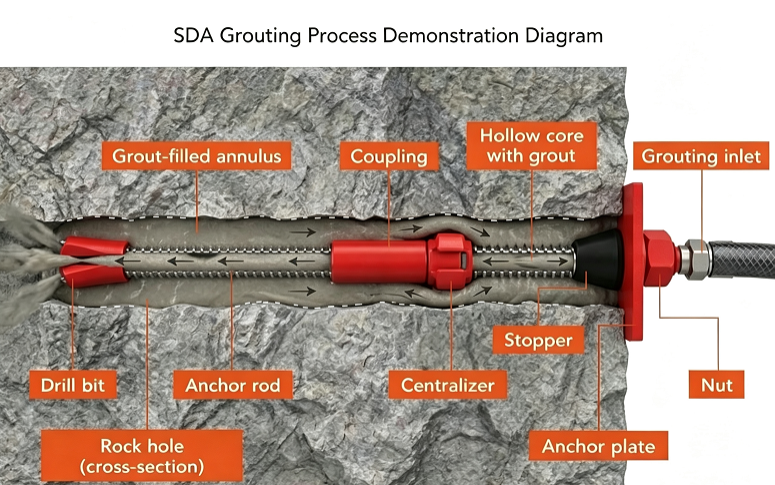
Self-Drilling Rock Bolts Grouting Process
Once installation is complete, the grout hardens to create a high-strength, corrosion-resistant bond along the entire length of the bar. This provides reliable load transfer and long-term ground support, even in fractured or water-bearing rock formations.
While this method requires specialized equipment and a controlled pumping rate, it offers significant advantages, minimizing installation time, enhancing bond quality, and reducing the risk of borehole collapse. Simultaneous drilling and grouting is a trusted solution in tunneling, slope stabilization, and foundation reinforcement projects where ground conditions are challenging and consistent anchorage is critical.
Rock Bolt Materials
The most widely used material for rock bolts is carbon steel, known for its strength and cost-effectiveness. Standard steel bolts are ideal for most applications where high load capacity is needed, and environmental exposure is minimal. However, plain steel may corrode quickly in aggressive environments, compromising structural integrity.
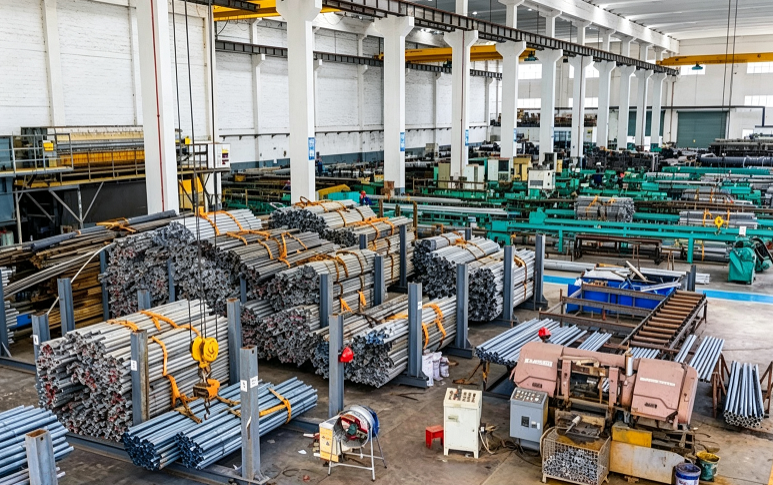
Rock bolt material – CQ ROCKBOLT factory
In contrast, stainless steel bolts are highly corrosion-resistant and offer superior performance in wet, chemically aggressive, or coastal environments. While the upfront cost is significantly higher than carbon steel, stainless bolts are preferred for permanent installations or locations where replacement would be challenging or dangerous.
Another alternative gaining popularity is fibreglass-reinforced polymer (FRP) rock bolts. Lightweight and corrosion-resistant, FRP bolts are non-conductive and ideal for electrified tunnels, nuclear facilities, and areas sensitive to magnetic interference. Though not as strong as steel in tensile load, their corrosion resistance and ease of handling make them suitable for niche applications.
Corrosion Protection Methods
No matter the material, corrosion is a major threat to the longevity of rock bolts, especially in environments with moisture, high salinity, or chemical exposure.
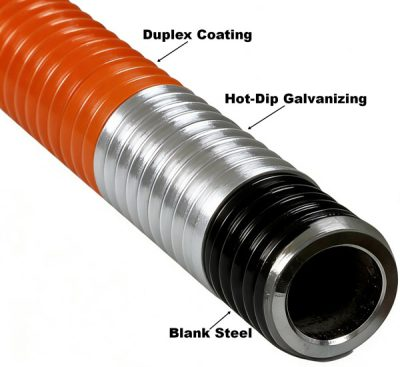
Corrosion protection design for CQ ROCKBOLT hollow bar systems
One of the most basic forms of protection is galvanization, where the bolt is coated with a layer of zinc. This sacrificial coating corrodes first, protecting the steel underneath. Galvanized rock bolts are commonly used in moist or mildly aggressive environments, balancing protection and cost.
For higher levels of protection, epoxy-coated bolts are widely used. The epoxy forms a tough, chemical-resistant barrier between the metal and the environment. While effective, the coating must remain intact; any damage during transport or installation can become a point of failure.
In particularly harsh environments, engineers may opt for duplex coatings, which combine galvanization with an overcoat of epoxy or polymer. This double-layer protection provides both sacrificial and barrier benefits, making it ideal for extreme environments like saltwater exposure or acidic mine drainage.
Longevity and Environmental Considerations
The service life of a rock bolt depends heavily on where and how it’s used. In dry, stable rock, even plain carbon steel may last decades. However, unprotected steel can deteriorate in wet, acidic, or salt-laden conditions within a few years.
For example, stainless steel or epoxy-coated bolts are typically favoured in underground mining operations with high humidity and water ingress. In coastal infrastructure or tunnels under marine conditions, duplex-coated or fully grouted bolts offer the longest protection against corrosion. Meanwhile, standard galvanized bolts often provide sufficient durability at a reasonable cost in temporary installations or low-risk projects.
Considering initial strength and how well a rock bolt will perform over time is important. The cost of bolt replacement, especially in confined or hazardous spaces, can far outweigh the savings from using lower-grade materials.
Common Applications of Rock Bolt
Rock bolts find diverse applications across various industries, contributing to the stability and safety of underground structures. Common applications include:
Mining Operations
Rock bolts are widely used for roof and wall support in underground hard-rock mines. They help secure loose rock and prevent ground falls, improving mine workers’ safety. Rock bolts are essential in creating safe working environments in room-and-pillar and longwall mining methods.
Beyond immediate safety, rock bolting systems contribute to operational efficiency by reducing unplanned downtime caused by rock falls or collapses. This allows mining companies to maintain consistent production schedules and improve overall cost-effectiveness. Additionally, modern rock bolting techniques can be installed quickly and adjusted to varying geological conditions, making them adaptable to challenging mining environments.
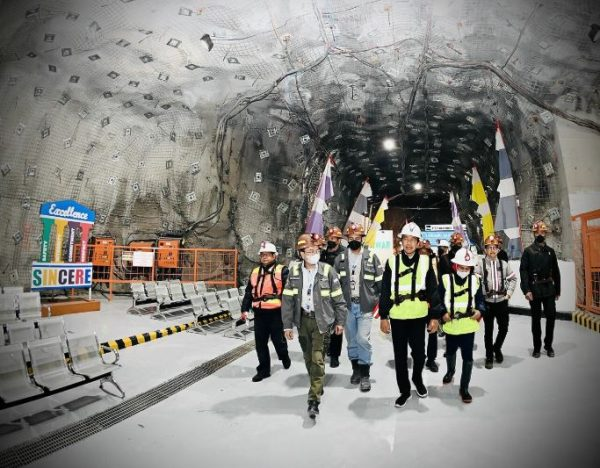
A notable example is the use of advanced rock-bolt systems at the Grasberg Mine in Indonesia, one of the world’s largest gold and copper mines. There, the implementation of systematic rock bolting improved underground safety and supported the transition from open-pit to underground mining. This shift has enabled continued resource extraction while minimizing environmental and surface disruption, showcasing how rock bolts are integral to sustainable mining operations.
Tunneling Projects
During the excavation of tunnels for transportation, water conveyance, or utility systems, rock bolts are used to reinforce tunnel walls and ceilings. They work in conjunction with other support systems like shotcrete and steel mesh to form a stable structure, ensuring the tunnel can withstand geological stress and vibration from nearby activities.
In addition to structural stability, rock bolts significantly reduce the risk of tunnel deformation over time, which is especially important in high-traffic or high-pressure environments. Their use enhances long-term tunnel durability, lowers maintenance costs, and improves safety for construction workers and end users. With the flexibility to be customized based on rock type and stress distribution, rock bolts are a key component in modern tunneling strategies that aim to minimize construction delays and maximize design lifespan.
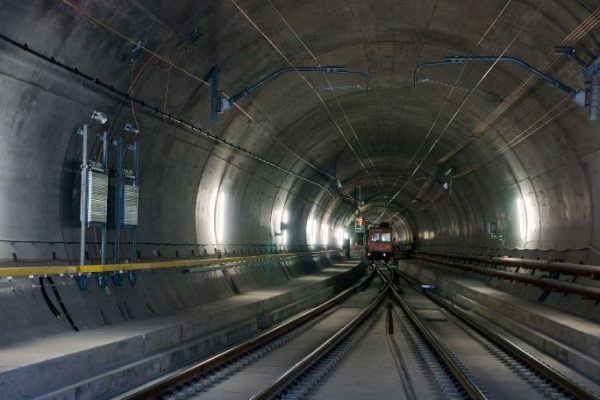
A widely recognized example is the Gotthard Base Tunnel in Switzerland, the world’s longest and deepest railway tunnel. Engineers relied heavily on rock bolting during construction to stabilize sections passing through variable and high-stress geological zones. The success of the project, completed in 2016, demonstrated how comprehensive rock support systems, particularly rock bolts, can be instrumental in delivering safe, efficient, and long-lasting infrastructure through complex terrain.
Civil Engineering Projects
In civil construction, rock bolts are commonly used for slope stabilization and excavation support. Whether it’s stabilizing highway cuttings, retaining walls, or large open excavations in urban settings, rock bolts offer a cost-effective and reliable method to control ground movement and ensure structural integrity.
Beyond immediate stabilization, rock bolts also play a critical role in preventing landslides and minimizing soil erosion, particularly in areas with complex topography or heavy rainfall. Their use allows engineers to safely develop infrastructure in challenging terrains while reducing the need for more invasive and expensive support systems. In urban environments, rock bolts help maintain the stability of adjacent structures during deep excavations, thus minimizing disruption and ensuring public safety.
A notable example is the Central-Wan Chai Bypass project in Hong Kong, where rock bolts were used extensively during tunnel and slope stabilization works. Given the dense urban setting and difficult geological conditions, engineers combined rock bolts, shotcrete, and soil nails to support steep slopes and underground sections. This approach ensured structural safety and allowed the project to stay on schedule and mitigate risks to nearby buildings and roadways.

Hydroelectric Power Projects
Rock bolts are employed to secure underground caverns, tunnels, and penstocks in constructing dams and underground power stations. These structures are often subjected to high water pressures and geological stresses, making rock bolts vital to long-term stability and safety in hydro projects.
Rock bolts not only enhance the structural integrity of these facilities but also play a key role in reducing maintenance needs and extending the operational lifespan of the infrastructure. By effectively managing stress redistribution within rock masses, they help prevent water seepage, rock falls, and deformation that could compromise performance or lead to costly repairs. Their installation supports safer working conditions during construction and operation phases, particularly in deep underground environments with limited access and intervention.
A compelling case study is the Tumut 3 Power Station in Australia, part of the Snowy Mountains Hydroelectric Scheme. During its development, engineers utilized advanced rock bolting techniques to stabilize large underground chambers housing turbines and penstocks. The reliable performance of these support systems has contributed to the station’s long-term success, underscoring how critical rock bolts are to the safety and durability of major hydroelectric infrastructure.
Roadway and Railway Infrastructure
Rock bolts play a crucial role in stabilizing both temporary and permanent ground conditions in complex terrains and high-risk zones. Beyond their primary function of securing slopes and tunnel walls, they help extend the lifespan of infrastructure by minimizing structural fatigue and controlling deformation over time. This enhances commuter safety and contributes to long-term cost efficiency in infrastructure management.
Moreover, rock bolts allow engineers to design more flexibly, enabling construction in previously considered too hazardous or unstable areas. This opens up new possibilities for transportation network expansion in regions where connectivity is vital for economic development and community access.
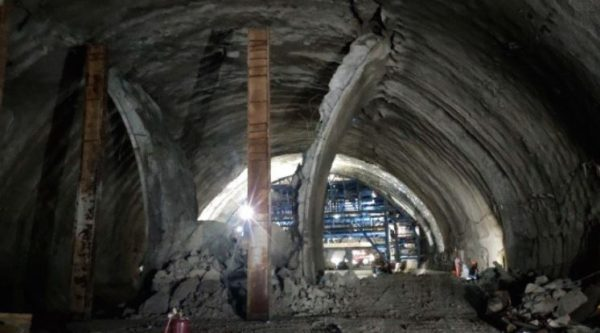
The Xiabeishan No.2 Tunnel, part of the Hang-Shao-Tai high-speed railway in China, is a notable example of utilizing rock bolts to ensure structural stability in challenging geological conditions. This shallow, super-large-span (SSLS) tunnel, with spans ranging from 26.3 to 27.3 meters, traverses weak rock masses, posing significant construction challenges. To address these, engineers implemented an extensive rock bolting system to reinforce the tunnel’s structural integrity. A comprehensive study involving field tests, numerical simulations, and laboratory analyses was conducted to assess the mechanical behaviour of anchor bolts in this context. The findings underscored the critical role of rock bolts in stabilizing large-span tunnels within weak rock formations, highlighting their effectiveness in mitigating deformations and enhancing overall safety during construction and operation phases.
Conclusion
From deep underground mines to steep roadside slopes, rock bolts are vital in enhancing safety, minimizing maintenance costs, and enabling construction in some of the world’s most geologically challenging environments. As construction and excavation projects grow in scale and complexity, choosing the right rock bolt system tailored to the site’s unique geological and operational demands has never been more important.
CQ-ROCKBOLT stands at the forefront of rock reinforcement solutions, offering a comprehensive selection of rock bolts, self-drilling systems, and support accessories engineered for performance in even the most demanding ground conditions.
Explore our product range and technical resources at cq-rockbolt.com and take the next step toward confidently reinforcing your project’s foundation.
Related News
Other news you might be interested in

How to Choose a Reliable Self-Drilling Anchor System Manufacturer
In underground mining, tunneling, slope stabilization, deep excavation support, and foundation reinforcement projects, complex ground conditions often determine the difficulty of the support solution. In soft ground, fractured rock, weathered rock masses, or water-bearing formations, conventional pre-drilled holes can collapse, jam, or lose borehole stability. By combining drilling, anchoring, and grouting into one process, a self-drilling anchor system has become an important solution in geotechnical engineering.However, selecting the right self-drilling anchor is only the first step. A manufacturer's ability to consistently supply compatible hollow threaded bars, sacrificial drill bits, couplers, bearing plates, nuts, and grouting accessories, while understanding actual ground support requirements, directly affects installation efficiency, anchorage quality, and project safety.

How to Install Rock Bolts: A Complete Step-by-Step Guide
A reliable ground support system is not complete simply because the drill has reached the design depth. Borehole condition, compatibility between the bolt and accessories, correct grouting or anchoring procedures, and traceable installation records all affect the final support performance. For installation crews, a loss of control at any stage can disrupt later operations. For project managers and procurement teams, system compatibility and process records are equally important.
Want to know more?
Get in touch with us for more information about our services and products.