

2026 Global Rock Support Market: Surging Demand in Deep Mining and Emergency Support

Dayang Yang
AuthorWith over 15 years of experience in the production and sales of ground anchoring and mining support products, we operate our own rock bolt and accessory manufacturing facility with stable large-scale production capacity. We are specialists in rock bolts, resin cartridges, anchor cables, bearing plates, and customized ground anchoring products for mining support and geotechnical anchoring solutions.
Ask a procurement team whether ground support demand is surging in 2026, and the answer depends on where they sit. A contractor in a deep gold mine is not buying the same thing as a tunnel contractor preparing a TBM launch. The common thread is not simply more bolts. It is a higher specification bar: deeper ground, faster response, more corrosion protection, more installation data, and more pressure to prove that the support installed matches the support designed.
That distinction matters because "surging demand" can hide three different markets. One is the deep-mining market, where ground conditions and service life drive value. A second is the emergency-support market, where speed and immediate load-bearing matter more than unit price. A third is the project pipeline, where announced capital investment has not yet become a purchase order. All three are visible in 2026. None of them is a substitute for a project-specific RFQ.
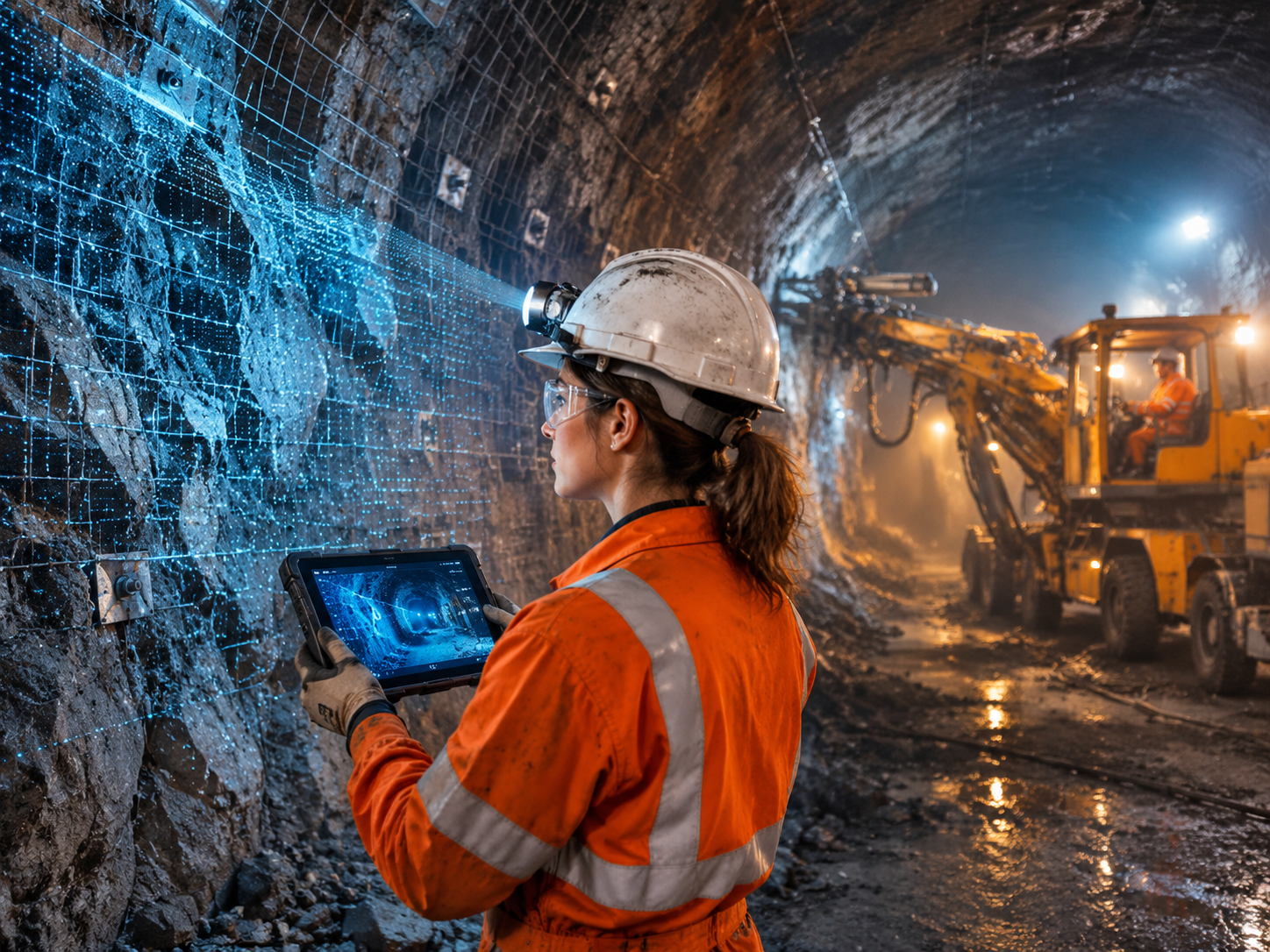
Deep mining: the specification is getting harder
The clearest signal comes from deep-level operations. On 10 November, Mining Weekly reported that the world's deepest mine lifted its gold grade by 10% to 11.55 g/t. Higher grade at depth is not only a grade story. It concentrates attention on high-stress ground, long service life, corrosion, and the cost of replacement in workings that are difficult to access.
The technical agenda reflects the same pressure. Ground Support 2026, taking place in Brisbane on 17–19 November, lists dynamic support, squeezing ground, high-corrosion environments, mechanised installation, support-system capacity and degradation, and instrumentation and monitoring among its themes. Those topics are not abstract. They are the questions that determine whether a bolt performs as a system over the life of a mine.
Two recent developments show where the bar is moving.
On 9 November, Sandvik launched xCell Vision, a cloud-based solution that uses AI and LiDAR point-cloud data to identify and classify installed rock bolts and measure bolt count, spacing, orientation and tail length. The system works with handheld, stationary or machine-mounted LiDAR scanners and presents results in an interactive 3D view. It is a QA/QC tool, not a replacement for geotechnical design. But it makes a point that buyers will increasingly apply to every supplier: installation data should be auditable.
On 7 November, Nature Scientific Reports published a study on "repairable" rock bolts. The researchers developed extrusion-crushing repairable (ECR) and hot-melt repairable (HMR) bolts and tested them under chloride wet–dry cycling and double-shear loading. Under the tested conditions, the ECR design achieved higher peak shear load and greater external work to peak load. This is laboratory research, not a commercial product. It is still useful because it points to a future procurement question: can corrosion damage be inspected and repaired, rather than simply replaced?
For buyers, the practical response is not to chase the newest label. It is to ask for the evidence behind it: what was tested, under what conditions, on which configuration, and how the result relates to the approved support design. That is also the discipline behind CQ Rockbolt's existing guidance on rock bolt corrosion protection and mechanised bolting compatibility.
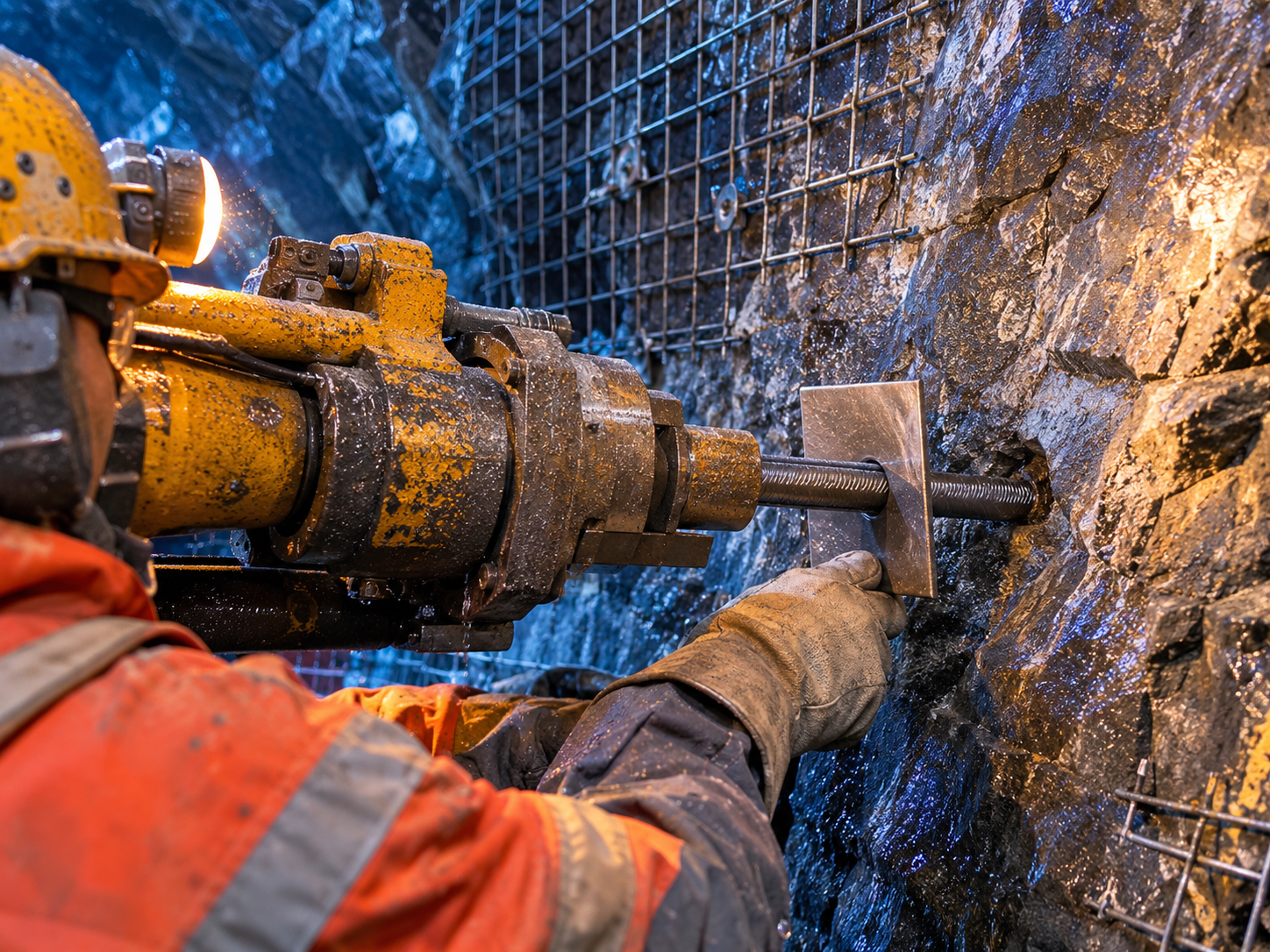
Emergency support is a procurement mode, not a product
"Emergency support" is often treated as a product category. In practice, it is a response mode. The requirement is immediate load-bearing, fast installation, a complete kit, and traceability when the ground is already moving.
Different products answer different failure modes. Split-set friction bolts provide immediate radial load without grout. Swellex-type expandable bolts use water pressure to bring the tube into full contact with the borehole, which suits fractured or uneven ground. Self-drilling hollow bars combine drilling and grouting in one pass, which matters where the hole is likely to collapse before a conventional bolt can be inserted. Resin capsules provide fast cure and controlled working time. Mesh, plates and nuts contain loose rock and transfer load across the support system.
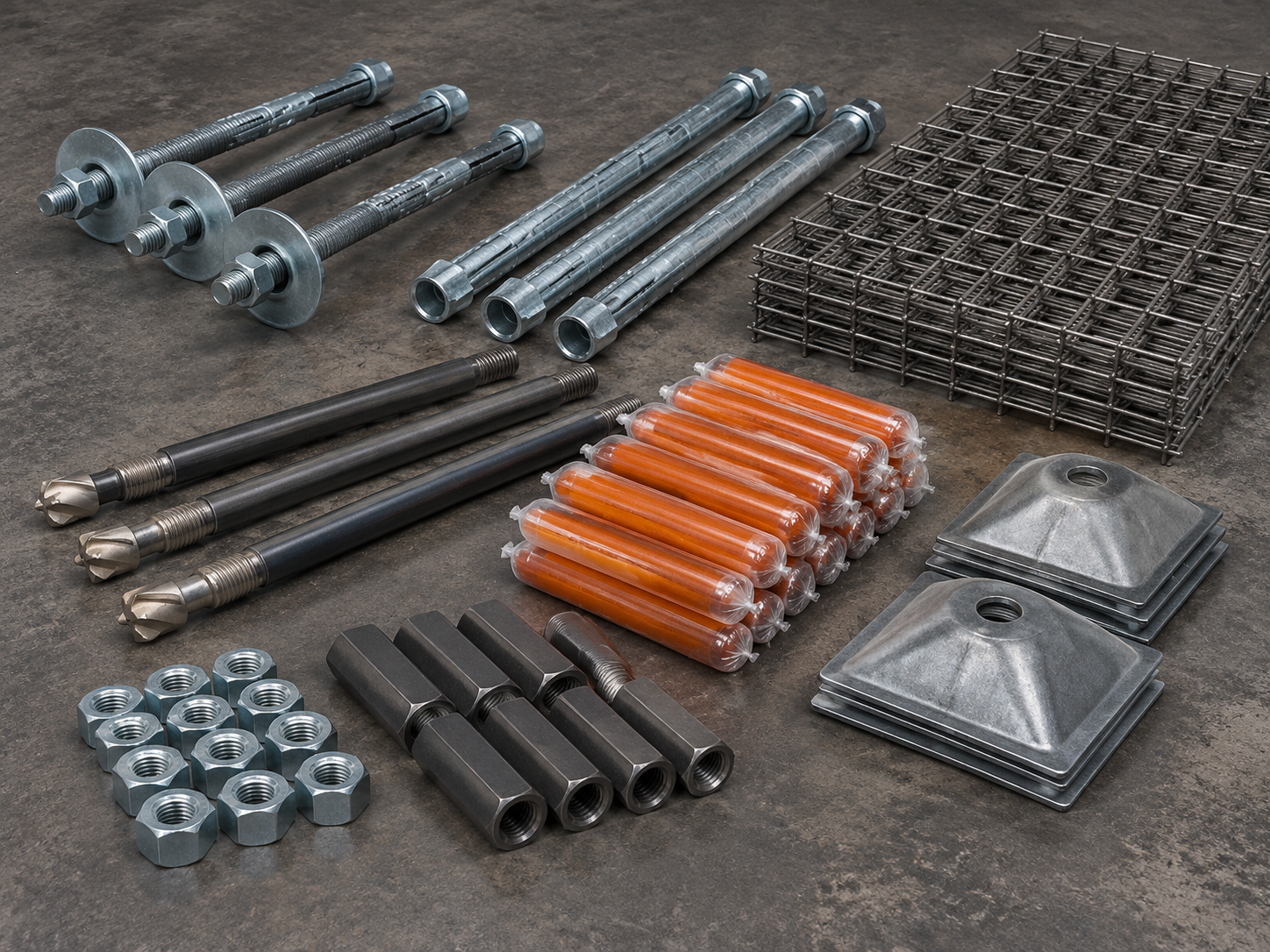
What makes emergency support different is not the bolt alone. It is the stock policy, the packaging, the mixed kit, the installation instruction, and the ability to trace the batch after the event. A buyer does not want to discover during a roof fall that the plate, nut and bolt were quoted as separate line items, or that the resin working time does not match the rig on site.
That is why emergency support should be procured as a system. The RFQ should state the ground condition, the installation method, the required time to load, the accessories, the packaging and the documentation. A low bolt price is not a low emergency-support cost if the kit is incomplete.
The global project map
The project pipeline is active, but it is not evenly distributed.
In South Africa, deep gold and platinum operations remain the most demanding ground-support environment. Mine-life extension, deeper workings and safety scrutiny put a premium on corrosion protection, system compatibility and supply continuity. The 10 November grade report is a reminder that the highest-value ounces often come from the most difficult ground.
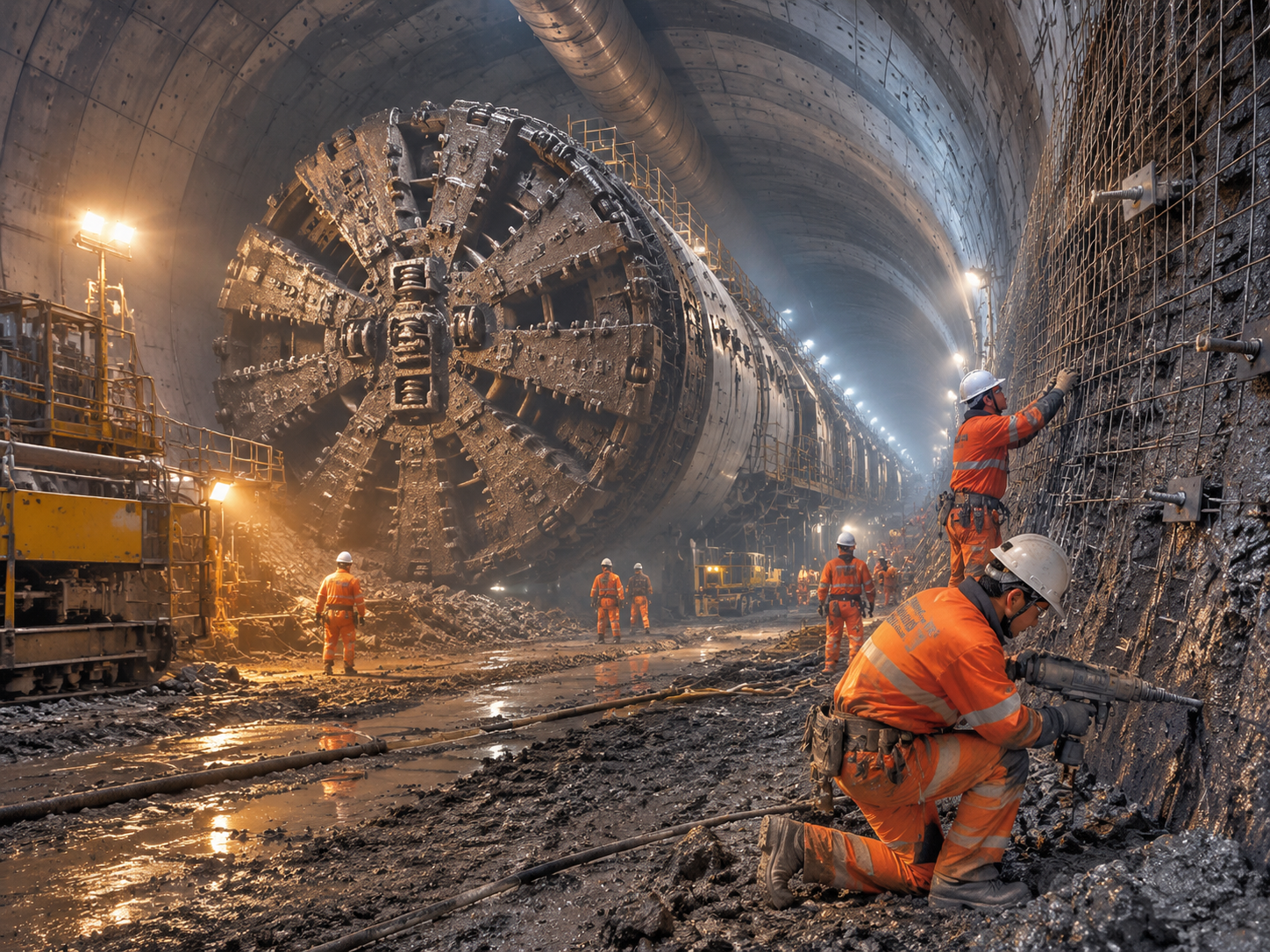
In India, the tunnel pipeline is moving. Trade press reported in early November that China had tightened exports of tunnel boring machines, while the Mumbai Coastal Road project expects its largest TBMs to arrive in January 2027 and tunnelling to begin by May 2027. Those dates are project signals, not purchase orders. They are a reason to start standards and RFQ research now, not a reason to assume demand.
In the United States, the signal is project-led rather than regulation-led. Rio Tinto approved US$144 million to advance the Resolution Copper project; South32's Hermosa project moved forward after a court declined to block it; and Barrick's Fourmile project faces potential delays. On 10 November, MSHA announced five final rules; the five rules remove outdated, duplicative or no-longer-applicable requirements. They do not create a new rock-bolt mandate. US buyers will still be driven by project design, ground conditions and supplier qualification.
In Chile, Codelco and Pucobre cleared a key hurdle for an US$870 million copper mine. In Gabon, the US$2 billion Mabounie niobium and rare-earth project is targeting construction in 2027, subject to project advancement. These are capital signals. They become ground-support demand only when the mining method, schedule and contractor are confirmed.
The conference calendar reinforces the geographic spread: Ground Support 2026 in Brisbane, The Mining Show in Dubai, bauma CHINA in Shanghai and Tunnelling Asia in Mumbai. Conferences are useful for technical intelligence and meetings. They are not evidence of buyer intent.
What buyers should put in the RFQ
Whether the project is a deep mine, a tunnel or an emergency rehabilitation, the same eight questions make quotations comparable:
- Ground condition and design intent. Rock type, strength, fracturing, water, stress and the approved support design.
- Installed cost per metre. Include installation time, resin or grout, accessories, rework and downtime—not just the bolt price.
- Interface compatibility. Drill bit, rig, resin working time, plate, nut and coupler must match the installation method.
- Test evidence. Tensile, pull-out, coating and batch records, with the standard, method and witnessing stated.
- Corrosion protection. Coating or galvanising system, design life, transport damage and field repair.
- Installation QA/QC data. Bolt count, spacing, orientation, tail length, installation record and batch traceability.
- Packaging and mixed kits. Clearly labelled bundles, accessories and emergency stock, ready for the site.
- Delivery and documentation. Incoterm, port, lead time, MTC, CO and third-party inspection requirements.
A supplier that cannot answer these questions for the exact configuration is not yet offering a comparable quotation.
Where CQ Rockbolt fits
CQ Rockbolt is the international brand of Handan Changqi Metal Products Co., Ltd. The company operates an ISO 9001:2015 quality management system and supplies a catalogue that covers several of the product families described above.
| Product family | Role in deep mining and emergency support | What to confirm |
|---|---|---|
| Split-set friction bolts | Immediate load-bearing without grout; development headings and rapid response | Diameter, length, hole size, plate and installation method |
| Swellex-type expandable bolts | Water-inflated full contact in fractured or uneven ground | Pump and head compatibility, expansion pressure, coating |
| Self-drilling hollow grouting bolts | Drilling and grouting in one pass in weak or broken ground | Bar size, drill bit, grout pressure, rig torque |
| Resin capsules | Fast cure and controlled working time for anchored bolts | Borehole diameter, gel time, temperature, shelf life |
| Cable bolts | Reinforcement of large spans and high-stress ground | Strand diameter, anchorage, grouting and corrosion protection |
| PT bars, anchorages, mesh, plates, nuts and couplers | Complete system for load transfer and containment | Drawing, thread, coating, batch and packaging |
The product pages state specific ranges: Swellex-type bolts from 22–32 mm diameter and 1–6 m length at 0.5–2.5 MPa expansion pressure; self-drilling bars in R25, R32, R38, R51 and T76 with tensile strength of at least 550 MPa and yield strength of at least 350 MPa; resin capsules for 28–45 mm boreholes with fast, medium or slow curing and at least 60 MPa compressive strength; and cable bolts in 15.2, 17.8 and 21.6 mm diameters at 1860 MPa grade. These are catalogue ranges. They do not replace the mine's approved design, and the final configuration must be confirmed against the project specification.
CQ Rockbolt's catalogue is strongest in conventional ground-support systems; for smart, repairable or dynamic requirements, buyers should ask for product-specific evidence. What the company can do is help buyers compare the complete system: bolt, plate, nut, coupler, resin or grout, mesh and documentation. Product pages also state that MTC, CO and third-party inspection support can be discussed; availability should be confirmed for each order.
For a project-specific quotation, send the support design, ground condition, rig details, quantities, destination port and document requirements to the CQ Rockbolt team.
The bottom line
The 2026 ground support market is not one uniform surge. It is a set of project-specific surges: deeper mines, tighter corrosion requirements, faster response, and more auditable installation. The suppliers best placed to benefit will be those that can show the right product, the right interface, the right evidence, and a realistic delivery plan.
This article does not publish a market size, growth rate or demand forecast. It uses public technical sources and project announcements to describe where the specification pressure is coming from. Project announcements are not purchase orders, and conference themes are not buyer intent.
Related News
Other news you might be interested in

Self-Drilling Anchor Bolts for Water-Conveyance Tunnel Reinforcement
Self-drilling anchor bolts are useful for water-conveyance tunnel reinforcement when broken or water-bearing ground makes conventional drill-and-insert bolting difficult. By using a hollow threaded bar as both the drilling member and the permanent reinforcement, the system removes the separate bolt-insertion step and provides a channel for grouting through the same bar.For a water-conveyance tunnel, that installation advantage matters. Headrace, tailrace, diversion, irrigation and water-supply tunnels can pass through fault zones, weathered rock, weak interlayers and interconnected fractures. Groundwater may enter the excavation, boreholes may deteriorate after drilling, and support must be coordinated with drainage, waterproofing and the final lining.

What Is a Split Set Mining System and How Is It Different from Other Rock Bolts?
A split set is often described as a rock bolt, but in mining it is more useful to think of it as a support system. The steel tube is the most visible part. The way it performs also depends on the drilled hole, the bearing plate, the installation adapter, the drilling equipment, the surface support and the checks made underground. That distinction matters when a project compares rock bolts. Two quotations can list a similar diameter and length, yet propose different load-transfer mechanisms, different hole requirements and different installation procedures. A split set is not a resin bolt with the resin removed. It is not a mechanical expansion-shell bolt, a self-drilling hollow bar, a water-inflatable tube or a cable bolt. Each product family solves a different part of the ground-support problem.
Want to know more?
Get in touch with us for more information about our services and products.