

Advantages of split pipe seam anchors

Dayang Yang
AuthorWith over 15 years of experience in the production and sales of ground anchoring and mining support products, we operate our own rock bolt and accessory manufacturing facility with stable large-scale production capacity. We are specialists in rock bolts, resin cartridges, anchor cables, bearing plates, and customized ground anchoring products for mining support and geotechnical anchoring solutions.
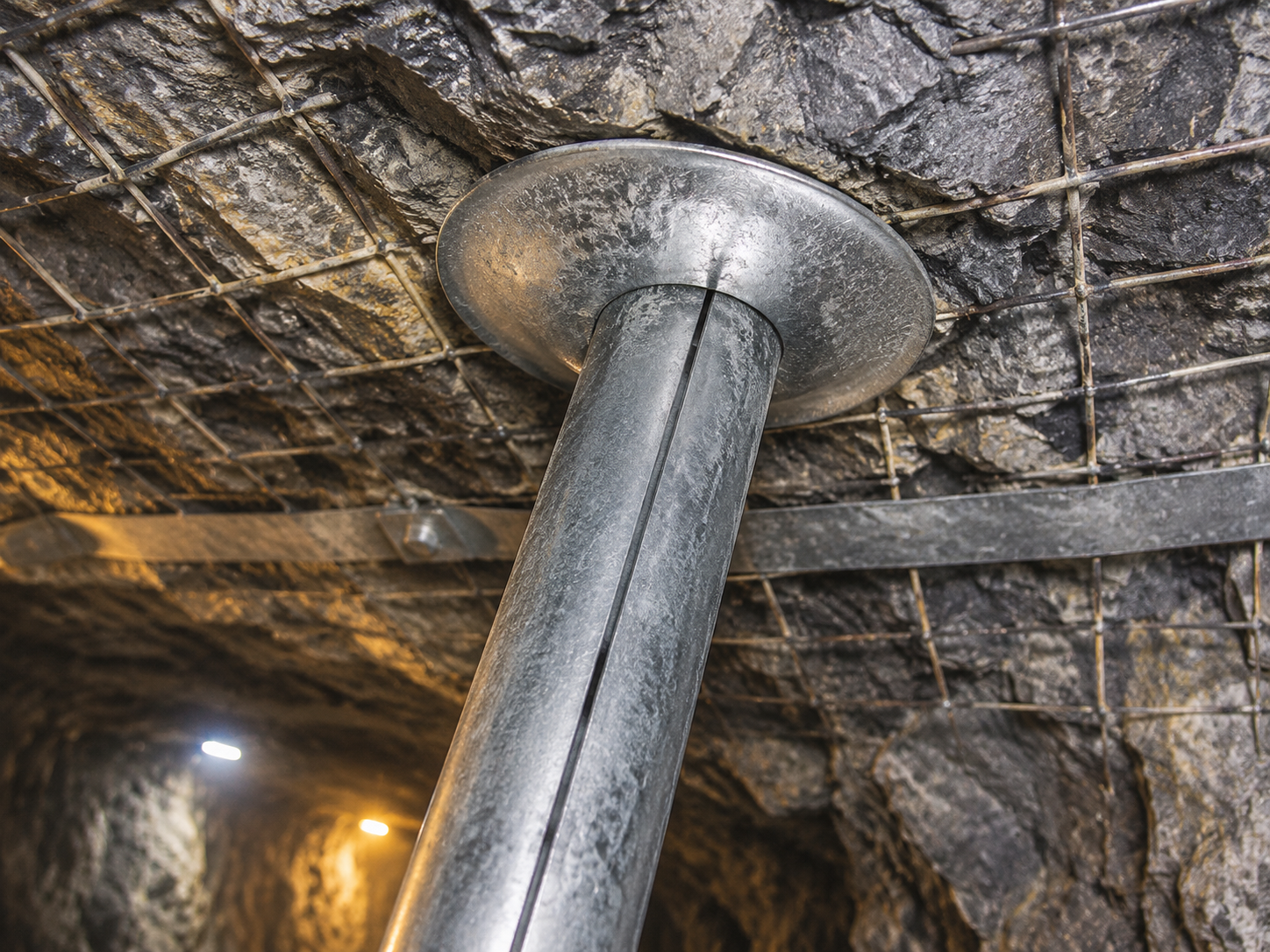
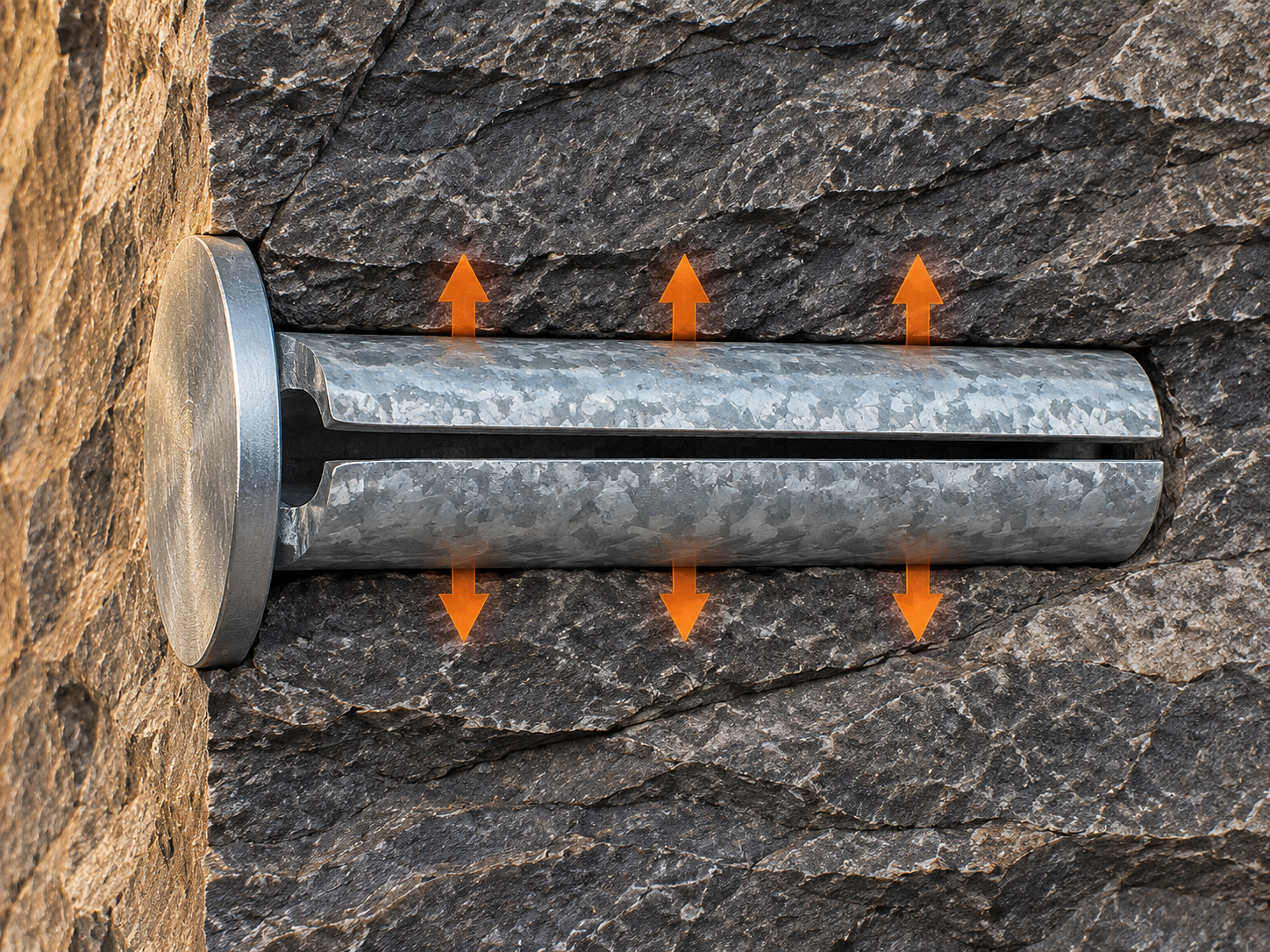
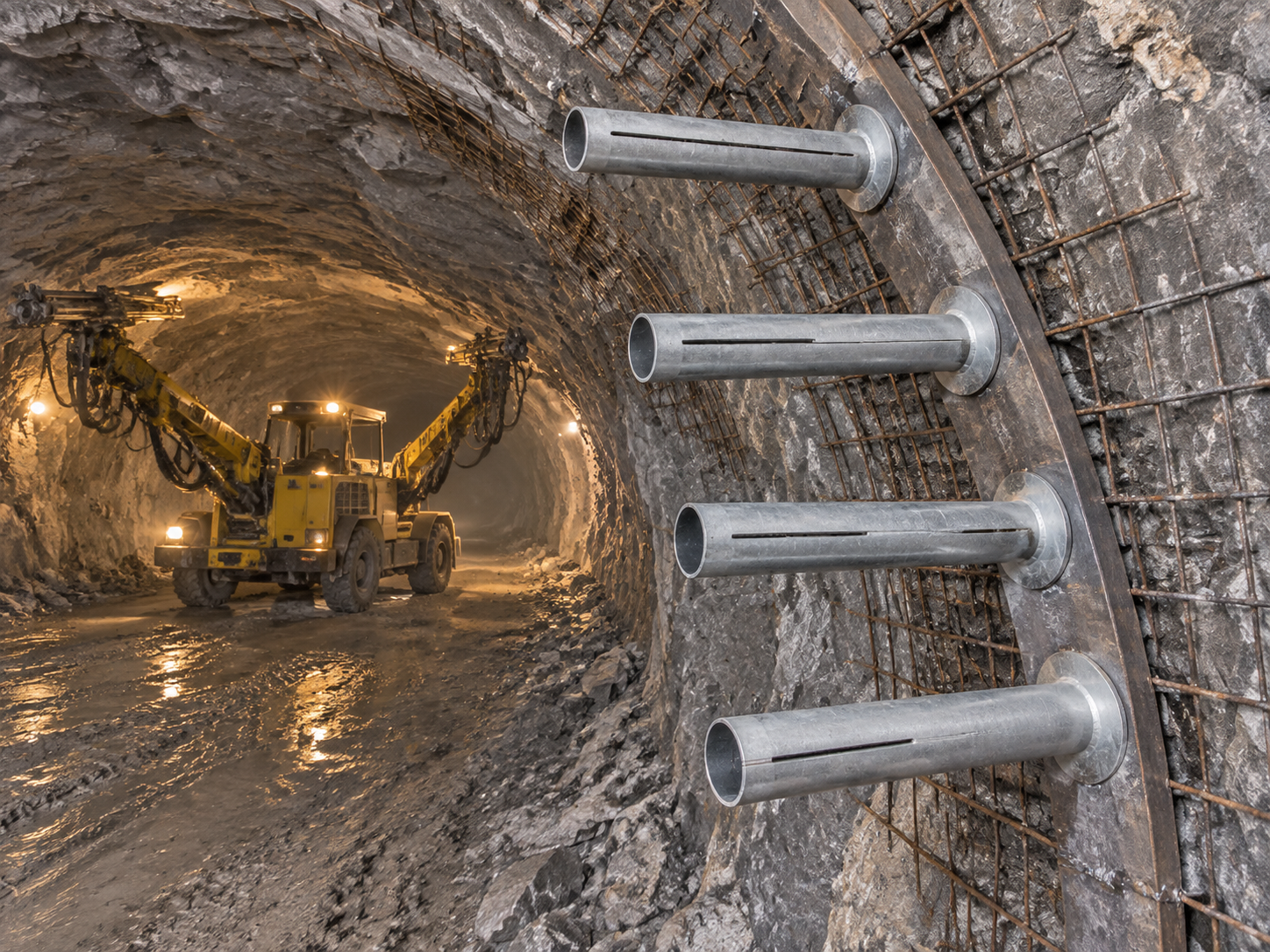
Split pipe seam anchors, also called split-set friction anchors or slotted-tube rock bolts, are one of the simplest forms of underground rock support. They are made from a steel tube with a longitudinal seam. The tube is driven into a borehole slightly smaller than its outside diameter. During installation, the seam allows the tube to compress, creating radial pressure against the borehole wall. This pressure produces a friction grip along the embedded length and allows the anchor to begin restraining rock movement without resin or grout.
In CQ Rockbolt’s product range, this system is listed as a split-set friction rock bolt. It is different from a self-drilling hollow bar and from a resin-anchored or grouted bolt. The advantages below depend on that distinction: a split pipe seam anchor still requires a pre-drilled hole, but it does not depend on a chemical or cementitious bonding agent to transfer load.
Fast installation with immediate ground contact
The first advantage is speed. After the hole has been drilled to the specified diameter and depth, the anchor is driven into place with a suitable installation tool or bolting rig. The tube compresses, and contact pressure develops against the rock. There is no resin mixing time, no grout pumping and no waiting for a chemical or cementitious bond to cure before the anchor begins to work.
This does not make the anchor a prestressed bolt. It does mean that, once correctly installed, the support element starts to engage the rock immediately. In development headings and tunnel faces where every cycle matters, that reduction in installation steps can help the crew install support and move on to the next operation sooner.
The important condition is that the borehole must be drilled within the manufacturer’s specified range. An oversize hole may reduce radial pressure; an undersize hole can make insertion difficult or damage the tube or installation equipment.
No resin or grout in the load path
Split pipe seam anchors do not require resin cartridges, cement grout, mixing equipment or grout pumps. That removes several consumables and site processes from the support cycle:
- no resin temperature or shelf-life control;
- no grout mixing and water-cement ratio control;
- no pumping, flushing or curing delay;
- no disposal of unused resin or grout;
- fewer materials to store and move underground.
For remote mines, phased development and projects where material logistics are difficult, this simplicity can be a practical advantage. It can reduce the number of separate items that must be ordered, stored and matched to the installation schedule.
It does not mean that every ground condition can be supported with a split-set anchor. The absence of grout also means that the system does not provide the same type of continuous bonded encapsulation used by a grouted anchor. The selection must still follow the approved support design.
Friction load transfer along the embedded length
A split pipe seam anchor does not rely on a single expansion shell at the end of the hole. Its grip is distributed along the embedded tube. As the tube presses against the borehole wall, friction develops along the contact length. This can be useful in jointed, fractured or variable rock where the load path is not concentrated at one point.
The system also does not depend on filling every void around the tube with grout. That can make installation more tolerant of local irregularities in the hole, provided the borehole remains within the specified dimensional range.
However, installed capacity is not a fixed catalogue number. It depends on the actual hole diameter, rock strength, fracture condition, embedment length, surface condition and installation energy. A pull test in representative ground is more meaningful than a bolt-only strength figure.
Simple equipment and handling
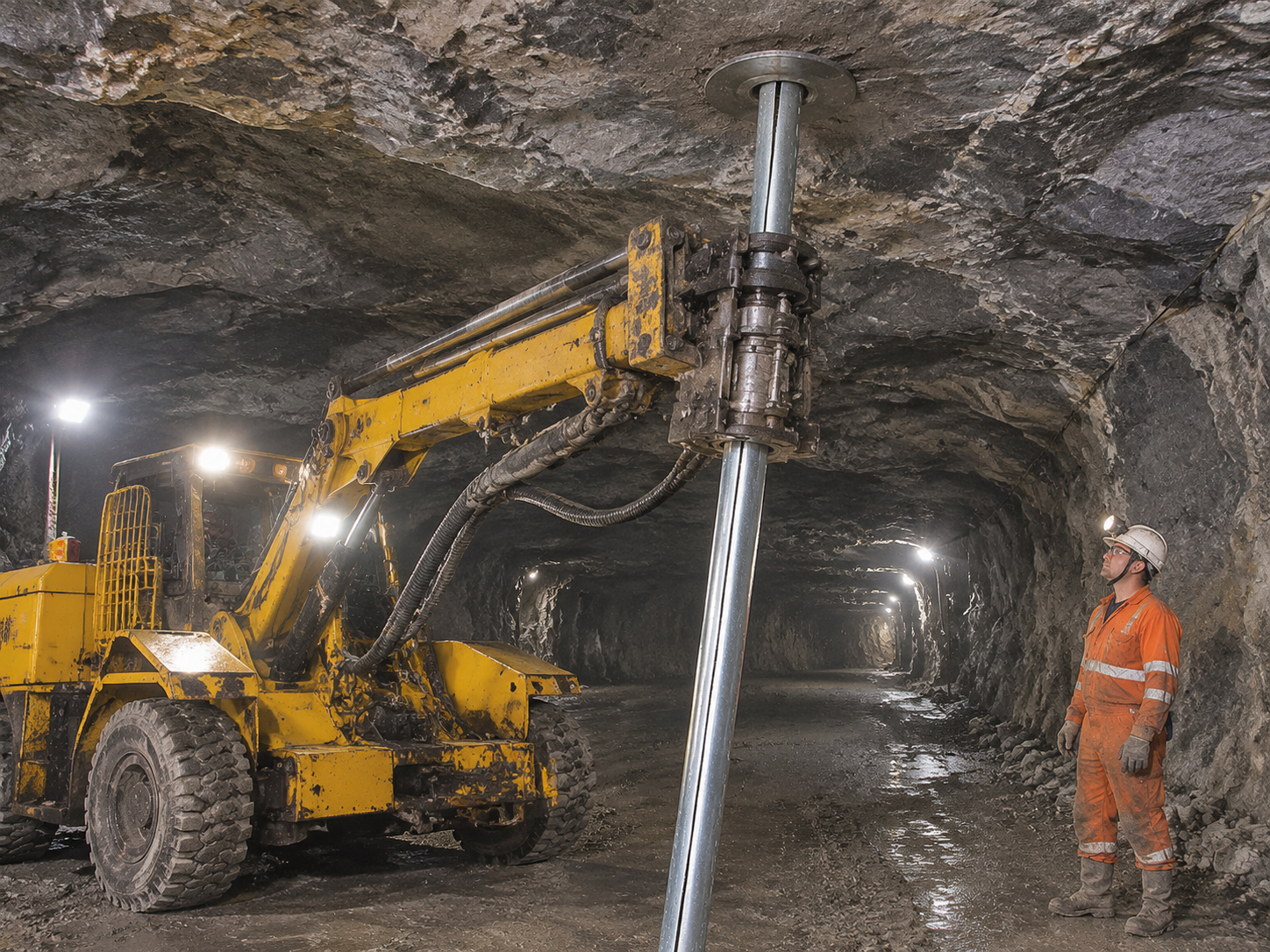
Split pipe seam anchors are generally simple to handle. They do not require a resin pump, grout plant or mixing station. Depending on the project, installation can be carried out with suitable drilling and driving equipment or with a compatible bolting rig and adapter.
This simplicity can reduce the amount of coordination required between drilling, material supply and support installation. It can also make the system easier to introduce in operations where the crew is already familiar with conventional bolting equipment.
The word “simple” should not be read as “universal.” The drill bit, hole diameter, tube model, driving adapter and rig must be matched. A standard mining drill does not automatically mean that every installation accessory is compatible.
Easy integration with plates, mesh and straps
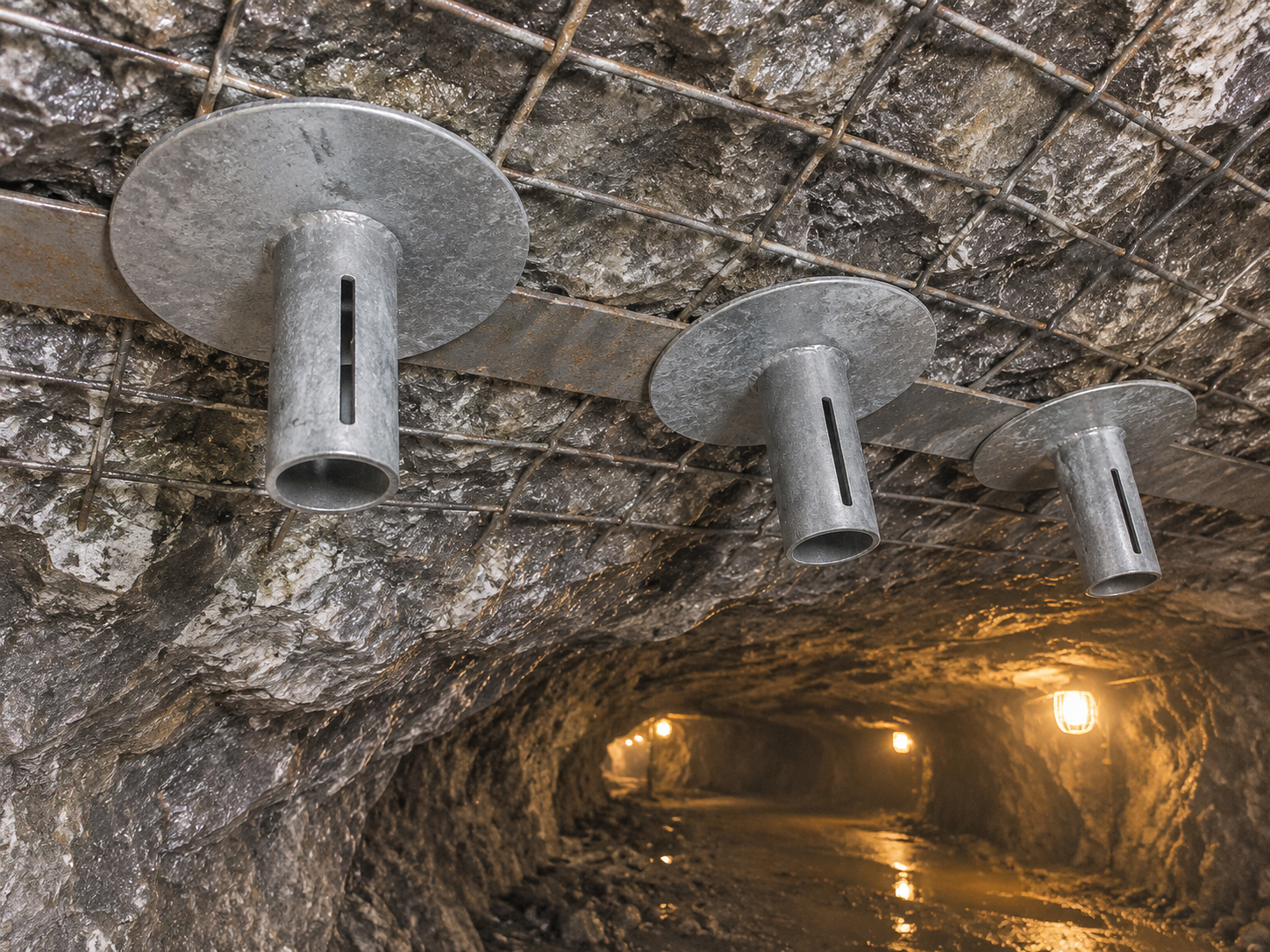
A split-set anchor is normally used with a bearing plate or domed plate at the rock surface. The plate spreads the load over a larger area and helps hold mesh, straps or other surface support against the rock. This makes the anchor part of a complete support system rather than an isolated steel tube.
The plate and collar arrangement should be specified with the anchor. The plate must fit the tube and collar, seat against the rock surface and provide the required bearing area. If mesh or straps are used, the plate should clamp them without cutting the wires or creating a point load.
Split pipe seam anchors are particularly useful where the support plan combines bolts with mesh or straps to control small blocks between anchors. The anchor holds the surface support, while the mesh or strap spreads the restraint across the opening.
Lower installed cost and less site waste
The commercial advantage is not simply the price per anchor. It comes from the complete installation process: fewer consumables, less mixing equipment, fewer steps, less cleaning and less unused material. In a production heading, saving a few minutes per support cycle can matter more than a small difference in the unit price of the bolt.
A split-set system can also reduce the amount of waste associated with resin or grout. There are no partially used cartridges, hardened bags of cement or contaminated mixing containers to handle. Packaging and storage requirements are simpler, although the anchors and plates still need protection from damage and corrosion.
For a fair comparison, buyers should calculate the installed cost rather than compare the anchor price alone. The comparison should include drilling, installation labor, consumables, equipment, rework, testing, coating and delivery to the working face.
Practical application scenarios
Split pipe seam anchors are used in underground mining and civil engineering where a fast, simple and mechanically anchored support element is required. Typical applications include:
| Application | How split pipe seam anchors are used | What to confirm |
|---|---|---|
| Mine development headings | Roof and rib support during roadway development; primary or secondary support depending on the design | Rock condition, hole diameter, bolt length, plate and mesh arrangement |
| Production openings | Local reinforcement of roof, walls or broken ground around active mining areas | Expected movement, service life and any dynamic loading requirement |
| Transportation and utility tunnels | Stabilising fractured rock in road, rail, water, sewer and metro tunnels | Borehole stability, water condition, clearance and installation equipment |
| Underground chambers and caverns | Surface restraint and rock reinforcement around excavations and openings | Span, geology, support pattern and surface support |
| Temporary or staged works | Rapid support where installation speed and minimal consumables are important | Whether the design permits a non-grouted friction anchor |
| Areas with mesh or straps | Holding surface support against the rock while the overall system carries the load | Plate size, collar fit, mesh aperture and seating angle |
These are application categories, not automatic product selections. The same tunnel or mine can contain several ground types, and the support class may change along the alignment.
What these advantages do not mean
Split pipe seam anchors are not the best answer for every underground condition. Their advantages depend on a hole that can be drilled and kept open long enough for insertion. In a collapsing or running ground, the hole may close before the anchor can be installed; a self-drilling system may then be more appropriate.
They are also not a substitute for a tensioned, grouted or dynamic support system where the design requires one. A split-set anchor should not be specified for a rockburst, large-deformation or permanent corrosion-critical application simply because it is quick to install. Those conditions require the appropriate product family, test evidence and project-specific design.
Corrosion protection is another selection point. The tube, plate, collar and any exposed accessories must be protected for the actual groundwater and service life. A general statement that a product is “corrosion resistant” is not a coating specification.
How to specify split pipe seam anchors
A useful inquiry should give the supplier enough information to match the anchor to the ground and the installation equipment. Include:
- mining or tunneling application and support location;
- rock type, fracture condition, water and expected movement;
- specified borehole diameter, depth and tolerance;
- drilling method, bit type and installation rig;
- required anchor diameter, length and steel grade;
- plate, collar, washer and mesh arrangement;
- coating or corrosion-protection requirement;
- pull-test or documentation requirement;
- quantity, packing, destination and delivery schedule.
Ask for the model drawing and the recommended hole range for the exact product, not only a generic product name. The anchor, plate and installation adapter should be confirmed as a matched assembly.
Conclusion
The main advantages of split pipe seam anchors are speed, simplicity and immediate mechanical contact with the rock. They eliminate resin and grout from the installation cycle, transfer load along the embedded tube, work with conventional surface support and can reduce the number of consumables and process steps underground.
Those advantages are strongest when the borehole is stable, the hole diameter is correctly matched and the support design calls for a friction anchor. For difficult ground, dynamic loading, long service life or strict corrosion requirements, the selection should be checked against the project design and the appropriate anchor system.
CQ Rockbolt supplies split-set friction rock bolts for underground mining and tunneling projects. To review a suitable configuration, send the application, ground conditions, hole requirements, plate arrangement and delivery destination to the CQ Rockbolt team.
Related News
Other news you might be interested in

Self-Drilling Anchor Bolts for Water-Conveyance Tunnel Reinforcement
Self-drilling anchor bolts are useful for water-conveyance tunnel reinforcement when broken or water-bearing ground makes conventional drill-and-insert bolting difficult. By using a hollow threaded bar as both the drilling member and the permanent reinforcement, the system removes the separate bolt-insertion step and provides a channel for grouting through the same bar.For a water-conveyance tunnel, that installation advantage matters. Headrace, tailrace, diversion, irrigation and water-supply tunnels can pass through fault zones, weathered rock, weak interlayers and interconnected fractures. Groundwater may enter the excavation, boreholes may deteriorate after drilling, and support must be coordinated with drainage, waterproofing and the final lining.

What Is a Split Set Mining System and How Is It Different from Other Rock Bolts?
A split set is often described as a rock bolt, but in mining it is more useful to think of it as a support system. The steel tube is the most visible part. The way it performs also depends on the drilled hole, the bearing plate, the installation adapter, the drilling equipment, the surface support and the checks made underground. That distinction matters when a project compares rock bolts. Two quotations can list a similar diameter and length, yet propose different load-transfer mechanisms, different hole requirements and different installation procedures. A split set is not a resin bolt with the resin removed. It is not a mechanical expansion-shell bolt, a self-drilling hollow bar, a water-inflatable tube or a cable bolt. Each product family solves a different part of the ground-support problem.
Want to know more?
Get in touch with us for more information about our services and products.