


Split Set Bolt for the support of the roof of the underground copper or gold mining and other projects
What is Split Set Bolt for the support of the roof of the underground copper or gold mining and other projects?
Split Set Bolt, also called Split Set Stabilizer or Friction Bolt, is an indispensable advanced material for underground mining support. Available in either black or hot dip galvanized. Variety of diameters (34 mm, 40 mm and 47 mm) and various lengths from 600 mm to 3,000 mm. Used in the development and production headings for immediate support with quick and easy installation.
Product Overview
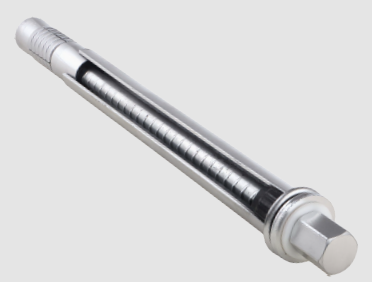
Split set bolts, also known as split set stabilizers or friction bolts, are an indispensable advanced support material for underground mine roof support and a dedicated support product. The bolt is built around a high-strength steel tube with a longitudinal slit. Together with a steel ring at the collar end and a high-strength bearing plate, it develops full-length friction anchoring in a borehole slightly smaller than the tube diameter. It is used for roof, roadway, and face support in underground copper and gold mines and other underground projects.

Key Benefits
- Full-length friction anchoring and larger contact area: When the high-strength steel tube is driven into a borehole slightly smaller than the tube diameter, the tube contacts the borehole wall along its full length. The increased contact area provides higher pull-out capacity.
- Immediate support at the working face: Frictional support is available at the face immediately after installation, making the bolt suitable for development cycles that require fast initial support.
- High strength, strong expansion force, and high shear performance: Item No. 47 has a tensile strength of at least 280 kN and a shear strength of at least 240 kN. The tube has a yield strength of 176 kN and a maximum tensile strength of 186 kN, with strong expansion force after compression.
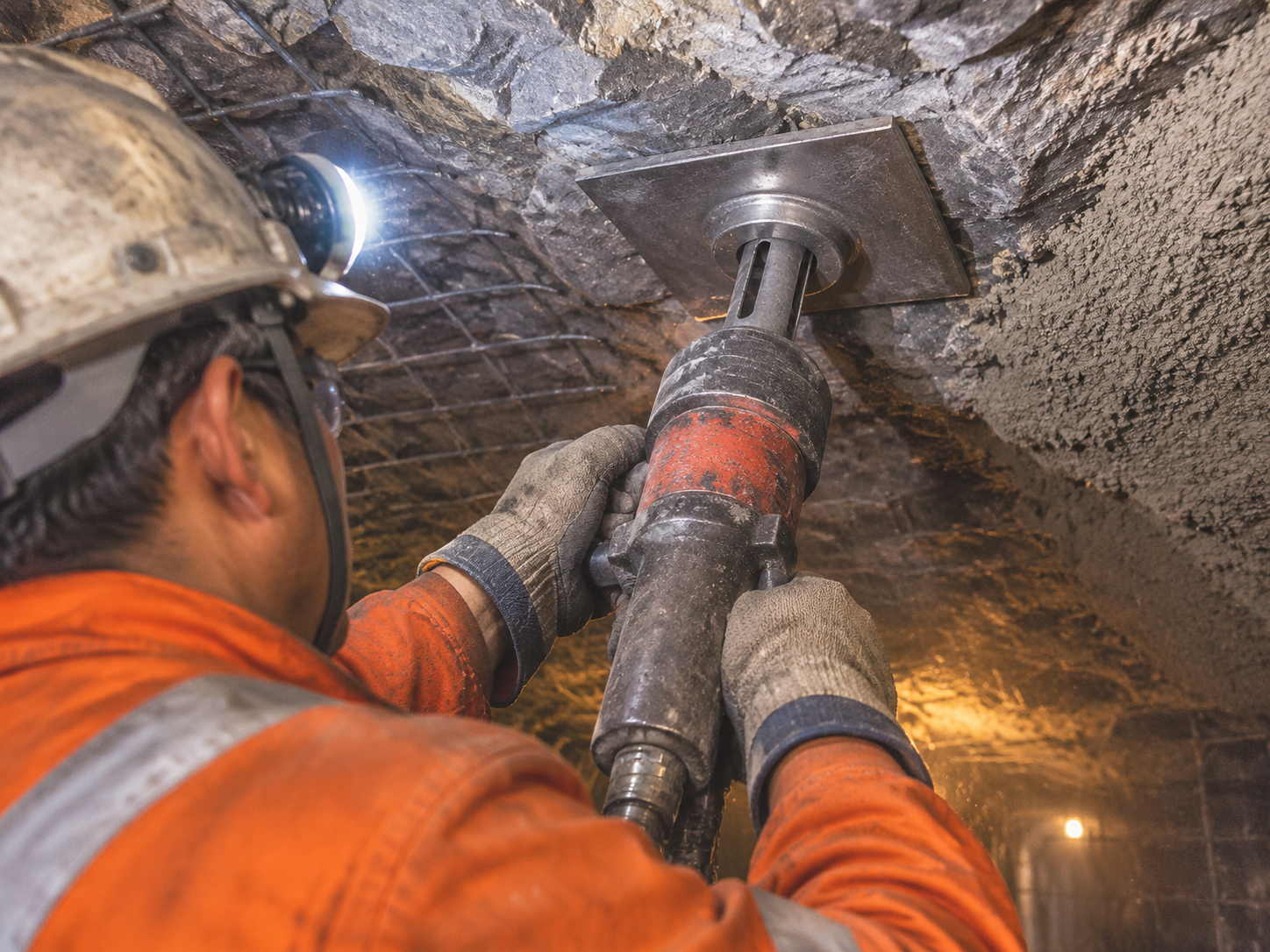
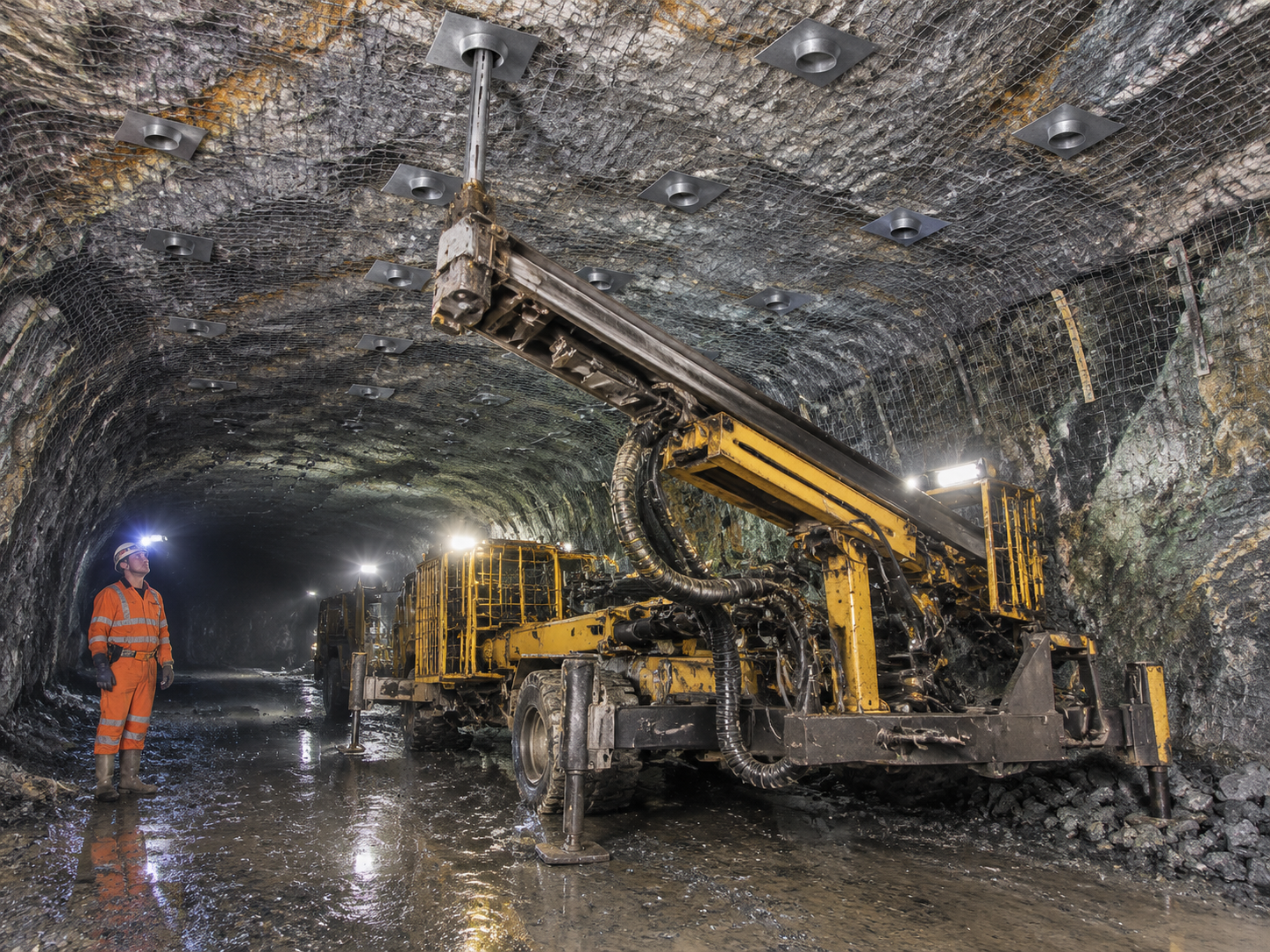
- Quick and flexible installation: The bolts can be installed with hand-held or mechanized equipment. Operation is simple and convenient, and installation is quick and easy, fitting different development and support workflows.
- Wide size range: Diameters of 34 mm, 40 mm, and 47 mm are available, with lengths from 600 mm to 3,000 mm, allowing selection according to roadway section, borehole conditions, and support design.
- Surface finish options: Black or hot-dip galvanized finishes are available. Both tubes and plates can be supplied in standard or galvanized versions.
- Steel ring and plate work together: The steel ring at the collar end retains the high-strength bearing plate on the installed tube and helps develop compressive force against the rock, keeping the plate tight against the rock surface and helping the entire roof act as one integrated body.
- Adapts to rock displacement: The bolt maintains support resistance when the surrounding rock undergoes significant displacement, giving it an advantage over expansion shell bolts in this respect.
Applications
- Roof support in underground copper and gold mines and other underground mines.
- Immediate support in development headings, production headings, and working faces.
- Combined rock bolt and shotcrete support underground.
- Development headings in metal mines that require fast installation and full-length friction anchoring.
- Underground projects using hand-held or mechanized bolting equipment.
- Other underground projects that require roof control, improved rock stability, and shorter support cycles.
Working Principle
A split set bolt is a new type of full-length anchoring bolt. Its main component is a high-strength steel tube with longitudinal slits. During installation, the bolt is driven into a borehole slightly smaller than the tube diameter. The tube is compressed and applies radial pressure to the borehole wall, creating load transfer between the steel tube and the rock. Friction between the tube and the borehole wall prevents the surrounding rock from sliding along the full anchored length.
Together with the supporting force of the mining plate, this places the surrounding rock under forces in three directions, helping ensure the stability and safety of the rock mass. The steel ring at the collar end retains the plate on the installed tube and helps establish compressive force against the rock surface. Tubes and plates are available in standard or galvanized versions for different service environments.
When the surrounding rock undergoes significant displacement, the split set bolt continues to provide support resistance. Compared with expansion shell bolts, this full-length friction support offers better adaptability under rock displacement.
Product Specifications
| Item | Specification |
|---|---|
| Product name | Split Set Bolt |
| Alternative names | Split Set Stabilizer, Friction Bolt |
| Main structure | High-strength steel tube, C-shaped section with a longitudinal slit; steel ring at the collar end + high-strength bearing plate |
| Diameter range | 34 mm, 40 mm, 47 mm |
| Length range | 600-3,000 mm |
| Surface finish | Black, hot-dip galvanized |
| Typical support applications | Underground mine roof support, development and production headings, rock bolt + shotcrete support |
Specification and Mechanical Properties (Item No. 47)
| Item No. | Size | Tensile Strength | Shear Strength | Recommended Drill Bit Size |
|---|---|---|---|---|
| 47 | 47×3.0 mm + 20 mm | ≥280 kN | ≥240 kN | 41-45 mm |
Rebar Properties
| Diameter | Elongation | Yield Strength | Max. Tensile Strength | Cross-sectional Area |
|---|---|---|---|---|
| 20 mm | 23% | 178 kN | 230 kN | 314.2 mm² |
Split Set Properties
| Diameter | Wall Thickness | Yield Strength | Max. Tensile Strength | Cross-sectional Area |
|---|---|---|---|---|
| 47 mm | 3 mm | 176 kN | 186 kN | 336 mm² |
The table above covers Item No. 47 and its corresponding rebar and split set properties. Other diameters, including 34 mm and 40 mm, and lengths from 600 mm to 3,000 mm can be selected according to the specific support design.
Structure and Installation Details
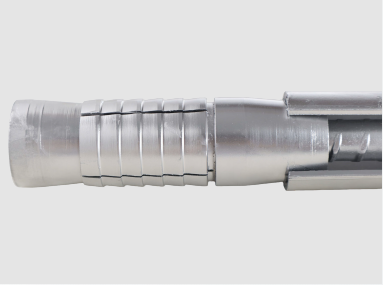
- Longitudinal slit tube: The body is a high-strength steel tube with a slit running along its length. When driven into a borehole slightly smaller than the tube diameter, the slit allows the tube to compress so that the wall contacts the borehole along the full length.
- Collar ring and bearing plate: The steel ring is fixed at the collar end of the tube and compresses the bearing plate. The plate contacts the rock surface, develops compressive force, and can connect the bolt to shotcrete or other surface support.
- Borehole matching: The bolt should be installed in a borehole slightly smaller than the tube diameter. For Item No. 47, the recommended drill bit size is 41-45 mm. Other sizes should be matched to the corresponding model and drilling conditions.
- Installation method: The bolts can be installed with hand-held equipment or a mechanized bolting rig. Frictional support is available at the working face immediately after installation, which suits development cycles requiring fast initial support.
- Surface finish: Black or hot-dip galvanized finishes are available. Tubes and plates can both be supplied in standard or galvanized versions to suit the service environment.
- Rock displacement adaptability: The bolt maintains support resistance under significant surrounding rock displacement, making it suitable for roadways that require both immediate support and a degree of adaptability to deformation.
Why Choose Split Set Bolts
Friction bolts have been used internationally in mining for decades and are regarded as one of the simplest forms of ground support in metal mining. Split set bolts combine full-length friction anchoring, fast installation, and plate compression, making them suitable for roof and roadway support in underground copper and gold mines and other metal mines.
In development headings, immediate frictional support at the working face helps shorten the waiting time before support is available. In roadways where the surrounding rock undergoes some displacement, full-length contact between the tube and borehole wall continues to provide support resistance. Under significant rock displacement, split set bolts offer better support performance than expansion shell bolts.
The product is available in 34 mm, 40 mm, and 47 mm diameters, with lengths from 600 mm to 3,000 mm, and in black or hot-dip galvanized finishes. This allows selection according to roadway section, borehole conditions, and environmental requirements.
FAQ
What is a split set bolt, and how is it different from an expansion shell bolt?
:A split set bolt is a full-length friction bolt. A high-strength steel tube with a longitudinal slit is compressed in a borehole slightly smaller than the tube diameter, creating radial pressure and friction along the full contact length. Its anchoring mechanism differs from that of an expansion shell bolt, and it maintains support resistance under significant rock displacement.
What diameters and lengths are available?
Common diameters are 34 mm, 40 mm, and 47 mm, with lengths from 600 mm to 3,000 mm. For Item No. 47, the recommended drill bit size is 41-45 mm. Other diameters and lengths should be matched to the specific model and borehole conditions.
What equipment is needed for installation?
The bolts can be installed with hand-held equipment or mechanized bolting equipment. After the bolt is driven into a borehole slightly smaller than the tube diameter, the tube compresses and develops friction against the borehole wall. The steel ring and bearing plate then apply compressive force to the rock surface.
Which surface finish should I choose?
Black or hot-dip galvanized finishes are available. Tubes and plates can both be supplied in standard or galvanized versions. The choice can be made according to the corrosive conditions and project requirements.
Can the bolt still provide support under large rock displacement?
The split set bolt maintains support resistance under significant surrounding rock displacement, which is an advantage over expansion shell bolts. Final selection should still take ground conditions, borehole quality, and the support design into account.
Can split set bolts be used with shotcrete?
Yes. Split set bolts can be used in combined rock bolt and shotcrete support, and the bearing plate can work with surface support.
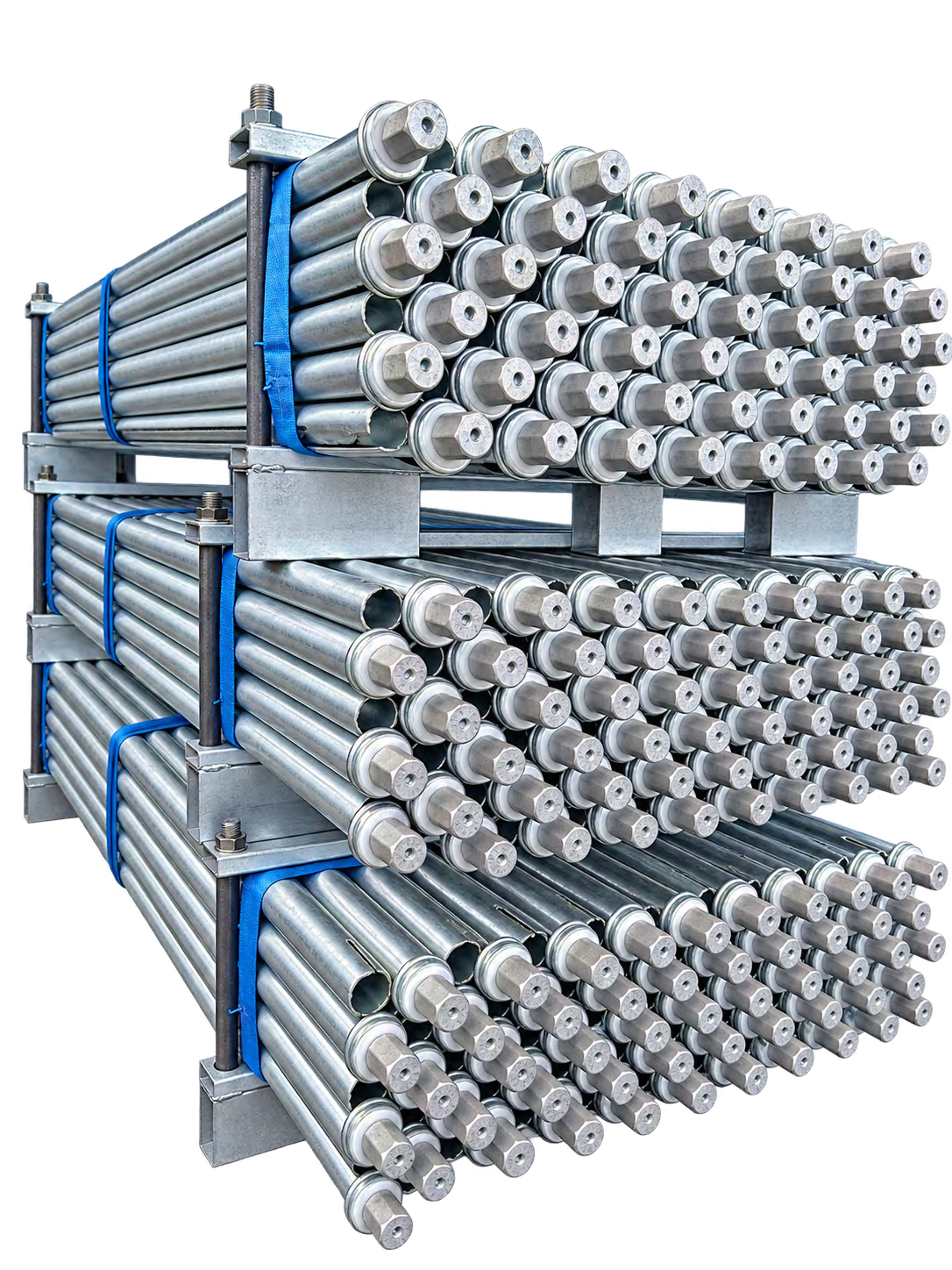
Procurement and Selection
When requesting a quotation, please provide the application (development heading, production heading, or working-face support), required diameter and length, borehole or drill bit conditions, surface finish requirement (black or hot-dip galvanized), plate configuration, and purchase quantity. We will help confirm the 34 mm, 40 mm, and 47 mm options, lengths from 600 mm to 3,000 mm, and the matching plate arrangement, and provide a quotation and technical information.
For further confirmation of specifications, installation matching, or a bulk purchase plan, please send the operating conditions and quantity requirements, and we will assist with the selection.
Interested in this product?
Get in touch for more information, pricing, or custom requirements.