

Why Does the Mining Industry Use Self-Drilling Anchors?

Dayang Yang
AuthorWith over 15 years of experience in the production and sales of ground anchoring and mining support products, we operate our own rock bolt and accessory manufacturing facility with stable large-scale production capacity. We are specialists in rock bolts, resin cartridges, anchor cables, bearing plates, and customized ground anchoring products for mining support and geotechnical anchoring solutions.
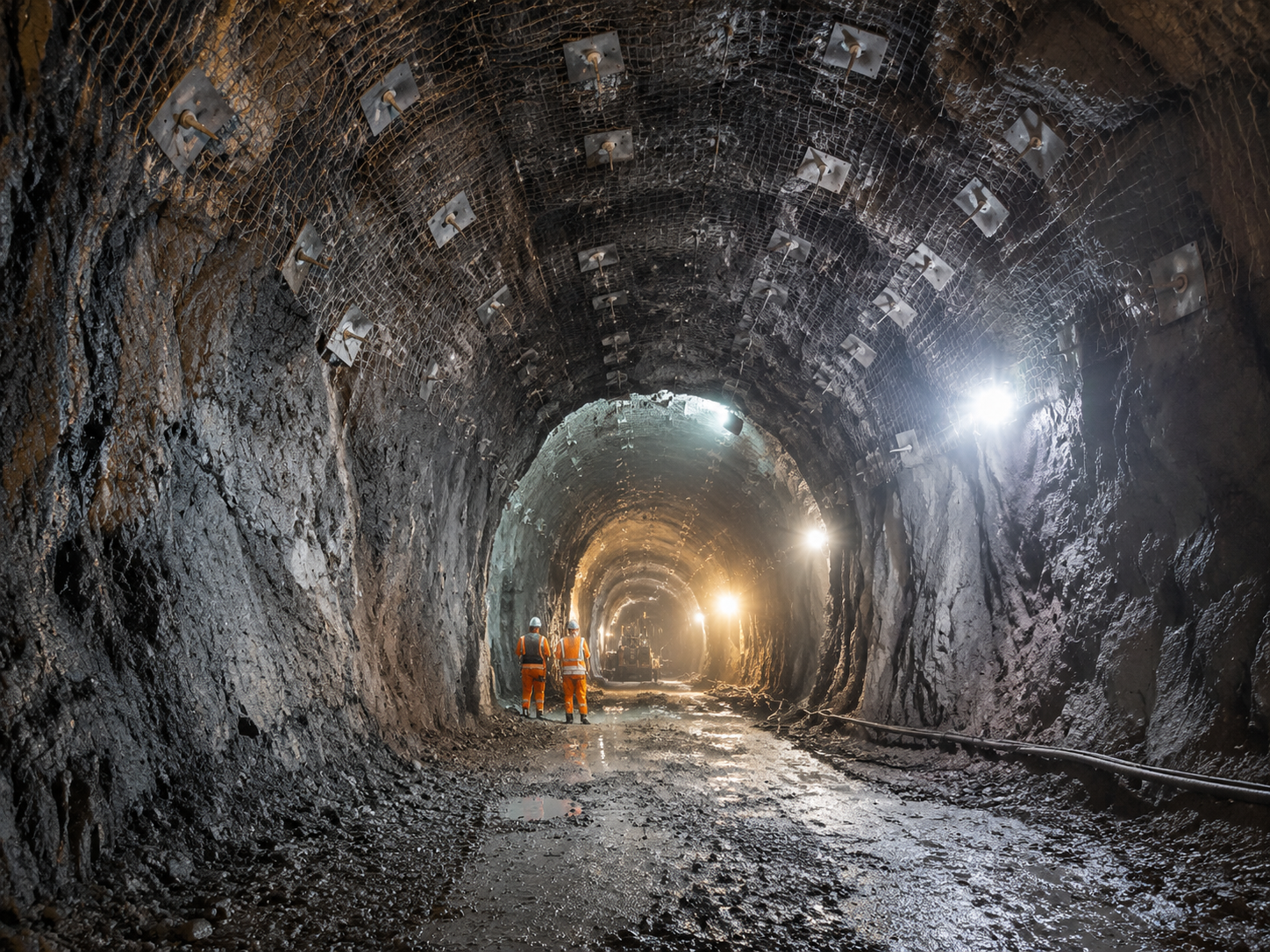
As underground mining moves into deeper and more complex areas, ground stability has become a critical factor affecting both safe production and development efficiency. Fractured rock, fault zones, high in-situ stress, groundwater, and ongoing mining-induced disturbance can all cause deformation or loosening at roadway roofs, sidewalls, and intersections. The objective of modern mining ground support is not simply to address local instability, but to create a stable working environment for mining, haulage, and ventilation through reliable rock reinforcement solutions.
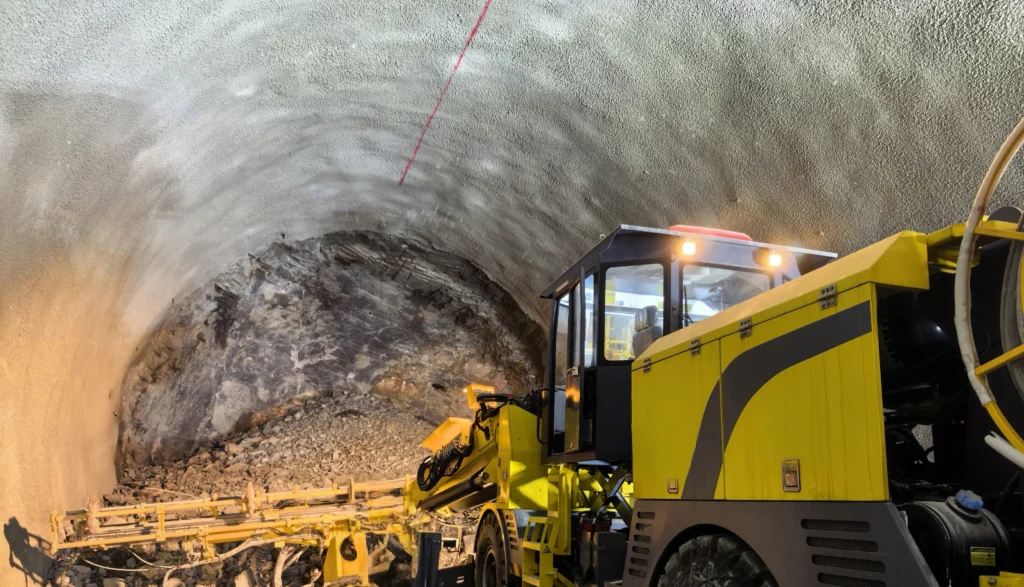
Ground Support Challenges in Mine Roadways
In rock masses with poor integrity, conventional pre-drilled holes can suffer from borehole collapse, deviation, or difficulty inserting the bolt after drilling. For time-sensitive development work, multiple installation steps can also lengthen the support cycle and keep personnel and equipment in insufficiently supported areas for longer. Therefore, mining projects need to select an appropriate anchoring system based on geological conditions, design loads, available equipment, and operating schedules.
What Is a Self-Drilling Anchor System?
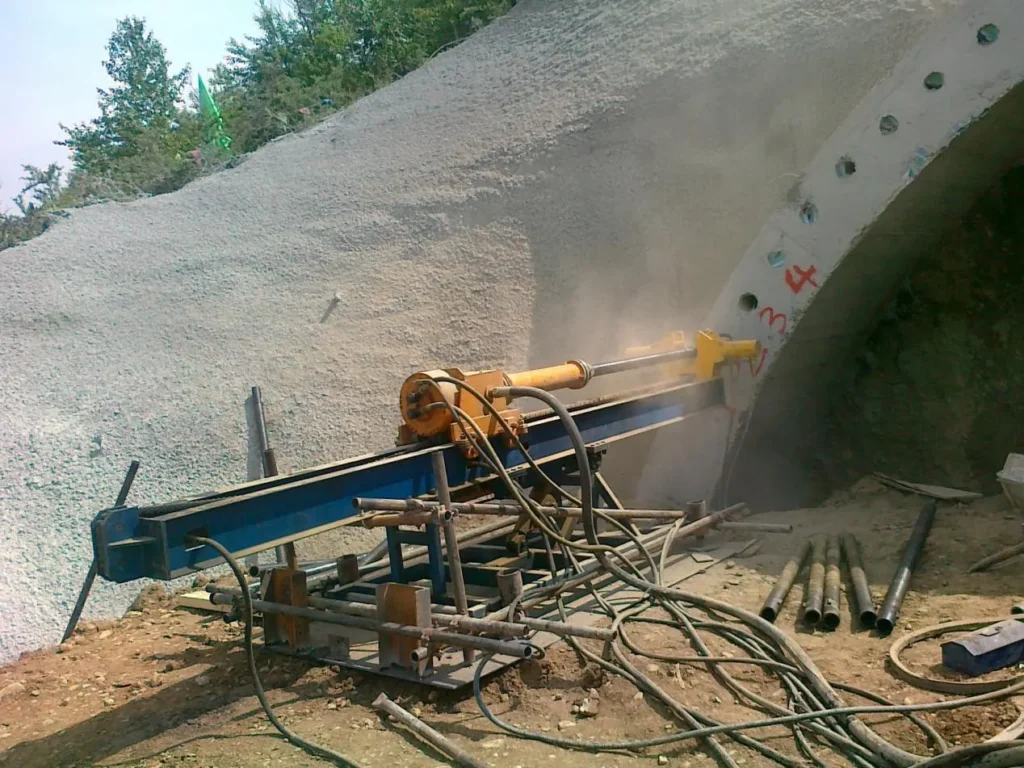
A self-drilling anchor, also known as a self-drilling hollow bar anchor or self-drilling anchoring system, typically consists of a sacrificial drill bit, hollow threaded bar, coupler, plate, and nut. Its key feature is that the bar serves as the drill string during drilling. Once the hole is completed, grout is injected through the hollow bar, and the bar remains in place as the load-bearing element.
This integrated drilling, grouting, and anchoring process makes self-drilling anchors particularly suitable for conditions with poor borehole stability or difficult hole formation. Across the industry, they are widely recognized as an important active ground support solution for underground mining, tunneling, and complex geotechnical works.
Why Are Self-Drilling Anchors Suitable for Complex Mining Conditions?
First, self-drilling anchors can reduce the risk of borehole instability between drilling and bolt installation. In fractured, weak, or collapsible ground, the anchor bar advances with the drilling process, helping maintain installation continuity.
Second, hollow bar grouting delivers grout directly into the anchorage zone, enabling the bar, grout, and surrounding rock to work as a more integrated load-bearing system. Grout quality, drill-bit selection, and installation parameters must still be controlled according to site conditions, but the system provides a more flexible approach to complex rock reinforcement.
In addition, reducing rod changes, pre-drilling steps, and repeated installation activities can improve the organization of mining ground support installation. This efficiency can be valuable in roadway development, intersection reinforcement, and localized fractured-zone treatment.
Typical Mining Applications of Self-Drilling Anchors
Self-drilling anchor systems can be used for mine roof support, sidewall reinforcement, stope ground control, fault-zone treatment, chamber support, and portal-area strengthening. In high-stress areas or where ground conditions change rapidly, engineering teams may also combine them with cable bolts, friction bolts, expandable bolts, steel straps, and mesh to create a layered mine ground control solution.
For example, the product range presented by CQ RockBolt includes mining ground support products such as Split Set friction bolts, Swellex expandable bolts, self-drilling anchors, cable bolts, and resin anchors. This reflects an important industry principle: different anchoring products are not necessarily substitutes for one another. They should be selected and combined according to rock conditions, installation speed, load requirements, and project cost objectives.
How Should Self-Drilling Anchors Be Selected Against Other Rock Bolt Types?
| Selection Factor | Key Engineering Considerations |
|---|---|
| Ground Conditions | Assess fractures, rock mass condition, borehole stability, and groundwater influence |
| Support Objective | Define whether the support is temporary, permanent, or designed to work with other elements |
| Installation Conditions | Confirm drill capacity, working space, installation sequence, and grouting conditions |
| Load Requirements | Determine bar specification, anchorage length, and connection method through project design |
| Durability Requirements | Evaluate corrosion protection requirements based on service life and site environment |
Where boreholes remain stable and installation conditions are well controlled, conventional pre-drilled rock bolts may still be an effective choice. In fractured ground, weak formations, or applications requiring continuous installation, self-drilling anchors often offer stronger adaptability. The key is not to select one universally “best” product, but to match the rock bolt type to the actual ground conditions.
Installation and Quality Control Are Equally Important
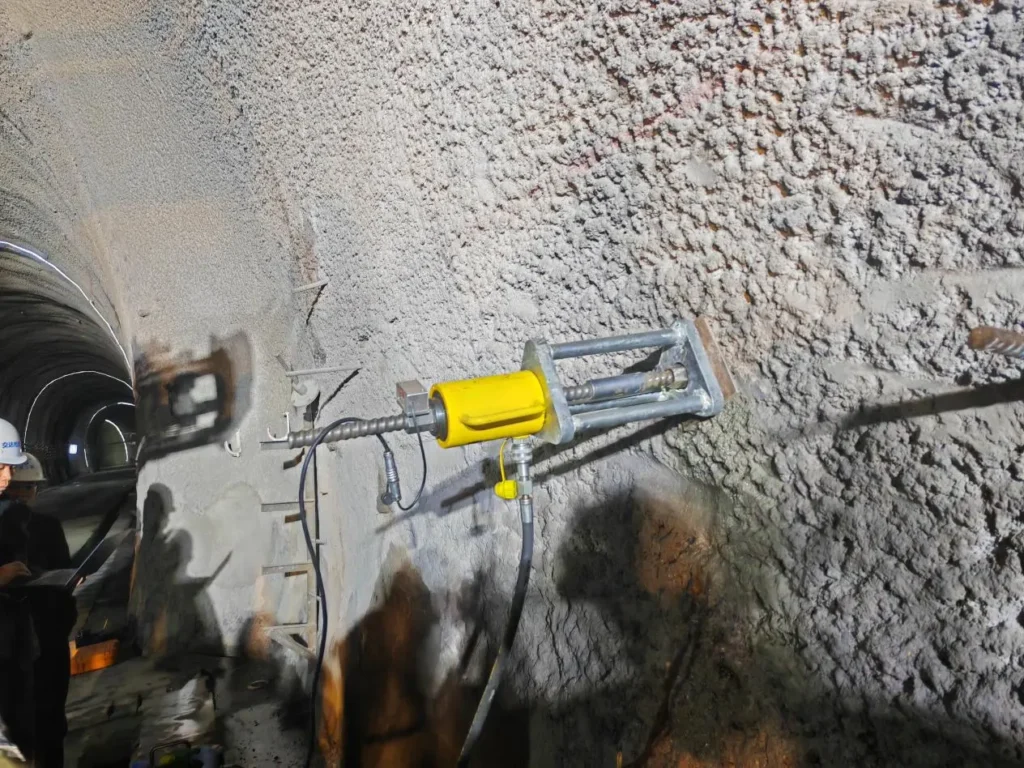
Reliable self-drilling anchoring depends not only on the product itself, but also on installation quality. Key controls include hole positioning, drilling depth, drill-bit suitability, bar connections, grout mix, grout return, and plate installation. Where required, pull testing, ground displacement monitoring, and installation records should be used to evaluate support performance continuously.
For procurement and engineering teams, providing clear rock bolt specifications, thread systems, lengths, quantities, geological conditions, and corrosion requirements helps suppliers configure a more suitable mining anchoring solution. Suppliers with customization capability can also provide coordinated options for anchor bars, drill bits, couplers, and surface treatments.
Conclusion
In complex underground mining environments, self-drilling anchors offer an important option for mining ground support through integrated drilling and anchoring, grouting reinforcement, and adaptability to unstable borehole conditions. Their value is not in replacing every support method, but in working alongside friction bolts, cable bolts, and other support components to create safer, more efficient, and more sustainable ground control systems for different rock conditions.
For a project-specific self-drilling anchor and supporting ground-support solution, submit your requirements through the CQ RockBolt Contact Us page.
Related News
Other news you might be interested in

Ground Support in Weak and Fractured Rock: How to Select Rock Bolt Systems for Mining and Tunneling
In underground mining, tunneling, slope excavation, and foundation pit construction, ground stability does not depend only on the strength of an individual rock bolt. Where the ground contains developed joints and fractures, loose rock, unstable boreholes, significant groundwater, or strong excavation disturbance, a single rock bolt support measure may not provide every required support function. A reliable ground support system must consider ground conditions, support objectives, equipment capacity, borehole stability, grouting procedures, system accessories, and long-term durability. Project teams can review the available systems in the CQ Rockbolt product center before selecting a solution that matches the actual site conditions, rather than choosing only by product name or rated capacity.

How to Choose a Reliable Self-Drilling Anchor System Manufacturer
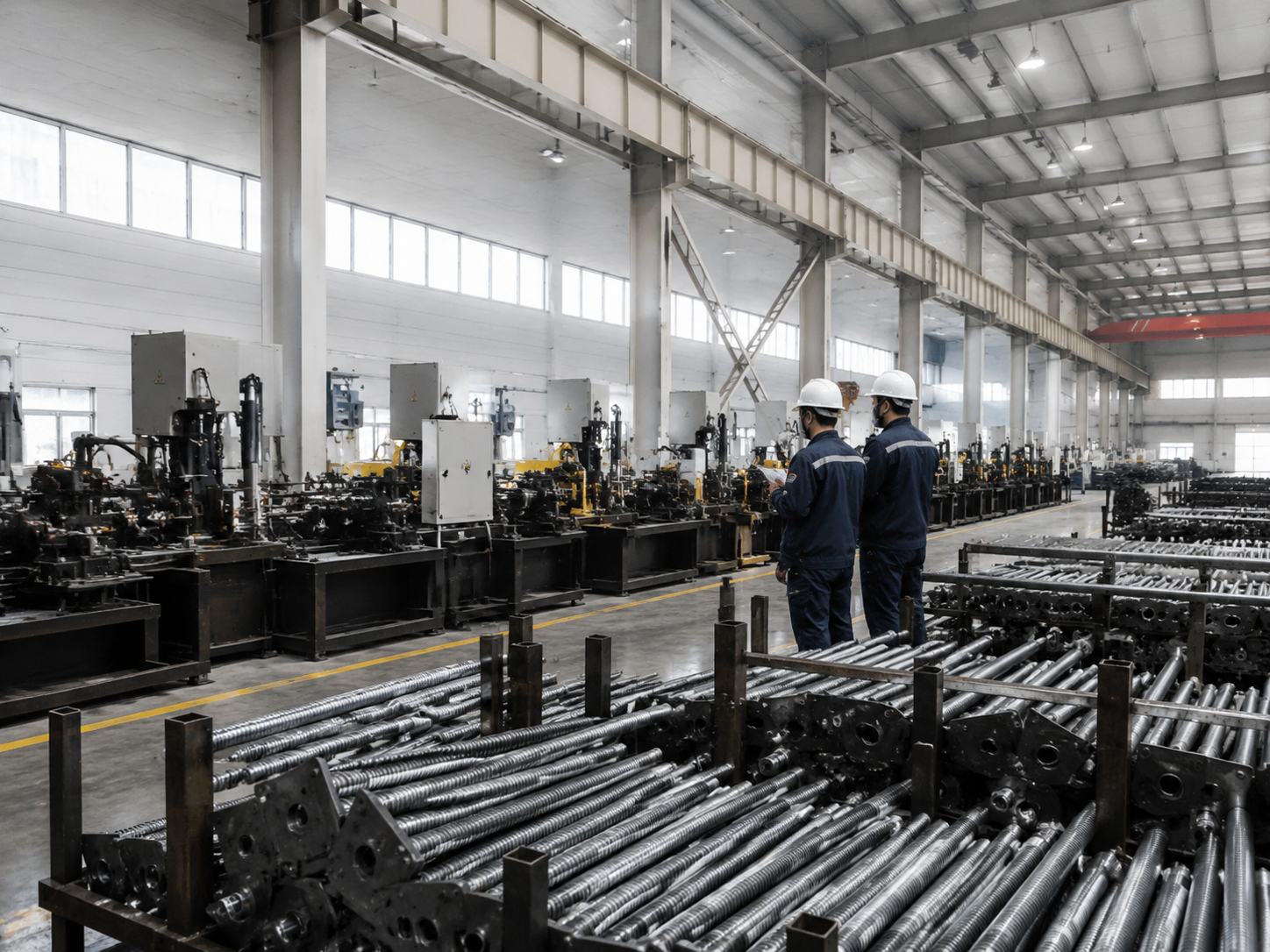
In underground mining, tunneling, slope stabilization, deep excavation support, and foundation reinforcement projects, complex ground conditions often determine the difficulty of the support solution. In soft ground, fractured rock, weathered rock masses, or water-bearing formations, conventional pre-drilled holes can collapse, jam, or lose borehole stability. By combining drilling, anchoring, and grouting into one process, a self-drilling anchor system has become an important solution in geotechnical engineering.However, selecting the right self-drilling anchor is only the first step. A manufacturer's ability to consistently supply compatible hollow threaded bars, sacrificial drill bits, couplers, bearing plates, nuts, and grouting accessories, while understanding actual ground support requirements, directly affects installation efficiency, anchorage quality, and project safety.
Want to know more?
Get in touch with us for more information about our services and products.