

Resin Cartridges, Pumpable Resin or Hollow-Core Bar: Choosing by Ground Condition

Dayang Yang
AuthorWith over 15 years of experience in the production and sales of ground anchoring and mining support products, we operate our own rock bolt and accessory manufacturing facility with stable large-scale production capacity. We are specialists in rock bolts, resin cartridges, anchor cables, bearing plates, and customized ground anchoring products for mining support and geotechnical anchoring solutions.
A tender line item that says “resin rock bolts” can return three quotations describing three different systems: pre-packaged resin cartridges, a pumpable two-component resin, or a self-drilling hollow-core bar. The prices are not comparable, because the products do not do the same job in the same way.
The first decision is not which resin is stronger. It is whether the borehole will still be open, at the right diameter, when the bolt goes in.
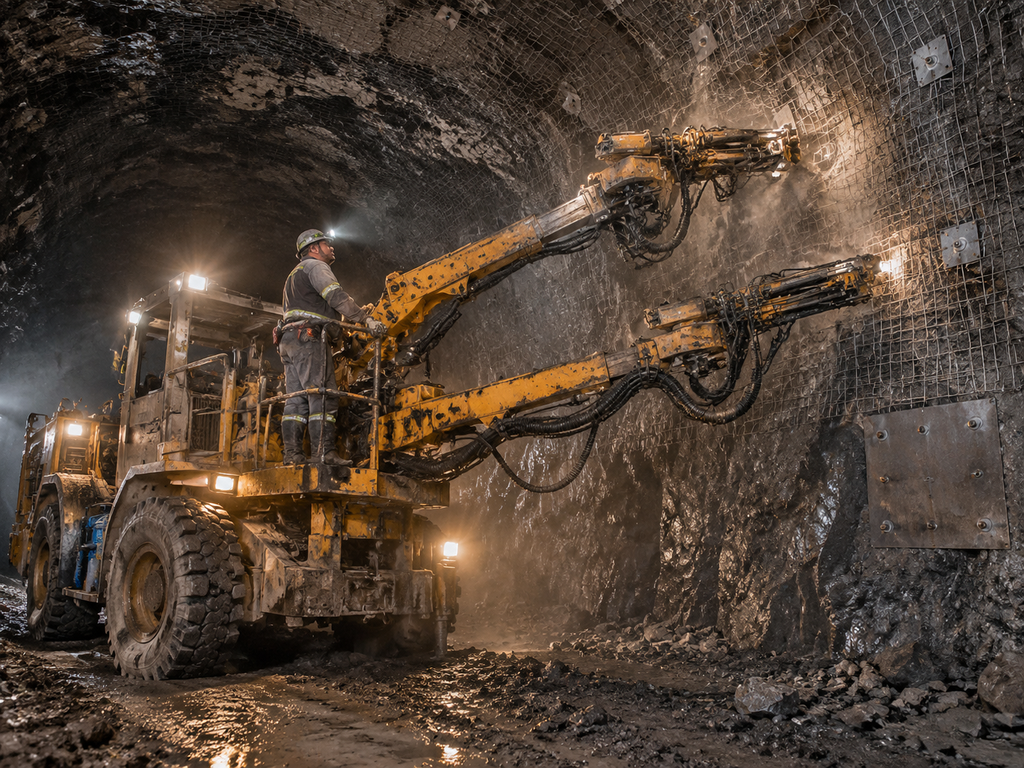
The three options do not sit on the same level
Resin cartridges and pumpable resin are two delivery formats for a resin anchorage. A hollow-core bar is a bar and drilling system that also carries the anchorage.
- Resin cartridge: a two-component resin is pre-packed in a film cartridge, pushed into the hole and ruptured and mixed by the rotating bolt.
- Pumpable resin: two components are mixed and injected at the face, normally with a pump or a bolting machine, either before the bar is inserted or through the bar after it is in place.
- Hollow-core bar (self-drilling anchor): the bar is the drill string, a sacrificial bit stays downhole, and grout or resin is injected through the bore.
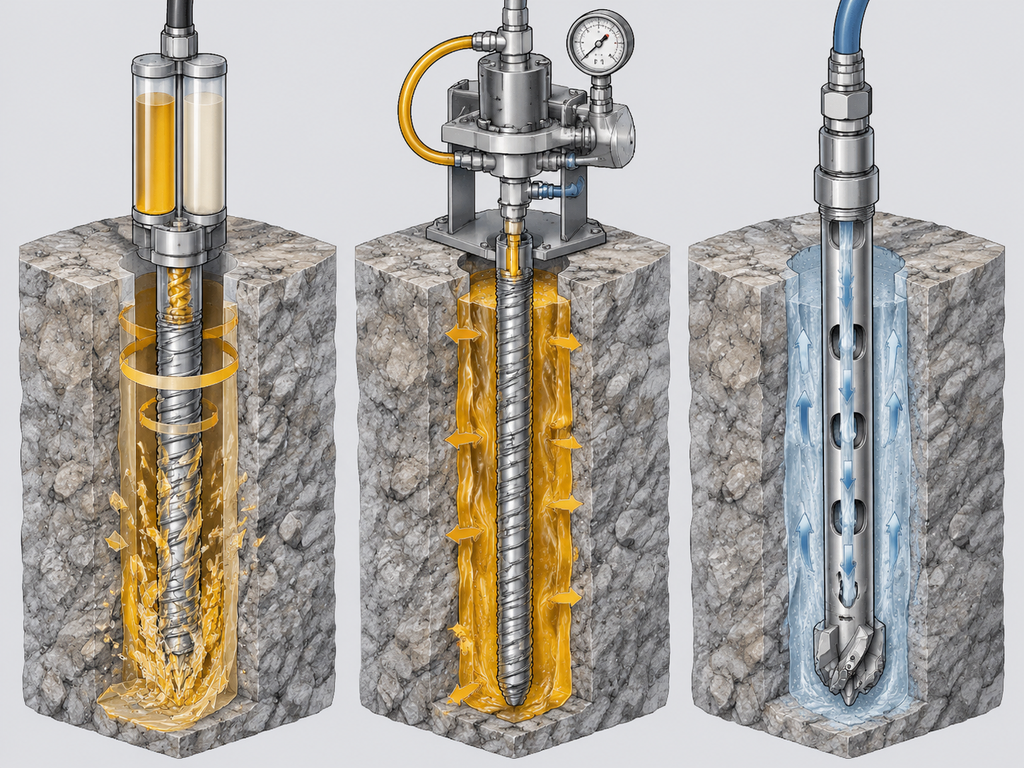
That third option is not a competing resin. It is a way of drilling and supporting ground that will not hold a hole. It can be grouted with cementitious grout, or injected with a pumpable resin; Jennmar describes post-grouting through a hollow bar for automated bolting with self-drilling anchors.
An RFQ that mixes the three levels — for example, asking for “pumpable resin bolts” without stating whether the bar is solid or hollow — usually produces offers that cannot be compared line by line. Separate the bar decision from the anchorage-material decision before asking for prices.
Decide from the borehole outward
Three questions, in this order, settle most of the choice:
- Will the hole stay open between drilling and bolt installation?
- Can the specified diameter be achieved and maintained along the bonded length?
- What equipment and services are at the face — rotation-capable bolter, pump, water, compressed air, power?
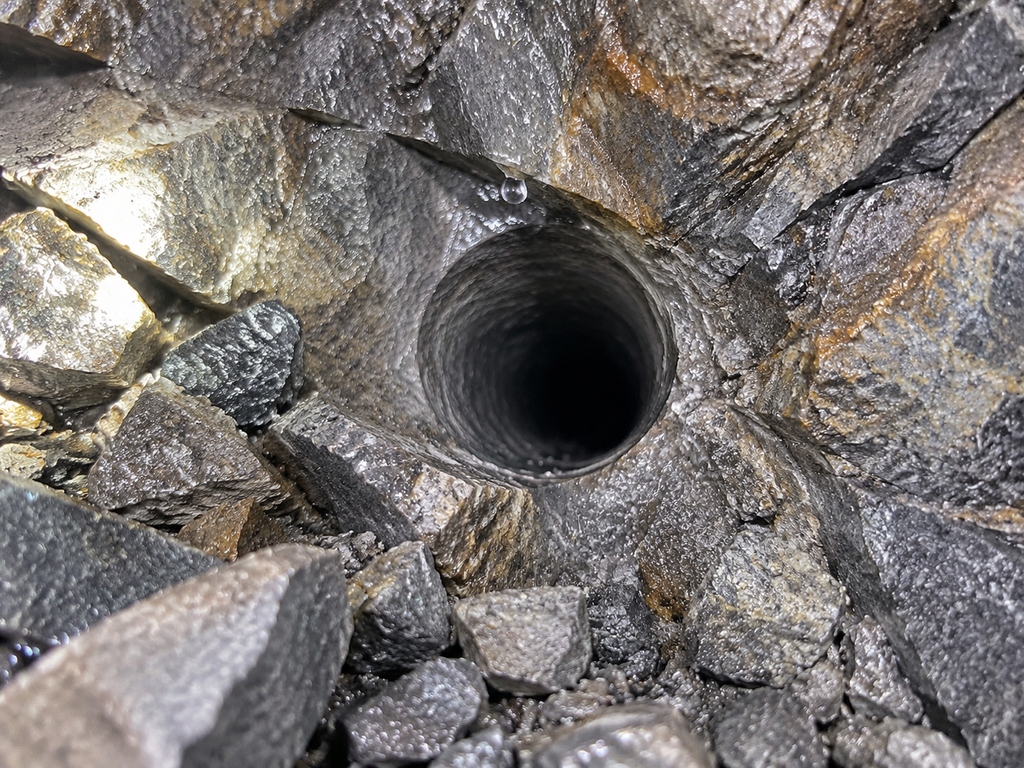
If the hole stands, the diameter is controlled and a rotating bolter is available, a cartridge system is usually the lowest-friction option. If the hole will not stand, no cartridge or pump will fix it: the bar has to become the drilling tool. If the hole stands but is oversize, irregular or lost to voids, or if the heading runs at a cycle time that manual cartridge handling cannot meet, pumpable resin becomes worth its mobilisation cost.
Resin cartridges: efficient when the hole behaves
A cartridge system assumes a hole that accepts the cartridge, a bar that can puncture and shred the film, and enough rotation to mix resin and catalyst along the bonded length. In competent rock, with a standard development bolter, that is a fast and well-understood cycle.
Four things decide whether the cartridge actually fits the job:
- Cartridge to hole fit. The cartridge diameter and length must suit the actual borehole, not the nominal bit size. Overbreak, bit wear and hole closure change the real annulus.
- Gel time at the real temperature. A catalogue gel time is measured under stated conditions; rock, bolt and cartridge temperature at the face can differ from surface storage temperature.
- Spin and hold time. These are procedure requirements, not suggestions, and they belong in the installation instruction rather than in a footnote.
- Shelf life remaining at delivery. For export orders, the useful number is the remaining life after transport, customs and site storage — not the shelf life printed at manufacture.
The failure mode is predictable: in broken or running ground the cartridge can be damaged on insertion, the film may not shred cleanly, and resin can escape into voids instead of filling the annulus. In an oversize hole, the cartridge volume may be insufficient for the annulus that actually exists. These are ground-condition problems, not brand problems, and no cartridge supplier can design them out.
For the detail behind these four checks, see our guides to resin cartridge ordering checks and how resin anchorage force forms.
Pumpable resin: the gain is encapsulation and cycle time, not a stronger glue
Pumpable resin is usually presented as a productivity system, and that is the right way to evaluate it. Jennmar states that, unlike resin cartridges, pumpable resin ensures full column encapsulation regardless of hole size, and that boreholes can be pre-grouted before a solid bar is inserted, or post-grouted through a pumpable bolt .
The post-grouting sequence described by the same manufacturer is worth understanding before specifying it: resin is pumped through the hollow bolt to the back of the hole, returns through the annulus, and injection stops when resin appears behind the plate. Setting time is adapted to the pumping time and the site temperature, and the method is used for automated bolting with self-drilling anchors .
That changes what the buyer is actually purchasing:
- Full column despite an irregular hole. The volume is pumped until return, so the annulus is filled rather than estimated.
- Fewer rejected holes. Oversize or partly broken holes are less likely to consume a cartridge without producing anchorage.
- Mechanised cycle. Material handling moves from the bolter operator to a pump and mixing unit.
- Immediate tension in some systems, where the resin is formulated for it.
The costs sit on the same list: a pump or mixing unit, consumables and spare parts, flushing and cleaning between shifts, pot life and set-time control, crew training, and material logistics to a face that may be far from the mixing station. On a small or dispersed project, mobilisation can outweigh the cycle-time gain. Pumpable resin is not automatically the modern choice; it is the choice that pays back at a certain combination of hole quality, volume and mechanisation.
Two papers at Ground Support 2026 (Brisbane, 17–19 November 2026) show where the industry is pushing this: Sandvik presents laboratory work on pumpable urea–silicate resin with hollow-core bars, covering shear and tensile loading, coupling integrity and productivity; Boliden Tara Mines presents pumpable resin systems for refurbishment in extremely poor ground. Both are the conditions where cartridges struggle — high-volume mechanised headings, and rehabilitation of ground that is already broken.
Hollow-core bar: when the hole will not stay open
A self-drilling anchor combines drilling and permanent reinforcement in one product. Normet describes its SDA as an injectable bolting system that uses the hollow bar and a sacrificial drill bit, suited to poor ground where a pre-drilled hole would not survive . DYWIDAG describes the same logic for loose or collapsing ground: no casing, drill with grout or water flush and then inject, or drill and grout simultaneously.
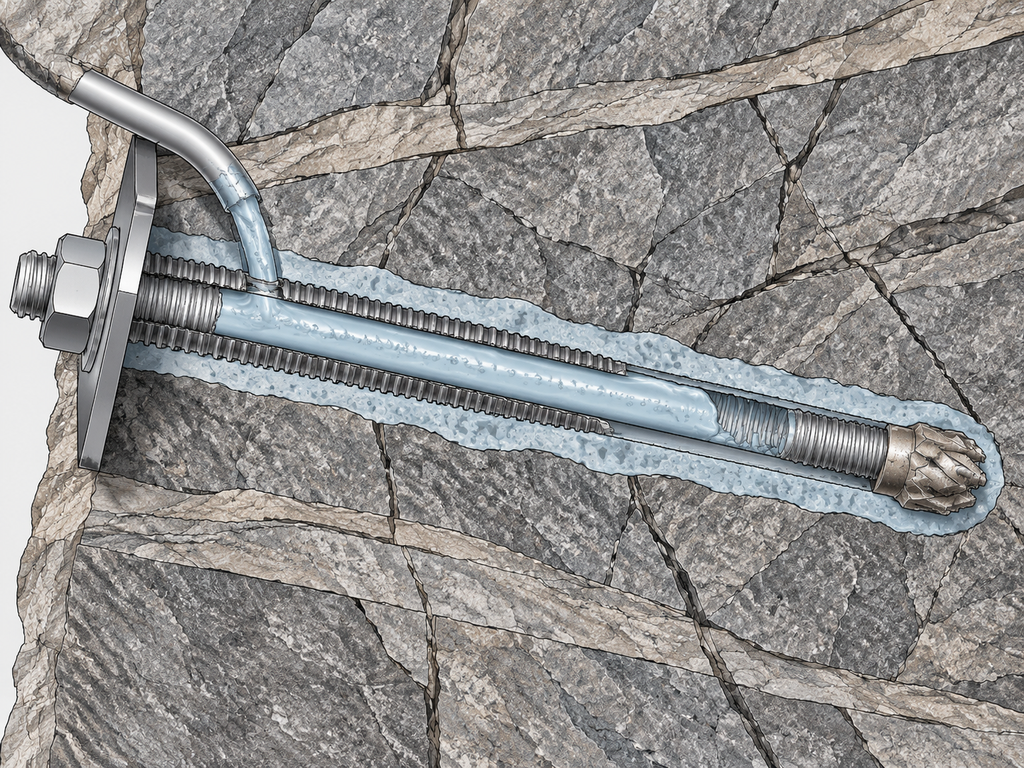
The value is not a higher capacity number. It is that support is installed while the ground is being drilled, so there is no window in which an open hole can close, and no temporary support step before the permanent one.
The costs are equally specific:
- Higher bar cost per metre, plus a sacrificial bit per hole.
- Grout quality control — mix, water ratio, pressure, volume and return — becomes the anchorage control variable.
- Couplers and threads need care during drilling and handling.
- Corrosion protection has to be chosen for the bar and for the exposed length.
- In competent rock, a standard bolt and cartridge is usually faster and cheaper per metre.
One boundary matters commercially: a grouted hollow bar develops anchorage from the grout column and the ground-to-grout bond. It is not a torque-tensioned mechanical anchor, and its capacity should not be inferred from installation torque.
A condition-based decision table
| Ground and site condition | Option that usually fits first | Why | Confirm before quoting |
|---|---|---|---|
| Competent rock, stable hole, standard development bolter | Resin cartridge | Low material handling, fast cycle with rotation | Actual hole diameter, gel time at site temperature, shelf life on arrival |
| Stable hole but oversize, irregular or intersecting voids | Pumpable resin | Full column encapsulation independent of hole size | Pump or bolter interface, set time, flushing procedure, consumables |
| Broken, running or collapsing ground; hole will not stand | Hollow-core self-drilling bar | Drilling and support in one pass, no casing | Bar and bit size, grout mix and pressure, corrosion protection |
| Rehabilitation of damaged ground with limited access | Pumpable resin, or grouted hollow bar | Material can be placed where a cartridge cannot be handled | Access and pump reach, adhesion to existing support, surface preparation |
| Mixed face with changing conditions | Combination, decided per zone | No single system covers a variable face | Zoning plan and change-over procedure at the face |
The table gives a starting point, not a design. A geotechnical engineer still has to confirm the support system against the ground model, and the supplier still has to confirm that the proposed components match.
What to state in the RFQ for each option
| Option | State in the RFQ | Commonly omitted |
|---|---|---|
| Resin cartridge | Bolt drawing, actual borehole diameter range, bonded length, site temperature range, bolter model, required shelf life at delivery | Actual (not nominal) hole diameter; temperature at the face rather than in the warehouse |
| Pumpable resin | Bar type and whether it is hollow or injection-equipped, hole volume, pump or machine model, set-time window, cleaning method | Whether grouting is pre- or post-installation; who supplies and maintains the pump |
| Hollow-core bar | Ground condition, hole depth, bar and thread size, bit type, grout mix and pressure, corrosion protection, coupling requirements | Grout specification; whether simultaneous drill-and-grout is permitted on site |
If these fields are missing, suppliers will fill them with their own assumptions, and the resulting prices will not describe the same scope.
Claims that should not appear in a quotation
No supplier should promise the following from a catalogue alone:
- Full encapsulation without knowing the hole condition and void risk.
- A pull-out or anchorage value without the ground, grout and test method being stated.
- A gel or set time without the temperature at which it applies.
- Compatibility with a specific bolting machine without confirming the interface, control system and consumables.
- A corrosion life without the coating system and the environment being defined.
- Equivalence between a cartridge and a pumpable resin on the basis of compressive strength alone.
The same discipline applies to test data. A capacity figure is only comparable when the test method, specimen and boundary conditions are stated alongside it — which is why test method has become a topic in its own right at industry conferences.
Next step
Send the ground condition, the actual borehole diameter range, the bolt length and the bolting equipment you intend to use. We will tell you which of the systems we manufacture — resin cartridges or self-drilling hollow bars — fits that combination, and what we need confirmed before quoting. If your site is standardising on a pumpable resin system, say so early: we will confirm what we can supply within that system rather than substitute a cartridge for it.
Related News
Other news you might be interested in

Self-Drilling Anchor Bolts for Water-Conveyance Tunnel Reinforcement
Self-drilling anchor bolts are useful for water-conveyance tunnel reinforcement when broken or water-bearing ground makes conventional drill-and-insert bolting difficult. By using a hollow threaded bar as both the drilling member and the permanent reinforcement, the system removes the separate bolt-insertion step and provides a channel for grouting through the same bar.For a water-conveyance tunnel, that installation advantage matters. Headrace, tailrace, diversion, irrigation and water-supply tunnels can pass through fault zones, weathered rock, weak interlayers and interconnected fractures. Groundwater may enter the excavation, boreholes may deteriorate after drilling, and support must be coordinated with drainage, waterproofing and the final lining.

What Is a Split Set Mining System and How Is It Different from Other Rock Bolts?
A split set is often described as a rock bolt, but in mining it is more useful to think of it as a support system. The steel tube is the most visible part. The way it performs also depends on the drilled hole, the bearing plate, the installation adapter, the drilling equipment, the surface support and the checks made underground. That distinction matters when a project compares rock bolts. Two quotations can list a similar diameter and length, yet propose different load-transfer mechanisms, different hole requirements and different installation procedures. A split set is not a resin bolt with the resin removed. It is not a mechanical expansion-shell bolt, a self-drilling hollow bar, a water-inflatable tube or a cable bolt. Each product family solves a different part of the ground-support problem.
Want to know more?
Get in touch with us for more information about our services and products.