

Rock Bolt Delivery Readiness for African Underground Mine Development: What Contractors Should Confirm Before Phase-Based Supply

Dayang Yang
AuthorWith over 15 years of experience in the production and sales of ground anchoring and mining support products, we operate our own rock bolt and accessory manufacturing facility with stable large-scale production capacity. We are specialists in rock bolts, resin cartridges, anchor cables, bearing plates, and customized ground anchoring products for mining support and geotechnical anchoring solutions.
Underground development is planned as a series of phases: a heading is excavated, support is installed, ventilation and services are extended, and the next work area is prepared. Rock bolt supply has to follow that sequence. A technically suitable bolt can still create problems if it arrives for the wrong work front, with the wrong plate, without the approved drawing revision, or in packaging that cannot be handled safely at the mine.
That is why rock bolt delivery readiness is more than a dispatch date. For contractors working on African underground projects, the practical question is: can the supplier show that each delivery will match the approved support package, the installation method and the phase schedule?
In this article, phase-based supply means releasing quantities against defined work fronts and approved technical packages, rather than relying on one annual blanket order. The approach still uses normal purchase orders and call-offs; it simply makes the link between the construction phase, the approved product and the delivery date visible.
The recent progress report on the Mogalakwena Sandsloot project in South Africa provides a useful industry example. Redpath Africa Limited is carrying out underground development beneath an existing open pit for Anglo American Platinum. Its scope includes excavation, construction, raiseboring, ground support, ventilation and preparation for longhole stoping. The current Phase B extension is scheduled to run until August 2027, and recent work has included critical ventilation infrastructure and preparation for trial stoping. The report also says that development, drilling, ground support, ventilation and equipment readiness must be coordinated as the project advances.
That description is relevant to procurement because it shows why a support package cannot be bought as an isolated commodity. However, the report does not disclose bolt types, quantities, suppliers, prices, a tender or an open purchasing opportunity. It is therefore a project-delivery example, not evidence that CQ Rockbolt is involved in Sandsloot or that any particular bolt is required there.

Start with the development sequence, not a single annual quantity

A contractor may know the total number of bolts expected over a year while still lacking the information needed for a reliable delivery plan. The more useful starting point is a support demand calendar. For each phase or work front, record:
- the planned start and finish dates;
- the approved support class and drawing revision;
- the bolt family, dimensions, anchor and accessory arrangement;
- the planned installation method and equipment;
- the expected consumption rate;
- the minimum and maximum stock to be held at site;
- the required delivery window and receiving location.
This is particularly important where the ground conditions or infrastructure sequence can change. The Sandsloot report notes that geological conditions and evolving infrastructure requirements have required the contractor to adapt its work programme. A supply plan that cannot absorb a revised sequence may leave the wrong items on site and create a shortage of the items actually needed.
Phase-based supply should therefore identify which work front drives the first delivery, which items are common across several phases, and which items are specific to one approved support design. It should also state who can authorise a change to the demand calendar. Without that control, a supplier may receive a revised call-off without a matching revision to the technical schedule.
Define the rock bolt system before comparing unit prices
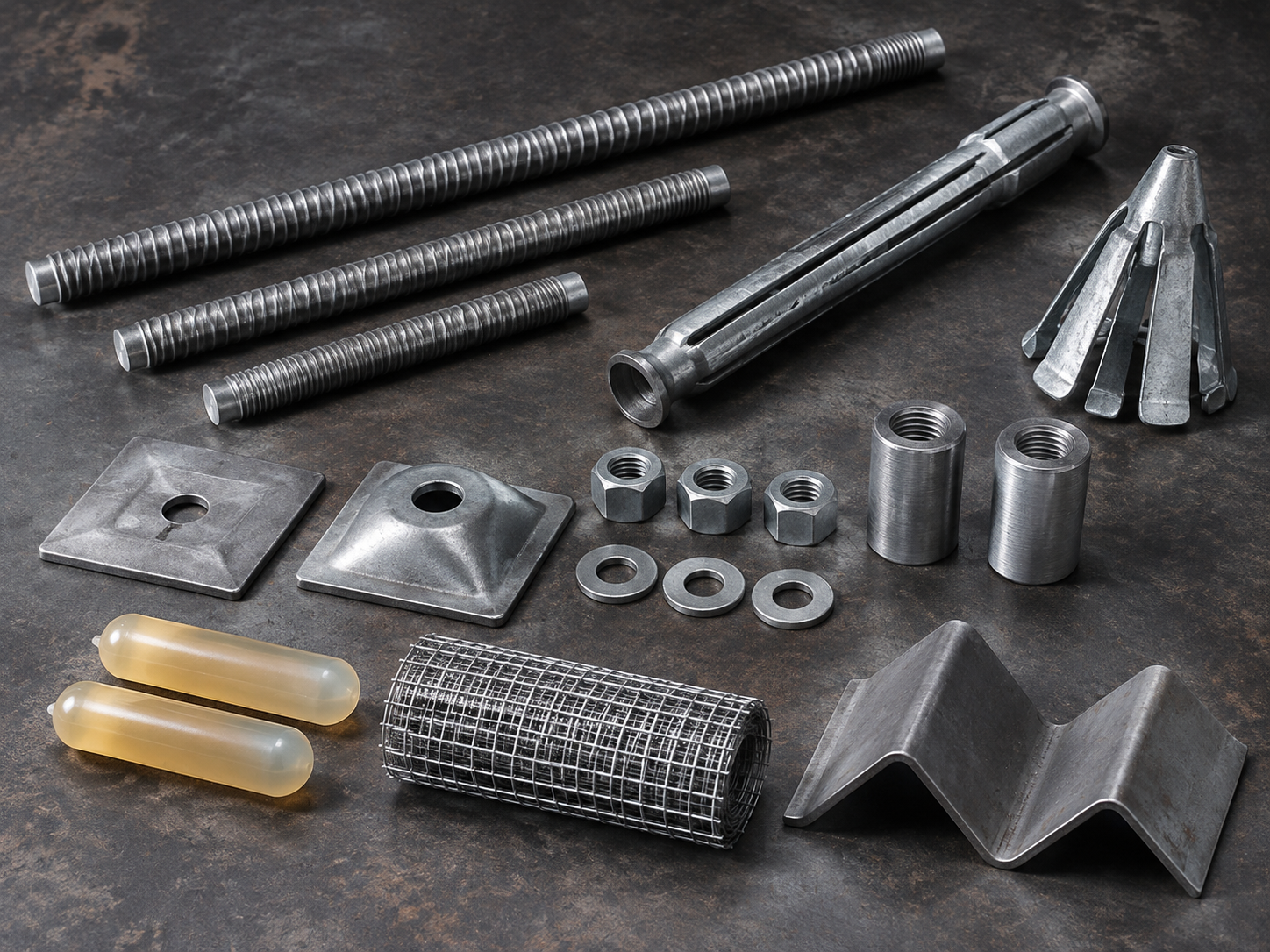
"Rock bolt" is a broad purchasing term. A quotation may cover a bar only, a bar with an expansion shell, a complete mechanical assembly, or a package that includes a plate, nut, resin and installation accessories. Those offers are not directly comparable.
CQ Rockbolt's public catalogue includes several product families relevant to underground mining and tunnelling: Split Set friction rock bolts, Swellex and hydraulic expansion bolts, expansion shell mechanical rock bolts, self-drilling hollow grouting rock bolts, Combo and CT bolts, resin capsules, and mining support materials such as plates, nuts, mesh, steel strips and W-shaped straps. The exact model, configuration, availability and supporting documents still need to be confirmed for the project.
Use one line item for one defined supply package. At minimum, the technical schedule should identify:
| Item | What the buyer should define |
|---|---|
| Product family | Friction, mechanical expansion, hydraulic expansion, self-drilling, resin-anchored, combination or another specified system |
| Bar | Diameter, length, steel grade, thread or end configuration, and drawing revision |
| Anchor | Expansion shell type, cone or wedge arrangement, or another specified anchorage method |
| Surface support | Plate, nut, washer, mesh, strap or other components required by the design |
| Consumables | Resin capsule, grout, drill bit, coupler or other installation-specific items |
| Finish | Coating, galvanising or other protection required for the service condition |
| Packing | Bundle, pallet, box, protective packaging and labelling requirements |
| Approval status | The document and revision against which the item must be supplied |
The public Split Set catalogue, for example, lists 33 mm, 39 mm and 46 mm diameters and lengths from 0.9 m to 3.0 m. Those are catalogue ranges, not a substitute for the project's specified dimensions, borehole conditions or plate arrangement. Similarly, the expansion shell page describes 2-leaf and 3-leaf designs and custom sizes, while the hydraulic expansion range lists Mn12, Mn16 and Mn24 models. A buyer should not treat those ranges as interchangeable across support designs or installation equipment.
For a resin-anchored system, the resin is part of the supply package rather than an unrelated accessory. The current resin capsule page lists fast, medium and slow curing options, a working temperature range, film or cartridge packaging and a stated shelf life. Those details are product-page information; the exact resin grade, storage history, remaining shelf life and compatibility with the specified bolt must be confirmed for the order. A delivery that arrives after the approved resin has lost part of its usable shelf life is not a successful delivery simply because the quantity matches.
Match the package to mechanised installation

The Sandsloot example describes mechanised drill-and-blast development, trackless loading and hauling, mechanised ground support installation and coordinated underground services. Mechanisation can improve consistency, but it also makes interface errors more visible. A bolt that is difficult to feed, a plate that does not seat correctly, or a resin capsule that does not suit the installation sequence can interrupt the cycle.
Before shipment, ask for an interface matrix rather than a general statement that a product is suitable for mining. The matrix should identify:
- the proposed bolt model and the equipment with which it is intended to be used;
- the drill-hole diameter and depth basis;
- the bar length and feed or handling limits;
- the anchor, plate, nut and washer arrangement;
- the installation tool or adapter required;
- the resin mixing, rotation or pump interface, where applicable;
- the packaging unit and the equipment available for unloading and underground transport;
- any interface that remains unconfirmed.
This is also where the difference between product families matters. A self-drilling hollow grouting bolt is part of the drilling string and may require a matching drill bit, coupler and grouting connection. A pre-drilled mechanical bolt does not perform the same installation task. A hydraulic expansion bolt may require a specific pump and control arrangement. A friction bolt may depend on borehole diameter and radial contact rather than resin curing. The supplier and contractor should describe the actual installation task, not rely on similar product names.
No supplier should claim compatibility with every rig, pump or brand. If the exact interface has not been confirmed, it should remain an open item in the quotation and delivery plan. This is particularly important when a contractor is introducing a new product family to a project that already has an approved installation method.
Convert the project schedule into a phase delivery plan
A delivery schedule should be built from the same phases as the construction schedule. A useful format is:
| Delivery gate | Information to agree |
|---|---|
| Phase or work front | The zone, heading or project stage that will consume the items |
| Technical release | The approved product, drawing revision and component list |
| Quantity release | Minimum, maximum and call-off quantities for the phase |
| Packing release | Bundle size, pallet, labels, protection and lifting points |
| Shipping release | Ship-from point, destination, mode and required departure date |
| Receiving release | Mine gate, warehouse or laydown area, receiving contact and unloading method |
| Document release | Records that must accompany the shipment and records supplied after dispatch |
| Change trigger | Conditions that require a new schedule or written variation |
For an African project, the route from factory to working face may involve several parties and handovers. The buyer should state the named delivery point and who is responsible at each handover. Import clearance, port handling, inland transport, site access, storage capacity and unloading equipment can all affect the date at which material becomes available underground. These are project-specific factors; a supplier should not quote a single generic lead time as though every destination and season were the same.
It is also useful to separate the date the supplier must dispatch from the date the contractor needs the material at the face. The difference is the time needed for transport, clearance, receiving inspection and internal distribution. A phased delivery plan should make that buffer visible rather than hiding it inside a sales lead time.
Where the mine or project owner requires vendor registration or pre-qualification, that process should be completed before the first call-off. Harmony's procurement portal, for example, states that potential vendors must register and lists company, tax, bank and other compliance documents as part of its process. This is one South African example, not a universal rule for every African project. The contractor or supplier should verify the actual requirements for the named mine, project owner and purchasing entity.
Set a documentation gate before shipment
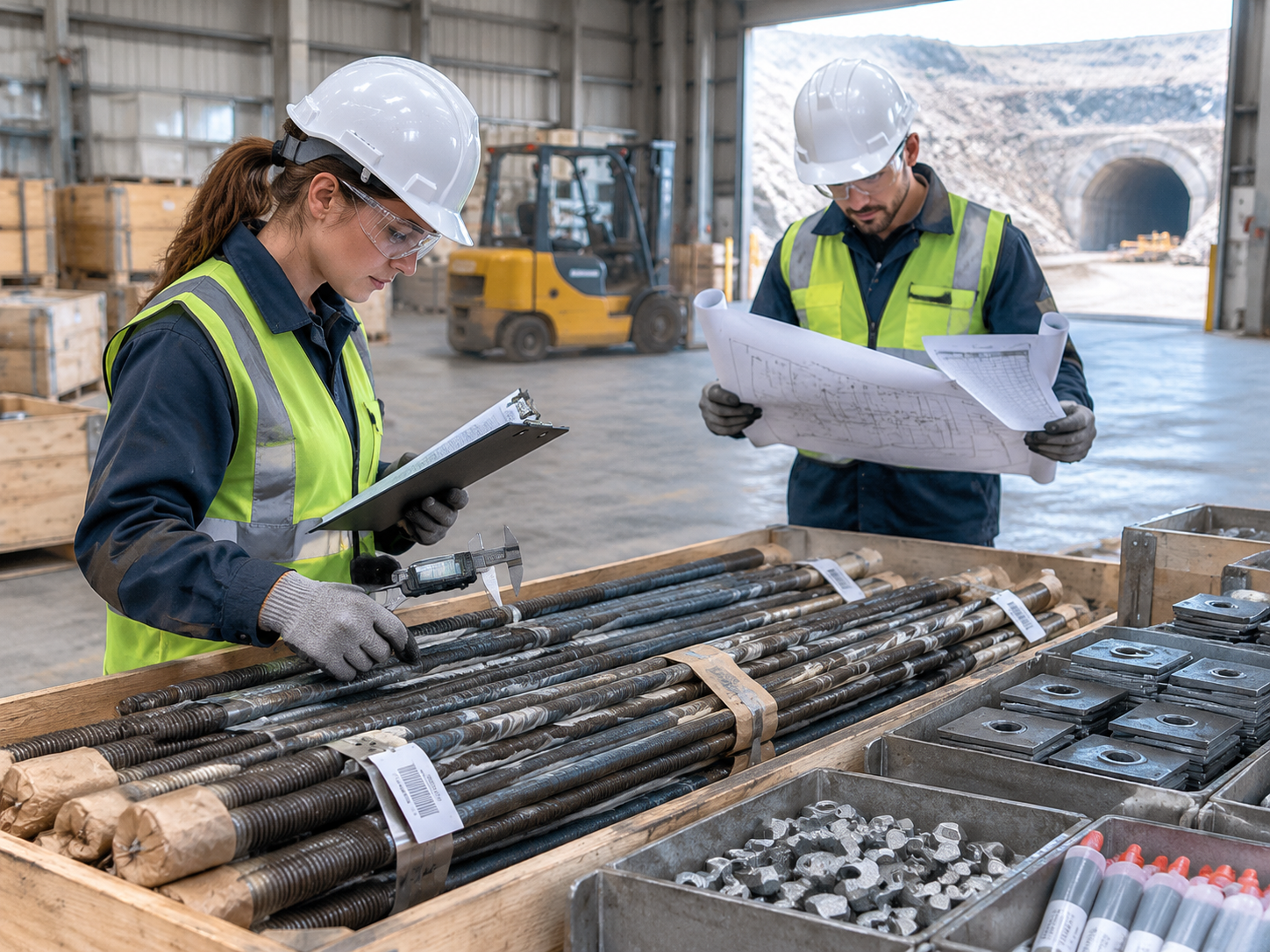
Delivery readiness includes document readiness. The buyer should not wait until the material is at the gate to discover that the certificate, drawing or packing list does not match the delivered configuration. Rock bolt batch traceability should be designed into the purchase order, not reconstructed after a discrepancy is found.
CQ Rockbolt's quality article makes a useful distinction between a compliant steel bar and a complete support system: plates, nuts, couplers and anchoring materials can also affect performance, and products should have clear batch identification and traceability to inspection records. That principle should be reflected in the purchase order.
The shipment file should identify:
- the purchase order and line item;
- the approved product drawing and revision;
- the exact model and component list;
- quantity by package and by item;
- material or product identification records required by the project;
- dimensional or inspection records covering the referenced items;
- applicable test reports and the product or assembly they cover;
- batch or lot identification;
- packing list, package labels and shipping marks;
- installation instructions and any equipment interface information;
- resin storage, handling and shelf-life information where applicable;
- any approved deviation or alternative.
Do not accept one document as evidence for every item in the package. A bar certificate does not automatically cover the plate, nut or complete assembly. A report for one bolt family may not apply to another model. A label that shows a product name but not the approved drawing revision may not be sufficient for receiving inspection. The right document set depends on the project specification, but the link between each document and each delivered item must be explicit.
Build a rock bolt delivery inspection checklist before the first truck arrives
Receiving inspection is the last check, not the first one. Before delivery, agree who will receive the material, where it will be stored, how it will be identified and what happens if an item is missing or nonconforming.
A practical receiving record should compare:
- the purchase order and call-off number;
- the packing list and package labels;
- the approved drawing and component schedule;
- the physical product, dimensions and quantity;
- the batch or lot marking;
- the documents supplied with the consignment;
- the storage requirement for resin, coated items and fragile components.
If the records do not match, the item should be placed in a hold area and referred to the authorised project representative. Receiving staff should not make an independent engineering decision to accept an alternative or to release a mixed batch. Visual inspection after arrival also does not prove installation performance, anchorage capacity or suitability for the ground condition.
For multi-phase supply, use a staged release record. Material can be received into the site store without being released to every work front. The project can then release the approved quantity for a specific phase while keeping the remainder identified for later use. This reduces the risk that a common accessory is consumed by the first heading and leaves a later phase short.
Control changes after the first delivery
The first delivery is not the end of the supply plan. Geology, excavation sequence, ventilation and infrastructure requirements can change during a long development phase. A supplier that has already manufactured or packed the next batch needs a clear change-control process.
Define what counts as a change: a revised support drawing, a change in bolt length or diameter, a different plate or nut, a revised resin grade, a new coating, a change in packing, a revised delivery date, or a substitution of any component. For each change, record who requested it, what was approved, which items are affected, whether new documents are required, and whether material already in production can still be used.
The contractor should not accept a substitution merely because the replacement has the same nominal dimensions. A different thread, anchor, steel condition, coating or accessory can change the installation and approval status. The supplier should list differences from the approved item rather than describing the offer as fully compliant.
A pre-delivery checklist for phase-based rock bolt supply
Use this checklist before releasing the first purchase order or call-off for a new phase:
- Is the work front and delivery phase clearly identified?
- Is the support drawing revision the current approved revision?
- Is the exact rock bolt family and model named?
- Are the bar, anchor, plate, nut, washer, coupler, resin and surface-support items listed separately?
- Is every accessory included, excluded or priced separately?
- Has the installation equipment and interface been checked?
- Is the packaging suitable for export, site handling and underground transport?
- Are package labels, batch identification and shipping marks defined?
- Are the required quality documents identified by product and by item?
- Is the delivery point, receiving contact and unloading method confirmed?
- Is there a minimum stock level and a process for call-off changes?
- Is there a hold and disposition procedure for nonconforming material?
- Have the supplier and project team listed every open item before shipment?
The answers should be recorded in the quotation, purchase order or supply schedule, not left as assumptions in email threads.
Prepare a clear enquiry for CQ Rockbolt
If you are planning phase-based supply for an underground mining or tunnelling project, send CQ Rockbolt:
- the project location and development stage;
- the work fronts and expected delivery windows;
- the approved bolt specification or drawings;
- the required product family and components;
- quantities by phase and by package;
- the installation method and available equipment;
- the required surface treatment and packing;
- the delivery point and receiving conditions;
- the inspection and traceability documents required by the project.
Ask the supplier to confirm the proposed product, the exact component scope, the available documentation, the packing arrangement and the assumptions behind the delivery schedule. Any technical suitability, equipment compatibility or project acceptance decision should still be confirmed by the contractor's engineering team.
When comparing a rock bolt supplier for underground mining in Africa, ask for more than a unit price and a generic lead time. Phase-based supply works when the product, the installation method and the delivery schedule are reviewed together. A supplier that can show this relationship is easier to audit, easier to hold to a delivery plan, and less likely to turn a rock bolt order into an unexpected site problem.
Related News
Other news you might be interested in

Self-Drilling Anchor Bolts for Water-Conveyance Tunnel Reinforcement
Self-drilling anchor bolts are useful for water-conveyance tunnel reinforcement when broken or water-bearing ground makes conventional drill-and-insert bolting difficult. By using a hollow threaded bar as both the drilling member and the permanent reinforcement, the system removes the separate bolt-insertion step and provides a channel for grouting through the same bar.For a water-conveyance tunnel, that installation advantage matters. Headrace, tailrace, diversion, irrigation and water-supply tunnels can pass through fault zones, weathered rock, weak interlayers and interconnected fractures. Groundwater may enter the excavation, boreholes may deteriorate after drilling, and support must be coordinated with drainage, waterproofing and the final lining.

What Is a Split Set Mining System and How Is It Different from Other Rock Bolts?
A split set is often described as a rock bolt, but in mining it is more useful to think of it as a support system. The steel tube is the most visible part. The way it performs also depends on the drilled hole, the bearing plate, the installation adapter, the drilling equipment, the surface support and the checks made underground. That distinction matters when a project compares rock bolts. Two quotations can list a similar diameter and length, yet propose different load-transfer mechanisms, different hole requirements and different installation procedures. A split set is not a resin bolt with the resin removed. It is not a mechanical expansion-shell bolt, a self-drilling hollow bar, a water-inflatable tube or a cable bolt. Each product family solves a different part of the ground-support problem.
Want to know more?
Get in touch with us for more information about our services and products.