

How to Choose the Right Friction Bolt: Diameter, Length, Strength, and Washer

Dayang Yang
AuthorWith over 15 years of experience in the production and sales of ground anchoring and mining support products, we operate our own rock bolt and accessory manufacturing facility with stable large-scale production capacity. We are specialists in rock bolts, resin cartridges, anchor cables, bearing plates, and customized ground anchoring products for mining support and geotechnical anchoring solutions.
A friction bolt is not selected from a single column in a catalogue. Four decisions determine whether it will hold: the diameter relative to the drilled hole, the length relative to the unstable ground, the strength relative to the design load, and the washer or bearing plate that transfers load to the rock surface. Get one wrong and the other three cannot compensate.
This guide is about the slotted-tube split-set friction bolt used in underground mining and tunneling. Other friction bolts — dynamic, inflatable or hybrid types — and grouted or resin-anchored bolts are different systems with different selection rules. CQ Rockbolt lists split-set friction bolts within a wider ground-support catalogue; the exact model, dimensions and supplied assembly must be confirmed against the current drawing and quotation.
choose the bolt after you know the hole, not before. Match the nominal bolt diameter to the supplier's recommended hole range; set the length from the anchorage zone plus the surface allowance; use minimum strength values in both MPa and kN; and specify the plate, collar and washer as one matched assembly.
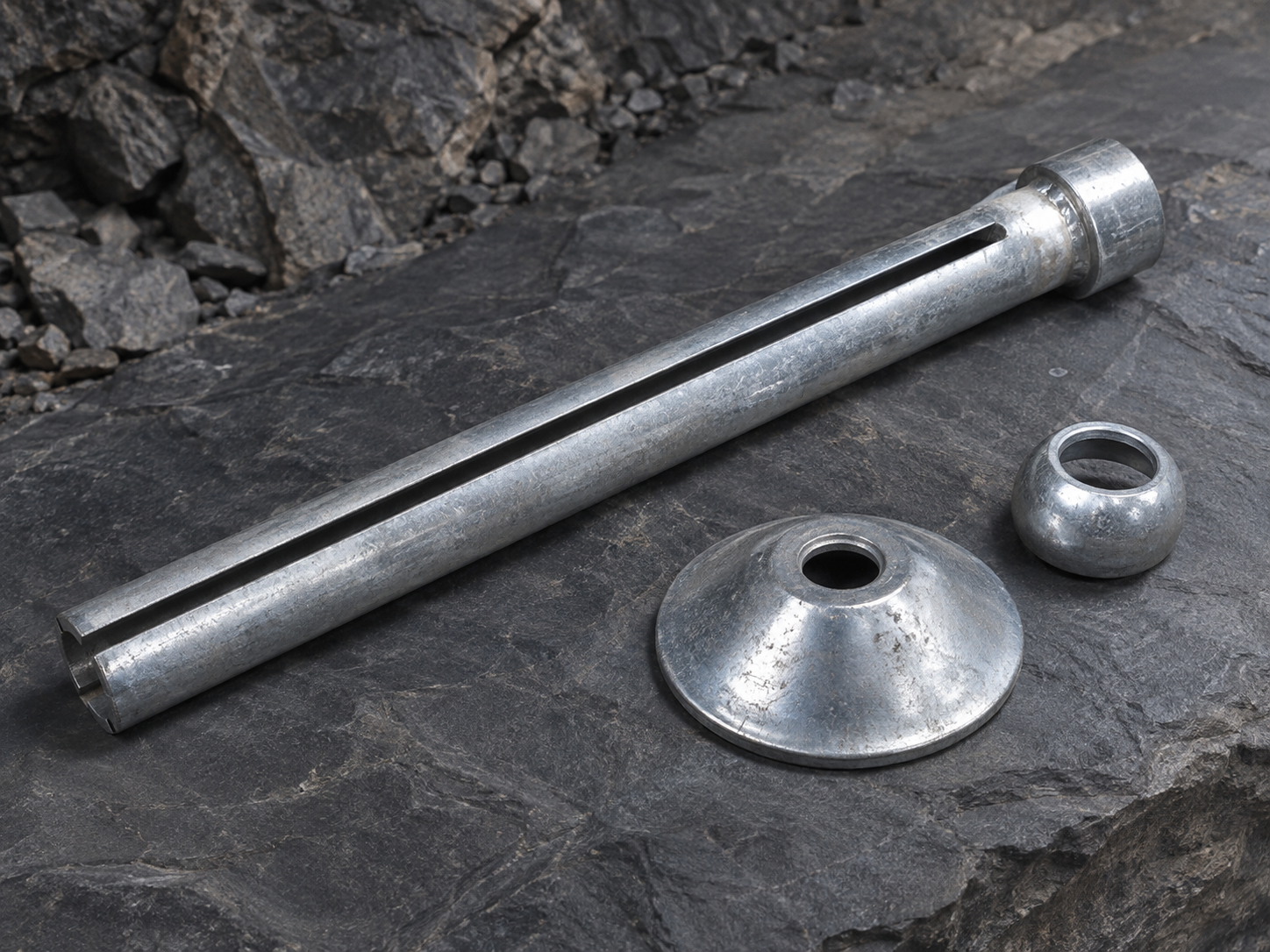
The four decisions at a glance
| Decision | What it controls | What it does not tell you |
|---|---|---|
| Diameter | Interference between tube and hole, radial pressure and installation fit | Installed pull-out capacity in a particular rock mass |
| Length | How far the bolt reaches beyond the loose zone and how much surface allowance it leaves | Whether the rock at that depth can react the load |
| Strength | Tube material and component capacity | System capacity at the rock interface |
| Washer / plate | Load distribution, angle accommodation and surface-support interface | Bolt capacity or rock quality |
The rest of this article explains how to confirm each one, and how to check them together before you request a quotation.
Start with the support task, not the product name
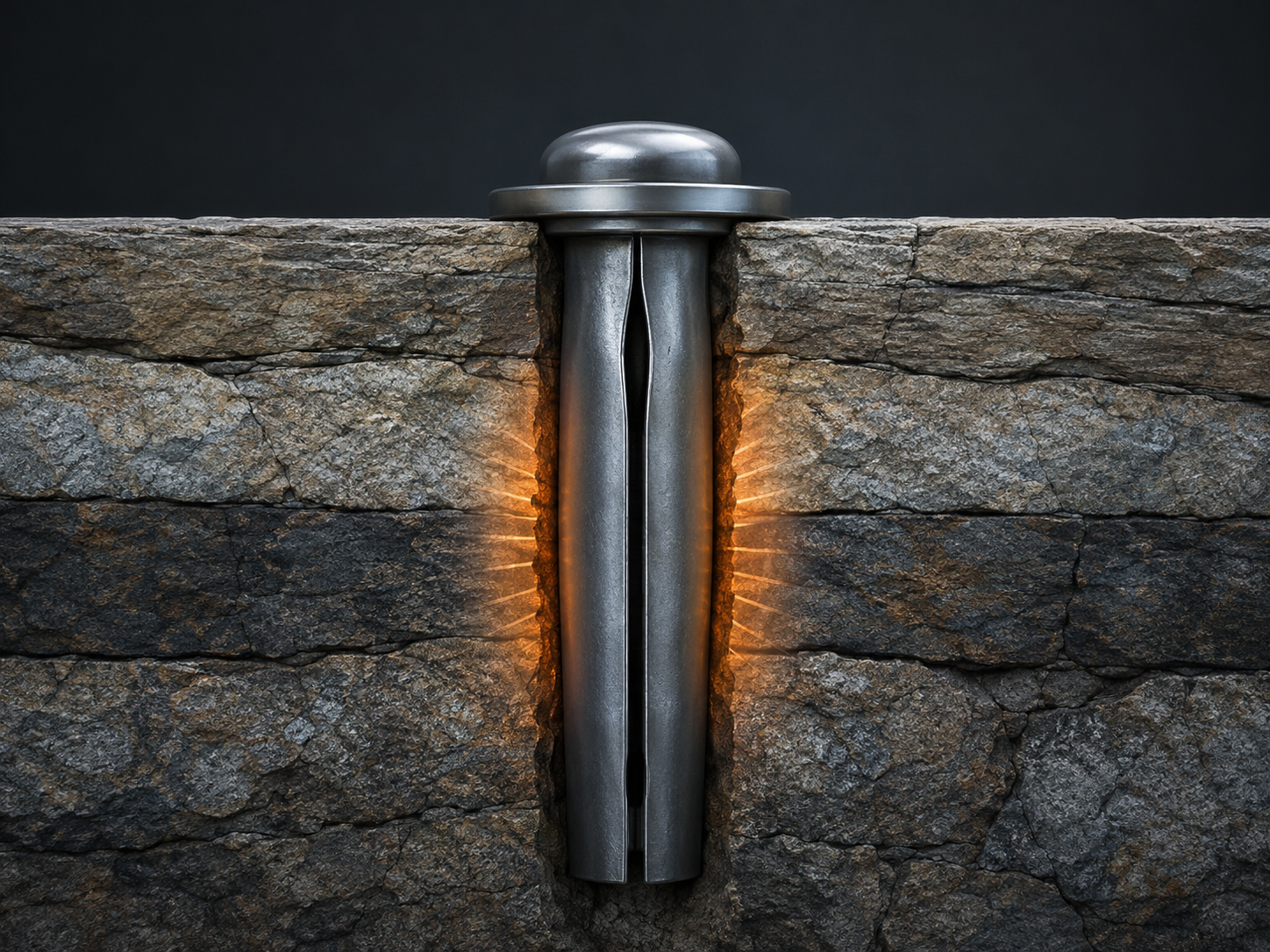
A split-set friction bolt is a ground-support element used for primary or secondary support. It is driven into a hole that is slightly smaller than the tube. The slot allows the tube to compress, and the resulting radial pressure grips the rock along the embedded length. Load transfer begins immediately, without grout.
That mechanism only works within a range of ground conditions. Before comparing diameters, confirm:
- the rock type, strength and fracture pattern;
- the excavation span, height and expected overbreak;
- water, stress, seismic or squeezing conditions;
- the required service life and corrosion exposure;
- the surface support: mesh, straps, shotcrete or arches;
- the drilling and installation equipment available;
- the design load and the acceptable test method.
A split set may not be the right choice where the hole will not stand open, where the rock is so soft that the tube cannot develop useful radial pressure, or where the design requires a tensioned, grouted or energy-absorbing element. In those conditions, an expandable, self-drilling, resin-anchored or dynamic bolt may be the correct system. CQ Rockbolt's catalogue includes several of these families; they should not be treated as interchangeable.
The output of this step is a one-page selection basis: ground condition, support design, bolt type, design load and installation method. Without it, a quotation is only a price for a shape.
Diameter: match the bolt to the drilled hole
The bolt is deliberately larger than the hole
The nominal diameter of a split-set bolt is not the drill-hole diameter. The bolt is manufactured slightly larger than the hole so that it compresses on installation. A published 39 mm friction-bolt datasheet, for example, specifies a 35–38 mm hole. The tube is therefore 1–4 mm larger than the hole before installation.
That interference is the source of the bolt's grip. If the hole is too large, the tube may not compress enough, radial pressure falls and the bolt can slip at a lower load. If the hole is too small, driving becomes difficult: the slot may close prematurely, the tube may bind, the collar or plate may not seat, and the rig may be overloaded.
Confirm the actual hole, not only the drill bit
The drill-bit size is a nominal starting point. Bit gauge, wear, drilling technique, hole deviation and ground condition can all change the actual hole. A worn bit may drill undersize; a new bit in broken rock may drill oversize. Measure a sample of holes with a gauge or caliper and record the range.
For selection, send the supplier:
- the specified hole diameter and tolerance;
- the bit type and nominal diameter;
- the drilling method and equipment;
- measured hole diameters from a representative sample;
- the installation rig, impact energy and driving adapter;
- any hole deviation or stand-up-time problem.
Ask the supplier to confirm the recommended hole range for the exact model, not for a generic “39 mm” or “46 mm” family. The model drawing should state the nominal tube diameter, wall thickness, slot geometry, length and hole range.
Standard sizes are a family, not a ranking
Split-set bolts are commonly offered in 33 mm, 39 mm and 46/47 mm classes. A larger diameter increases stiffness and contact area, but it also requires a larger hole, more drilling energy and a rig that can drive it. It is not automatically the stronger choice for every ground condition.
CQ Rockbolt's public catalogue pages cover more than one split-set configuration, and the dimensional listings are not all expressed on the same basis. Treat each page as a catalogue range, not as a single model datasheet. For an order, ask for the drawing and datasheet that apply to the exact model, and confirm the diameter, hole range, length and strength together.
What diameter does not tell you
A larger bolt does not guarantee a higher installed capacity. In soft rock, the tube may indent the wall rather than develop uniform radial pressure. In broken rock, the hole may collapse before the bolt is inserted. In a long hole, deviation may prevent full insertion. Diameter selection must be verified by a trial installation in representative ground, not only by a catalogue table.
Length: anchorage depth plus surface allowance
Length is an anchorage decision
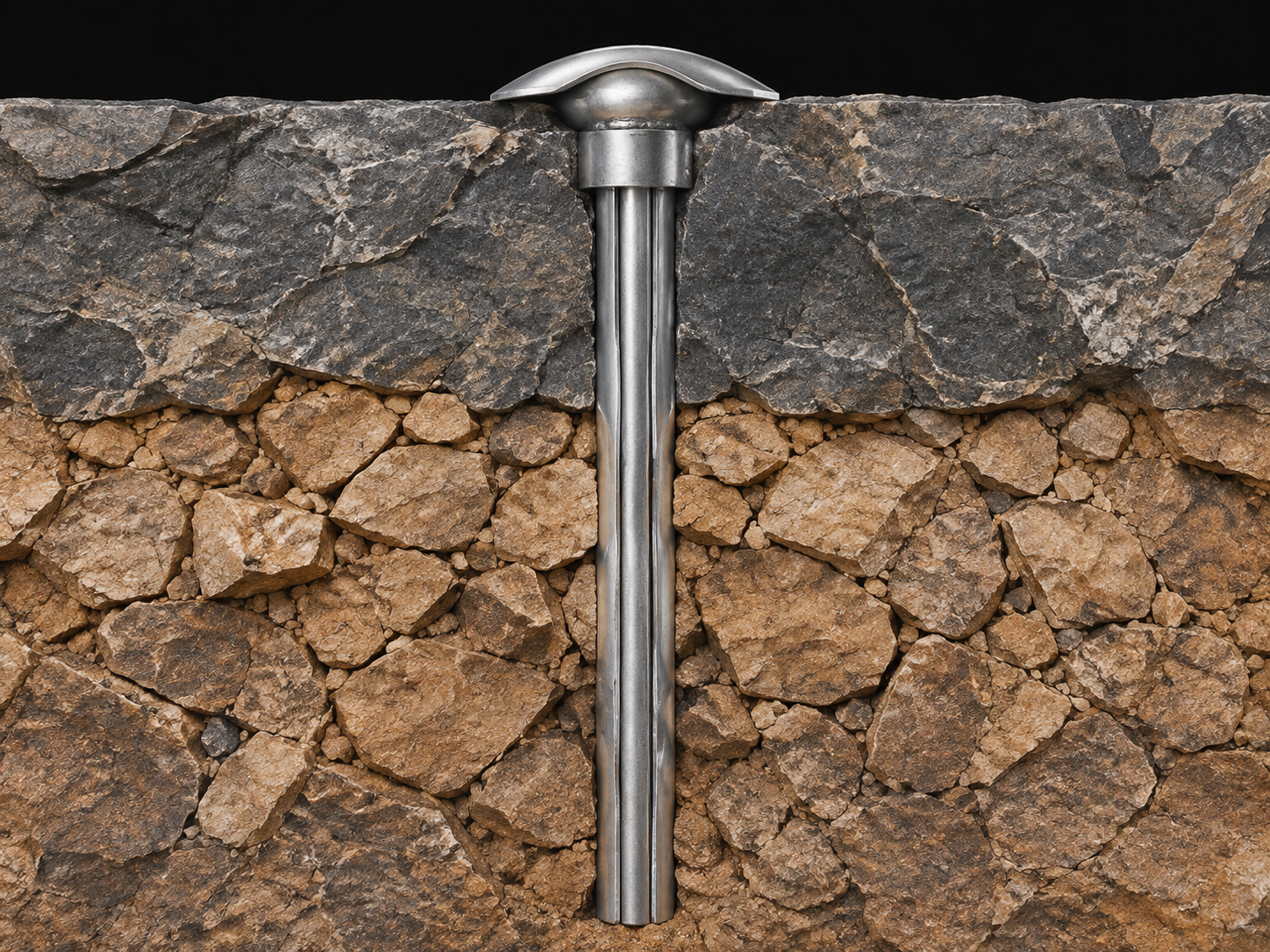
A split-set bolt transfers load along its embedded length. The bolt must pass through the loose or fractured zone and reach ground that can react the load. In a bedded roof, that usually means anchoring above the immediate roof layer; in massive rock, the required length is set by the support design. There is no universal multiplier such as “two times the span.” The approved design, strata information and pull-test results should govern.
Length selection inputs include:
- the height of the loose or fractured zone;
- the excavation span and roof condition;
- the design load and bolt pattern;
- the expected overbreak and hole stand-up time;
- the plate, washer and mesh allowance at the surface;
- the drilling equipment, feed length and available headroom;
- the installation direction and accessibility.
Nominal length is not embedded length
The nominal bolt length includes the portion at the collar. The embedded length is reduced by the collar, plate, washer and any exposed tail. If the design calls for a specific anchorage depth, confirm how the supplier measures length: tube length, overall length including the collar, or length to a specified point.
Hole depth must allow the bolt to be fully inserted and the plate to seat, with a defined tolerance. A hole that is too shallow prevents full insertion. A hole that is too deep can hide insufficient embedment: the bolt may not reach the toe, so the effective contact length is shorter than the design assumes. Confirm the drilled depth, the measuring method and the acceptance tolerance before drilling.
Practical checks on site
- Check that the hole is clean and free of cuttings that would prevent full insertion.
- Confirm the hole depth with a rod or tape, not by eye.
- Check that the bolt is straight, the slot runs the full length and the cut end is square and burr-free.
- Confirm that the collar and plate can seat on the rock surface without bridging a hollow.
- In low seams, confirm that the rig and crew can handle the bolt length safely.
- Record the installed length and any deviation from the drawing.
A bolt that is too long is not merely wasteful. It can be difficult to handle, increase hole deviation, protrude into the travelway or fail to seat if the hole is not deep enough. A bolt that is too short may leave the loose zone partially unreinforced.
Strength: separate material, component and system capacity
Four different numbers are often called “strength”
Friction-bolt strength can refer to:
- Material strength — yield or tensile stress in MPa.
- Component strength — axial force at yield or tensile failure in kN.
- System capacity — pull-out resistance of the installed bolt in the rock, also in kN.
- Surface-hardware capacity — the plate, collar or washer load rating.
These numbers are related but not interchangeable. A material test does not prove pull-out capacity. A plate rating does not prove bolt capacity. A typical value does not replace a minimum value.
MPa and kN measure different things
MPa is stress; kN is force. For a given tube cross-section, force is stress multiplied by area. A 39 mm friction bolt with a 220 mm² cross-section illustrates the relationship: 345 MPa × 220 mm² ≈ 76 kN, which corresponds to the published minimum yield of 75 kN. The same datasheet lists a minimum tensile strength of 460 MPa, or 100 kN, and typical values of 445 MPa/100 kN at yield and 510 MPa/115 kN at tensile.
Those are published values for one manufacturer's 39 mm product, not a CQ Rockbolt specification. The example shows why a higher MPa value does not always mean a higher kN value: the cross-section matters. It also shows why the unit must be stated with the number. For reference, 1 MPa = 1 N/mm², and 1 kN ≈ 0.102 tonne-force ≈ 225 lbf.
Design to the minimum, not the typical
Use minimum values for design. A typical value describes a sample or a production average; it is not a guaranteed lower bound. If a required capacity is 80 kN, a product with a 75 kN minimum yield is below that requirement before any factor of safety is applied. A 100 kN typical value does not close the gap. The project engineer must apply the correct factor of safety and check the relevant failure mode.
Pull-out is a system property
The installed capacity of a friction bolt depends on radial pressure, hole diameter, rock strength, embedment length, surface condition and installation energy. A bolt that performs well in one rock mass may slip in another. A pull test measures the installed system under the specific conditions of the test; it does not replace a material certificate, and a material certificate does not replace a pull test.
Ask for:
- the steel grade and tube dimensions;
- minimum yield and tensile values in MPa and kN;
- the test standard and sample basis;
- the pull-test procedure, test frequency and acceptance criteria;
- batch or heat traceability;
- the coating specification and inspection record.
A certificate for the steel mill is not a certificate for the finished bolt. Confirm that the documents cover the finished product, the batch and the tests actually performed.
Corrosion is part of strength over time
A split-set tube has a relatively thin wall. Corrosion can reduce the section and the long-term capacity. Published friction-bolt data may offer optional hot-dip galvanizing, but the requirement depends on water chemistry, humidity, chloride exposure and design life. Confirm the coating, thickness, repair method and inspection plan. The plate and washer need compatible protection.
Washer: specify the load-transfer assembly, not an accessory
“Washer” can mean three different things
On a friction bolt, “washer” is not always a standard flat washer. Confirm which assembly is being quoted:
- Welded collar plus domed plate. On a standard split-set bolt, a ring or collar is welded to the outer end and retains a domed plate against the rock. There is no nut in the load path. For that reason, do not apply a nut torque value to a standard split-set bolt; confirm any tensioning requirement with the supplier.
- Domed plate plus spherical washer. A self-aligning ball pad or spherical washer sits between the plate and the collar to accommodate angular misalignment and keep the load axial. CQ Rockbolt's dome-plate page describes a matching self-aligning ball pad for this purpose.
- Flat washer plus nut on a threaded bolt. This is a different bolt type. A hex nut and flat washer are part of the load path on a threaded or tensioned bolt, but they are not a standard split-set assembly. Do not mix the two.
If a quotation includes a nut for a split-set bolt, ask for the drawing. It may be a hybrid or threaded product, or the accessory may be unnecessary. The load path must be clear before the order is placed.
What the plate and washer do
The plate spreads the bolt load over a larger rock area. The washer or spherical seat helps the load remain axial when the rock surface is uneven or the hole is not perpendicular. The assembly also protects the collar, clamps mesh or straps, and reduces the risk of point loading or punching.
A plate that is too small can punch into soft rock or deform under load. A plate that is too large may not fit the profile, may bridge a hollow, or may not follow the rock contour. The correct plate is a balance between bearing area, stiffness, fit and load rating.
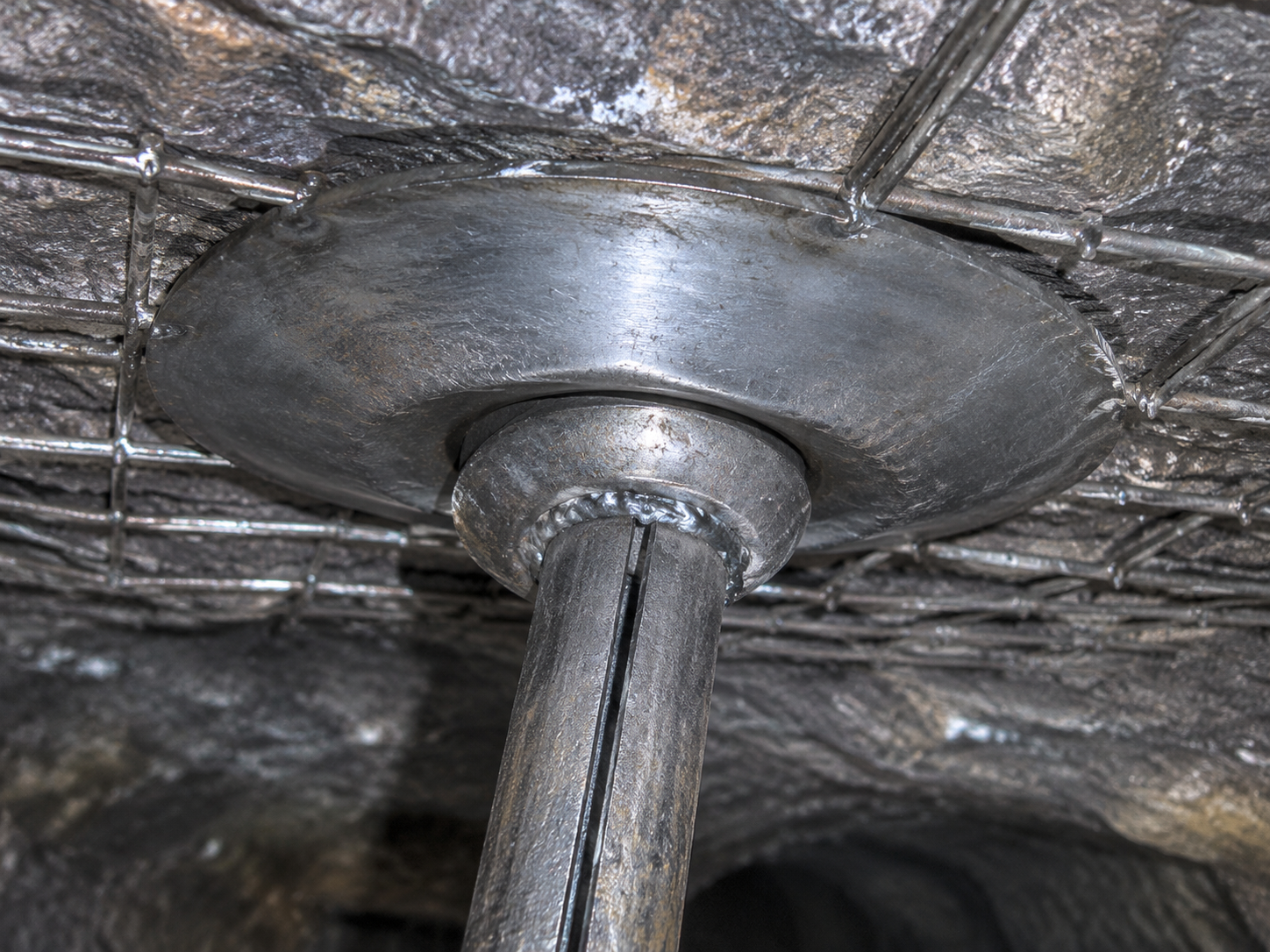
What to confirm in the plate and washer
- Center hole: clears the bolt and collar, but is not so large that the collar pulls through.
- Plate diameter and area: matches the rock strength and the required bearing area.
- Thickness and material: adequate for the design load; CQ's page lists Q235B and Q355B options.
- Load rating: confirmed by test, not only by dimensions. CQ's page lists a range from 80 kN to 902 kN for its dome plates.
- Standard and test method: confirm the plate standard and the test method behind the rating. CQ states that its dome plates are manufactured to MT/T 146.2 and tested by a three-point support method.
- Spherical seat: matches the plate and compensates the expected installation angle; CQ's page describes compensation within 10° for its matching ball pad.
- Edge profile: deburred and rounded so it does not cut mesh or straps.
- Coating: compatible with the bolt and the environment; galvanizing, painting or other treatments as specified.
- Fit: the plate, washer, collar and bolt are a matched set, not parts from different systems.
CQ Rockbolt's dome-plate page suggests that plate load capacity should be at least 1.2 times the bolt's design anchoring force. That is a useful catalogue guideline, but the project's factor of safety, rock condition and test requirements still govern. The plate should not be the weakest link in the support system.
Plate ratings may be stated in kN, tonnes-force or pounds, and may refer to a standard such as ASTM F432. JENNMAR's plate page, for example, states that its plates are manufactured in accordance with ASTM F432 and lists ratings from 20,000 to 60,000 lb. Convert every offer to the same unit and test basis before comparing it with the design load.
Plate selection is not only a diameter match
A plate whose catalogue row lists a 20–22 mm bolt is not automatically suitable for a 39 mm friction bolt. The center hole, collar diameter, spherical seat and load path are different. Use the plate drawing and the bolt drawing together. If mesh is part of the support, confirm that the plate clamps the mesh without cutting wires and that the plate size suits the mesh aperture. CQ Rockbolt also lists welded and woven mining mesh for surface support; the plate and mesh should be selected together.
Choose the four together
The four decisions interact. A larger bolt needs a larger hole and may need a bigger rig. A longer bolt amplifies hole deviation and handling difficulty. A stronger tube does not fix a poor hole match. A larger plate can improve bearing in soft rock but may not fit the profile or follow the surface.
Use this sequence:
- Define the ground condition and support design.
- Confirm the bolt type: split set, expandable, self-drilling, resin or dynamic.
- Confirm the drilling method, bit and actual hole range.
- Select the bolt diameter and hole range as a matched pair.
- Select the length from the anchorage zone and surface allowance.
- Select the strength from the minimum required capacity and test basis.
- Select the plate, collar and washer as a matched assembly.
- Trial-install in representative ground and pull-test.
- Freeze the specification in the RFQ.
| Selection step | Evidence to require | Common error |
|---|---|---|
| Diameter | Model datasheet with hole range; measured holes; trial installation | Choosing bolt diameter before confirming the drill bit and hole |
| Length | Approved design; hole depth; length measuring method; tolerance | Using the opening height or nominal length as the anchorage length |
| Strength | Minimum yield/tensile in MPa and kN; test standard; pull-test procedure | Comparing typical MPa values across different tube sections |
| Washer / plate | Plate drawing; center hole; load rating; seat angle; coating | Buying a plate by bolt diameter alone, or mixing threaded and split-set hardware |
RFQ and trial acceptance
A quotation is comparable only when every supplier is quoting the same scope. Send a single technical package with:
- project location, application and ground condition;
- approved support design and design load;
- hole diameter range, bit type and drilling method;
- bolt type, nominal diameter, length and tolerance;
- minimum yield and tensile values in MPa and kN;
- plate, collar and washer requirement, with current drawing revision, center-hole dimensions and load rating;
- coating, thickness and repair requirement;
- test and documentation requirements, including pull-test frequency, acceptance criteria and batch traceability;
- quantity, packing, marking and delivery destination;
- required delivery date and any approval or vendor-registration requirement.
Ask each supplier to state exceptions, included accessories, test scope and document scope. Compare the offers on the same basis, not only on price per bolt.
Before accepting a batch, run a trial installation in representative ground. Record the hole diameter, installation time, driving behavior, slot closure, plate seating, collar condition and pull-out result. Define the acceptance criteria before the trial, and review the results as a set rather than accepting the best single result. A trial that is not representative can be more misleading than no trial at all.
What to send to CQ Rockbolt
CQ Rockbolt's catalogue includes split-set friction bolts for underground mining and tunneling, together with dome plates, mesh and other support accessories. To review a project-specific selection, send:
- the ground condition and support design;
- the hole diameter range and drilling method;
- the required bolt length and design load;
- the plate, washer and mesh arrangement;
- the coating and design life;
- the quantity, delivery destination and document requirements.
The team can then review the exact model, drawing, supplied assembly and available documentation in the quotation.
The right friction bolt is not the largest or the cheapest. It is the one that matches the hole, reaches the right ground, carries the required load with a verified minimum, and transfers that load through a compatible plate and washer. Those four checks are what turn a catalogue number into a support system.
Related News
Other news you might be interested in

Self-Drilling Anchor Bolts for Water-Conveyance Tunnel Reinforcement
Self-drilling anchor bolts are useful for water-conveyance tunnel reinforcement when broken or water-bearing ground makes conventional drill-and-insert bolting difficult. By using a hollow threaded bar as both the drilling member and the permanent reinforcement, the system removes the separate bolt-insertion step and provides a channel for grouting through the same bar.For a water-conveyance tunnel, that installation advantage matters. Headrace, tailrace, diversion, irrigation and water-supply tunnels can pass through fault zones, weathered rock, weak interlayers and interconnected fractures. Groundwater may enter the excavation, boreholes may deteriorate after drilling, and support must be coordinated with drainage, waterproofing and the final lining.

What Is a Split Set Mining System and How Is It Different from Other Rock Bolts?
A split set is often described as a rock bolt, but in mining it is more useful to think of it as a support system. The steel tube is the most visible part. The way it performs also depends on the drilled hole, the bearing plate, the installation adapter, the drilling equipment, the surface support and the checks made underground. That distinction matters when a project compares rock bolts. Two quotations can list a similar diameter and length, yet propose different load-transfer mechanisms, different hole requirements and different installation procedures. A split set is not a resin bolt with the resin removed. It is not a mechanical expansion-shell bolt, a self-drilling hollow bar, a water-inflatable tube or a cable bolt. Each product family solves a different part of the ground-support problem.
Want to know more?
Get in touch with us for more information about our services and products.