

Friction Rock Bolts vs. Expandable Rock Bolts: Five Factors to Check Before Procurement

Dayang Yang
AuthorWith over 15 years of experience in the production and sales of ground anchoring and mining support products, we operate our own rock bolt and accessory manufacturing facility with stable large-scale production capacity. We are specialists in rock bolts, resin cartridges, anchor cables, bearing plates, and customized ground anchoring products for mining support and geotechnical anchoring solutions.
Two rock bolt quotations can show a similar length and quantity but represent very different installation requirements. One offer may cover slotted-tube bolts driven into drilled holes. Another may cover folded steel-tube bolts that require water inflation. The difference affects more than the bolt price: it changes the equipment review, borehole checks and evidence needed before purchase.
For mine engineers, tunneling contractors and technical buyers, the useful question is not simply, “Which bolt is better?” It is: which proposed product meets the approved support requirements, works with the intended installation arrangement and comes with a clearly defined supply scope?
CQ Rockbolt’s catalogue includes both split set friction rock bolts and water-inflatable expandable rock bolts. This comparison explains five checks to make before requesting or accepting a quotation. It is a procurement guide, not a substitute for project-specific ground support design.
1. Confirm the Bolt Structure and Anchorage Mechanism
Buyer question: Are we comparing two clearly identified products, or just two catalogue names?
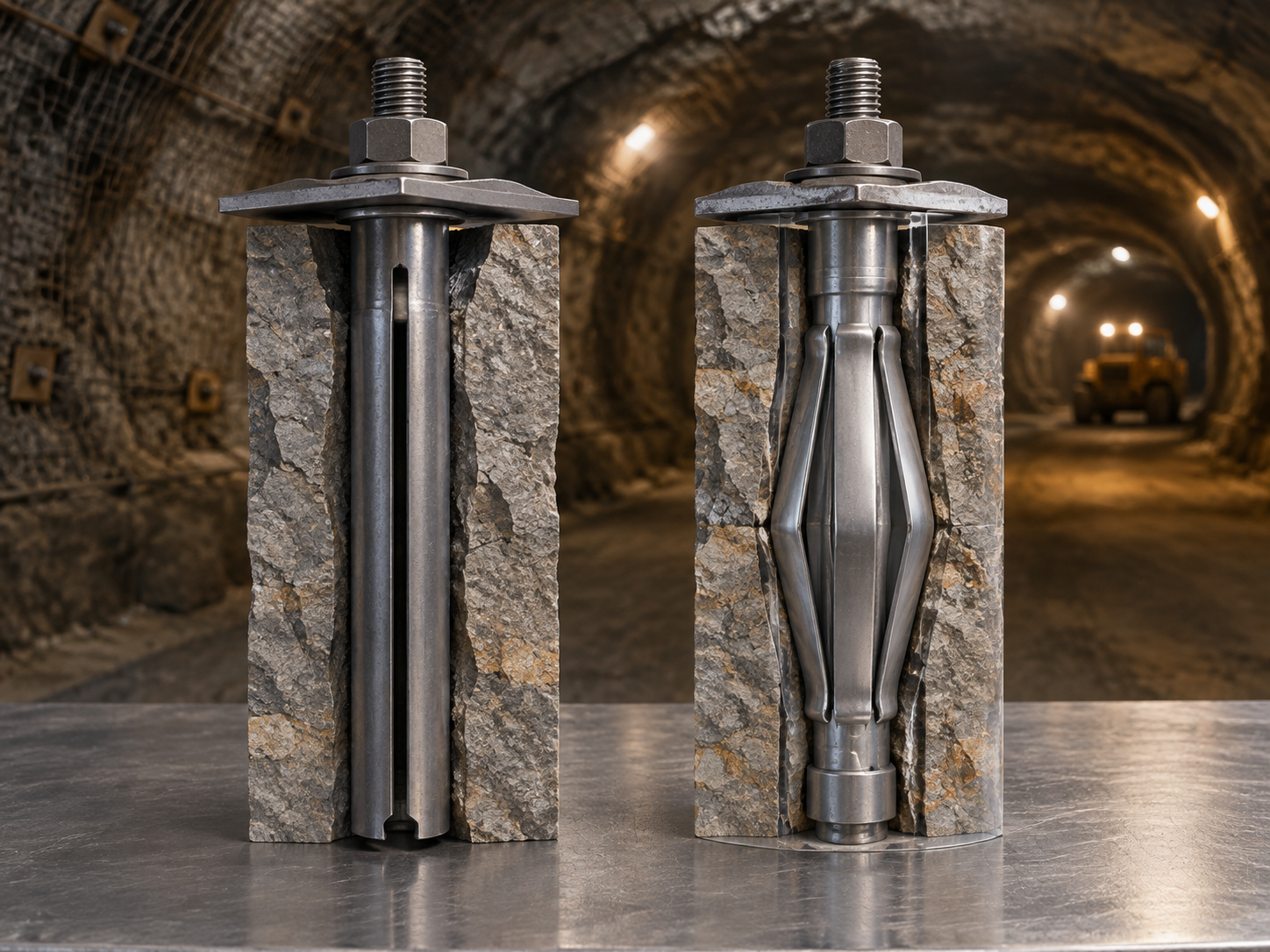
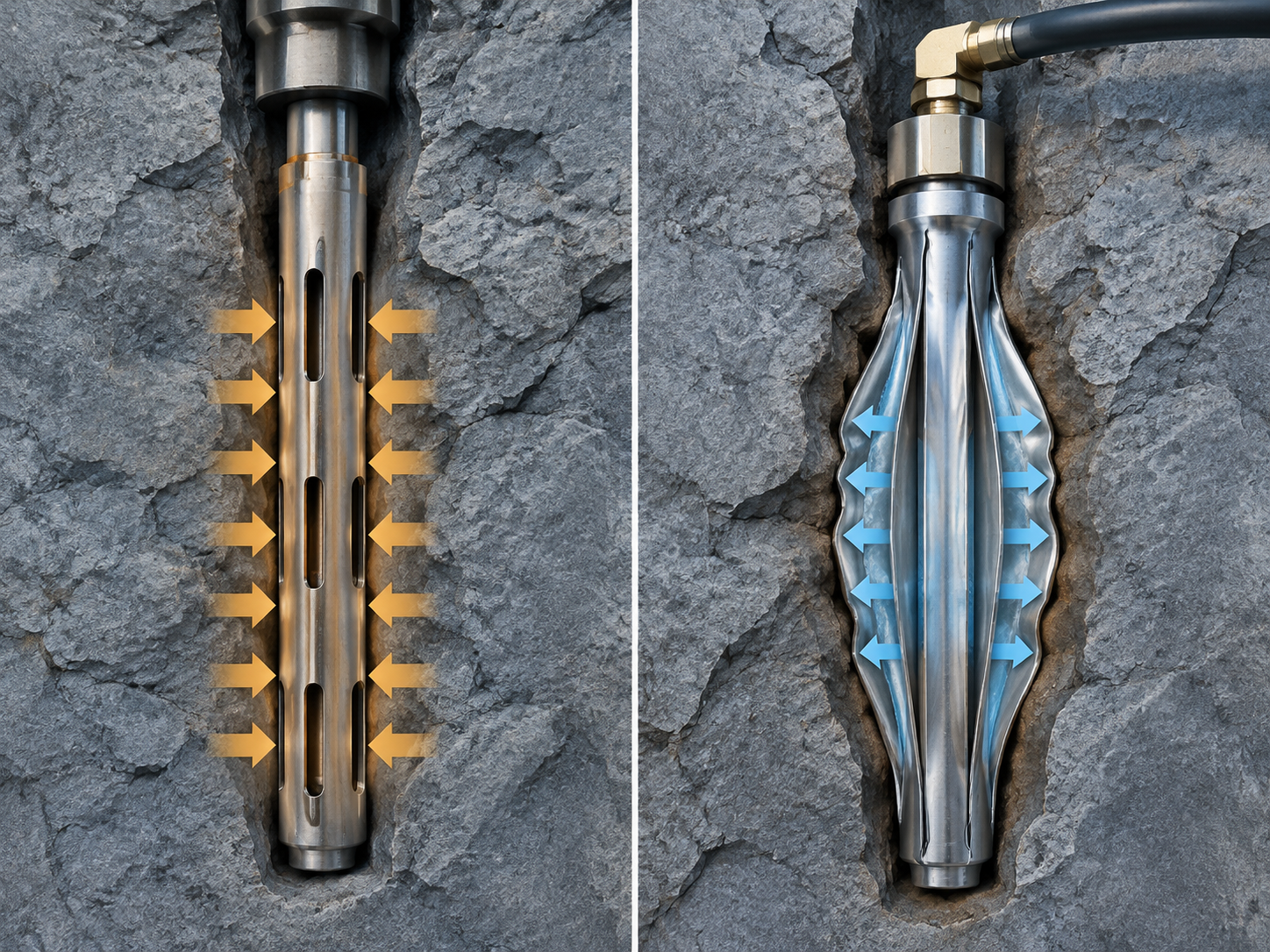
In this article, friction rock bolt means the conventional slotted-tube type often described as a split set bolt. The tube is driven into a suitably sized borehole. Compression of the tube creates radial contact pressure, allowing frictional load transfer between the bolt and the borehole wall.
An expandable rock bolt here means a water-inflatable steel-tube bolt, not an expansion-shell anchor. A folded tube is inserted into the hole and inflated with pressurized water so that it expands against the borehole wall. Frictional contact also contributes to its anchorage.
The terminology matters: expandable bolts can also be classified as friction bolts. The practical distinction is driven slotted-tube installation versus water-inflated tube installation, rather than friction versus no friction.
| Procurement point | Slotted-tube friction rock bolt | Water-inflatable expandable rock bolt |
|---|---|---|
| Basic form | Steel tube with a longitudinal slot | Folded steel tube with an inflation connection |
| How contact is established | Tube compression during driven installation | Tube expansion during water inflation |
| Main equipment review | Driving equipment and installation adapter | Pump, inflation head, hoses and connections |
| Main dimensional review | Tube geometry and model-specific borehole requirements | Product geometry and model-specific borehole requirements |
| What the name does not establish | Installed capacity or suitability for a particular mine | Installed capacity, equipment compatibility or suitability for a particular mine |
Ask for the exact model, dimensioned drawing and applicable installation document. If a supplier proposes a replacement for an approved product, record the differences for technical review rather than accepting a similar name as proof of equivalence.
2. Check the Bolt-to-Borehole Match
Buyer question: Can we use the existing drilling specification without changing anything?
Do not assume that equal nominal bolt diameters mean equal borehole requirements. For slotted-tube friction bolts, the relationship between the uninstalled tube and the drilled hole is central to establishing contact pressure. Manufacturer data therefore identify bolt diameter and hole diameter separately.
Water-inflatable bolts expand after insertion, but this does not make every hole size acceptable. The relevant borehole range and installation conditions still belong to the exact product being offered. A range stated for one manufacturer’s model should not be transferred to another supplier’s bolt.
Before ordering, exchange:
- The approved bolt designation, length and drawing revision.
- The specified borehole diameter and depth.
- Available information about actual drilled-hole dimensions and condition.
- Relevant ground conditions identified by the project engineer.
- The proposed manufacturer’s dimensional limits and installation requirements.
A drill bit designation alone does not document every aspect of the finished hole. Where hole condition or variability could affect the proposed match, ask the project technical team what measurements or verification are needed.
Neither bolt type should be selected solely because the rock is described as “fractured” or because the catalogue promises broad adaptability. The support design, actual ground conditions and applicable product evidence must be reviewed together.
3. Verify Installation Equipment and Site Resources
Buyer question: What needs to change on site if we buy this product?
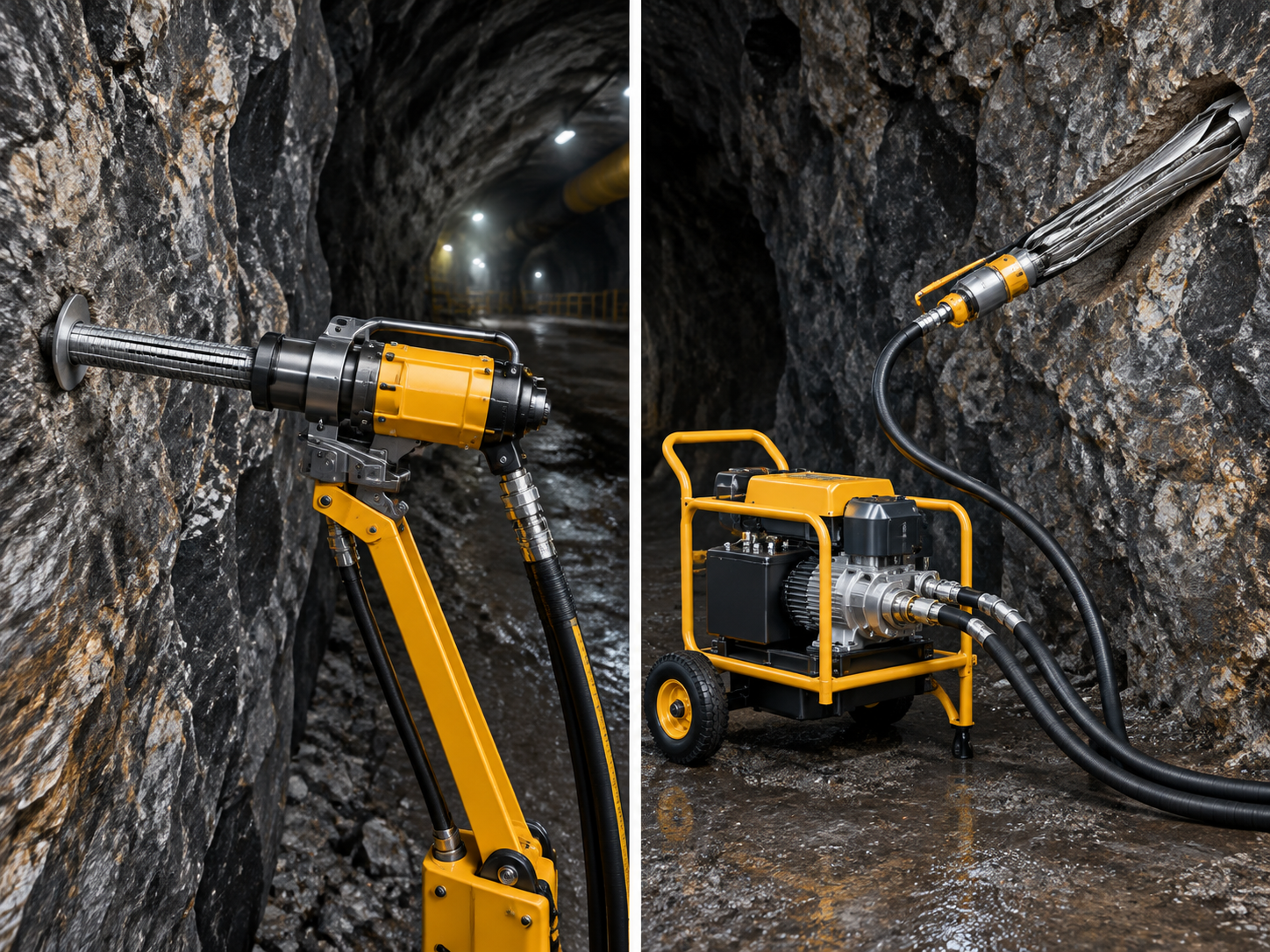
For slotted-tube bolts, identify the driving equipment, installation adapter and intended working arrangement. Provide equipment models and relevant drawings instead of relying on “standard mining equipment” as a compatibility description.
For expandable rock bolts, identify the pump, inflation head, hoses, couplings, controls and available site utilities. The review should address the complete connected arrangement, not just the pump’s maximum pressure rating.
Ask each supplier to separate equipment into four categories: included, optional, buyer supplied and awaiting confirmation. If an adapter or connection change is proposed, request the supporting drawing and confirmation for the intended assembly.
Installation method also affects work planning. Compare equipment availability, setup, access, maintenance and operator training requirements. Do not assume that one system is always faster: the relevant comparison depends on the actual installation arrangement and site conditions.
For a more detailed equipment enquiry, see Expandable Rock Bolt Procurement: Pump, Connection and Equipment Checks.
Operating settings and procedures must come from the applicable equipment and bolt instructions. A general comparison article cannot establish an inflation pressure, driving procedure or safe operating limit for a particular assembly.
4. Compare Performance Evidence and Service Requirements
Buyer question: Do the quoted strength figures prove the same thing?
A steel strength figure, a bolt product test and an installed pull-test result answer different questions. Material properties help describe the steel; product testing addresses a defined component or assembly; an installed test includes the conditions of the tested anchorage.
Before comparing values, ask:
- What was tested: material, tube, complete bolt or installed assembly?
- Is the figure a minimum requirement, a typical result or an individual test result?
- What procedure, units and acceptance criteria apply?
- Does the report identify the quoted model and relevant batch?
- For installed testing, what borehole, ground and installation conditions were recorded?
Immediate activation after correct installation is not an unconditional guarantee of installed capacity. Likewise, a static strength result does not establish dynamic support performance. Where the design specifies dynamic loading, displacement accommodation or another special requirement, request evidence for that requirement and the proposed product.
Service environment is another separate check. State the intended service life and relevant exposure conditions, and ask what protection is proposed for the specified assembly. “Corrosion resistant” is not a complete coating specification or proof of suitability for permanent support.
This comparison does not justify treating all slotted-tube bolts as temporary support or all expandable bolts as permanent support. That decision belongs to the approved design and product-specific evidence.
5. Compare the Complete Supply Scope, Not Only Unit Price
Buyer question: Does the lower-priced offer leave costs or responsibilities outside the quotation?
Compare offers against the same approved requirement. If both product types remain under consideration, keep their technical differences visible rather than treating them as interchangeable line items.
| Cost or supply item | What to make explicit |
|---|---|
| Bolts and plates | Exact models, drawings, quantities and included components |
| Installation equipment | Existing equipment to be retained; new equipment or adapters required |
| Maintenance items | Applicable spare parts and the availability to be confirmed |
| Technical documents | Product data, installation instructions and agreed inspection or test records |
| Packaging and identification | Packing units, labels and links to the order or batch records |
| Delivery | Destination, shipment stages, quoted schedule and commercial terms |
| Exceptions | Deviations, exclusions and unresolved technical questions |
For phased underground development, also agree how mixed lengths, separate plates and different product batches will be identified. Clear packing and document references help the receiving team check the shipment against the approved order.
Total installed cost may include equipment, labor, maintenance and inspection as well as the bolts. Use project data to evaluate those items; a catalogue claim about faster installation is not enough to calculate savings.
What to Send with Your Rock Bolt Enquiry
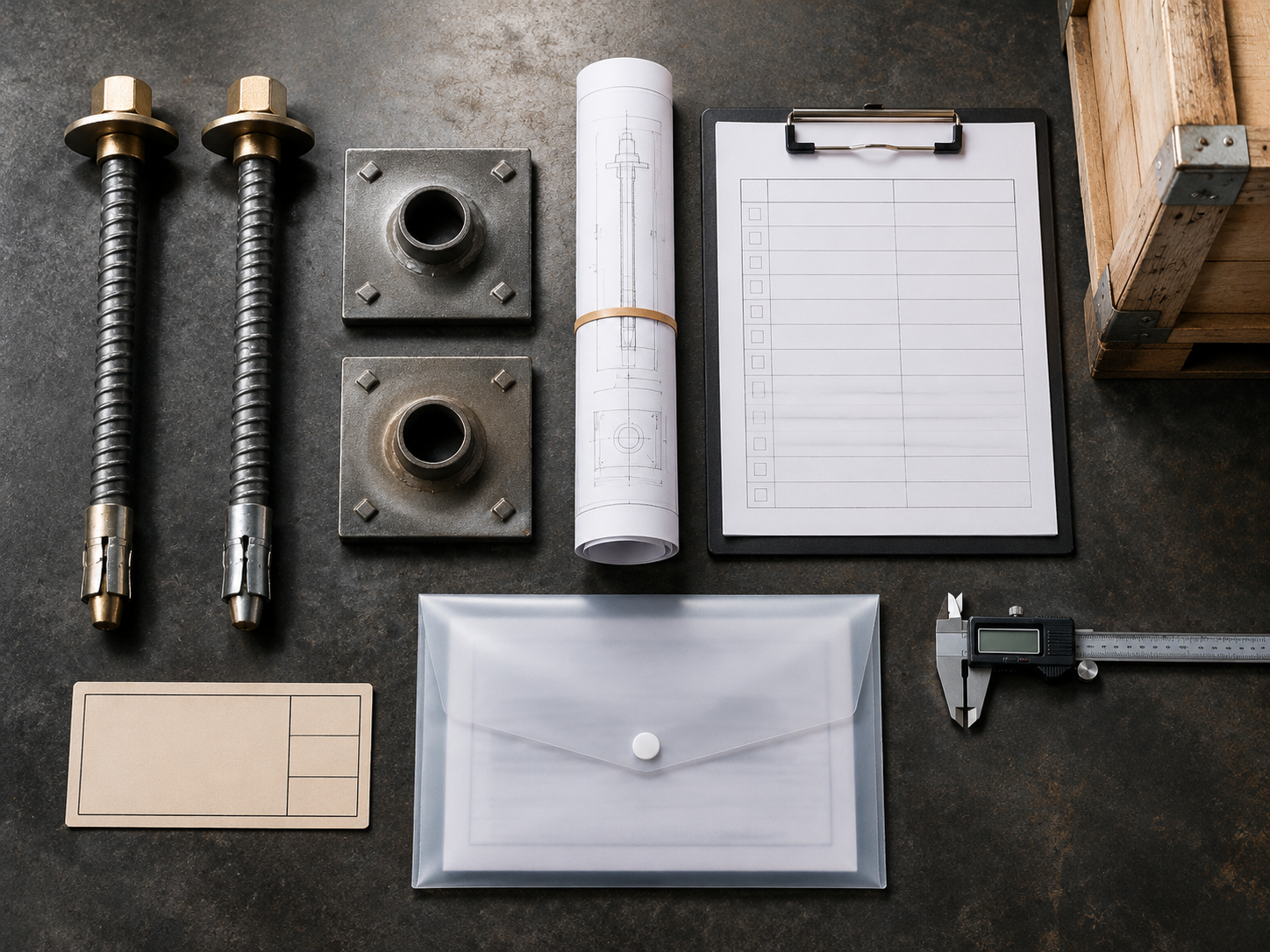
To make the comparison useful, prepare one information package for all shortlisted suppliers:
- Approved support specification and product drawings, where available.
- Required bolt type, dimensions, quantities and bearing plates.
- Borehole requirements and available drilling information.
- Existing installation equipment models and relevant technical documents.
- Required test evidence, surface protection and shipment documents.
- Delivery destination, requested schedule and any phased shipment requirements.
Ask suppliers to identify their proposed model, confirm the supply boundary and list deviations explicitly. Any proposed change from the approved support arrangement should be reviewed by the responsible project engineer before acceptance.
Discuss Your Requirements with CQ Rockbolt
Whether you are sourcing slotted-tube friction bolts or water-inflatable expandable bolts, start with the project requirement rather than the catalogue name alone.
Send CQ Rockbolt your approved drawing or specification, bolt quantities, drilling information, installation equipment details and delivery destination. Request confirmation of the available product, included components and supporting documents for the proposed supply.
For a closer look at the slotted-tube option, read Friction Rock Bolt Specifications: What Buyers Should Confirm Before Ordering, or contact CQ Rockbolt with your enquiry package.
Related News
Other news you might be interested in

Expansion Shell vs. Expansion Sleeve vs. Expansion Bolt: A Buyer's Guide to Underground Rock Bolt Terminology
An underground rock bolt RFQ may call for “expansion bolts.” One supplier may quote an expansion shell. Another may quote a sleeve. A third may quote a complete assembly with a bar, plate and nut.These responses can all look responsive, yet price different scopes. Before comparing unit price or delivery, the buyer needs to establish what each term means in that supplier’s offer and what will actually be supplied.This guide separates the terms commonly used for mechanical ground support and shows what to request in a quotation. It is a procurement guide, not a substitute for the project engineer’s selection, installation specification or acceptance criteria.

Where a Rock Bolt Fails Matters: Reading Failure Location in Underground Support
A failed rock bolt is often described in one sentence: the bolt broke, pulled out, or came loose. That description records an outcome, but it does not explain the problem.The location of the failure is more useful. Did the steel rupture in the bar body, at the thread, inside a coupler, behind the plate, at the resin–rock interface, or in the rock mass itself? Did the bolt survive the ground movement but lose surface restraint when the plate punched into weak rock? Did a delayed fracture begin at a corroded pit far from the collar?Those are different load-path events. They point to different parts of the support system and require different evidence before anyone can decide whether the cause was material, design, installation, environment, loading, or a combination.This article explains how mining and tunneling teams can read failure location in underground support. It is written for rock-mechanics and geotechnical engineers, contractors, supervisors, quality personnel, and technical buyers who need to turn a failed bolt into useful engineering information rather than an immediate argument about product quality.
Want to know more?
Get in touch with us for more information about our services and products.