

Expandable Rock Bolt Procurement: Pump, Connection and Equipment Checks

Dayang Yang
AuthorWith over 15 years of experience in the production and sales of ground anchoring and mining support products, we operate our own rock bolt and accessory manufacturing facility with stable large-scale production capacity. We are specialists in rock bolts, resin cartridges, anchor cables, bearing plates, and customized ground anchoring products for mining support and geotechnical anchoring solutions.
The quotation for expandable anchor rods may seem simple: model, length, quantity, and unit price. For mining or tunnel contractors using existing installation equipment, a question needs to be answered before placing an order: Can the proposed bolts be installed together with the existing pumps, inflation heads, and connectors on site?
When comparing suppliers of expandable anchor rods, please send detailed equipment information along with anchor rod specifications. A useful quotation should identify the proposed product, explain the basis of equipment compatibility, and specify which accessories are included. This makes it easier to resolve lost information before it becomes a website issue.
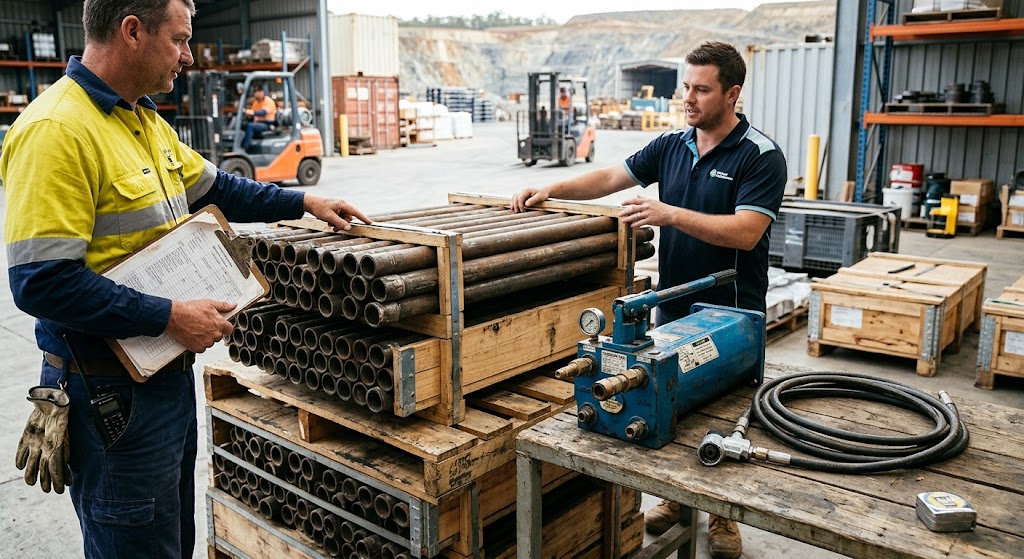
Starting from precise bolts and supply range
In this guide, expandable anchor rod refers to water filled steel pipe anchor rod. Before discussing the equipment, confirm that this is the product required for the project. The broad description of "expansion anchor" cannot determine the specific bolt or installation arrangement.
Provide the supplier with the specified bolt model or drawing, required length, quantity, and project documents. If you want to replace an existing product, please provide its identification and available technical information. Request the supplier to determine the drawings and document revisions applicable to the proposed replacement.
Also specify what you want to purchase: individual bolts, bolts with bearing plates, installation accessories, or packaging including equipment. The request for a 'complete system' still requires a itemized list for both parties to understand the scope.
Can you continue to use the existing pump?
Before asking if the pump is suitable, first confirm the pump. The nameplate photo, model, and operation manual provide suppliers with a clearer starting point than descriptions such as' our current anchor pump '
For existing expandable anchor rod pumps, provide:
- Manufacturer, model, and configuration, including any known modifications.
- The current operation manual or related technical table.
- Available driving power supply and on-site water supply information.
- Detailed information on hoses, control devices, and inflation heads.
Then request confirmation of the installation requirements for the proposed bolts. Inquire about which files support the proposed pairing and whether additional components or checks are required.
Do not use the maximum rated pressure of the pump as the sole basis for accepting combinations. The procurement review should cover the specified operational requirements and connected equipment. Obtain operational settings and precise layout instructions from responsible equipment and bolt suppliers.
If a new pump is provided, please request its model, required utilities, provided control devices and accessories, documents, and spare parts list. This allows for a separate comparison between equipment pricing and bolt pricing.
Does the inflation rate match the correlation?
Inquire about the connection details required to inspect the proposed components. Photos help identify equipment, but drawings and part references should support the final compatibility review.
| Item | Information to exchange before ordering |
|---|---|
| Bolt inflation connection | Drawing, dimensions and applicable product reference |
| Inflation head | Model, connection details and documented bolt compatibility |
| Hose assembly | Identification, fittings and relevant technical specification |
| Couplings and seals | Part references, mating details and replacement requirements |
| Existing equipment interface | Details of how the inflation equipment is connected and operated |
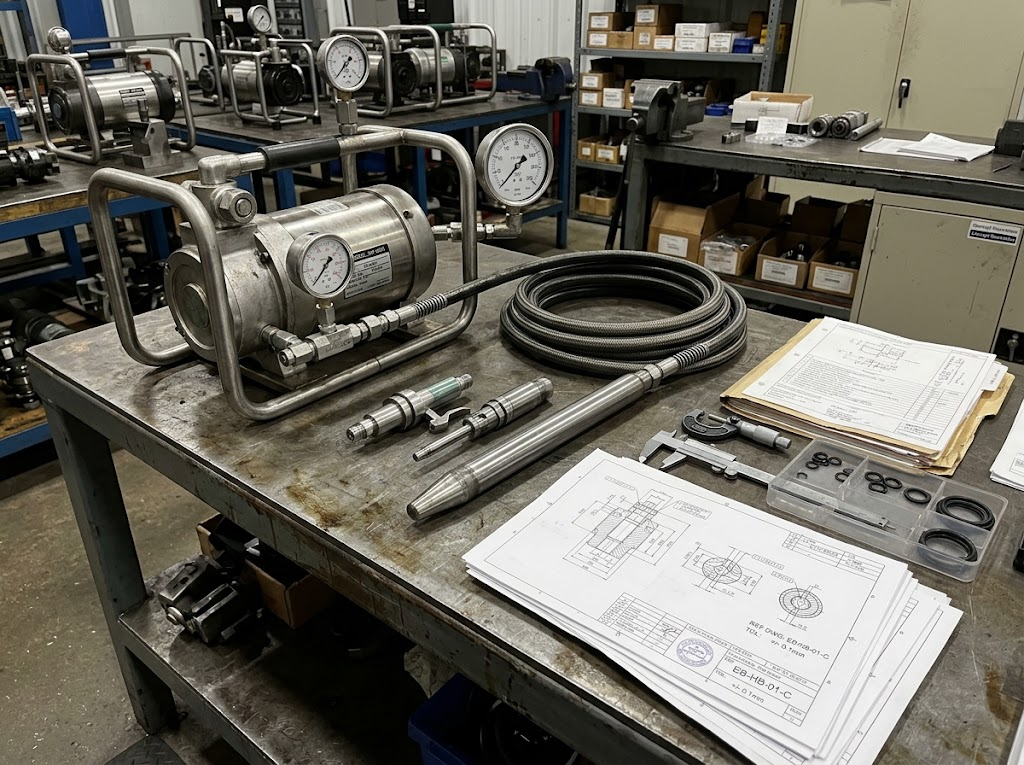
Require suppliers to mark each item as included, optional, buyer provided, or awaiting confirmation. If it is recommended to use an adapter, please request its drawings and confirm the expected components. Visually similar accessories or assemblable connections are not sufficient as evidence for purchasing equipment combinations.
It is also useful to determine replacement seals and connecting components before shipment, especially when the equipment will be used in a location far from the supplier. Confirm availability and part references, rather than assuming universal spare parts are suitable.
Check installation schedule and project input
The selection of expandable anchor rod installation equipment also requires information on how to carry out the work. Inform the supplier whether the project will use handheld devices, mechanized bolt connection devices, or other specified methods.
Provide project defined drilling dimensions, bolt lengths, equipment access restrictions, and available workspace. Including any relevant requirements for water, electricity, and equipment operation. Require the technical team to identify missing inputs or limitations during the review.
The purpose of this exchange is to inspect the proposed supply based on project requirements. The drilling size, installation settings, and acceptance criteria should be derived from the approved project design and applicable product specifications. They should not be selected from the general procurement terms.
Make the quotation comparable
Before comparing unit prices, place the quotation on the same supply basis. Use a checklist that includes the following:
- Bolt: Model, drawing reference, length, quantity, and identification requirements.
- Load bearing plates and other designated accessories: quantity and applicable drawings.
- Equipment: pump, inflation head, hose, coupling, and control device (if required).
- Documents: Product data, installation instructions, and inspection or testing records required for the project.
- Business details: packaging, delivery destination, proposed schedule, and exclusions.
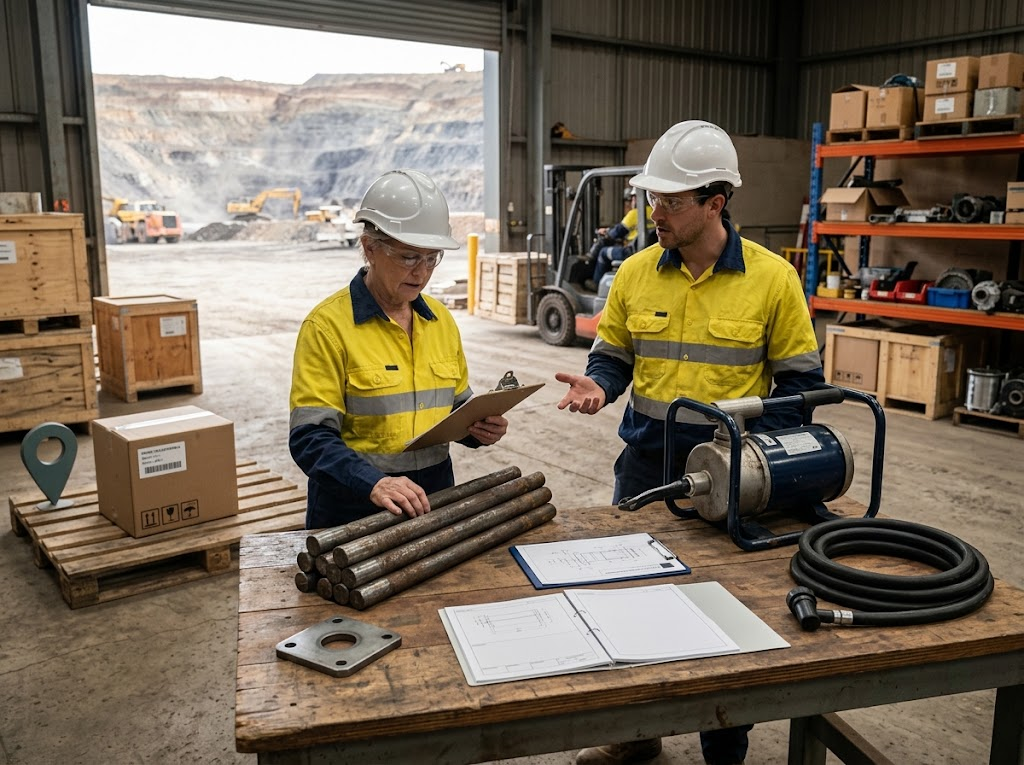
Require each supplier to clearly list deviations and unresolved compatibility issues. 'To be confirmed' is only useful when the offer has identified which information is missing and who needs to provide it.
For inspection and testing documents, check whether the records are applicable to the referenced product and project requirements as evidence. Reports from different models cannot determine the performance or applicability of the proposed supply.
RFQ template for device compatibility check
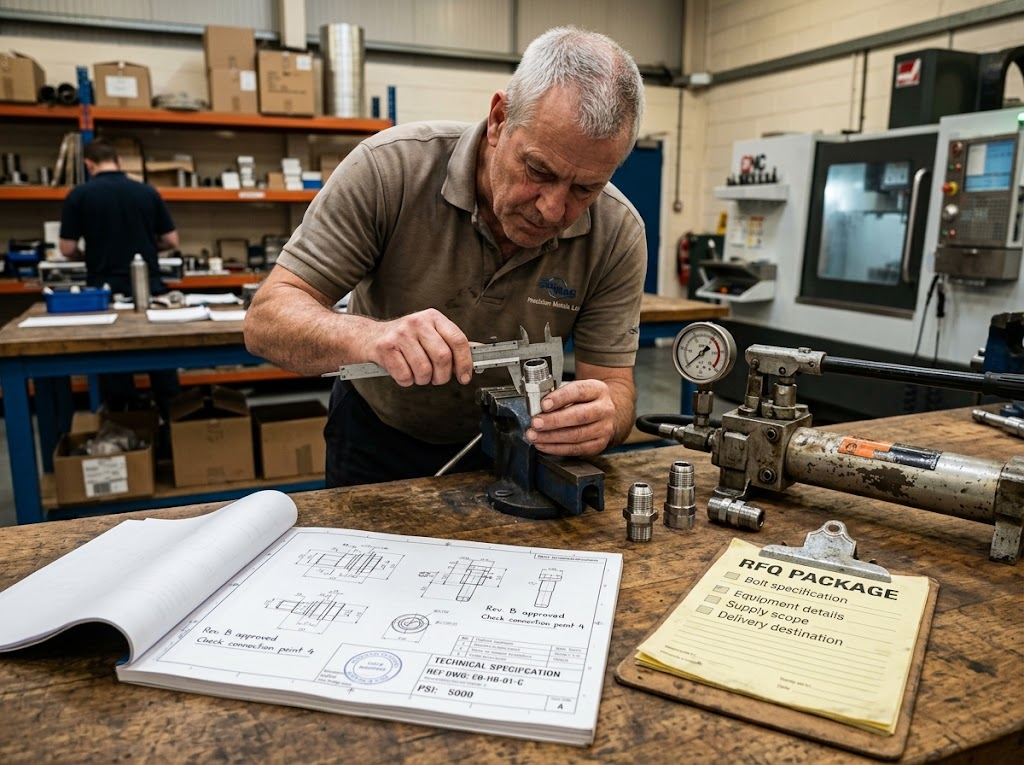
When contacting suppliers, you can use the following request:
We are procuring expandable anchor rods for [mining or tunnel projects]. Please review the attached specifications and equipment details before quoting.
>
Required bolts: [model or drawing, length and quantity]. Project investment: [specified drilling information and related installation requirements]. Existing equipment: [pump manufacturer/model, inflation head, hose, and connection details]. The manual, photos, and drawings are attached. Required supply: [Only bolts/bolts and plates/installation accessories/equipment package].
>
Please identify the proposed product, explain the basis for compatibility with our equipment, list any other components required, and separate the included items from the excluded items. Please also specify the available documents proposed for supply and any information still required for technical review.
>
Delivery: [Destination and required schedule].
If you need to consult CQ Rockbolt, please send the bolt specifications along with detailed information about the existing equipment, quantity, and delivery destination. Before finalizing the order, it is required to confirm the proposed supply scope and supporting documents. Clear equipment records provide a practical basis for buyers and suppliers to check and quote prices.
Related News
Other news you might be interested in

Active vs. Passive Anchors: How to Choose the Right Ground Support System
A ground support system can fail for a simple reason: the team selected a product by name before deciding how the load should develop. Two anchors may look similar in a catalog, use the same diameter, and carry the same nominal steel grade, yet behave very differently underground. One is tensioned against the rock immediately after installation. The other begins to carry load only when the rock mass starts to move.That difference is what "active" and "passive" should describe. It is not a quality ranking. It is not a choice between modern and old-fashioned support. It is a choice about timing, displacement and load path.

How do concrete anchor bolts improve foundation stability?
A concrete anchor bolt is a small part of a foundation, but it decides whether the foundation and the structure above it behave as one system. The bolt does not make the concrete stronger or the soil stiffer. It provides a controlled load path between the steel structure, the base plate, the concrete, and—when the anchor is designed to reach it—the deeper ground.In this article, the term covers cast-in anchor rods, post-installed mechanical or adhesive anchors, and post-tensioned bars or strand anchors used to tie a structure or foundation element into concrete.That distinction is the key to answering the question. Anchor bolts improve foundation stability by resisting uplift, shear and overturning, maintaining clamping force, helping to distribute concentrated loads, and tying the foundation to a competent bearing stratum. They cannot compensate for an undersized footing, a poor subgrade, or a missing reinforcement detail.
Want to know more?
Get in touch with us for more information about our services and products.