

The Weakest Point in Ground Support May Not Be the Bolt, But the Contact Surface

Dayang Yang
AuthorWith over 15 years of experience in the production and sales of ground anchoring and mining support products, we operate our own rock bolt and accessory manufacturing facility with stable large-scale production capacity. We are specialists in rock bolts, resin cartridges, anchor cables, bearing plates, and customized ground anchoring products for mining support and geotechnical anchoring solutions.
Summary
As underground mining and tunneling projects move into deeper, wetter, and more fractured ground conditions, the reliability of ground support systems is being judged by more than bolt strength alone. In many roadways and tunnels, the actual weak point may appear at the contact surface between the rock mass and the support components. Poor plate contact, uneven load transfer, loose surface rock, and insufficient connection between support points can reduce the effectiveness of even high-strength rock bolts. This shift is pushing the industry to pay closer attention to plates, nuts, steel straps, and other components that help transform individual bolts into a complete support system.
Ground Support Is Becoming a System-Level Challenge
For many years, rock bolt performance has been evaluated mainly through tensile strength, anchoring force, material quality, and installation depth. These indicators remain important, but underground conditions are becoming more complex.
In deep mines, high ground stress, fractured zones, groundwater, and mining-induced vibration can all affect the stability of roadways. In tunnel construction, changing geology, weak surrounding rock, and uneven excavation surfaces often create additional support challenges. Under these conditions, a strong bolt does not automatically guarantee a stable support result.
The reason is simple: rock bolts do not work alone. Their performance depends on how effectively the load is transferred from the surrounding rock to the plate, nut, strap, and anchoring system. If the contact surface is uneven, loose, poorly fitted, or not properly connected, the support force may not be distributed as designed.
Why the Contact Surface Matters
The contact surface is the area where the support system meets the rock surface. It may look like a small detail on site, but it plays a major role in load transfer.
When a rock bolt is installed, the plate and nut are expected to press against the rock surface or support material and help restrain deformation. However, if the plate does not sit flat, if the rock surface is broken, or if the surrounding material is too loose, the support force may become concentrated in a small area. This can lead to plate bending, local rock crushing, reduced pre-tension, or gradual loosening of the support system.
In some cases, the bolt may still pass a basic strength requirement, but the support effect underground may be weakened because the contact surface cannot carry and distribute the load properly. This is why many engineers are now paying more attention to the full support chain instead of focusing only on the bolt body.
Common Contact Surface Problems in Underground Projects
Uneven Rock Surfaces
After blasting or excavation, the surface of the roadway is often irregular. If the plate or strap cannot match the rock surface properly, part of the support force may be lost. Gaps behind the plate can also allow small rock pieces to loosen over time.
Local Stress Concentration
When the bearing area is too small or the plate is not well matched with the surrounding rock, the force from the bolt may concentrate at one point. This can damage the rock surface and reduce the stability of the support system.
Disconnected Support Points
A single bolt provides point support. In fractured or layered ground, separate bolts may not be enough to control deformation between anchoring points. Without steel straps or other connecting components, the roadway surface may still deform locally.
Installation Quality Variations
Even when good materials are used, poor installation can reduce support performance. Plate angle, nut tightening, hole position, strap alignment, and surface preparation all affect the final result.
From Strong Bolts to Reliable Load Transfer
The industry is gradually recognizing that ground support should not be judged only by the strength of individual components. A reliable support system must ensure that force can be transferred smoothly from the rock mass to the entire support structure.
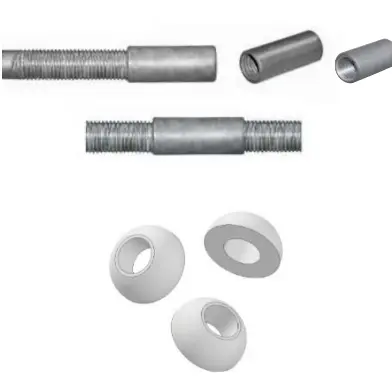
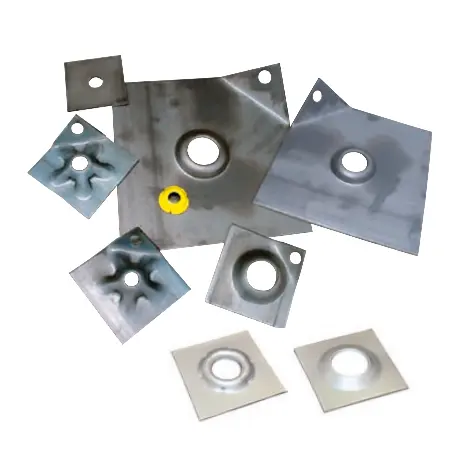
This is where support accessories become important. CQ Rockbolt’s Rock Bolt Accessories - Plates, Nuts & Mining Hardware include bearing plates, nuts, washers, and couplers designed for underground mining support. These components are not simply “small parts.” They help connect the bolt body with the rock surface and ensure that anchoring force can be delivered more effectively.
In practical applications, suitable bearing plates and nuts can help improve contact quality, reduce local stress concentration, and support more stable load transfer. For mining roadways, tunnel support, and roof reinforcement, these accessories play a direct role in whether the installed bolt can achieve its intended support effect.
 |  |
|---|
Steel Straps Help Connect Point Support into a System
In fractured roofs, layered rock, and high-stress roadways, the challenge is not only the contact between one plate and one rock surface. The larger issue is how to connect multiple support points into a more continuous structure.
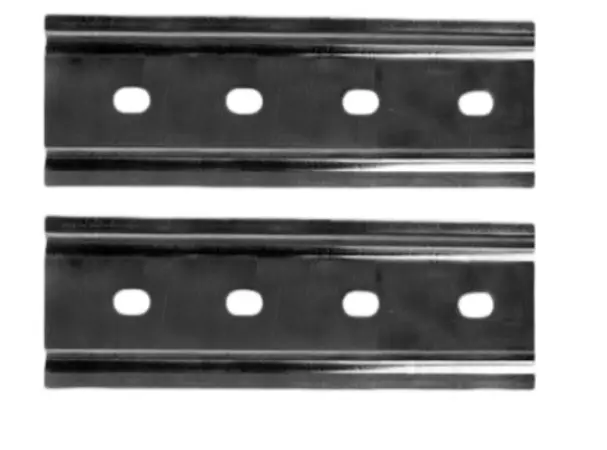
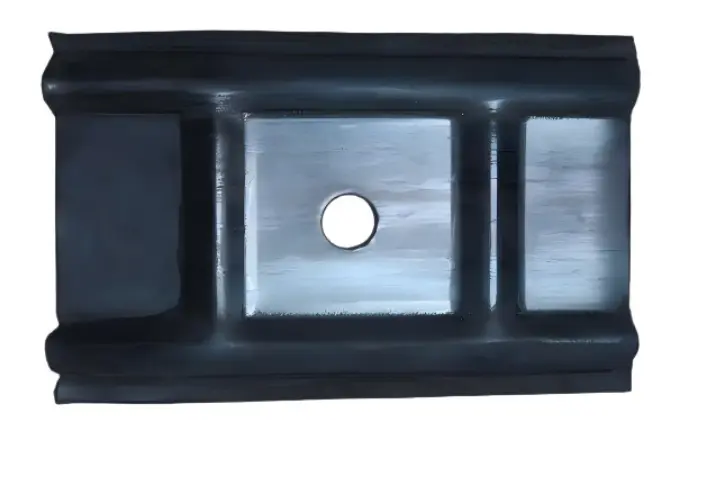
CQ Rockbolt’s W-Shaped Steel Strap / Mining Support Steel Strap is designed for mine support and tunnel reinforcement. When used with anchor bolts, the steel strap connects scattered point supports into an integrated load-bearing structure. This helps distribute stress across a wider area and improves the continuity of the support system.
Compared with relying on individual bolts alone, steel straps can help reduce deformation between bolts and strengthen the surface support effect. In coal mine roadways, tunnel projects, chambers, and other underground spaces, this type of component can improve the overall performance of the support system, especially where the rock surface is layered, cracked, or uneven.
 |  |
|---|
The Real Risk Is Not Always Material Failure
In underground projects, support problems are often described as bolt failure, roof failure, or ground instability. But in many cases, the real issue may be more subtle. The bolt may be strong enough, but the load path may be incomplete. The plate may be installed, but the contact may be poor. The support points may exist, but they may not work together as a system.
This means that ground support design should consider not only product specifications, but also installation conditions and interaction between components. A high-strength bolt without reliable surface contact may not perform as expected. A plate without proper fitting may create stress concentration. Separate bolts without straps or surface support may leave weak zones between anchoring points.
What Project Owners Should Pay Attention To
For underground mines and tunnel contractors, future support evaluation should include several practical questions:
- Does the plate fully contact the rock surface or support layer?
- Is the selected nut and plate suitable for the bolt type and ground condition?
- Are there fractured or layered areas that require steel straps?
- Can the support system distribute load across multiple anchoring points?
- Is installation quality being checked as carefully as material strength?
These questions help shift ground support from a material purchase decision to an engineering performance decision.
Conclusion
The weakest point in underground ground support may not always be the rock bolt itself. In many projects, the more important risk lies at the contact surface, where the bolt, plate, nut, strap, and rock mass must work together.
As mining and tunneling projects face deeper, wetter, and more fractured ground conditions, reliable load transfer is becoming just as important as bolt strength. By paying closer attention to bearing plates, nuts, steel straps, and installation quality, project teams can build support systems that are not only strong on paper, but also stable and effective underground.
 |  |
|---|
Related News
Other news you might be interested in

Deep Mining & Long-Service-Life Tunnel Support: Key Factors for Rock Bolt Corrosion Protection and Long-Term Durability
A buyer can receive two quotations for “corrosion-resistant rock bolts” and still be unable to compare them. One may refer to a galvanized bar. Another may include epoxy-coated bars, sealed couplers, protected anchor heads, and a specified grout cover. Both descriptions sound protective, but they do not cover the same parts of the support system or provide the same kind of evidence.

Threadbar Coupler Compatibility: Drawings, Threads and Test Evidence Before Ordering
A threadbar coupler can look like a straightforward steel sleeve with a thread at each end. In practice, compatibility depends on the bar system, the complete joint arrangement and the evidence supplied for the exact product.A matching nominal diameter is not enough. Similar-looking couplers may use different thread forms, tolerances, engagement lengths or material conditions. They may also serve different purposes in a prestressing anchor, a mechanical reinforcement splice or another load-carrying assembly.Before accepting a quotation, establish what the coupler connects, which drawings control the joint and what the test report actually proves. These checks help buyers compare offers on the same technical basis.
Want to know more?
Get in touch with us for more information about our services and products.