

Standards and Quality Requirements for Rock Bolts in Underground Mining and Tunneling Projects

Dayang Yang
AuthorWith over 15 years of experience in the production and sales of ground anchoring and mining support products, we operate our own rock bolt and accessory manufacturing facility with stable large-scale production capacity. We are specialists in rock bolts, resin cartridges, anchor cables, bearing plates, and customized ground anchoring products for mining support and geotechnical anchoring solutions.
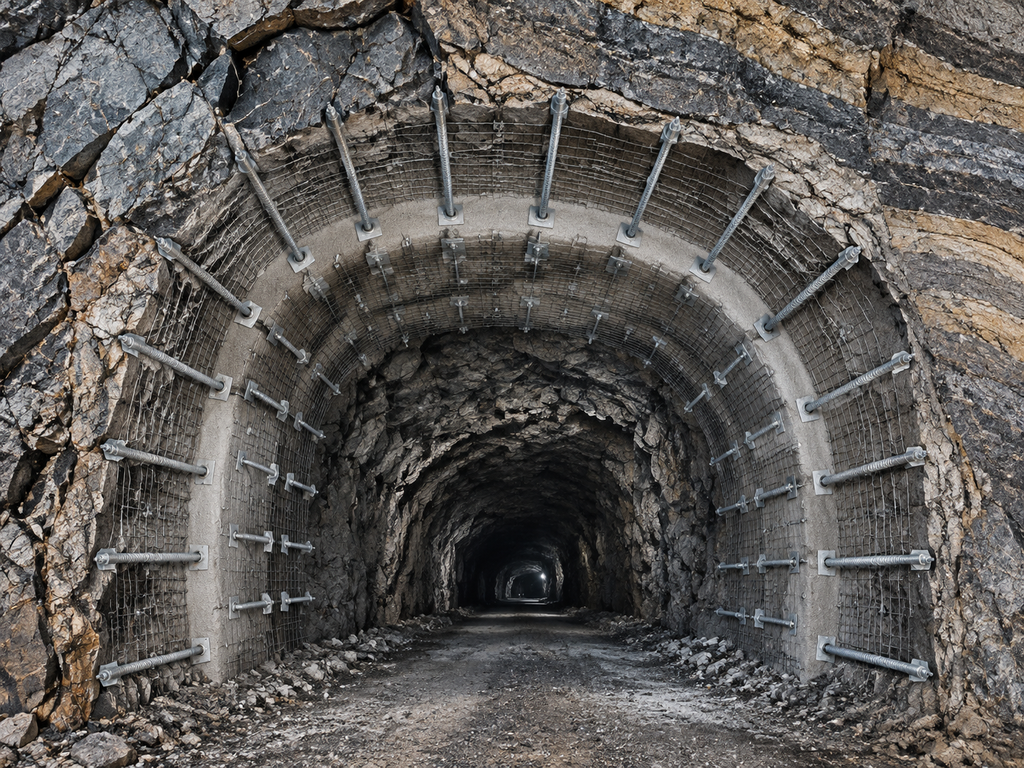
In underground mines, tunnels, underground caverns, and slope excavation projects, rock bolts are among the most widely used components for rock mass reinforcement and ground support. They connect loosened shallow rock to deeper, more stable rock layers, improve overall rock-mass integrity, and limit the expansion of fractures and localized deformation.
However, the performance of a rock bolt depends on more than the strength of the steel bar. It is also affected by ground conditions, support design, anchorage method, installation quality, field testing, and long-term durability. Therefore, rock bolt quality should be evaluated as part of a complete underground engineering support system.
The Role of Rock Bolts in Underground Engineering Support
Basic Support Principle of Rock Bolts
Rock bolts are generally installed in drilled holes and connected to the surrounding rock through mechanical anchorage, resin anchorage, grouted anchorage, or frictional resistance. Once loaded, they improve the restraint between rock blocks, reduce the opening of discontinuities, limit block movement, and help prevent rock falls.
In underground mining and tunnel excavation, rock bolts mainly perform three functions: reinforcing fractured rock, controlling ground deformation, and connecting locally unstable blocks to relatively stable rock layers. In projects involving large deformation or dynamic loading, the bolt’s ductility and energy-absorption capacity must also be considered.
Main Functions of Rock Bolts in Mine Roadways and Tunnels
In mine roadways, rock bolts are commonly used for roof support, sidewall support, and reinforcement around intersections. They help resist mining-induced disturbance, blasting vibration, and stress concentration.
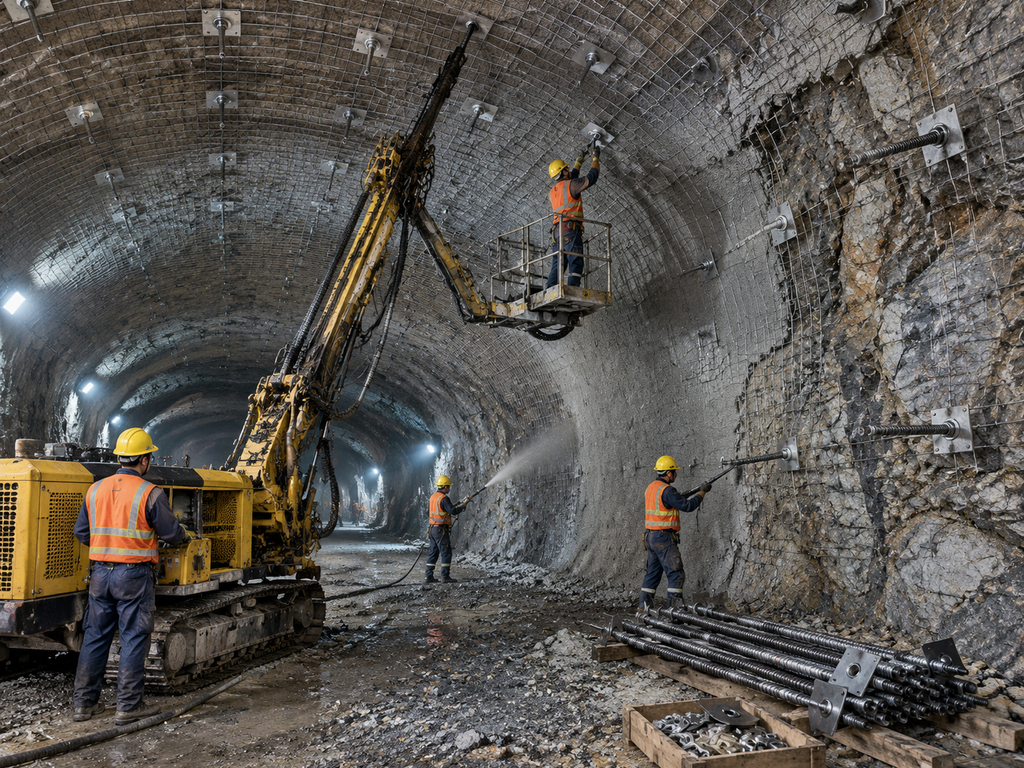
In tunneling projects, rock bolts are normally used together with shotcrete, steel mesh, and steel arches to form a tunnel ground support system. This system controls loosening, deformation, and localized collapse after excavation. In weak, fractured, or water-bearing ground, grouting or advanced support may also be required.
Coordination Between Rock Bolts, Shotcrete, Steel Mesh, and Other Support Structures
Rock bolts do not work as isolated components. Shotcrete mainly seals the exposed surface and restrains shallow rock, while steel mesh helps control small rock fragments. Steel arches and other structural supports provide greater load-bearing and deformation-control capacity.
Rock bolts improve the internal stress condition of the rock mass, while other support components control surface and structural deformation. A reliable combined support system can only be achieved when different support elements are properly matched in terms of design parameters, installation sequence, and connection methods.
Rock Bolt Application Conditions in Mining and Tunneling Projects
Rock-Mass Classification, Rock Structure, and Ground Stress
Rock bolt design should be based first on the rock-mass classification, rock integrity, joint and fracture conditions, and ground-stress environment. Relatively intact hard rock may require mainly localized anchorage, while jointed, layered, or blocky rock masses generally require systematic rock bolting.
In deep mines and deeply buried tunnels, high ground stress and rockburst risks must also be considered. In these conditions, rock bolts should not be selected only for high tensile strength; they should also provide suitable deformation and dynamic load-bearing capacity.
Weak, Fractured Rock and High-Stress Conditions
In weak or fractured rock, drilling may cause hole collapse, hole shrinkage, or instability of the borehole wall. As a result, conventional pre-drilled rock bolts may be difficult to install. Depending on the design, self-drilling rock bolts, grouted rock bolts, or other systems capable of rapid drilling and simultaneous reinforcement may be used.
In high-stress environments, bolt spacing, anchorage length, and pretension should match the deformation characteristics of the rock mass. If support stiffness is too low, deformation may not be controlled effectively. If the support is excessively rigid, brittle failure may occur as the rock mass continues to deform.
Effects of Groundwater, Water Ingress, and Corrosive Conditions
Groundwater can affect borehole stability, grout dispersion, and the bonding performance of the anchorage zone. Rock bolts exposed to humid, saline, or chemically aggressive environments for long periods may suffer corrosion, cross-sectional loss, and reduced load-bearing capacity.
The design stage should therefore assess the source of groundwater, water pressure, chemical composition, and drainage conditions. Appropriate corrosion protection, grouting, and drainage measures should then be selected according to the required service life.
Standards and Design Requirements for Rock Bolts
Material, Structural, and Mechanical Performance Standards
Rock bolt standards generally cover material properties, bar dimensions, thread configuration, accessory compatibility, mechanical performance, installation procedures, and acceptance requirements. The applicable requirements should be determined according to the standards of the project location, the engineering category, and the contract specifications.
Common mechanical indicators include yield strength, tensile strength, elongation, connection strength, and anchorage capacity. It is important to understand that a compliant steel bar does not necessarily mean that the entire rock bolt system is compliant. Plates, nuts, couplers, and anchoring materials also affect final performance.
Bolt Length, Diameter, Spacing, and Anchorage Length
The bolt length should pass through the potentially loosened zone and extend into rock with reliable load-bearing capacity. The diameter and bar strength should satisfy the design load requirements, while spacing and layout should reflect the discontinuities, excavation profile, and support range.
For grouted and resin-anchored rock bolts, the effective anchorage length and the bonding between the anchoring material and the borehole wall must also be ensured. Simply increasing bolt length cannot replace proper rock-mass analysis and support-parameter design.
Load Capacity, Pretension, and Deformation Capacity
Rock bolt load capacity should correspond to the engineering loads, rock-mass deformation, and support class. Pretension allows the bolt to participate in the support system at an early stage and improves contact between the support and the rock surface. Excessive pretension, however, may crush the rock locally or damage the accessories.
In projects subject to continuous deformation or impact loading, the bolt’s ductility, energy-absorption capacity, and allowable deformation range should be evaluated instead of focusing only on static tensile strength.
Basic Principles for Selecting Standards in Mining and Tunneling Projects
Standards should be selected according to three principles. First, they must satisfy the regulations and specifications applicable to the project location. Second, they must be compatible with the geological conditions, excavation method, and required service life. Third, design, procurement, installation, and acceptance should follow the same technical framework.
For international projects, the equivalence between different standards, testing methods, and acceptance limits should be clarified in advance to avoid disputes caused by inconsistent standard interpretation.
Material and Manufacturing Quality Requirements for Rock Bolts
Steel Strength, Toughness, and Ductility
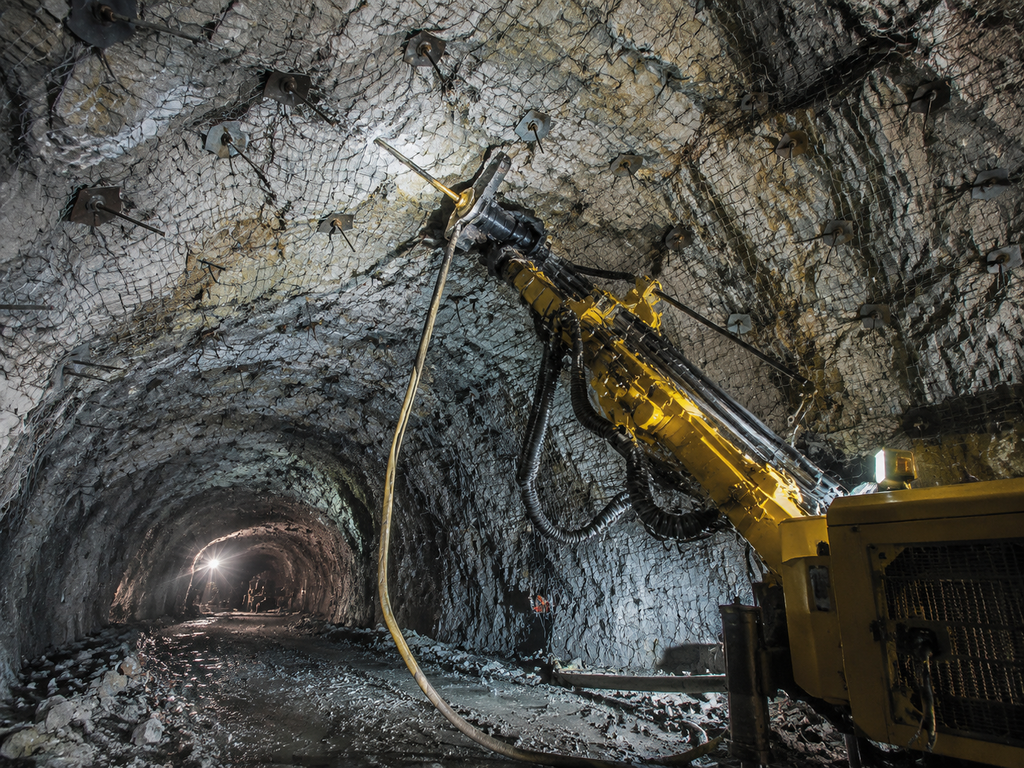
Rock bolt steel should provide stable strength, toughness, and ductility. High-strength steel can increase load capacity, but insufficient ductility may lead to sudden fracture under continuous rock deformation or dynamic loading.
For high-stress mines and complex tunneling projects, material properties should be selected according to the support design rather than simply choosing the highest available strength grade.
Manufacturing Accuracy of Bars, Threads, Plates, and Nuts
Bar straightness, thread accuracy, thread length, and end configuration all affect installation and load transfer. Bearing plates should match the rock surface and bar dimensions, while nuts should be capable of transferring pretension reliably.
Damaged threads, deformed plates, or poor nut engagement may cause premature failure at the connection even when the steel bar itself meets the required material specification.
Heat Treatment, Corrosion Protection, and Batch Traceability
Heat treatment affects steel strength and toughness, while surface treatment influences long-term durability. In humid, water-bearing, or chemically aggressive environments, corrosion protection should be specified according to the required service life.
All materials and finished products should have clear batch identification and be traceable to the raw material, processing stages, and inspection records.
Factory Inspection and Quality Documentation
Factory inspection generally includes checks of appearance, dimensions, threads, mechanical performance, and accessory compatibility. Depending on the project requirements, suppliers should also provide material certificates, inspection reports, batch information, and necessary third-party test documents.
Quality documentation does not merely prove that a product has passed inspection. It also allows the causes of abnormal performance to be traced and responsibilities to be identified.
Applicability Comparison of Different Rock Bolt Types
Mechanical, Resin-Anchored, and Grouted Rock Bolts
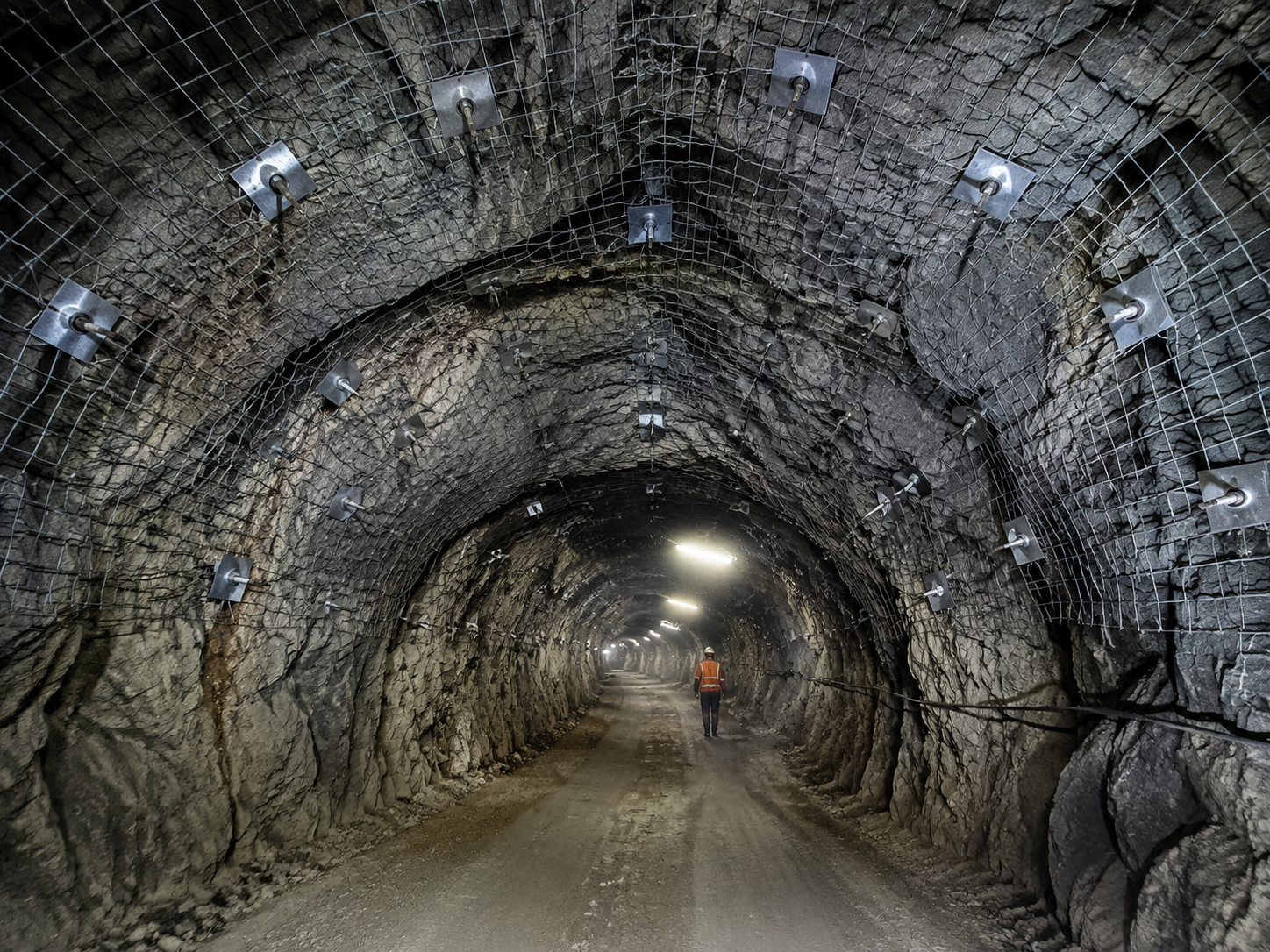
Mechanical rock bolts can be installed relatively quickly and are suitable for conditions where the borehole wall is stable and rapid support is required. Resin-anchored rock bolts use resin cartridges to form the anchorage and can provide efficient installation, but their performance is sensitive to hole diameter, installation speed, and resin mixing quality.
Grouted rock bolts can provide continuous anchorage over a longer length and are suitable for projects requiring stronger bonding or treatment of more complex rock conditions. However, they place greater demands on grouting equipment, grout proportioning, and construction records.
Friction-Type Rock Bolts and Self-Drilling Rock Bolts
Friction-type rock bolts rely on friction or expansion between the bar and the borehole wall to create support. They are suitable for certain applications requiring rapid installation.
Self-drilling rock bolts combine drilling, bar installation, and grouting in one process. They are suitable for weak, fractured, unstable, or easily collapsing ground where conventional drilling is difficult to maintain. Their performance depends not only on the bar, but also on the drill bit, couplers, grout, and field installation procedures.
Geological Adaptability and Installation Requirements of Different Rock Bolt Types
Rock bolt selection should consider rock integrity, borehole stability, groundwater, excavation speed, equipment capacity, and required service life. No bolt type should be selected based on a single performance indicator.
The correct approach is to define the required support function first, then compare the suitability of different bolt types in terms of load capacity, deformation, installation, and maintenance.
Installation and Quality Control of Rock Bolts
Borehole Position, Orientation, Depth, and Diameter
The rock bolt installation procedure should begin with borehole quality control. Borehole position and orientation should comply with the design, hole depth should satisfy the anchorage-length requirement, and hole diameter should match the rock bolt and anchoring material.
Deviation in borehole position, insufficient depth, excessive diameter, or severe disturbance of the borehole wall may reduce anchorage performance. In fractured ground, collapsed holes, constricted holes, and accumulated water should be treated promptly.
Rock Bolt Installation, Anchorage, and Pretension Control
Construction crews should complete bar insertion, anchorage, bearing-plate installation, and nut tightening in accordance with the approved method statement. Mechanical anchorage should be checked for proper expansion and locking. Resin anchorage requires control of mixing and curing time, while grouted anchorage requires continuous grout flow and adequate filling.
Pretension should be controlled using the specified equipment or method and recorded for traceability. It should not be judged solely by operator experience.
Grouting Materials, Grout Filling, and Construction Records
The proportion, flowability, setting time, and strength of the grouting material should satisfy the design requirements. During construction, records should include grouting pressure, grout volume, return flow, and abnormal conditions.
If grout leakage, pipe blockage, abnormal pressure, or insufficient grout volume occurs, the cause should be investigated promptly. Supplemental grouting, verification, or reinstallation may then be required.
Common Installation Defects and Their Effects
Common defects include incorrect drilling angle, insufficient bolt length, incomplete insertion to the design depth, poor contact between the plate and rock surface, inadequate nut pretension, and incomplete grouting.
These defects may prevent the bolt from carrying load effectively, reduce the restraint provided to the rock mass, and create safety risks during subsequent blasting, mining activity, or deformation.
Rock Bolt Testing, Acceptance, and Long-Term Performance
Inspection of Appearance, Dimensions, and Installation Quality
Field acceptance should first check the bolt specification, quantity, location, orientation, exposed length, plate condition, and nut tightening. Concealed portions should be verified through construction records, photographic documentation, and sampling inspections.
Material Re-Testing, Load Capacity, and Pull-Out Testing
Rock bolt testing includes material re-testing, connection-performance inspection, pretension verification, and pull-out testing. Pull-out testing is mainly used to verify the actual connection capacity between the rock bolt and the surrounding rock or anchorage body.
The testing quantity, loading method, and acceptance requirements should be determined according to the project specifications, design documents, and applicable standards. Test values from one project should not automatically be treated as universal limits for every project.
Pretension, Displacement, and Rock-Mass Deformation Monitoring
For important mine roadways, long tunnels, and high-stress zones, the pretension of rock bolts, rock-mass displacement, crack development, and support condition should be monitored continuously or periodically.
Monitoring results help engineering teams assess support stability and adjust bolt spacing, length, or combined support measures when ground conditions change.
Corrosion, Fatigue, and Long-Term Durability Management
The long-term performance of rock bolts can be affected by corrosion, fatigue, stress relaxation, and groundwater conditions. Projects with long design lives should establish regular inspection and maintenance procedures.
If corrosion, plate deformation, nut loosening, or continuous rock deformation is detected, the condition should be reviewed together with monitoring data. Reinforcement or replacement may be required.
Key Points of Rock Bolt Quality Management in Underground Engineering
Full-Process Quality Control from Design and Procurement to Installation
The quality of underground mining ground support and tunnel support should not be checked only after construction is complete. It should cover design, procurement, manufacturing, transportation, installation, testing, operation, and maintenance.
Design documents should clearly define support parameters and acceptance requirements. Procurement should verify material quality and technical capability. Installation should control critical processes, and acceptance should ensure that test results are complete and traceable.
Compatibility Between Rock Bolts, Accessories, Equipment, and the Support System
Rock bolts, plates, nuts, couplers, and anchoring materials should be compatible in terms of dimensions and performance. Drilling, grouting, and tightening equipment should also meet the design requirements.
Replacing an individual component without evaluating the entire support system may result in connection f
ailure, lower installation efficiency, or unstable support performance.
Handling and Re-Testing of Nonconforming Rock Bolts
Rock bolts with nonconforming materials, installation deviations, insufficient load capacity, or abnormal grouting quality should be treated according to the nature of the defect. Possible measures include reinforcement, reinstallation, support densification, or re-testing.
All corrective measures should be documented, and their effects on adjacent support areas and overall engineering safety should be evaluated.
Establishing a Support Quality System Focused on Engineering Reliability
High-quality rock bolt support does not simply mean using a high-strength product. It is the result of coordinated design, materials, installation, testing, and monitoring.
For underground mining and tunneling projects, the most important task is to establish a support quality management system suited to the actual rock-mass conditions, continuously verify the working condition of the bolts, and improve the support design according to field data. Only in this way can underground projects achieve greater safety, durability, construction efficiency, and overall reliability.
Related News
Other news you might be interested in

Coal Mine Roadway Support Systems: How Rock Bolts, W-Straps, Mesh and Cable Bolts Work Together
Coal mine roadways are essential to safe, continuous underground operations. Their stability can be affected by changing geological conditions, mining-induced stress and excavation activity. As ground-control research increasingly focuses on the overall coordination and monitoring of support systems, rock bolts, W-straps, mesh and cable bolts should not be viewed as isolated components, but as elements that work together under site-specific mine conditions. This article explores their complementary roles in coal mine roadway support, while recognizing that support designs must be based on the conditions of each mine.

Five Major Advantages of Self-Drilling Anchors in Engineering Applications
In weak ground, fractured rock, loose soil, or rock masses with numerous joints, boreholes may narrow, shed material, or collapse. This can make it difficult to insert the anchor bar and may also affect subsequent grouting. Groundwater and changing strata add further uncertainty to construction.
Want to know more?
Get in touch with us for more information about our services and products.