

Deep Mining & Long-Service-Life Tunnel Support: Key Factors for Rock Bolt Corrosion Protection and Long-Term Durability

Dayang Yang
AuthorWith over 15 years of experience in the production and sales of ground anchoring and mining support products, we operate our own rock bolt and accessory manufacturing facility with stable large-scale production capacity. We are specialists in rock bolts, resin cartridges, anchor cables, bearing plates, and customized ground anchoring products for mining support and geotechnical anchoring solutions.
The buyer may receive two quotations for "corrosion-resistant anchor rods", but still cannot compare them. People may mention galvanized steel bars. Another possibility includes epoxy coated steel bars, sealed couplings, protected anchor heads, and designated grouting covers. Both of these descriptions sound protective, but they do not cover the same parts of the supporting system or provide the same type of evidence.
This difference is important in deep mines and tunnels with long service lives. Corrosion is not just a matter of surface smoothness. It will reduce the effective steel cross-section, affect threads and connections, and make the support system more difficult to inspect or maintain. In permanent openings, the relevant question is not just 'Is this bolt coated?' but:
Which parts of the anchor system are protected, for which environment, for how long, and what evidence supports this claim?
This article explains the main corrosion mechanisms, available protection options for anchor rods, and detailed information that buyers should provide in the inquiry form. It is a procurement and technical overview guide and cannot replace project specific support design.
Before specifying a protection system, buyers typically need to answer four practical questions:
- What are the actual groundwater and exposure conditions, rather than general descriptions such as "moist" or "erosive"?
- Which parts of the bolt assembly must be protected to achieve the required service life?
- Are the proposed protective measures coatings, encapsulation systems, different materials, or combinations?
- What inspection records will show that the protective device was provided and installed according to regulations?
The following sections answer these questions in order.
Why corrosion has become a problem for the support system
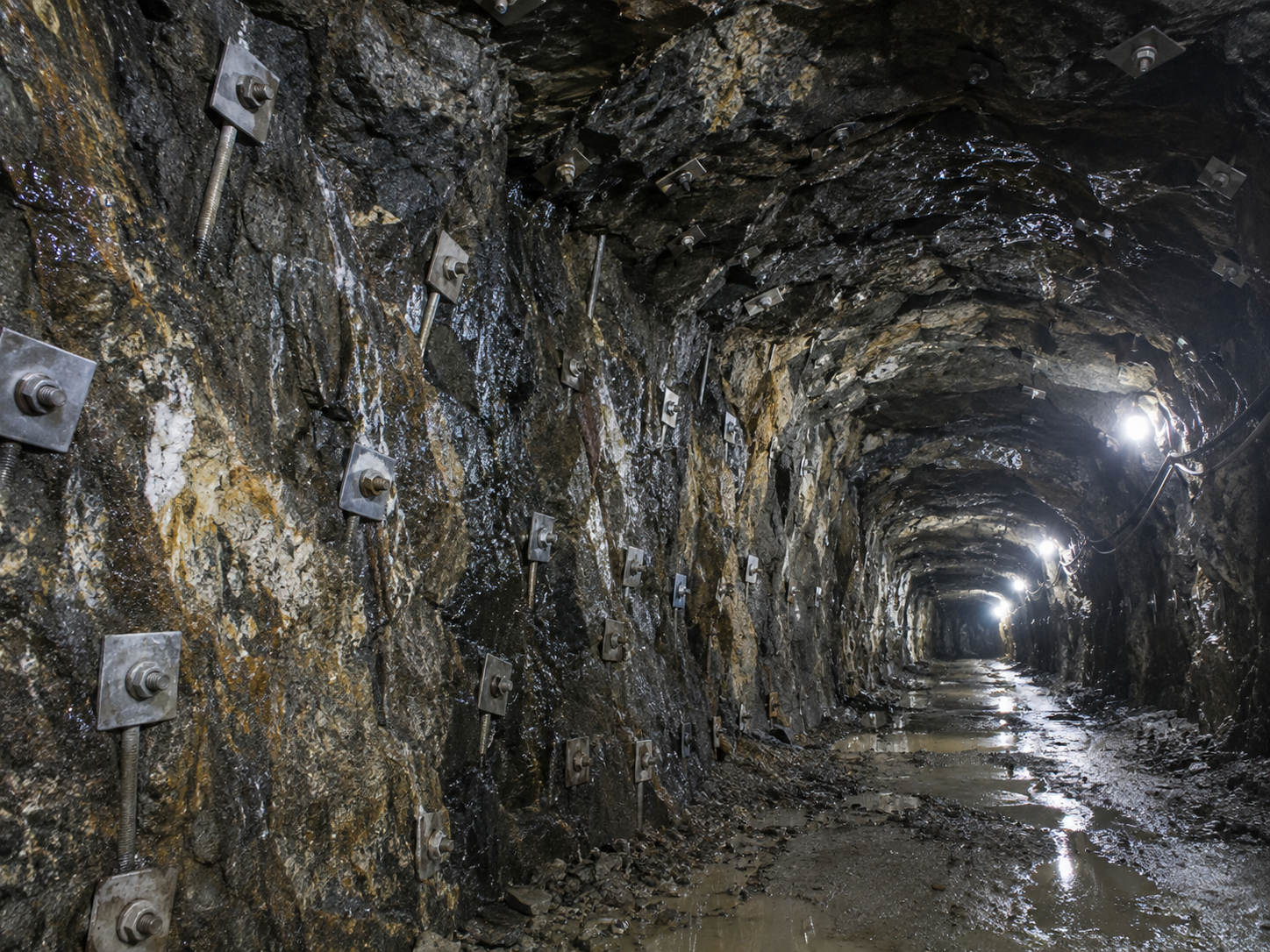
Underground anchor rods work in rarely uniform environments. Groundwater may contain chlorides, sulfates, dissolved salts, or sulfides. The humidity can be maintained at a high level. Water can flow through cracks, alternating between wet and dry conditions, or accumulate around the plate and exposed bolt ends. Temperature and stress will also vary with the lifespan of excavation.
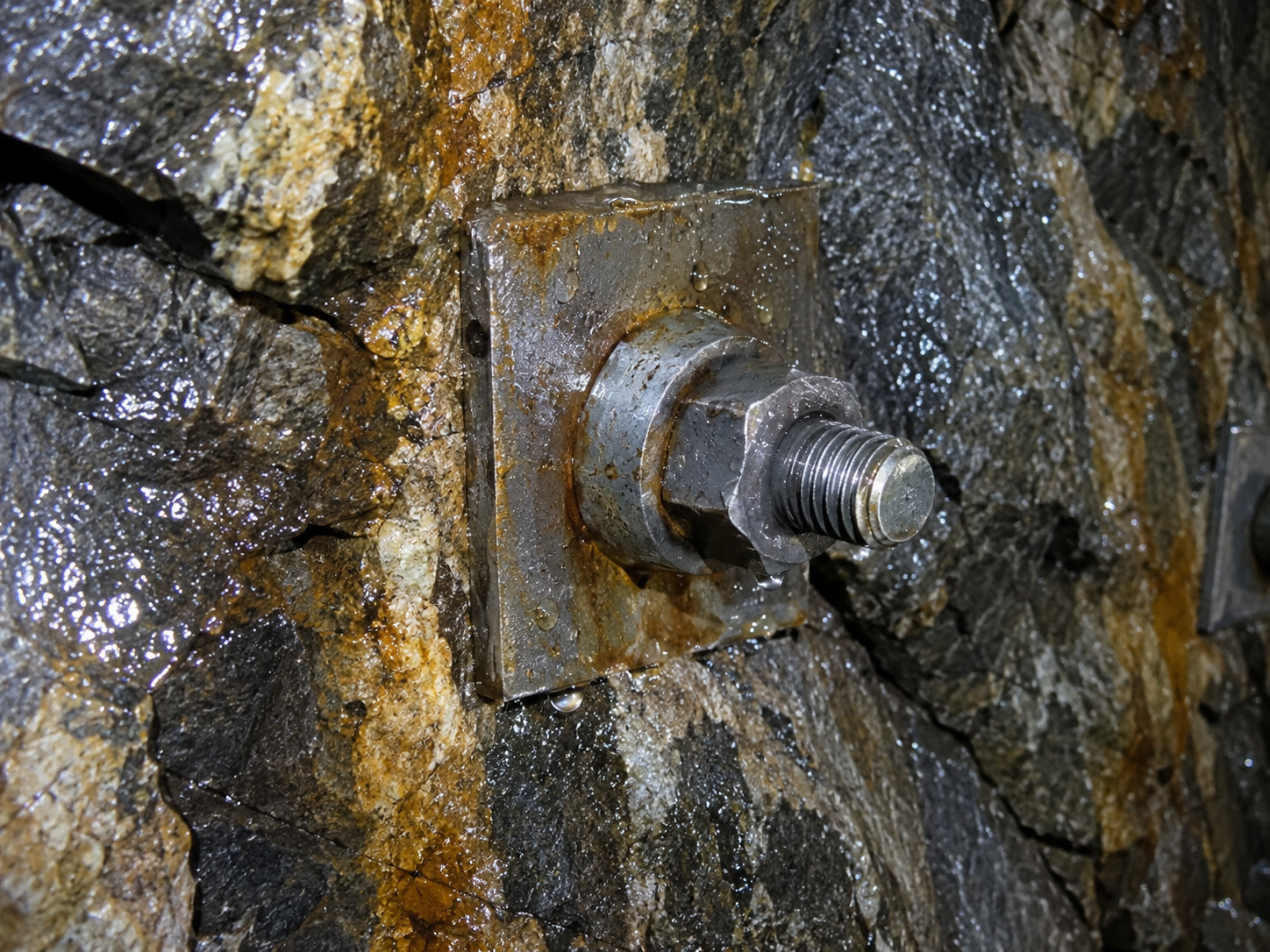
These conditions will not affect every part of the installation in the same way. The bolt may be partially surrounded by cement slurry or resin, partially exposed on the collar, and connected to a plate, nut, coupler, or anchor made of another component or coating system. The exposed end may accumulate water. Threads may be damaged during transportation. During transportation or installation, the coating may be scratched.
Therefore, 'corrosion-resistant bolts' is an incomplete description. The long-term durability of the ground bracket depends on the entire protected component and its installation method.
The consequences also exceed the price of alternative steel. Corrosion in long-life tunnels may lead to:
- The effective cross-section of the rod decreases;
- Deterioration of threads, couplings, plates, nuts, or anchoring components;
- The uncertainty of the remaining bearing capacity of concealed components;
- More frequent inspections, repairs, or restorations;
- Even if the initial bolt price is low, the lifecycle cost is still high.
Anchor rods are not the only supporting components in underground openings. They work together with sprayed concrete, mesh, straps, arches, and surrounding rock mass. The durability issue of only one component will affect the performance of a wider support system. Therefore, the goal is to provide a reliable support system within the required service period, rather than making coating claims on isolated items.
What should be included in 'corrosion resistance'
Before comparing protection methods, buyers should determine the system boundaries. A complete review can include:
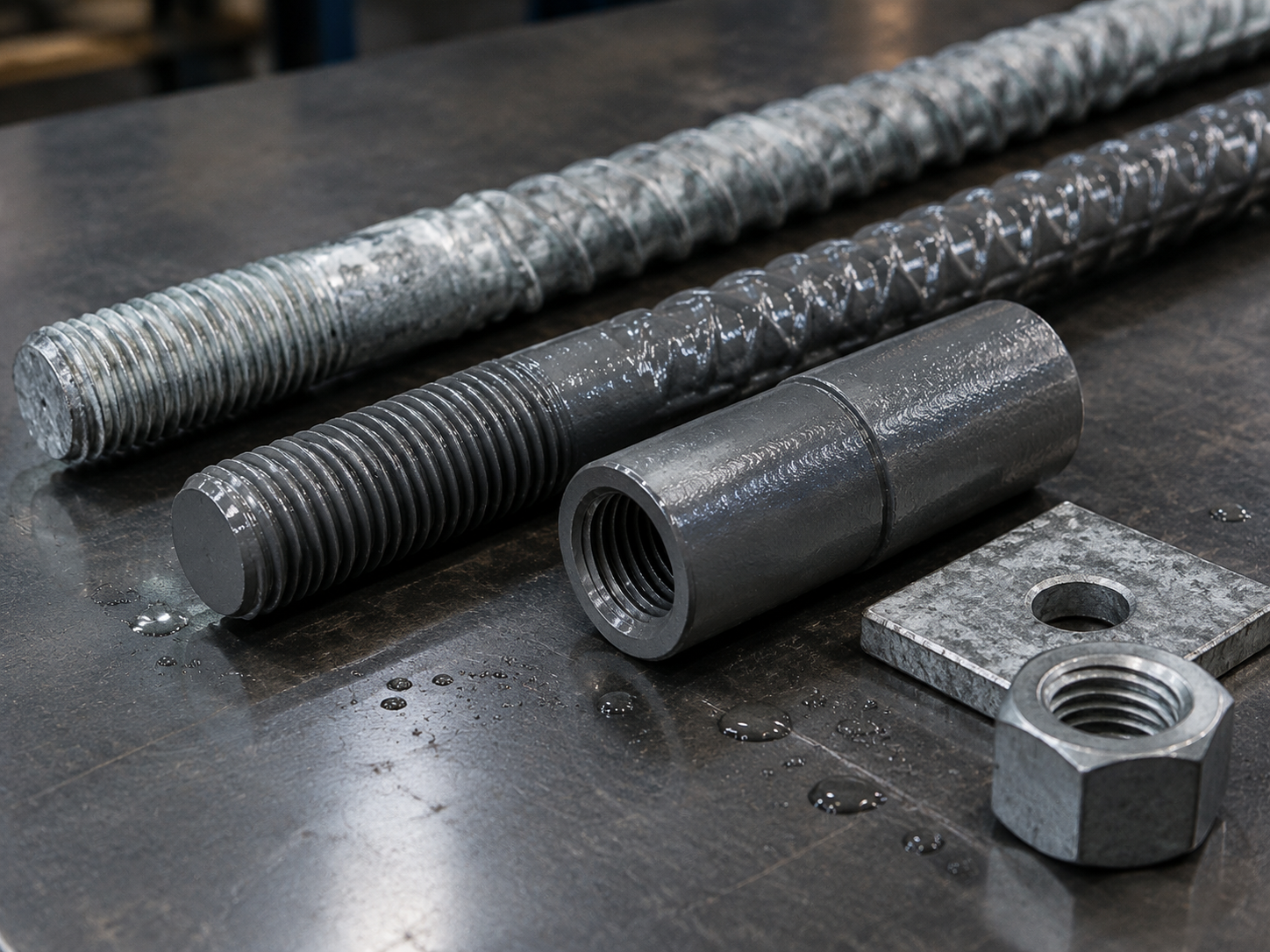
Pole and line. The steel grade, surface condition, thread geometry, and protection method are all important. Coated steel bars with exposed cutting ends or damaged threads do not equal fully protected steel bars.
Couplings and connectors. The coupler may produce cracks, expose different materials, or interrupt the protective coating. The joint must be considered as part of the anti-corrosion length and cannot be treated as an accessory outside the specifications.
Plates, nuts, washers, and anchor heads. They are often exposed to water and air. They may require compatible coatings, sealing devices, covers, or anti-corrosion compounds. The protected rod connected to the unprotected board is not a complete system.
Anchorage. Resin or cement slurry can provide load transfer and physical barriers around steel. The effectiveness of this barrier depends on the mixed design, filling, covering, installation procedures, and drilling conditions.
Exposed collar and head. This is one of the easiest to access parts during installation, and usually one of the most exposed parts. It is worth explicitly addressing in the design and quotation.
Damage during transportation, storage, and installation. The coating may be damaged before the bolt reaches the surface. Therefore, protection requirements should include handling, storage, inspection, touch up painting, and rejection criteria, not just factory finishes.
When the supplier says "galvanized", "epoxy coating" or "corrosion-resistant", ask which of these items are included. The answer should be visible in the drawings, bill of materials, and inspection plan.
Protection options and their limitations
There is no protection method that can automatically correct each anchor rod, groundwater condition, and design life. The main options have different purposes.
hot-dip galvanizing
Hot dip galvanizing applies zinc coating to prefabricated steel. It can provide sacrifice protection and environmental barriers. ISO 1461:2022 specifies the general properties and test methods for hot-dip galvanized coatings on prefabricated steel products, but the standard also states that individual product standards may add different requirements.
Galvanizing is a practical choice for suitable anchor components and moderate corrosive environments. It does not prevent bolts from corroding. Coating thickness, surface treatment, drainage, exposure conditions, damage, and protection of threads and connections can all affect performance. Acidic or chemically aggressive groundwater may require different or additional barriers.
For buyers, useful questions are not only 'Is it galvanized?', but also:
- Which parts are galvanized?
- What are the coating specifications and inspection methods?
- Has the cutting end, thread, coupling, and on-site damage been resolved?
- Does the project require additional barriers or different materials?
Epoxy resin and other barrier coatings
Epoxy coating can provide a barrier on the surface of steel. When the galvanized finish itself is considered insufficient, or when the project requires a specified coating system, they are usually considered for use.
The performance of coated bolts depends on surface treatment, coating thickness, adhesion, continuity, curing, and damage control. Special attention should be paid to threads, cutting ends, and connections as it is difficult to maintain a continuous coating at each interface. Coatings that appear intact in straight sections may still have damaged edges or incomplete coverage at the ends.
Therefore, the specifications should determine the coating system, covered parts, acceptance inspection, and methods for repairing damages. Epoxy coating itself is not a complete requirement.
Cement slurry or resin encapsulation
Cement slurry and resin can transfer loads and form a physical barrier around the steel. In permanent anchors, encapsulation is typically used as part of anti-corrosion systems. FHWA's guidance on ground anchors describes the use of one or more barrier layers for protection systems and distinguishes encapsulation systems from grouting protection systems. The appropriate level depends on the design life, environmental corrosiveness, consequences of failure, and anchor system.
For anchor rods, the same principle is relevant but not automatically equivalent. Grouting or resin anchoring bolts may have continuous coverage along the bonding length, while the collar, plate, nut, and exposed end remain separate details. Incomplete filling, gaps, contaminated cement slurry, or damaged protective covers can create channels for water.
The recent hybrid anchoring system illustrates why it is necessary to clearly specify the packaging scope. The HX bolt announcement released by Normet in August 2026 describes a system that can provide immediate support and then be encapsulated with resin or cement slurry in areas that require additional anchoring or long-term corrosion protection. This is a manufacturer specific system description. This does not mean that every mechanical, frictional, or resin bolt will become a permanent anti-corrosion system due to the presence of cement slurry or resin.
Double anti-corrosion
Double anti-corrosion is sometimes used loosely in sales materials. In anchor practice, it typically refers to a defined system with multiple protective barriers, typically involving encapsulation, sheathing, or piping, as well as protected anchor details. The exact definition and required components depend on applicable standards and project specifications.
The current threaded rod system also shows why separate heads and transitions are needed. The product literature may combine the pre grouting encapsulation of permanent engineering with anchor caps, sealing devices, and optional galvanized or epoxy resin finishes. These elements perform different functions. Naming only one specification does not describe the entire scope of protection.
Without drawings, this term is unacceptable. Buyers should ask:
- What are these two obstacles?
- Which parts of tendons and anchorages are covered?
- How to maintain the continuity of the coupler, transition section, and anchor head?
- What tests, records, and installation checks prove that the system is complete?
Fiberglass reinforced plastic and other non-metallic options
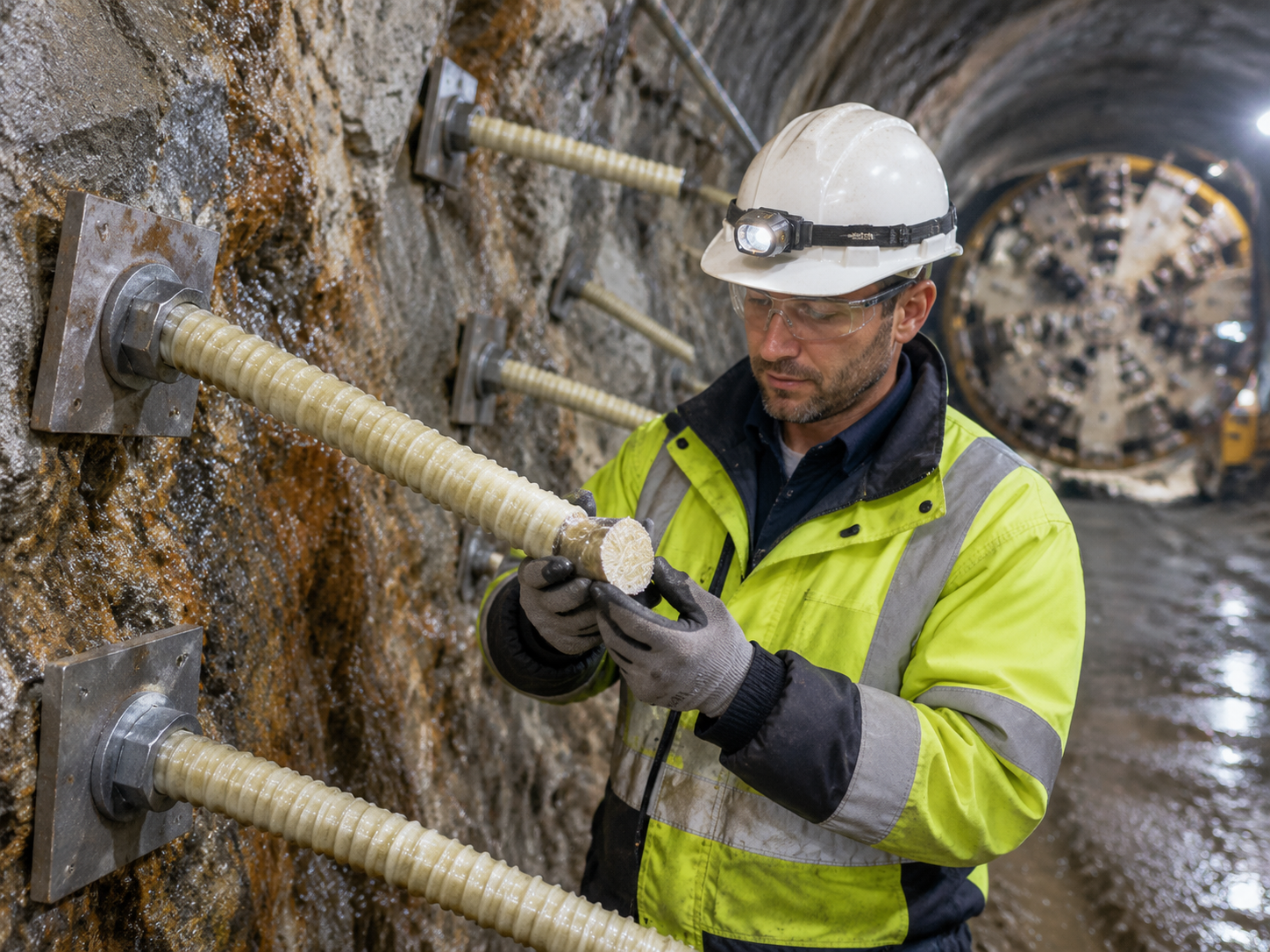
Fiberglass reinforced polymer (GFRP) anchor rods are non-metallic and useful in areas where cuttability, low weight, or electrochemical corrosion resistance are important. CQ Rockbolt's GFRP product line includes solid and hollow grouting options for mining, tunneling, and temporary or specific permanent applications.
Fiberglass reinforced plastic is not a universal substitute for steel. The structural performance, anchoring, connection details, fire or anti-static requirements, and applicability to specific ground conditions must be evaluated by the project team. 'Non metallic' does not mean that every accessory or installation detail will be automatically protected. Plates, nuts, couplings, and surrounding support systems still need to be considered.
Variables that determine long-term durability
Realistic durability assessment combines products with projects. The main variables include:
- Environmental aggressiveness
Water chemistry, chloride content, sulfates, sulfides, pH value, humidity, temperature, oxygen availability, and the presence of stray currents or industrial pollutants can all affect corrosion. 'Wet ore' is not enough description. The buyer should provide the best groundwater and exposure data, and clearly identify the known and still to be tested content.
Required service life and consequences of failure
Temporary working face support bolts and permanent tunnel support components do not require the same protection strategy. The required lifespan, accessibility of inspection, replacement cost, and consequences of bracket failure should be explained as early as possible. Merely relying on a longer design lifespan does not prove that a specific coating can achieve this goal.
Stress and deformation conditions
Corrosion is not always a simple uniform cross-sectional loss. Threads, couplings, bends, damaged coatings, and high stress parts may be more susceptible to attack. Projects with dynamic loads, large deformations, or erosive stress conditions require a joint review of the support system and its protective details.
Protecting continuity
The most common weakness in anti-corrosion declarations is continuity interruption. Examples include unpainted cut ends, damaged threads, couplings with different coatings, stagnant water plates, incomplete grouting columns, or exposed anchor heads without covers or seals.
Installation quality
Proper drilling, hole cleaning, cement slurry mixing, filling, resin mixing, curing, tensioning, and damage control can all affect durability. High quality coatings cannot compensate for incomplete grouting columns or damaged threads. On the contrary, a well-designed protection system may be damaged due to improper pre-treatment before installation.
Inspection and maintenance
Long service life support should include a practical inspection strategy: what is visible, what is hidden, how to inspect exposed components, and which records to retain. If components cannot be inspected in the future, original installation records and material traceability become even more important.
How to include anti-corrosion measures in the inquiry form
Only requesting an inquiry for "galvanized anchor rods" allows the supplier to decide what this means. More specific requirements can include the following parts.
Project and risk information
- Tunnels, mine tunnels, vertical shafts, entrances, or other applications;
- Temporary or permanent support with the required service life;
- Groundwater and humidity conditions;
- Known pH values, chlorides, sulfates, sulfides, or other related chemical substances;
- Temperature range and any cyclic wetting or drying;
- Expected coating damage during handling or installation;
- Design drawings and bracket layout.
If the chemical composition is unknown, say so. The project team can decide whether to conduct testing, more conservative barriers, or additional inspections.
Product and System Scope
- Bolt type, diameter, length, thread, and steel grade;
- Resin, cement slurry or mechanical anchoring;
- Requirements for rods, couplings, plates, nuts, washers, and anchor heads;
- Whether protection must be carried out continuously through connection;
- The cutting end and thread require coating or encapsulation;
- Compatible with specified drilling and installation methods.
Protection performance and inspection
- Applicable standards or project specifications;
- Coating system and dry film or coating thickness (if applicable);
- Adhesion, continuity, appearance, and damage acceptance criteria;
- Requirements for grouting or resin covering and filling;
- Batch identification and material traceability;
- Test reports and inspection records required at the time of delivery;
- Packaging, storage, and handling requirements.
Repair and Nonconformance
- Permitted repair materials and procedures;
- Coating damage limitation;
- Acceptance or rejection criteria for damaged threads and connections;
- Procedure for recording non-conforming items;
- Is it necessary to replace, rework, or provide additional protection.
This level of detail allows suppliers to quote for the same scope. It also provides a basis for project teams to review low prices that may not include surface treatment, connection protection, testing, or documentation.
How to evaluate the evidence behind supplier claims
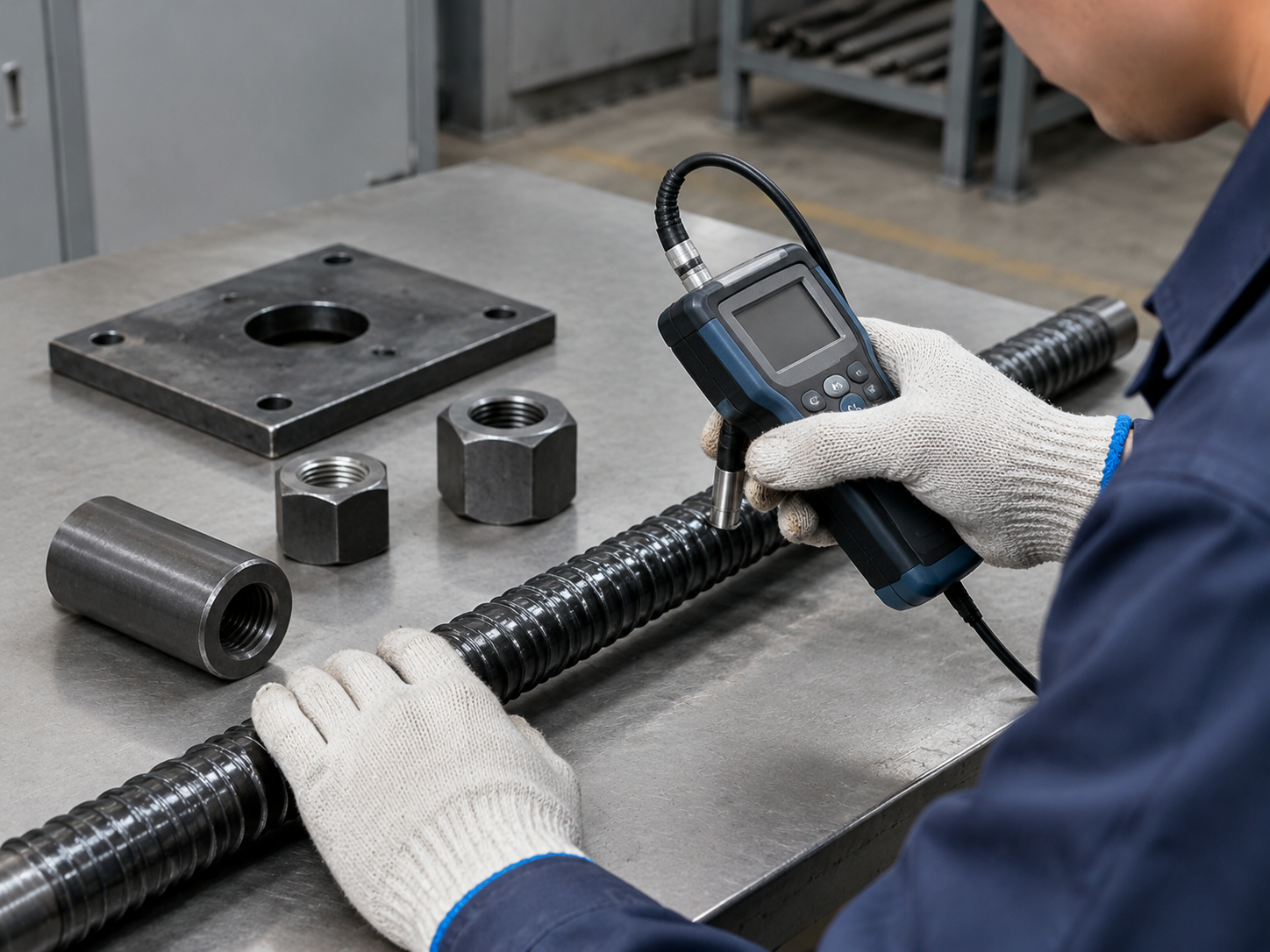
Suppliers can provide certificates, salt spray reports, coating thickness measurements, or general statements that the product is suitable for "harsh environments". These are not interchangeable.
Check the content covered by the document
The report should identify the product, materials, coating system, samples, testing methods, dates, and results. Confirm if it is suitable for the exact rod, thread, coupling, or plate provided. The report of flat specimens may not represent the threaded rod after cutting and processing.
Do not convert salt spray hours into years of use
Accelerated corrosion testing can compare coating systems under controlled conditions, but the results cannot automatically predict the service life of bolts in specific mines or tunnels. The presence of hydrochemistry, temperature, mechanical damage, installation, and other protective layers can all alter the results. Inquire about the relationship between testing and project environment, and what other evidence is available.
Search for system level evidence
Useful evidence may include coating inspection records, material certificates, batch traceability, cement slurry or resin data, installation procedures, and prescribed repair methods. The exact file depends on the product and project. A certificate is rarely sufficient to prove the long-term durability of a complete supporting component. CQ Rockbolt's article on anchor rod standards and quality requirements provides a wider range of materials, manufacturing, and acceptance documents.
Separate product data from project design
Manufacturers can describe coatings, bars, or systems. The project designer is still responsible for determining whether the system is suitable for ground conditions, design life, load conditions, and acceptance requirements. Supplier statements, such as' applicable to corrosive environments', should not replace project specific reviews.
Common errors in shortening service life
When buyers compare anti-corrosion anchor rods, several recurring errors may occur:
Compare only the prices of bars. The quotation may not include coated panels, sealed connections, inspection, testing, or packaging. More protected areas, not just bars.
Assuming that all parts use the same surface treatment. Galvanized steel bars can be equipped with uncoated or differently coated fittings. Confirm the bill of materials and the handling of each component.
Ignore cutting ends and threads. Cutting, threading, and installation may expose exposed steel. The regulations should specify how to protect and inspect these areas.
Consider cement slurry as automatic protection. Only by achieving the prescribed coverage, filling, and process can cement slurry become an effective barrier. We need to address the issues of gaps and incomplete filling.
Use an environment description for the entire project. Different tunnel sections, collection pits, entrances, and groundwater areas may have different exposure conditions. A single universal coating requirement may be too weak in one field and unnecessarily expensive in another.
Skip the inspection plan. If the project cannot check the continuity of the coating, cement slurry cover or exposed head, the quality of protection is uncertain regardless of the product description.
Practical buyer list
Before issuing an inquiry for deep well or long-life tunnel anchor bolts, please confirm the following:
- The required service life and whether the bracket is temporary or permanent;
- Groundwater and atmospheric exposure conditions;
- Which bolts, couplings, plates, nuts, and anchor components are within the scope;
- Whether to consider galvanizing, epoxy resin, encapsulation, dual protection, glass fiber reinforced plastic or combination;
- How to protect cutting ends, threads, connections, and on-site damage;
- Applicable standards, coating or grouting requirements, and inspection methods;
- Required reports, certificates, and batch records;
- Handling, storage, repair, and rejection procedures;
- Who will review the installation records and long-term inspection plan.
The answer should be written in the inquiry form and purchase order. If they only exist in emails or sales manuals, it is difficult to verify them after delivery.
Project specific support provided by CQ Rockbolt
CQ Rockbolt provides anchor rods and ground support components for underground mining and tunnel engineering, including split friction bolts, Swellex and hydraulic expansion bolts, self drilling anchor rods, resin anchoring systems, GFRP bolts, prestressed threaded rods, and related accessories.
The protection options for each product series are not the same. Some systems may offer zinc or epoxy resin surface options, while grouting, encapsulation, or non-metallic solutions may be more suitable for other project conditions. Therefore, the available surface treatment, accessory protection, documentation, and installation requirements should be confirmed based on the actual product and order specifications.
For the review of specific projects, please send us:
- Tunnel or mining applications and required service life;
- Bolt type, diameter, length, and support diagram;
- Groundwater and exposure information;
- Required surface treatment or packaging;
- Range of plates, nuts, couplings, and anchor heads;
- Standards, inspection documents, quantity, and delivery location.
Then, our team can help match the inquiry with the relevant product line and determine the technical details that need to be confirmed before quoting.
Are there any deep mining or long-life tunnel projects? Please contact CQ Rockbolt with your drawings, service life requirements, and groundwater conditions for a joint review of the anti-corrosion scope.
Related News
Other news you might be interested in

Threadbar Coupler Compatibility: Drawings, Threads and Test Evidence Before Ordering
A threadbar coupler can look like a straightforward steel sleeve with a thread at each end. In practice, compatibility depends on the bar system, the complete joint arrangement and the evidence supplied for the exact product.A matching nominal diameter is not enough. Similar-looking couplers may use different thread forms, tolerances, engagement lengths or material conditions. They may also serve different purposes in a prestressing anchor, a mechanical reinforcement splice or another load-carrying assembly.Before accepting a quotation, establish what the coupler connects, which drawings control the joint and what the test report actually proves. These checks help buyers compare offers on the same technical basis.

Expansion Shell Rock Bolts: Shell, Bar and Borehole Checks Before Ordering
An order for expansion shell rock bolts needs more than a bar diameter, length and quantity. The shell must match the specified bar connection and the borehole conditions, while the quotation must make clear which components are included.This matters when replacing an existing bolt, sourcing shells separately or comparing a new supplier with an approved assembly. Similar-looking parts are not enough to establish compatibility.Before requesting a price, prepare the product drawings, project requirements and supply list. The following checks help buyers ask the right questions without turning a purchasing decision into an unsupported engineering assumption.
Want to know more?
Get in touch with us for more information about our services and products.