

Next-Generation Rock Bolts: Conquer Corrosion and Seismic Challenges for Safer, More Efficient Mining

Dayang Yang
AuthorWith over 15 years of experience in the production and sales of ground anchoring and mining support products, we operate our own rock bolt and accessory manufacturing facility with stable large-scale production capacity. We are specialists in rock bolts, resin cartridges, anchor cables, bearing plates, and customized ground anchoring products for mining support and geotechnical anchoring solutions.
The Growing Challenge of Underground Reinforcement
Mining and tunneling operations today face a convergence of pressures: tightening safety regulations, deeper excavations into unpredictable geology, and relentless demands for operational efficiency. Yet, traditional ground support systems are increasingly failing to meet these demands. Corrosion of steel components in acidic groundwater, the weight burden of heavy fasteners during installation, and insufficient site investigation that leads to premature support failure are costing operations millions in downtime and remediation. As ore bodies are pursued into more complex, high-stress environments, the need for reliable load bearing capacity, genuine seismic resistance, and sustained strata control transcends preference—it becomes an operational imperative. Simply put, yesterday's bolting solutions cannot be trusted to secure tomorrow's excavations.
Why Traditional Rock Bolts Fall Short
Field data and engineering forensics consistently expose the weaknesses of conventional rock bolts. Corrosion remains the primary culprit: galvanized coatings are sacrificial by design, and once breached, rapid section loss undermines yield strength and tensile strength. While Glass Fiber Reinforced Polymer (GFRP) Bolts eliminate corrosion risk, their mechanical profile differs, requiring careful design integration. Installation inefficiencies further erode productivity. Resin capsules and cementitious grouts demand precise mixing, hole cleanliness, and curing time—luxuries often absent in high-advance tunnels. Meanwhile, expansion shell bolts can slip under dynamic or seismic loads, and as highlighted in Applied Sciences (2024), even fully grouted threaded steel rebar bolts may not adequately support highly fractured rock masses where dilation and shear dominate. These failures underscore a critical gap: the industry needs support that reacts instantly, adheres irrevocably, and withstands aggressive chemistry without compromising installation speed.
Next-Generation Ground Support Systems: A Comprehensive Solution

Our engineered ground control range directly targets these failure modes. Unlike passive systems, our Swellex rock bolts deliver immediate full-column friction anchorage via high-pressure water inflation, conforming to irregular borehole walls for instant load bearing capacity in variable rock conditions—no resin, no wait. For high-shear zones, friction anchor bolts (Split Set) utilize a C-shaped steel tube that expands radially upon driving, generating exceptional pull-out resistance; available in black or HDG finish with integrated dome plates or butterfly plates, they excel in rapid support cycles.
Where permanent anchorage is non-negotiable, our prestressing anchorage system ensures reliable load transfer for PT bars and steel strands, while the Mining Nut range provides high-strength bolted connections with custom threads, compatible with dome nuts, hex nuts, and couplers to maintain system integrity. Complementary elements like welded wire mesh, chain link mesh, steel wire mesh, and W-straps complete a holistic strata control envelope, while anchor plates and spherical washers compensate for off-axis loading, minimizing bending stresses. For projects requiring flexural strength, our T-section steel and W-strap profiles distribute loads across wider spans.
To match installation conditions, our anchorage agents include resin cartridges, quick-setting mortar, and advanced injection grout formulations that achieve high early strength even in wet holes. For self-drilling applications, the hollow grouting bolt integrates drilling, grouting, and anchoring in a single pass, dramatically reducing cycle times. Meanwhile, strand cable bolts offer long tendon lengths for deep anchoring, and chemical anchor bolts provide bond reliability in water-sensitive zones. The integration of these elements—bolts, rocbolt accessories, mesh, and grouting—creates a support system rather than a mere collection of components, with each part engineered to complement the next and push yield strength beyond conventional limits.
Real-World Success: ROI and Performance Data
Performance claims demand proof. In a former quarry slope stabilization project, our combination of CT bolts, mining wire mesh (selecting the precise welded or woven configuration for the geology), and shotcrete reinforcement reduced deformation by 40% and cut installation time by 30% versus the original design using traditional rebar and chain link mesh. This translated to a two-month schedule acceleration and a six-figure saving in indirect costs.
Deep in a metalliferous mine subject to high horizontal stress, a roadway reinforcement using Swellex rock bolts and W-straps achieved immediate load bearing capacity after cross-cutting, with convergence rates stabilized within minutes rather than hours. The system’s compatibility with injection grout and post-grouting sleeves allowed later upgrading to a permanent lining without disruption. Service life projections were revised upward by several years, directly attributable to the bolt’s corrosion-resistant alloy and the elimination of exposed steel threads through dome nut protection. Customers also report that our high-strength sleeve-based couplings and hex nuts simplify torque application, reducing joint assembly time. To ensure these outcomes, we advocate data-driven design—a methodology explored in depth in our article on how to optimize mine support with full-scale shear test data, which helps eliminate under- or over-design.
How to Choose the Right System for Your Project
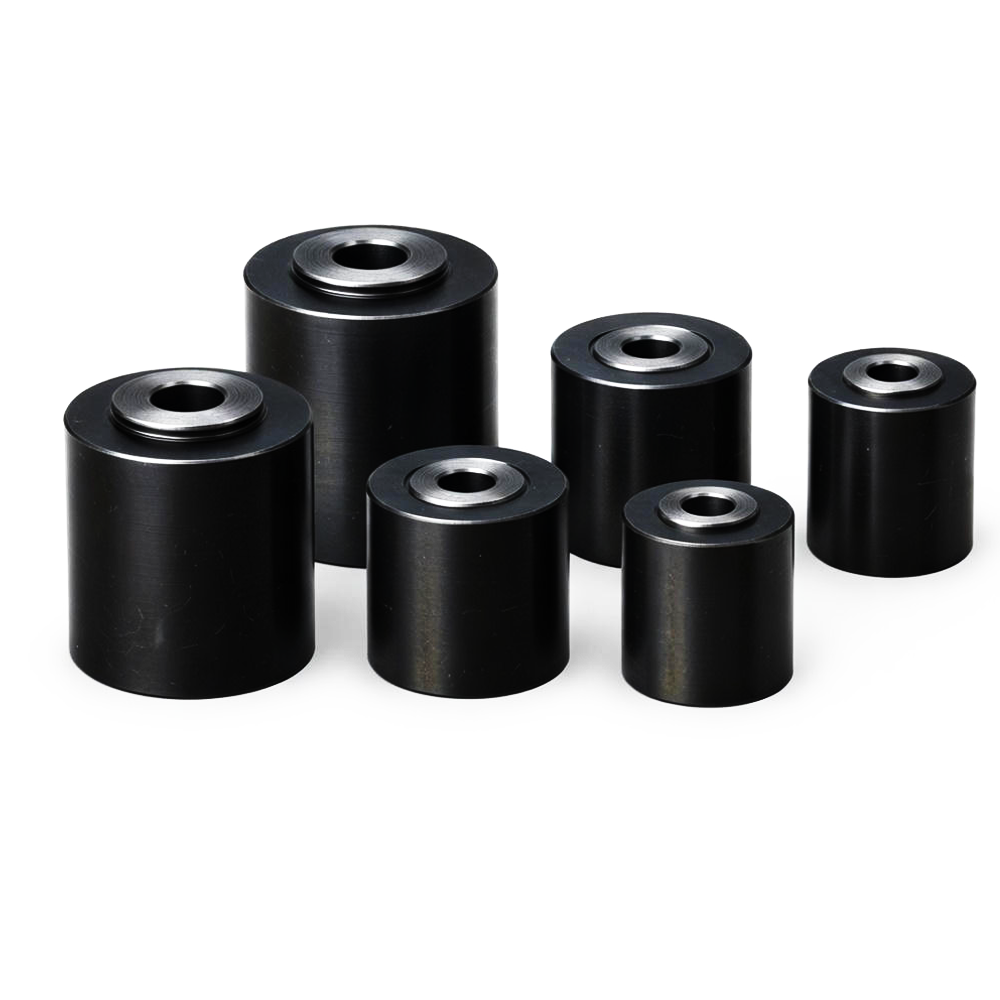
Selecting the optimal ground support configuration demands a structured evaluation. Begin with thorough characterization of rock mass quality, stress regime, and water inflow. Where rapid support is needed in dry, competent rock, mechanical expansion shells or split sets with butterfly plates offer speed; but in fractured, water-bearing ground, resin cartridges or quick-setting mortar combined with hollow grouting bolts provide the bond security required. For high seismic zones, CT bolts with integrated energy-absorbing sleeves and couplers maintain seismic resistance. When selecting bolt type, match the mechanical properties: step rebar bolts for sheer tensile demands, strand cable bolts for long tendons in heavy ground, or combo bolts for versatility. Do not overlook the role of load distribution: dome plates, spherical washers, and anchor plates ensure the bolt's load bearing capacity is transmitted without eccentricity. Finally, plan for longevity. The integration of GFRP bolts in permanently exposed faces, combined with injection grout encapsulation and double-corrosion-protection nuts, directly impacts lifecycle costs and safety beyond the initial 2026 regulatory horizon.
Partner with CQ Rockbolt for Reliable Ground Support
Our catalogue spans the entire ground support ecosystem: from welded wire mesh and chain link mesh for surface control, through Swellex and friction anchor bolts for immediate reaction, to post-tensioning systems and high-performance chemical anchor bolts for permanent fortification. We do not simply ship product—we embed engineering expertise into every order, drawing on decades of data and site-specific simulation. Whether you are designing a deep shaft with shotcrete reinforcement and T-section steel arches or remediating a slope with threaded steel rebar bolts and steel wire mesh, our team supports the full lifecycle. For further information on mastering bolted connections, review our rocbolt accessories for rock and roof bolts.
Don’t leave ground support to chance. Partner with CQ Rockbolt for engineered, data-driven reinforcement. Contact us today to discuss your upcoming project and receive a tailored ground support proposal.
Related News
Other news you might be interested in

Deep Mining & Long-Service-Life Tunnel Support: Key Factors for Rock Bolt Corrosion Protection and Long-Term Durability
A buyer can receive two quotations for “corrosion-resistant rock bolts” and still be unable to compare them. One may refer to a galvanized bar. Another may include epoxy-coated bars, sealed couplers, protected anchor heads, and a specified grout cover. Both descriptions sound protective, but they do not cover the same parts of the support system or provide the same kind of evidence.

Threadbar Coupler Compatibility: Drawings, Threads and Test Evidence Before Ordering
A threadbar coupler can look like a straightforward steel sleeve with a thread at each end. In practice, compatibility depends on the bar system, the complete joint arrangement and the evidence supplied for the exact product.A matching nominal diameter is not enough. Similar-looking couplers may use different thread forms, tolerances, engagement lengths or material conditions. They may also serve different purposes in a prestressing anchor, a mechanical reinforcement splice or another load-carrying assembly.Before accepting a quotation, establish what the coupler connects, which drawings control the joint and what the test report actually proves. These checks help buyers compare offers on the same technical basis.
Want to know more?
Get in touch with us for more information about our services and products.