

Battery-Powered Bolting Is Turning Ventilation from a Cost Burden into a Safety Advantage

Dayang Yang
AuthorWith over 15 years of experience in the production and sales of ground anchoring and mining support products, we operate our own rock bolt and accessory manufacturing facility with stable large-scale production capacity. We are specialists in rock bolts, resin cartridges, anchor cables, bearing plates, and customized ground anchoring products for mining support and geotechnical anchoring solutions.
Summary
Battery-powered bolting equipment is emerging as an important development in underground mining and tunneling. Its value extends beyond lower fuel consumption and reduced emissions. By eliminating diesel exhaust at the work face, battery-electric bolters can reduce heat generation, ease ventilation requirements, and improve working conditions for underground crews. However, the benefits of electrification depend on more than the machine itself. Rock bolt selection, installation speed, geological adaptability, and support quality must also be coordinated with the new equipment. As a result, the industry is moving toward integrated solutions that combine electric bolting equipment with fast-installing and adaptable rock support products.
Ventilation Is Becoming a Production and Safety Challenge
As mines move deeper underground, ventilation systems face increasing pressure. Longer haulage routes, higher rock temperatures, diesel-powered equipment, dust, and restricted underground spaces all increase the amount of air required at working faces.
Underground workers may also face high heat and humidity, which can increase the risk of heat strain and reduce concentration during physically demanding operations. At the same time, diesel equipment produces exhaust gases and particulate matter that must be diluted and removed through continuous ventilation.
For mining companies, this creates a difficult balance. More ventilation can improve air quality and working conditions, but it also increases energy consumption, fan requirements, ducting needs, and operating costs. In deep mines, ventilation can become one of the largest energy consumers in the entire operation.
This is why the electrification of underground equipment is increasingly being viewed as both an environmental initiative and a practical safety strategy.
Battery-Powered Bolters Change the Underground Airflow Equation
Battery-electric equipment does not eliminate every ventilation requirement. Underground operations still need sufficient airflow for people, dust control, blasting fumes, heat management, and other equipment. However, removing diesel exhaust and reducing machine-generated heat can significantly reduce the ventilation burden at the working face.
Epiroc reports that battery-electric underground vehicles and rigs can consume less energy, generate less heat, and reduce the need for underground ventilation compared with traditional machines. Its Boltec battery-electric rock bolting rigs are also promoted as solutions for improving operator health, ventilation, cooling, and maintenance conditions.
The practical benefit is especially important in narrow tunnels, deep roadways, and remote working areas where ventilation capacity is limited. Lower heat and exhaust levels can help create a more stable working environment and reduce the time required to clear contaminated air after equipment operation.
Electrification Must Be Matched with Faster Support Cycles
A battery-powered bolter can reduce emissions, but it cannot deliver its full value if the support process remains slow and complicated.
Traditional support cycles may involve separate drilling, rod insertion, grouting, curing, and inspection stages. Each additional step keeps equipment and workers at the face for longer periods. In a deep underground environment, longer face exposure means greater demands on ventilation, cooling, logistics, and emergency management.
This is where rock bolt design becomes increasingly important. Support products that shorten installation time, provide immediate load-bearing capacity, or combine multiple construction steps can help battery-powered equipment achieve better overall productivity.
Split Set Rock Bolts Support Rapid Installation
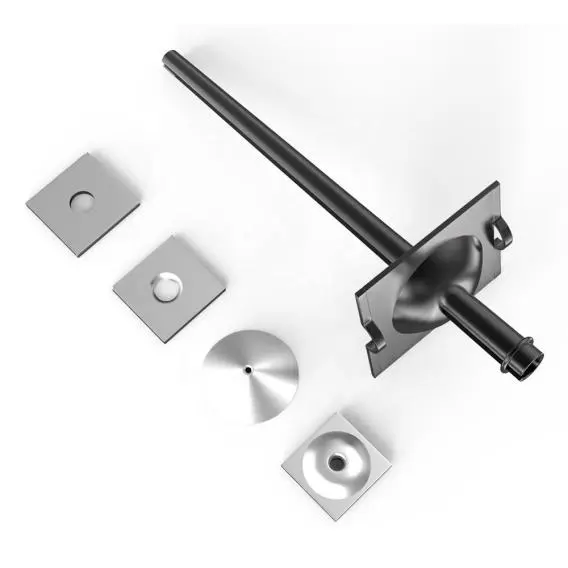
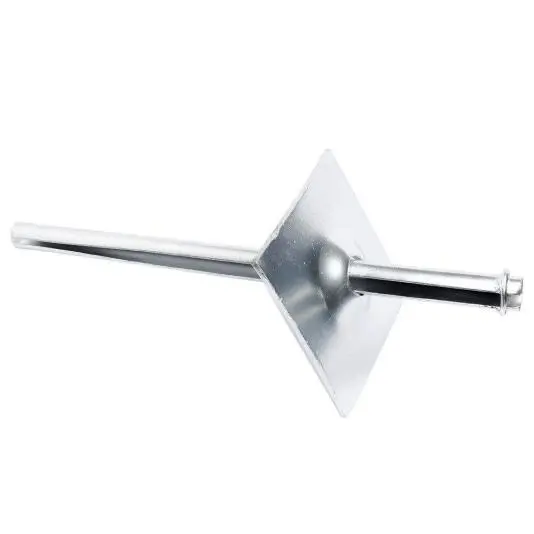
CQ Rockbolt’s Split Set Friction Rock Bolt is designed for fast installation and immediate load-bearing in underground mining and tunneling applications.
The friction-based anchoring mechanism creates radial pressure between the bolt tube and the borehole wall. Because the system does not rely on a conventional curing period, it can support faster installation and earlier stabilization of the surrounding rock. This is particularly valuable when a battery-powered bolting rig is being used to reduce face time and improve the continuity of the excavation cycle.
In practical applications, a faster support cycle can help reduce the period during which workers and equipment remain in a newly excavated area. It can also make better use of the battery system by allowing the bolter to complete more support operations within each operating cycle.
The product is suitable for mine roadways, tunnel excavation, and other ground reinforcement projects where rapid installation and immediate support are important.
 |  |
|---|
Self-Drilling Technology Reduces Rehandling in Weak Ground
Not all underground conditions allow conventional bolt installation to proceed smoothly. In loose, fractured, or weak formations, boreholes may collapse before the bolt is inserted. Re-drilling, changing tools, and adding separate grouting steps can increase construction time and place additional demands on ventilation and equipment availability.
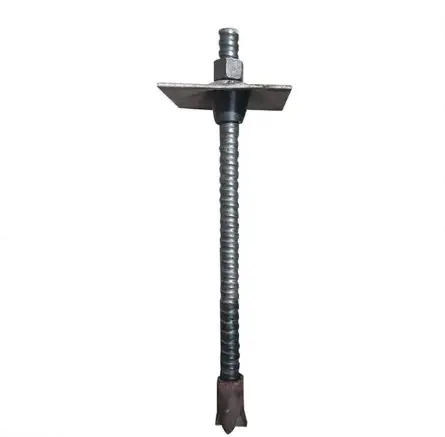
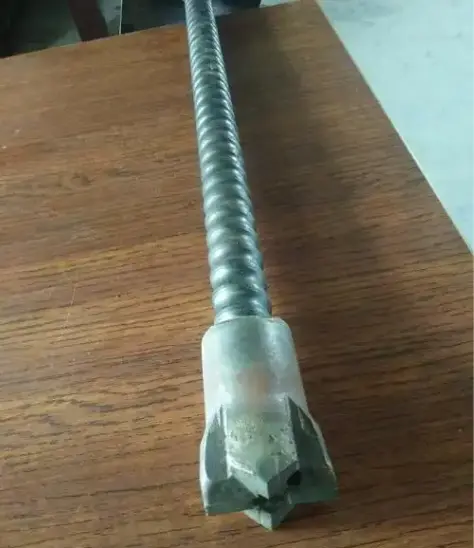
CQ Rockbolt’s Self-Drilling Hollow Grouting Rock Bolt integrates drilling, grouting, and anchoring into one support product. Its hollow threaded body acts as a grouting channel, allowing grout to be injected through the bolt during construction. The product is designed for tunnels, mines, slopes, and other projects involving weak or fractured ground. (cq-rockbolt.com)
For mechanized or battery-powered bolting operations, this integrated process can help reduce rod changes, rehandling, and delays caused by unstable boreholes. It does not remove the need for proper equipment selection and installation control, but it can simplify the workflow in geological conditions where conventional drilling and bolt insertion are difficult.
 |  |
|---|
Self-Drilling Hollow Grouting Rock Bolt
The Safety Advantage Goes Beyond Emissions
The main safety benefit of battery-powered bolting is not simply the absence of diesel fumes. It is the combination of a cleaner working environment, lower heat generation, reduced equipment noise, and improved separation between operators and unstable ground.
Modern rock bolting rigs increasingly include automated positioning, drilling control, and mechanized bolt handling. Epiroc describes these systems as tools for improving drilling and bolting consistency while reducing operator exposure in underground environments.
When battery power is combined with mechanized installation and suitable support materials, the process can become more predictable. Consistent hole positioning, controlled installation, immediate support, and reduced face exposure all contribute to a safer construction cycle.
Battery Power Requires a Different Project Evaluation Method
The adoption of battery-powered bolting equipment should not be evaluated only through the purchase price of the machine. Mine operators should also consider:
- Ventilation energy savings and reduced cooling requirements
- Battery charging and replacement infrastructure
- Support material compatibility with the bolting equipment
- Installation time per bolt
- Ground conditions and risk of borehole collapse
- Maintenance requirements underground
- Operator training and emergency procedures
- Total cost per supported meter
A battery-electric bolter may deliver strong results in one project but require a different configuration in another. Narrow tunnels, long travel distances, weak strata, high humidity, and limited charging access can all affect the final return on investment.
The Next Step Is an Integrated Ground Support Workflow
The move toward battery-powered bolting is part of a broader transformation in underground construction. Mines are increasingly connecting equipment electrification, automated drilling, digital monitoring, and high-performance support materials into a single workflow.
In this model, the bolting machine, battery system, rock bolt, drilling tools, grouting equipment, and quality-control process are evaluated together. The objective is not only to reduce diesel consumption, but also to create a shorter, cleaner, and more consistent support cycle.
Conclusion
Battery-powered bolting is changing the role of ventilation in underground mining. By reducing diesel exhaust and machine-generated heat, electric bolters can help lower ventilation pressure while improving the underground working environment.
However, the machine is only one part of the solution. Fast-installing products such as Split Set Friction Rock Bolts and integrated support products such as Self-Drilling Hollow Grouting Rock Bolts can help reduce construction delays and improve the efficiency of electrified bolting operations.
As underground projects become deeper and more complex, the most effective support strategy will combine battery-powered equipment, adaptable rock bolt technology, mechanized installation, and disciplined quality control. In this way, ventilation can move from being a constant operating burden to becoming part of a broader safety and productivity advantage.
 |  |
|---|
Related News
Other news you might be interested in

Ground Support in Weak and Fractured Rock: How to Select Rock Bolt Systems for Mining and Tunneling
In underground mining, tunneling, slope excavation, and foundation pit construction, ground stability does not depend only on the strength of an individual rock bolt. Where the ground contains developed joints and fractures, loose rock, unstable boreholes, significant groundwater, or strong excavation disturbance, a single rock bolt support measure may not provide every required support function. A reliable ground support system must consider ground conditions, support objectives, equipment capacity, borehole stability, grouting procedures, system accessories, and long-term durability. Project teams can review the available systems in the CQ Rockbolt product center before selecting a solution that matches the actual site conditions, rather than choosing only by product name or rated capacity.

Why Does the Mining Industry Use Self-Drilling Anchors?
As underground mining moves into deeper and more complex areas, ground stability has become a critical factor affecting both safe production and development efficiency. Fractured rock, fault zones, high in-situ stress, groundwater, and ongoing mining-induced disturbance can all cause deformation or loosening at roadway roofs, sidewalls, and intersections. The objective of modern mining ground support is not simply to address local instability, but to create a stable working environment for mining, haulage, and ventilation through reliable rock reinforcement solutions.
Want to know more?
Get in touch with us for more information about our services and products.