

Advanced Rock Bolt Solutions for Maximum Safety and ROI in Underground Mining

Dayang Yang
AuthorWith over 15 years of experience in the production and sales of ground anchoring and mining support products, we operate our own rock bolt and accessory manufacturing facility with stable large-scale production capacity. We are specialists in rock bolts, resin cartridges, anchor cables, bearing plates, and customized ground anchoring products for mining support and geotechnical anchoring solutions.
Engineered Strata Control: A 2026 Imperative for Underground Mining
As strata control challenges intensify ahead of 2026, mining operations must replace reactive ground support with proactive, engineering-grade solutions. The cost of failure is non-negotiable: improper water-cement ratios, inadequate resin dosage, or poorly matched components directly reduce load bearing capacity, triggering dynamic instability that endangers crews and equipment. To move beyond guesswork in mine support design, the evidence is clear—superior anchoring and seismic resistance are the deciding factors for rock mass stability and continuous production. Every shutdown due to ground failure hits your margin. The answer is a support system where yield strength and tensile strength are specified with exacting precision, not left to chance.
High-Performance Rock Bolt Technologies Redefining Ground Support
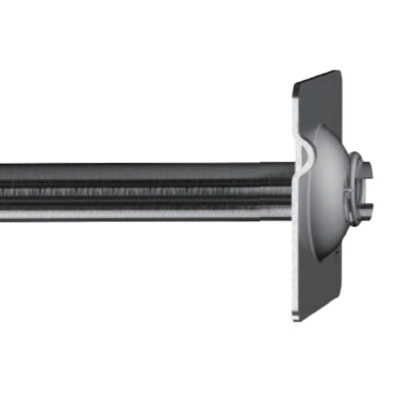
Friction anchor bolts, particularly Split Set designs, now lead the industry for immediate underground support in metal mining and roadway reinforcement. They deliver instant pull-out and shear resistance with no cure time. Combined with high-strength dome plates and butterfly plates, load distribution across the rock face is maximized, preventing localized failures that lead to collapse.
Modern resin capsules and resin cartridges have undergone a materials transformation, forming bonds that resist both chemical corrosion and dynamic loading far beyond conventional polyester. For critical anchoring, chemical anchor bolts with precision injection grout or quick-setting mortar create a tailored bond profile that mechanical anchors cannot match. The hollow grouting bolt epitomizes this advancement—drilling, placing, and grouting in a single pass, reducing install time while boosting long-term bond strength.
The strand cable bolt and threaded steel rebar bolt categories continue to advance with higher tensile grades and improved sleeve/coupler designs, maintaining full load bearing capacity across connections. In corrosive environments, Glass Fiber Reinforced Polymer (GFRP) bolts eliminate oxidation risk, offering a permanent solution where steel degrades. The expansion shell remains a reliable option for temporary support in competent strata, now manufactured with tighter tolerances for consistent grip.
Effective ground support extends beyond the bolt. The integration of steel wire mesh, welded wire mesh, and chain link mesh with rock bolts creates a composite reinforcement system, containing loose rock between anchors. When combined with shotcrete reinforcement, these meshes laminate the rock surface, bridging fractures and preventing unraveling. T-section steel and W-strap accessories channel ground pressure into the bolt array, avoiding stress concentration. Every component—dome nuts, hex nuts, and spherical washers—must match the bolt's tensile grade to ensure the assembly functions as a unified strata control system. The anchor plate serves as the critical load-transfer interface; undersizing it is a costly mistake.
Case Study: 30% Safety Gain with Integrated Ground Support
A major underground mine facing dynamic ground conditions switched to our friction anchor bolts and high-tensile mining wire mesh. The results: a 30% improvement in safety metrics within the first quarter and a 20% reduction in face installation time. Full-length radial friction anchoring, combined with continuous surface restraint, eliminated progressive loosening. By addressing failure at its root, the mine recorded zero lost-time incidents from ground fall over 18 months following implementation.
In a tunneling project through fractured metasedimentary rock, our prestressing anchorage system with optimized resin cartridge pairing and injection grout secondary anchoring delivered a step-change in seismic resistance. Prestress locked the stratified roof into compression before stress redistribution could cause separation. Load-bearing capacity exceeded design specifications by 22%, with minimal load relaxation over 24 months. The long-term ROI came from eliminated rehabilitation cycles and extended infrastructure life—transforming maintenance budgets from unpredictable liabilities into forecastable expenditures.
Integrated Ground Support Systems: Engineered for Your Operation
Every underground environment presents unique constraints. Our comprehensive portfolio spans mechanical expansion shell bolts, self-drilling anchors (SDA) for collapsing ground, CT and combo bolts for high tensile strength in deep mines, and threaded steel rebar bolts with customizable coupler configurations. Each product is available with application-specific coatings and finishes—because off-the-shelf compromises in ground support are indefensible.
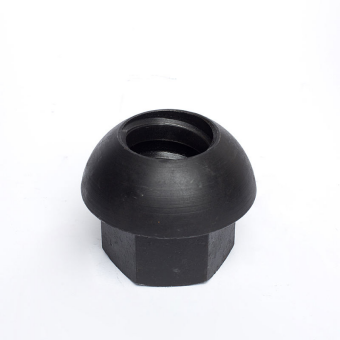
Connection hardware is the most overlooked failure point. Our high-strength mining nuts—dome nuts and hex nuts—are manufactured to exact tolerances for full thread engagement under dynamic loads. Paired with spherical washers that compensate for off-axis installation, they maintain design integrity throughout the service life. Our butterfly plates and formed anchor plates provide the bearing surface needed to prevent punch-through in fractured ground.
Anchoring chemistry equals steel in importance. Our resin capsules and cartridges offer controlled gel times from 15 seconds to several minutes, balancing speed and bond quality. Injection grout systems with quick-setting mortar achieve handling strength in under an hour while remaining pumpable. Chemical anchor bolts provide the ultimate customization, with formulations for wet holes, high temperatures, and aggressive groundwater. For corrosion immunity, GFRP bolts with matching hardware complete the system. Explore our full range of rock bolt accessories—every component engineered as part of an integrated strata control strategy.
Chain link mesh, steel wire mesh, and welded wire mesh integrate with our bolting systems for shotcrete reinforcement and slope support. T-section steel and W-strap provide linear reinforcement across bolt rows, forming a unified arch. Strand cable bolts with wedge-barrel anchors and sleeve-protected free lengths address deep-seated instability beyond the reach of shorter bolts. All products are backed by full-scale test data, not estimates—because ground support decisions demand evidence.
Secure Your Operation’s Future: Act Now
The difference between adequate support and optimized strata control is measured in lives saved, downtime avoided, and equipment preserved. As 2026 approaches, operations investing in engineering-caliber rock bolt systems, properly specified resin cartridges, and integrated mesh reinforcement will outperform those relying on commodity materials. Yield strength, tensile strength, and load bearing capacity are not abstract specs—they are the parameters that determine whether your ground support holds when conditions worsen. Contact our engineering team for a free consultation on optimizing your strata control strategy. Request a quote or download detailed product catalogues for Split Set bolts, high-strength nuts, washers, cable bolts, and complete anchorage systems. Speak with our ground support specialists today to build a safer, more profitable operation.
Related News
Other news you might be interested in

Ground Support in Weak and Fractured Rock: How to Select Rock Bolt Systems for Mining and Tunneling
In underground mining, tunneling, slope excavation, and foundation pit construction, ground stability does not depend only on the strength of an individual rock bolt. Where the ground contains developed joints and fractures, loose rock, unstable boreholes, significant groundwater, or strong excavation disturbance, a single rock bolt support measure may not provide every required support function. A reliable ground support system must consider ground conditions, support objectives, equipment capacity, borehole stability, grouting procedures, system accessories, and long-term durability. Project teams can review the available systems in the CQ Rockbolt product center before selecting a solution that matches the actual site conditions, rather than choosing only by product name or rated capacity.

Why Does the Mining Industry Use Self-Drilling Anchors?
As underground mining moves into deeper and more complex areas, ground stability has become a critical factor affecting both safe production and development efficiency. Fractured rock, fault zones, high in-situ stress, groundwater, and ongoing mining-induced disturbance can all cause deformation or loosening at roadway roofs, sidewalls, and intersections. The objective of modern mining ground support is not simply to address local instability, but to create a stable working environment for mining, haulage, and ventilation through reliable rock reinforcement solutions.
Want to know more?
Get in touch with us for more information about our services and products.