

Mechanized Rock Bolting Can Accelerate Tunnel Construction While Improving Installation Quality

Dayang Yang
AuthorWith over 15 years of experience in the production and sales of ground anchoring and mining support products, we operate our own rock bolt and accessory manufacturing facility with stable large-scale production capacity. We are specialists in rock bolts, resin cartridges, anchor cables, bearing plates, and customized ground anchoring products for mining support and geotechnical anchoring solutions.
Higher Requirements for Rock Bolting Efficiency in Tunnel Construction
In modern tunnel engineering, rock bolting is a key part of the primary support system. Whether in mountain tunnels, mining roadways, or urban underground projects, support must be installed quickly after excavation to control the development of the loosened zone, reduce surrounding rock deformation, and create stable conditions for subsequent shotcrete, steel arch installation, and lining construction.
Traditional manual rock bolting is often affected by worker experience, limited working space, drilling accuracy, and site conditions. In fractured rock masses, fault zones, water-rich strata, and large-section tunnels, manual construction may not only be inefficient but may also lead to hole deviation, insufficient grouting, inconsistent installation depth, and other quality issues.
As a result, more engineering projects are adopting mechanized rock bolting methods. Through the coordinated use of bolting rigs, drilling equipment, automatic grouting systems, and tensioning devices, mechanized construction improves both operational continuity and quality control.
Mechanized Construction Shortens the Support Cycle
One of the key advantages of mechanized rock bolting is its ability to significantly improve support efficiency within each excavation cycle. Compared with manual methods, mechanized equipment can provide more stable drilling angles, more accurate hole depth control, and a more continuous installation rhythm, reducing waiting time and the risk of rework.
In long-distance tunnels and mining roadways, support efficiency directly affects the overall construction schedule. If rock bolt installation is slow, subsequent processes such as mucking, shotcrete, and lining may all be delayed. Mechanized construction allows rock bolt installation to better match the excavation rhythm, creating a more efficient connection between excavation and support.
For contractors, this helps shorten the project timeline, reduce site management pressure, and improve the overall utilization of equipment and labor.
Standardized Installation Improves Support Reliability
The effectiveness of rock bolting depends not only on the strength of the product itself but also on the quality of on-site installation. Hole position, hole diameter, hole depth, anchorage length, grouting fullness, nut tightening, and prestress application all affect the final support performance.
Mechanized construction reduces operational differences caused by manual work and makes the installation process more standardized. For example, drilling equipment improves hole positioning accuracy, grouting systems improve the stability of grout delivery, and tensioning equipment enables more controlled prestress application. Through better process control, a more stable load-bearing relationship can be formed between the rock bolt and the surrounding rock.
In complex geological conditions, standardized installation is especially important. Consistent installation quality can reduce the risk of local support failure, improve overall tunnel safety, and lower later maintenance and reinforcement costs.
In fractured rock layers, gravel strata, fault zones, and collapse-prone formations, conventional rock bolt installation often faces problems such as difficult hole formation, serious hole collapse, and uneven grouting.
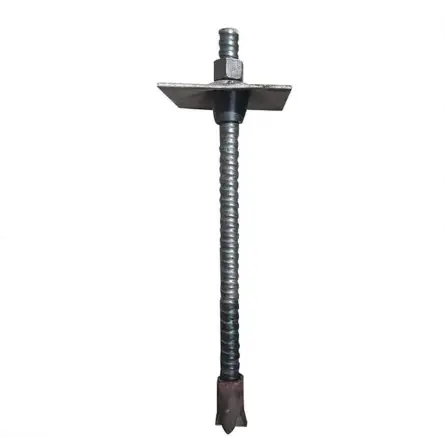
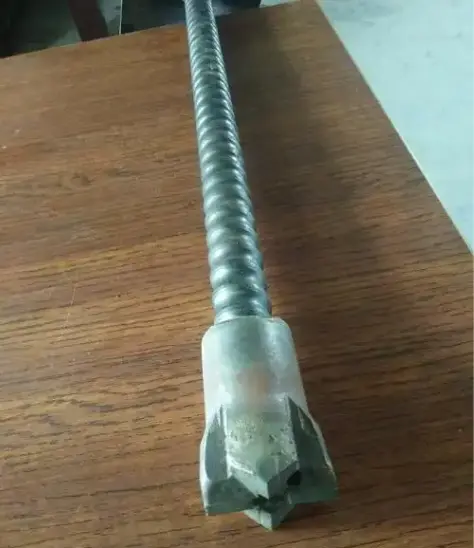
The self-drilling hollow grouting rock bolt integrates drilling, grouting, and anchoring functions into one system. It is suitable for tunnel advance support, primary support, slope reinforcement, and complex ground stabilization. The hollow bar body can serve as a grouting channel, allowing grout to fill cracks in the surrounding rock and improve the integrity and anchoring strength of the rock mass. When used with mechanized construction equipment, this product helps reduce the risk of hole collapse and improve construction continuity.
 |  |
|---|
The self-drilling hollow grouting rock bolt
High-performance Rock Bolt Products Are the Foundation of Mechanized Construction
Mechanized construction improves operating efficiency, but reliable support still depends on rock bolt products with stable performance, consistent specifications, and reliable connections. In high ground stress, large deformation, water-rich, and corrosive environments, rock bolt products need to offer high tensile strength, yield strength, elongation, and corrosion resistance.
For export projects and large-scale infrastructure projects, batch consistency, quality inspection systems, and traceability are also important. High-quality rock bolts not only improve on-site installation efficiency but also reduce acceptance risks and long-term operation and maintenance pressure.
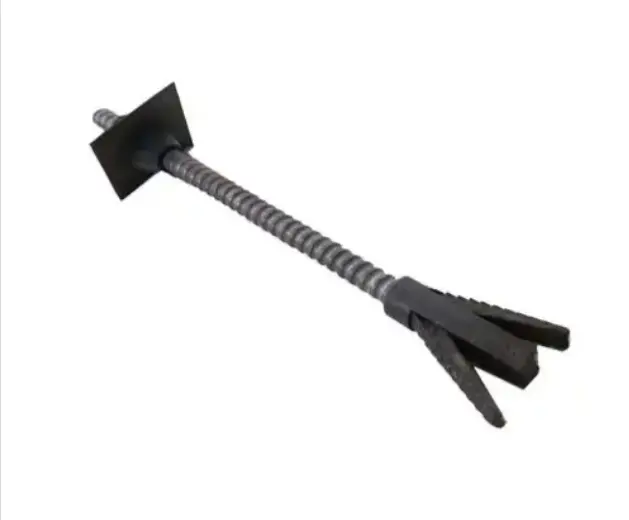
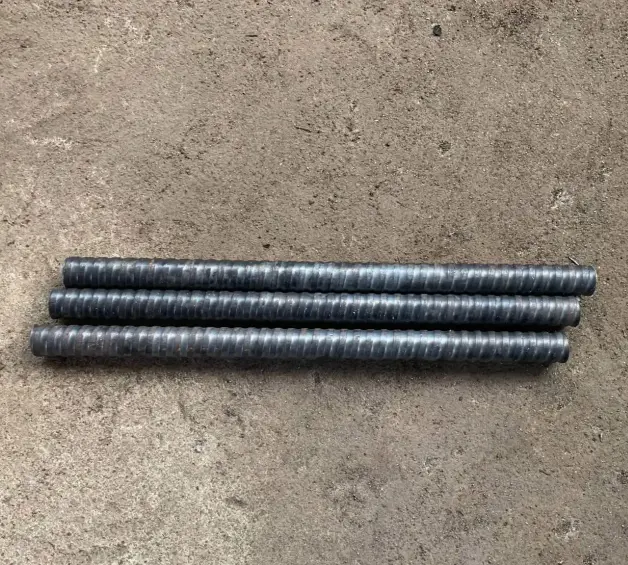
The expansion shell mechanical rock bolt achieves rapid anchorage through its mechanical expansion shell structure at the end of the bolt. After installation, it can immediately provide support force, making it suitable for mining roadways, tunnels, slopes, underground chambers, and other engineering scenarios. In construction environments where surrounding rock deformation must be controlled quickly, this product helps contractors shorten waiting time and improve the response speed of primary support. When used together with grouting or other support components, it can further enhance long-term stability.
 |  |
|---|
expansion shell mechanical rock bolt
Mechanized Rock Bolting Promotes More Efficient Tunnel Engineering
From the perspective of industry development, support systems for tunnels and underground engineering are upgrading from traditional manual construction toward mechanized, systematic, and refined construction. Rock bolting is no longer just a single reinforcement measure. It works together with shotcrete, steel arches, steel mesh, anchor cables, and monitoring systems to form a comprehensive surrounding rock control system.
In the future, with the development of intelligent construction equipment, high-performance support materials, and digital quality management, mechanized rock bolting will play an increasingly important role in tunnel and mining projects. For contractors, selecting suitable rock bolt products according to geological conditions and combining them with mechanized construction methods will become an important way to improve construction progress, ensure installation quality, and reduce overall project costs.
 |  |
|---|
Related News
Other news you might be interested in

Active vs. Passive Anchors: How to Choose the Right Ground Support System
A ground support system can fail for a simple reason: the team selected a product by name before deciding how the load should develop. Two anchors may look similar in a catalog, use the same diameter, and carry the same nominal steel grade, yet behave very differently underground. One is tensioned against the rock immediately after installation. The other begins to carry load only when the rock mass starts to move.That difference is what "active" and "passive" should describe. It is not a quality ranking. It is not a choice between modern and old-fashioned support. It is a choice about timing, displacement and load path.

How do concrete anchor bolts improve foundation stability?
A concrete anchor bolt is a small part of a foundation, but it decides whether the foundation and the structure above it behave as one system. The bolt does not make the concrete stronger or the soil stiffer. It provides a controlled load path between the steel structure, the base plate, the concrete, and—when the anchor is designed to reach it—the deeper ground.In this article, the term covers cast-in anchor rods, post-installed mechanical or adhesive anchors, and post-tensioned bars or strand anchors used to tie a structure or foundation element into concrete.That distinction is the key to answering the question. Anchor bolts improve foundation stability by resisting uplift, shear and overturning, maintaining clamping force, helping to distribute concentrated loads, and tying the foundation to a competent bearing stratum. They cannot compensate for an undersized footing, a poor subgrade, or a missing reinforcement detail.
Want to know more?
Get in touch with us for more information about our services and products.