

Mechanized Rock Bolt Construction Accelerates, Self-Drilling Hollow Anchor Bolts Help Improve Efficiency and Reduce Costs in Mining and Tunneling Projects

Dayang Yang
AuthorWith over 15 years of experience in the production and sales of ground anchoring and mining support products, we operate our own rock bolt and accessory manufacturing facility with stable large-scale production capacity. We are specialists in rock bolts, resin cartridges, anchor cables, bearing plates, and customized ground anchoring products for mining support and geotechnical anchoring solutions.
Mechanized Construction Becomes a New Trend in Underground Support
In mining and tunneling projects, rock bolt support is an important measure to ensure surrounding rock stability. Traditional construction methods usually require drilling first, then inserting the anchor bolt, followed by grouting or resin anchoring. The process involves multiple steps and relies heavily on worker experience and site conditions.
As engineering projects place higher demands on safety, efficiency, and quality consistency, mechanized rock bolt construction is becoming increasingly popular. With drilling rigs, grouting equipment, and standardized anchoring systems, construction teams can reduce manual labor intensity, improve borehole quality and installation efficiency, and make the support process more stable and controllable.
Self-Drilling Hollow Anchor Bolts Are Suitable for Complex Geological Conditions
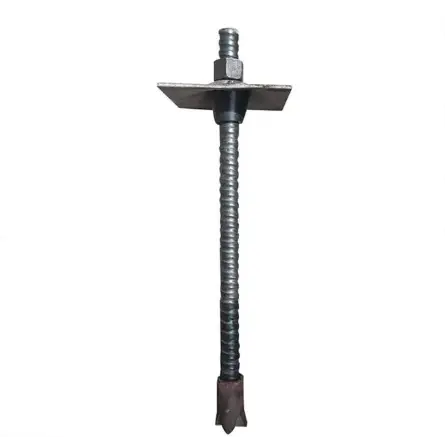
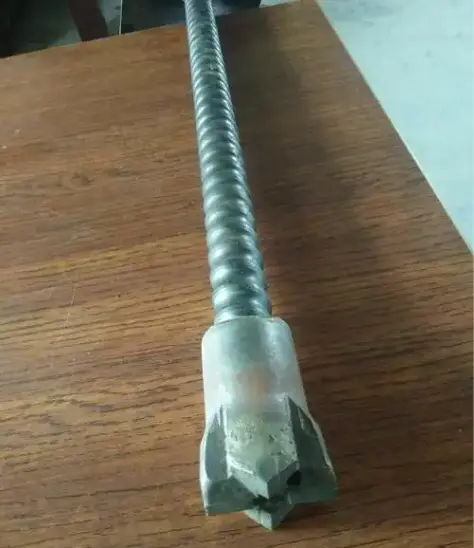
In fractured rock layers, loose soil, fault fracture zones, and high-water-content formations, traditional rock bolt construction may face problems such as hole collapse, difficult drilling, and insufficient grouting, which can affect the final support performance. Self-drilling hollow anchor bolts combine the drill bit, bolt body, and grouting channel into one system, enabling drilling, installation, and grouting to be completed simultaneously. This reduces repeated procedures and is especially suitable for rapid support under complex geological conditions.
Self-Drilling Anchor Bolt adopts an integrated design and can complete the “drilling-installation-grouting” process in one step under complex ground conditions. Its structure is suitable for slope reinforcement, tunnel support, foundation pit engineering, and underground reinforcement projects, helping improve construction efficiency and enhance the overall stability of surrounding rock.
 |  |
|---|
Efficiency Improvement and Cost Reduction Come from Process Optimization and Risk Reduction
The value of self-drilling hollow anchor bolts lies not only in the installation speed of a single bolt, but also in the optimization of the entire construction process. Because they can reduce pre-drilling, rod replacement, secondary grouting, and other procedures, on-site construction organization becomes simpler, and equipment and labor waiting time can also be reduced.
For mining roadways and tunnel projects, improved construction efficiency means shorter operation cycles, faster support closure, and lower downtime risks. At the same time, mechanized construction can reduce workers’ exposure time under unstable surrounding rock, lowering safety risks caused by manual operation in high-risk areas.
Matching Load-Bearing Components Affect Overall Support Performance
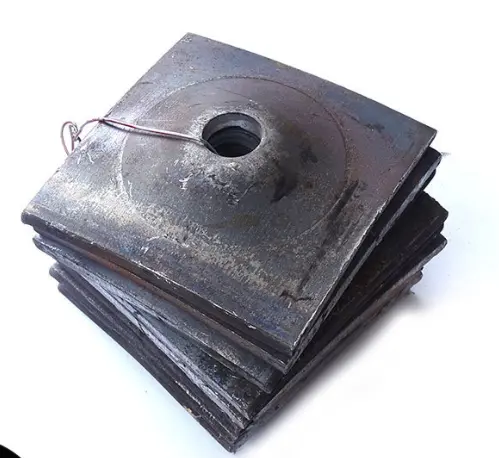
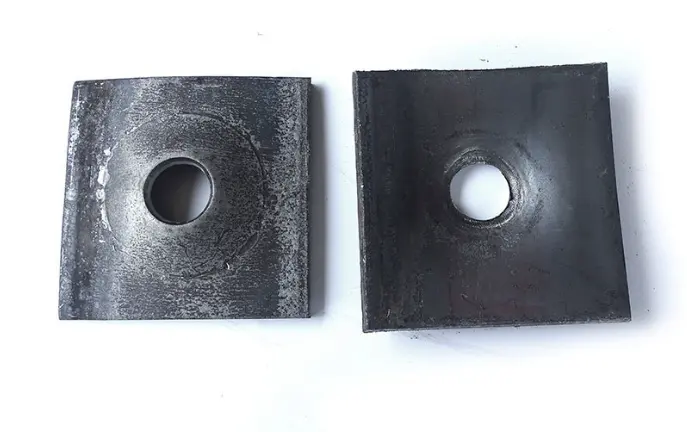
Rock bolt support does not rely on the bolt body alone. It is a support system composed of rock bolts, plates, nuts, washers, grouting materials, and surrounding rock. Especially in mechanized construction and high-strength support applications, the matching performance between the plate and the bolt directly affects preload transfer and surrounding rock stress distribution.
Dome Plate / Anchor Plate can be used with hollow anchor bolts, self-drilling anchor bolts, and other products to help expand the support bearing area and improve load transfer through its spherical structure. Its high load-bearing capacity and self-aligning design make it suitable for coal mine roadways, metal mines, tunnels, slope treatment, and other engineering support scenarios.
 |  |
|---|
Mining and Tunneling Projects Pay More Attention to Systematic Solutions
Today, the selection of support materials in mining and tunneling projects has shifted from focusing only on product price to comprehensively evaluating construction efficiency, support reliability, service life, and maintenance costs. For projects with complex ground conditions, selecting suitable self-drilling hollow anchor bolts and matching them with high-load-bearing plates, nuts, and grouting systems can better balance safety and cost.
In the future, mechanized rock bolt construction will continue to develop toward higher efficiency, standardization, and systematic solutions. Suppliers that can provide multiple specifications of rock bolts, matching accessories, and customized support solutions will gain more opportunities in mine support, tunnel excavation, and geotechnical reinforcement markets.
Conclusion
Mechanized construction is reshaping the support methods used in mining and tunneling projects. With simplified construction procedures, strong adaptability to complex ground conditions, and high support efficiency, self-drilling hollow anchor bolts are becoming an important choice in underground engineering and geotechnical reinforcement. For engineering projects that aim to achieve safe construction, shorten project schedules, and reduce overall costs, choosing a mature and reliable self-drilling anchor bolt system and matching load-bearing components will become an important step in improving project competitiveness.
 |  |
|---|
Related News
Other news you might be interested in

Coal Mine Roadway Support Systems: How Rock Bolts, W-Straps, Mesh and Cable Bolts Work Together
Coal mine roadways are essential to safe, continuous underground operations. Their stability can be affected by changing geological conditions, mining-induced stress and excavation activity. As ground-control research increasingly focuses on the overall coordination and monitoring of support systems, rock bolts, W-straps, mesh and cable bolts should not be viewed as isolated components, but as elements that work together under site-specific mine conditions. This article explores their complementary roles in coal mine roadway support, while recognizing that support designs must be based on the conditions of each mine.

Five Major Advantages of Self-Drilling Anchors in Engineering Applications
In weak ground, fractured rock, loose soil, or rock masses with numerous joints, boreholes may narrow, shed material, or collapse. This can make it difficult to insert the anchor bar and may also affect subsequent grouting. Groundwater and changing strata add further uncertainty to construction.
Want to know more?
Get in touch with us for more information about our services and products.