


Expansion Shell Mechanical Rock Bolt
What is Expansion Shell Mechanical Rock Bolt?
Expansion shell mechanical rock bolts are high-performance active support elements designed for geotechnical engineering. Featuring a mechanical expansion anchor head and high-strength alloy steel body, these bolts deliver immediate anchoring force upon installation without waiting for grout curing. The dual reinforcement mechanism of mechanical locking and grout bonding ensures reliable bearing capacity, while the prestressed design actively controls surrounding rock deformation. Suitable for mines, tunnels, foundation pits, and slope stabilization projects, these bolts excel in complex geological conditions including broken rock, fault zones, and water-rich strata. Available in multiple specifications with customizable options to meet diverse project requirements.
Product Overview
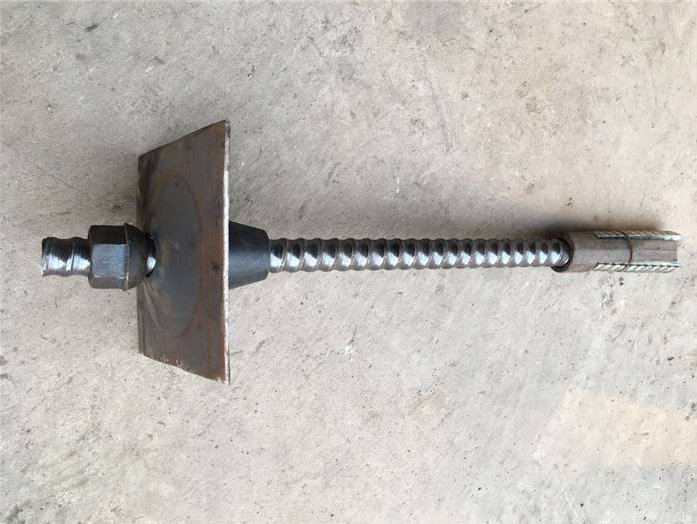
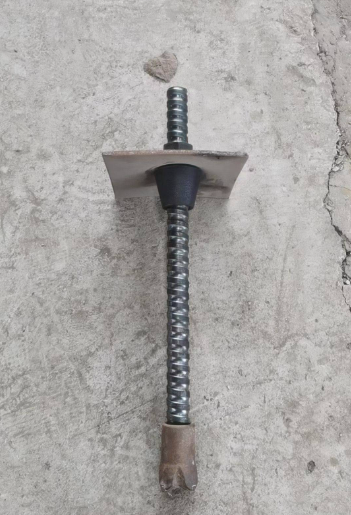
The expansion shell mechanical rock bolt is an active support product widely used in geotechnical engineering. Its core design lies in the organic combination of an expandable expansion shell anchor head at the end and a high-strength bolt body. During installation, rotating or tensioning the bolt body drives the conical nut to displace axially, forcing the expansion shell segments to expand radially outward and tightly engage the borehole wall rock, thus forming a reliable mechanical anchorage point at the bottom of the hole.
Core Advantages
Immediate Load-Bearing, Rapid Support
Expansion shell mechanical rock bolts provide initial anchoring force immediately after installation without waiting for grout to set, effectively solving the problem of insufficient initial bearing capacity of traditional mortar bolts. In scenarios requiring rapid support such as emergency rescue and fault fracture zones, an effective support system can be formed in a short time, significantly improving construction safety.
Dual Reinforcement, Reliable Bearing
Adopting a dual reinforcement mechanism of "mechanical anchoring + grout bonding". The mechanical engagement between the end expansion shell and the rock mass provides end anchoring force. After hollow grouting, the grout fills rock fractures and wraps the bolt body, forming full-length bonded support. The synergistic effect of the two mechanisms greatly improves the bolt's pull-out resistance, shear resistance, and overall stability.
Prestressed Active Support
Prestress (60kN~150kN) can be applied to the bolt by tightening the nut, actively restraining surrounding rock deformation and improving the stress state of the surrounding rock. Compared with passive support forms, prestressed support can more effectively control rock separation and loosening, suitable for large-deformation rock masses and high-stress areas.
Strong Geological Adaptability
The expansion shell structure has self-adaptive capability and can form effective anchorage in rock layers of different hardness. From hard rock to soft rock, from intact rock strata to broken surrounding rock, the expansion shell segments can closely fit the borehole wall to ensure anchoring effect. Various specifications of expansion shell heads can match different borehole diameters and geological conditions.
Efficient Construction, Simple Operation
The installation process is simple, requiring no complex equipment, and can be completed by a single person. Compared with resin bolts or split set bolts, expansion shell bolts are not affected by ambient temperature and can be constructed normally under harsh conditions such as water-rich and low-temperature environments, with comprehensive construction efficiency improved by more than 3 times.
 |  |
|---|
Product Specifications
| Parameter | R25 Type | R32 Type | R38 Type | Remarks |
|---|---|---|---|---|
| Nominal Bolt Diameter (mm) | 25 | 32 | 38 | Other sizes customizable |
| Expansion Shell OD (mm) | 40~44 | 48~52 | 68~72 | Matches borehole diameter |
| Bolt Material | Q355B / 45# Steel | Q355B / 40Cr | 40Cr / 42CrMo | Selectable as required |
| Tensile Strength (MPa) | ≥600 | ≥800 | ≥900 | Quenched and tempered |
| Yield Strength (MPa) | ≥400 | ≥600 | ≥700 | — |
| Elongation after Fracture (%) | ≥16 | ≥14 | ≥12 | — |
| Design Anchoring Force (kN) | ≥80 | ≥120 | ≥180 | Subject to geological conditions |
| Bolt Length (m) | 1.5~4.0 | 2.0~6.0 | 3.0~8.0 | Customizable length |
| Number of Shell Segments | 2~3 pcs | 3~4 pcs | 4 pcs | Selected by rock properties |
| Grouting Pressure (MPa) | 0.5~2.0 | 1.0~3.0 | 1.5~3.0 | Hollow grouting type |
| Bearing Plate Size (mm) | 150×150×8 | 200×200×10 | 250×250×12 | Square / Arch shape |
| Surface Treatment | Blackening / Hot-dip Galvanized | Hot-dip Galvanized / Epoxy Coated | Hot-dip Galvanized / Epoxy Coated | Anti-corrosion options |
Applications
Mine Roadway Support
Widely used in roadway excavation support for coal mines and metal mines, including roof support, side support, and intersection reinforcement. Especially suitable for broken surrounding rock, soft rock roadways, and high ground stress mining areas, effectively controlling roadway deformation and ensuring mining safety.
Tunneling and Underground Engineering
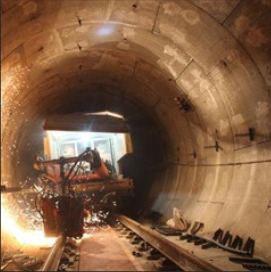
Used for systematic support, advance pre-support, and local reinforcement in railway tunnels, highway tunnels, water conservancy tunnels, and underground powerhouses. Used in conjunction with steel arches and wire mesh to form a combined support system, effectively coping with complex geology such as fault fracture zones and karst development areas.
Foundation Pit Support
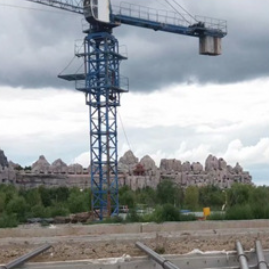
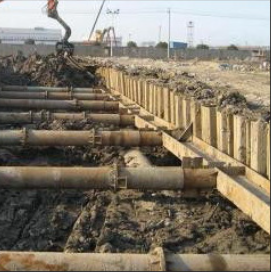
Used for slope reinforcement, soil nailing walls, and anchoring of internal support systems in deep foundation pits. In urban deep foundation pit projects, the rapid construction feature of expansion shell bolts can effectively shorten the construction period and reduce the impact on the surrounding environment.
Slope Reinforcement and Treatment
Applied to highway and railway slope reinforcement, landslide treatment, and open-pit mine slope stabilization projects. Provides immediate anchoring force and plays a key role in slope emergency rescue, effectively curbing further development of landslide masses.
Water Conservancy and Hydropower Engineering
Undertakes support tasks in hydropower station buildings, diversion tunnels, spillway tunnels, and dam foundation reinforcement projects. Its corrosion-resistant version can adapt to groundwater-rich environments and meet the long-term durability requirements of water conservancy projects.
Other Geotechnical Engineering
Also applicable to support and reinforcement of underground utility tunnels, subway stations, civil defense projects, and various underground space development projects, making it one of the most widely used support products in geotechnical engineering.
 |  |  |
|---|
Structural Details
The expansion shell mechanical rock bolt consists of an expansion shell anchor head, bolt body, bearing plate, nut, and grout plug. The expansion shell anchor head is the core load-bearing component, where the conical nut drives multiple expansion shell segments to expand radially, with the inverted tooth patterns on the outer surface tightly engaging the rock mass to form reliable mechanical anchorage. The bolt body is made of high-strength alloy steel with quenching and tempering treatment, featuring a full-thread design for easy prestress adjustment, and the hollow type can also serve as a grouting channel. The bearing plate and nut work together to lock the prestress, while the grout plug ensures grouting sealing effect, with all components working in coordination to achieve stable support.
FAQ
What geological conditions are expansion shell bolts suitable for?
Suitable for various rock formations from soft to hard rock, performing well in broken rock, fault zones, and water-rich strata. For extremely loose sand or fluid-plastic soil, use with casing is recommended.
How to choose the number of expansion shell segments?
2 segments for medium-hard intact rock, 3 segments for broken surrounding rock, 4 segments for soft rock or high-plasticity strata. Determined by rock parameters and design anchoring force.
What are the advantages over resin bolts?
① Immediate load-bearing, no curing wait; ② Temperature-independent; ③ Reusable and recyclable; ④ More stable anchoring in water-rich conditions.
How to determine bolt length?
Based on loosening zone thickness, rock structure, and design anchoring force. End anchorage ≥0.5m, penetration into stable rock ≥0.8m. Professional design calculation recommended.
How to test anchoring quality?
Common methods include pull-out test, torque detection, and ultrasonic testing. Sampling inspection required for important projects per specifications.
Can expansion shell bolts be reused?
Reusable in temporary support via reverse rotation. Not recyclable after grouting in permanent support. Check shell segment wear after multiple uses.
Contact Us for Custom Solutions
For the geological conditions and support requirements of different projects, we provide professional customized rock bolt solutions, covering specification selection, material customization, special performance development, and construction technical guidance. Welcome to contact us for detailed product information and quotations. We will escort your engineering safety with high-quality products and professional services.
 |  |
|---|
Interested in this product?
Get in touch for more information, pricing, or custom requirements.