

Maximizing Underground Safety and ROI: The Future of Strata Control with Advanced Rockbolting Solutions

Dayang Yang
AuthorWith over 15 years of experience in the production and sales of ground anchoring and mining support products, we operate our own rock bolt and accessory manufacturing facility with stable large-scale production capacity. We are specialists in rock bolts, resin cartridges, anchor cables, bearing plates, and customized ground anchoring products for mining support and geotechnical anchoring solutions.
Introduction: The Escalating Challenge of Strata Control
As strata control challenges intensify in 2024, mining and tunneling operations face a hard truth: quality compromises in ground support directly erode load bearing capacity and profitability. Incorrect water‑cement ratios, improper bolt setting, or sub‑standard installation can trigger premature support degradation, endangering crews and budgets. Recent dynamic studies on rock bolt behaviour confirm that elevated anchoring degrees are non‑negotiable for rock mass stability. To stay ahead, forward‑thinking sites are shifting from reactive repairs to proactive, high‑performance strata control systems that lock in safety and predictable ROI.
Critical Factors in Rockbolt Performance
Yield strength and tensile strength are the first numbers you check—but they only matter if the entire assembly behaves as one. In seismically active zones, seismic resistance and corrosion resistance separate temporary patches from permanent asset protection. The often‑overlooked detail lies in the hardware: dome plates, spherical washers, and dome nuts (like our high‑strength mining nuts) work in concert to maximise load distribution. Pairing precision‑engineered hex nuts with matched domed washers eliminates eccentric loading that silently kills bolt life, turning a simple system into a fatigue‑resistant, high‑capacity anchor.
Innovative Rockbolt Solutions for Modern Operations
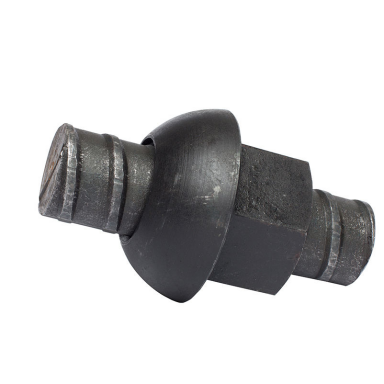
Today’s rapid development cycles demand ground support that installs in minutes and performs for decades. Water‑inflatable Swellex bolts deliver high‑capacity anchoring in variable strata, while friction anchor bolts (Split Set) provide immediate full‑length radial friction—ideal for seismically active or squeezing ground. To transform these shells into durable reinforcement, resin capsules and injection grouts (often a quick‑setting mortar) chemically bond the bolt to the rock, massively upgrading load transfer. Couplers and high‑strength hex nuts join threaded steel rebar bolts into continuous, tensionable strings, ensuring the load path remains uninterrupted. For the toughest corrosion environments, cement‑based injection grout systems with sacrificial steel further lock in long‑term reliability.
Driving ROI Through Proper Ground Support
Falling ground or a prematurely failed roadway isn’t just a safety incident—it’s a multi‑day production loss. Investing in advanced support like strand cable bolts dramatically elevates load bearing capacity, extending roadway life and slashing rehabilitation costs. Surface containment is equally critical: steel wire mesh, welded wire mesh, and chain link mesh (mine support mesh) create a resilient skin that prevents unraveling. Where convergence threatens, T‑section steel and W‑straps add flexural stiffness, while anchor plates and butterfly plates distribute bolt tension across shotcrete reinforcement. The numbers speak for themselves—operations that pre‑invest in these integrated systems see lower maintenance spend and higher muck‑pile volumes month after month.
Selecting the Right System for Your Operation
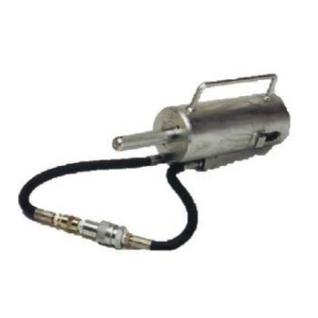
One bolt does not fit all. In water‑sensitive or heavily fractured zones, self‑drilling anchors (SDA) and hollow grouting bolts eliminate open‑hole collapse and speed installation. Glass fiber reinforced polymer (GFRP) bolts shine where electromagnetic transparency or total corrosion immunity is mandatory. Equally decisive is the anchoring method: resin cartridges cure within seconds, mechanical expansion shells offer point‑anchoring simplicity, and chemical anchor bolts excel in saturated, low‑strength strata. Even the threads matter—sleeve couplers on fully threaded bars let you tension past a blocky zone without sacrificing bond length. And since no two rock masses behave identically, skip the guesswork; base specs on full‑scale shear data (optimize mine support design) to match butterfly plates, spacers, and bolt type to the true in‑situ stiffness.
Conclusion: Partner for Safer, More Profitable Operations
As the industry accelerates toward 2026 production targets, the sites that win will be those that treat strata control as a precision engineering discipline—not a commodity buy. Our full product line covers everything from high‑strength mining nuts and mesh to tensioning equipment and rock bolt accessories. Get a personalised assessment of your system and see exactly where you can raise safety and ROI. Request a quote today — contact us.
Related News
Other news you might be interested in

Active vs. Passive Anchors: How to Choose the Right Ground Support System
A ground support system can fail for a simple reason: the team selected a product by name before deciding how the load should develop. Two anchors may look similar in a catalog, use the same diameter, and carry the same nominal steel grade, yet behave very differently underground. One is tensioned against the rock immediately after installation. The other begins to carry load only when the rock mass starts to move.That difference is what "active" and "passive" should describe. It is not a quality ranking. It is not a choice between modern and old-fashioned support. It is a choice about timing, displacement and load path.

How do concrete anchor bolts improve foundation stability?
A concrete anchor bolt is a small part of a foundation, but it decides whether the foundation and the structure above it behave as one system. The bolt does not make the concrete stronger or the soil stiffer. It provides a controlled load path between the steel structure, the base plate, the concrete, and—when the anchor is designed to reach it—the deeper ground.In this article, the term covers cast-in anchor rods, post-installed mechanical or adhesive anchors, and post-tensioned bars or strand anchors used to tie a structure or foundation element into concrete.That distinction is the key to answering the question. Anchor bolts improve foundation stability by resisting uplift, shear and overturning, maintaining clamping force, helping to distribute concentrated loads, and tying the foundation to a competent bearing stratum. They cannot compensate for an undersized footing, a poor subgrade, or a missing reinforcement detail.
Want to know more?
Get in touch with us for more information about our services and products.