

Elevating Underground Mining Safety and Productivity: Advanced Rockbolt Systems to Mitigate Complacency Risks in 2026

Dayang Yang
AuthorWith over 15 years of experience in the production and sales of ground anchoring and mining support products, we operate our own rock bolt and accessory manufacturing facility with stable large-scale production capacity. We are specialists in rock bolts, resin cartridges, anchor cables, bearing plates, and customized ground anchoring products for mining support and geotechnical anchoring solutions.
The Silent Danger of Complacency in Strata Control: Why 'Good Enough' Isn’t Enough
You've seen the sign: "Complacency Kills. Stay Alert!" at industrial sites. This warning rings true in underground mining, where normalizing deviations from strata control standards gradually erodes rock mass stability. At the 2025 Underground Operators Conference, attended by over 1500 professionals, proactive ground support emerged as a top priority to reduce downtime and safety incidents. The link is clear: subpar component selection, such as low-yield nuts or substandard anchorage agents, directly increases the risk of ground failure in underground roadways. Ignoring these details compromises the entire system's integrity.
2026 Trends Shaping Underground Roadway Reinforcement and Strata Control
As we look to 2026, the industry is shifting focus towards enhanced seismic resistance and load bearing capacity. Insights from Maptek video analyses of seismic event impacts on unreinforced mine sections drive this trend. There's a growing adoption of corrosion-resistant materials like galvanized steel and Glass Fiber Reinforced Polymer (GFRP) bolts to extend component lifespan in harsh environments. Moreover, demand is rising for integrated systems that combine mechanical solutions, such as expansion shell bolts and threaded steel rebar bolts, with chemical anchors like resin capsules or chemical anchor bolts for superior reliability. This holistic approach is key to future-proofing operations.
Advanced Rockbolt Systems and Accessories: Solving Core Mining Challenges
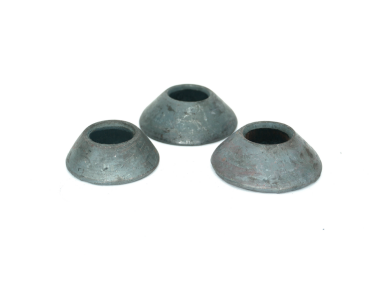
To address these challenges, advanced rockbolt systems are essential. Pipe seam anchors, or friction bolts, provide immediate load transfer in metal mines, offering a simple yet effective solution for loose rock strata. For more demanding applications, prestressing anchorage systems support strand cable bolts and PT bars with consistent load distribution, ideal for post-tensioned concrete and geotechnical anchoring. Accessories play a critical role: Rocbolt accessories like dome plates, anchor plates, butterfly plates, spherical washers, W-straps, and couplers are tested for high yield strength and can accommodate angular surfaces up to 18°, ensuring reliable tension in uneven environments. High-strength mining nuts, including customizable hex nuts and dome nuts with specialized threads, are designed for heavy-duty bolted connections. For reliable fastening, consider high-strength mining nuts that meet rigorous standards. Complementary reinforcement such as chain link mesh, welded wire mesh, and steel wire mesh, along with T-section steel for shotcrete reinforcement, boosts overall rock mass stability. Versatile bolt options like hollow grouting bolts, threaded steel rebar bolts, and mechanical expansion shell bolts allow for tailored support in varying rock conditions.
Precision Tensioning and Anchorage Agents: Ensuring Long-Term System Integrity
System integrity hinges on precision tensioning and quality anchorage agents. Rocbolt tensioning equipment for CableLok anchors includes robust hydraulic kits with capacities from 100–250 kN, delivering accurate tonnage for pre-loading bolts to design specifications. Anchorage agents like quick-setting mortar, cementitious grout, resin cartridges, and injection grout form strong, durable bonds between bolts and rock strata, minimizing long-term degradation. Proper tensioning and anchorage enhance key metrics: tensile strength, load bearing capacity, and resistance to seismic events in high-risk operations. For instance, using high-performance prestressing anchorage systems ensures that strand cable bolts maintain their integrity under stress.
Aligning with Industry Best Practices: Cited Insights from Leading Mines
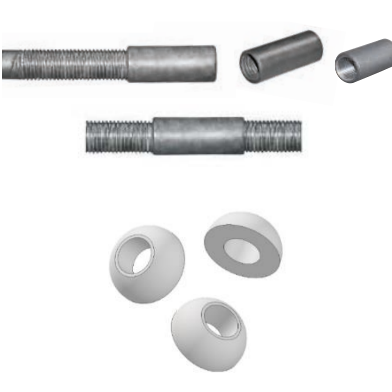
Industry best practices underscore the importance of quality components. The Musselwhite Mine in Ontario reported an 18% reduction in unplanned downtime over 12 months after implementing high-yield Rocbolt accessories. Maptek video analyses highlight how precision tensioning mitigates ground failure during seismic activity. Consensus from the 2025 Underground Operators Conference emphasizes that standardized component testing—for elements like sleeve and coupler performance—is non-negotiable to avoid compliance gaps. These insights, detailed in resources like beyond guesswork optimize mine support design with full scale shear test data, provide actionable data for improving strata control strategies.
Take Action: Optimize Your Strata Control Strategy for 2026
Start by assessing your current system to identify gaps in component quality, such as outdated tensioning tools or low-strength nuts that expose your operation to risks. Explore custom solutions by working with experts to design tailored setups, from custom mining nut configurations to model-specific tensioning equipment packages. Request a consultation to match products like GFRP bolts or combo bolts to your mine's unique needs for seismic resistance and underground roadway reinforcement. Download our free Rocbolt accessories datasheet to review yield strength and compatibility specifications, or schedule a demo to see accurate tonnage delivery in action.
To discuss how these advanced systems can be integrated into your operation, contact our team today.
Related News
Other news you might be interested in

Active vs. Passive Anchors: How to Choose the Right Ground Support System
A ground support system can fail for a simple reason: the team selected a product by name before deciding how the load should develop. Two anchors may look similar in a catalog, use the same diameter, and carry the same nominal steel grade, yet behave very differently underground. One is tensioned against the rock immediately after installation. The other begins to carry load only when the rock mass starts to move.That difference is what "active" and "passive" should describe. It is not a quality ranking. It is not a choice between modern and old-fashioned support. It is a choice about timing, displacement and load path.

How do concrete anchor bolts improve foundation stability?
A concrete anchor bolt is a small part of a foundation, but it decides whether the foundation and the structure above it behave as one system. The bolt does not make the concrete stronger or the soil stiffer. It provides a controlled load path between the steel structure, the base plate, the concrete, and—when the anchor is designed to reach it—the deeper ground.In this article, the term covers cast-in anchor rods, post-installed mechanical or adhesive anchors, and post-tensioned bars or strand anchors used to tie a structure or foundation element into concrete.That distinction is the key to answering the question. Anchor bolts improve foundation stability by resisting uplift, shear and overturning, maintaining clamping force, helping to distribute concentrated loads, and tying the foundation to a competent bearing stratum. They cannot compensate for an undersized footing, a poor subgrade, or a missing reinforcement detail.
Want to know more?
Get in touch with us for more information about our services and products.