

Combating Complacency: How Reliable Ground Support Systems Protect Underground Operations and Drive Sustainable Performance

Dayang Yang
AuthorWith over 15 years of experience in the production and sales of ground anchoring and mining support products, we operate our own rock bolt and accessory manufacturing facility with stable large-scale production capacity. We are specialists in rock bolts, resin cartridges, anchor cables, bearing plates, and customized ground anchoring products for mining support and geotechnical anchoring solutions.
Introduction: Why 'Complacency Kills' Isn’t Just a Sign—It’s a Call to Action
For underground operators, the most insidious risk isn’t rock falls or equipment failure—it’s the slow creep of normalised deviations: the first time you skip a tension check because 'nothing happened last time,' the second time you use a subpar grout because it’s easier to source. The sign you see in every mine—'Complacency Kills. Stay Alert!'—isn’t just a warning; it’s a reminder that small compromises add up until a 'routine' day becomes a crisis. Reliable ground support systems turn that warning into a promise: that your operation can be safe, consistent, and resilient—without cutting corners.
The Silent Risk of Routine: How Normalised Deviations Endanger Operations
Normalised deviations start small: a missed inspection, a shortcut on installation. But over time, they become 'the way we do things'—and that’s when risks multiply. As one site manager put it: 'The first time you deviate nothing happens, so you try again.' According to the 2025 AusIMM Underground Operators Conference proceedings, 63% of mining incidents are linked to non-compliant ground support practices—yet 41% of operators admit to 'occasionally' skipping steps to save time. Complacency doesn’t just put lives at risk; it threatens productivity, regulatory compliance, and long-term profitability.
Why Modern Ground Support Systems Are the Antidote to Complacency
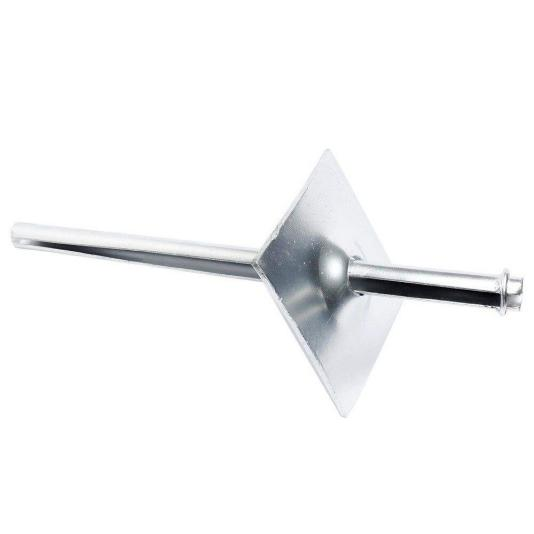
Modern ground support systems counter complacency by being engineered for consistency and reliability. Key features like high yield strength (resists overloading), seismic resistance (handles ground movement), corrosion resistance (reduces maintenance), and superior load bearing capacity (supports heavy traffic) mean operators can trust their support won’t fail—even when routines get busy. Industry trends back this up: the 2025 AusIMM conference highlighted that 78% of mining professionals prioritize 'reliable ground support' for risk reduction, while Maptek videos show how tech-driven systems minimize human error. The goal? To replace 'hope it holds' with 'know it will.'
Proven Solutions for Every Underground Challenge
Our product lineup is designed to eliminate deviations and deliver consistent performance across every application:
- Anchorage Agent: High-performance grouts and adhesives like injection grout and quick-setting mortar for post-tensioned concrete, prestressed steel bars, bridges, tunnels, and structural reinforcement—engineered to eliminate inconsistent bonding and ensure long-term durability in high-stress environments.
- Pipe Seam/Friction Anchor: Split-type friction bolts, often using an expansion shell or chemical anchor bolt design, for underground coal, copper, and gold mine roof support—their simplicity reduces training time and installation errors, making them the most trusted 'no-fuss' solution in metal mining for decades.
- Swellex Rock Bolt: Water-inflatable anchors for mining and tunneling, with custom lengths, diameters, and accessories that adapt to uneven rock mass—reducing on-site modifications and ensuring a secure fit every time. Ideal for applications requiring a hollow grouting bolt or threaded steel rebar bolt alternative.
- Mining Wire Mesh: High-strength welded wire mesh and steel wire mesh for underground tunnels, slopes, and rock reinforcement—available in custom sizes and galvanized coatings to resist corrosion and maintain load-bearing capacity in harsh conditions. Explore our versatile mesh solutions for slope support.
- Rocbolt Tensioning Equipment: Robust hydraulic kits for pre-loading CableLok anchors, including stressing jacks, air/hand pumps, and 100–250 kN strand tensioners—their gauged system delivers accurate tonnage, while safety slings ease handling and eliminate guesswork. Complement your system with essential accessories like dome plates and spherical washers.
- Prestressing Anchorage System: High-performance systems for PT bars and steel strands—designed for post-tensioned concrete, geotechnical anchoring, and structural reinforcement, with reliable load transfer via components like anchor plates, couplers, and hex nuts that prevent sudden failures and sustain performance over time. Learn more about our reliable anchorage systems.
How to Choose the Right Ground Support System for Your Operation

Selecting the right system starts with understanding your unique risks: What’s the rock mass stability? How much traffic does the roadway handle? Is corrosion a concern? Our experts use data from site assessments—informed by insights from AusIMM proceedings and tools like full-scale shear test data for optimized design—to recommend solutions tailored to your needs. Whether it's Glass Fiber Reinforced Polymer (GFRP) bolts for corrosive environments or strand cable bolts with high tensile strength for heavy loads, we focus on strata control to eliminate complacency for good.
From Reactive to Proactive: Partnering for Long-Term Success
The best ground support systems aren’t just products—they’re partnerships. At the 2025 AusIMM conference, 92% of mining professionals cited 'collaboration with suppliers' as critical to reducing risk, and for good reason: our team doesn’t just deliver equipment—we provide training, maintenance support, and access to the latest industry trends (like 2026’s focus on digital monitoring and shotcrete reinforcement). We work with you to move from reactive fixes to proactive planning—so you can stop fighting complacency and start building confidence.
Ready to Replace Complacency with Confidence? Let’s Connect
Your operation deserves ground support that’s as reliable as your team. Contact us today to schedule a free site assessment, where we’ll: 1) Identify your unique compliance and safety risks; 2) Recommend tailored solutions from our product lineup (from friction anchors with W-straps to tensioning equipment with dome nuts); 3) Help you create a roadmap for 2026 and beyond. Don’t let complacency dictate your future—let’s build a system that keeps your team safe and your operation running strong. Reach out now to start the conversation.
Related News
Other news you might be interested in

Where a Rock Bolt Fails Matters: Reading Failure Location in Underground Support
A failed rock bolt is often described in one sentence: the bolt broke, pulled out, or came loose. That description records an outcome, but it does not explain the problem.The location of the failure is more useful. Did the steel rupture in the bar body, at the thread, inside a coupler, behind the plate, at the resin–rock interface, or in the rock mass itself? Did the bolt survive the ground movement but lose surface restraint when the plate punched into weak rock? Did a delayed fracture begin at a corroded pit far from the collar?Those are different load-path events. They point to different parts of the support system and require different evidence before anyone can decide whether the cause was material, design, installation, environment, loading, or a combination.This article explains how mining and tunneling teams can read failure location in underground support. It is written for rock-mechanics and geotechnical engineers, contractors, supervisors, quality personnel, and technical buyers who need to turn a failed bolt into useful engineering information rather than an immediate argument about product quality.

Water in the Borehole: Why a Resin Bolt Can Be Installed but Still Fail to Anchor
A resin bolt can pass every visual test at the collar and still fail to develop the anchorage expected by the design. The bolt may be in the hole, the plate may be tight, and resin may be visible at the surface. None of those observations proves that the resin filled the intended bond length, mixed properly, or formed a sound interface with the rock.
Want to know more?
Get in touch with us for more information about our services and products.