

What Is the Difference Between Rock Bolts and Cable Bolts, and When Is Each Used in Mining?

Dayang Yang
AuthorWith over 15 years of experience in the production and sales of ground anchoring and mining support products, we operate our own rock bolt and accessory manufacturing facility with stable large-scale production capacity. We are specialists in rock bolts, resin cartridges, anchor cables, bearing plates, and customized ground anchoring products for mining support and geotechnical anchoring solutions.
In underground mining, excavating a roadway or stope may cause the surrounding rock mass to loosen, separate, or deform. Both rock bolts and cable bolts can be used for ground support, but they differ in construction, load transfer, and engineering role. The key is not simply to ask “which one is stronger,” but to consider the extent of the rock that needs to be controlled, the available anchorage locations, and the conditions at the worksite.
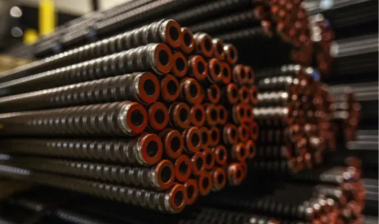
How Do Rock Bolts and Cable Bolts Differ in Structure and Support Mechanism?
In mining literature, rock bolt is sometimes used as a broad term for rock reinforcement. For clarity, this article uses rock bolt to refer specifically to bar-type reinforcement and compares it with a cable bolt as a separate support element.
A rock bolt works with the surrounding rock mass to restrain rock layers or blocks near an excavation. Depending on the design, it can use different anchorage methods. Its length, installation angle, spacing, and interaction with components such as bearing plates all affect its support performance.
A cable bolt is generally made of multiple steel wires or strands. It is installed in a borehole and may be grouted or anchored in another way, depending on the design. It can extend the support action into a deeper anchorage zone. The load must transfer through the interfaces between the cable, grout, and surrounding rock, so anchorage quality and installation are important. Research has also examined these interfaces as key factors in load transfer.
| Comparison | Rock Bolt | Cable Bolt |
|---|---|---|
| Component form | Bar-type element | Multiple steel wires or strands |
| Support focus | Anchorage and support of rock layers and blocks around the excavation | Anchorage and load transfer between the cable, grout, and rock mass |
| Engineering role | Restrains and reinforces a defined area of the rock mass, as specified by the design | Can extend support into deeper areas or across a wider zone, as specified by the design |
| Design and installation priorities | Bolt layout, anchorage method, and installation quality | Borehole and anchorage conditions, grouting quality, and load transfer |
The table summarizes engineering comparison points; it does not establish fixed limits for length or load capacity. Actual performance depends on ground conditions, support design, and installation quality.
What Rock Mass Problems Are Rock Bolts Suited to Address?
Engineers may consider bar-type support when the area of rock-mass deformation or loosening can be effectively covered by the designed rock bolts. For example, support may be needed for rock layers, discontinuities, or local blocks around a roadway, and the design must provide reliable anchorage conditions.
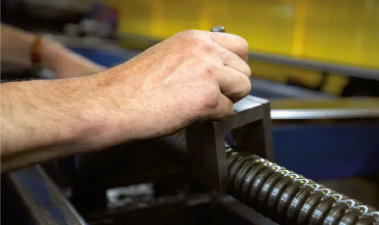
This does not mean that a roadway is automatically suited to rock bolts. If the potential failure zone extends beyond the area covered by the anchorage design, or the rock mass shows significant deep-seated failure, large deformation, or complex joints and fractures, the support plan needs to be reassessed. Mine support design must account for rock-layer conditions, stress, and excavation factors; the installation location alone is not enough to determine the support method.
In Which Mining Conditions Can Cable Bolts Offer Advantages?
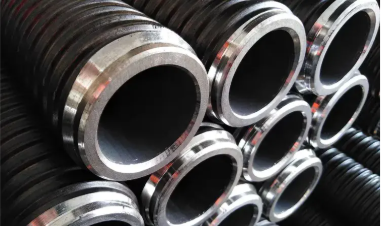
A cable bolt may form part of the support plan when support needs to extend into deeper rock mass or control a wider area. For example, engineers may assess cable bolts for certain stopes, underground openings with larger spans, or areas where additional roof support is needed. U.S. mining research has documented field evaluations of cable bolts for roof support under different underground mining conditions, illustrating that their use depends on the specific ground conditions and design requirements.
A cable bolt should not be selected solely because the span is large or the rock is poor. Engineers also need to assess whether the anchorage zone is reliable, whether drilling and grouting can meet the design requirements, and whether the installation and loading arrangements are suitable for the project.
Why Do Installation and Grouting Quality Affect the Performance of Rock Bolts and Cable Bolts?
The support performance specified in a design can only be achieved through proper installation. The location, depth, and diameter of the borehole; whether its condition is suitable for installation; and whether the anchoring material is prepared and placed as specified all affect anchorage quality. In systems using resin or cementitious grout, incomplete filling, inadequate mixing, or gaps between the anchoring element and the borehole wall may prevent the intended load transfer. Research on rock bolting has also identified borehole diameter and condition, grout, and rock mass characteristics as factors affecting anchorage integrity between grout and rock.
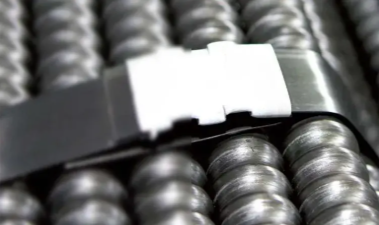
For cable bolt installation, attention should also be paid to whether the borehole aligns with the designed anchorage zone, whether grout has filled the required area, and whether the specified tensioning and curing procedures are followed. Crews should work to the project design, approved method statement, and material requirements. Exposed length or surface appearance alone cannot confirm that the anchorage is reliable.
Quality checks should not rely on a single test result. Depending on project requirements, assessment may combine installation records, inspections, specified pull tests, or other testing methods. Where necessary, rock-mass monitoring can also be used to observe conditions after support installation. Test results should be interpreted in the context of the ground conditions and support design, rather than treated in isolation as the sole measure of whether the entire support system is effective.
Can Rock Bolts and Cable Bolts Be Used Together?
Yes. In some mining projects, if the design determines that both the excavation perimeter and deeper rock mass need reinforcement, rock bolts and cable bolts may be included in the same support plan to address stability over different areas. For example, the plan may use rock bolts to control rock-layer movement within their designed support zone and cable bolts to extend support deeper. The specific roles must be determined by the engineering design; this arrangement is not a universal rule.
For a combined design, engineers should first define the failure mechanism and the area to be controlled. They should then determine each element’s anchorage location, layout, and installation sequence, and check whether the elements cover the target area and fit the worksite schedule. Studies have documented cable bolts as part of combined support systems and have also evaluated them as a primary support component. This indicates that their role depends on the specific mine conditions and design, rather than being limited to supplementary support.
The purpose of combining support elements is not to assume that more components automatically mean greater safety. Each element should address a defined ground-support problem. After installation, construction quality should be checked and support performance verified against site conditions and project requirements.
Why Should Support Selection Not Be Based on Component Strength Alone?
Engineering decisions can be assessed in the following order:
- Identify the potential failure location and extent. Is the concern movement in rock blocks or layers around the excavation, or does deeper rock also need to be controlled?
- Confirm available anchorage locations. Is the designed anchorage zone reliable, and does the anchorage length match the actual ground conditions?
- Consider excavation and stress conditions. How might the shape and span of the roadway or stope, in-situ stress, and expected deformation affect support requirements?
- Check installation and quality control. Can drilling, anchoring, grouting, and any required field testing or rock-mass monitoring verify that the support system performs as designed?
In some projects, rock bolts and cable bolts can form a combined ground-support system, with each taking responsibility for a different area or stage of support. However, combining them does not automatically make the excavation safer. The design still needs to account for the failure mechanism, anchorage conditions, and construction requirements. Because anchorage interfaces and installation quality can affect load transfer, they must also be considered in the support assessment.
In short, rock bolts and cable bolts are not simply better or worse than one another. The choice should begin with the rock-mass problem to be controlled: engineers must assess the extent of potential failure, anchorage locations, and site installation conditions before the support design determines whether to use one method or a combination.
Related News
Other news you might be interested in

Coal Mine Roadway Support Systems: How Rock Bolts, W-Straps, Mesh and Cable Bolts Work Together
Coal mine roadways are essential to safe, continuous underground operations. Their stability can be affected by changing geological conditions, mining-induced stress and excavation activity. As ground-control research increasingly focuses on the overall coordination and monitoring of support systems, rock bolts, W-straps, mesh and cable bolts should not be viewed as isolated components, but as elements that work together under site-specific mine conditions. This article explores their complementary roles in coal mine roadway support, while recognizing that support designs must be based on the conditions of each mine.

Five Major Advantages of Self-Drilling Anchors in Engineering Applications
In weak ground, fractured rock, loose soil, or rock masses with numerous joints, boreholes may narrow, shed material, or collapse. This can make it difficult to insert the anchor bar and may also affect subsequent grouting. Groundwater and changing strata add further uncertainty to construction.
Want to know more?
Get in touch with us for more information about our services and products.