

Mining Support Materials: How Roof Straps, Mesh, Plates, and Anchor Cables Build Safer Underground Support Systems

Dayang Yang
AuthorWith over 15 years of experience in the production and sales of ground anchoring and mining support products, we operate our own rock bolt and accessory manufacturing facility with stable large-scale production capacity. We are specialists in rock bolts, resin cartridges, anchor cables, bearing plates, and customized ground anchoring products for mining support and geotechnical anchoring solutions.
As underground mining extends into deeper and more complex ore bodies, roadways face more pronounced high in-situ stress, fractured ground, bedded roofs, groundwater, and mining-induced disturbance. Roof separation, crack propagation, local rock falls, and roadway convergence are not always caused by a single factor; they are usually related to rock-mass structure, excavation disturbance, support timing, and field quality.
For this reason, the goal of underground mining ground support is not simply to increase the strength of one component. It is to establish a support system that can transfer loads continuously, control shallow loosened rock, and accommodate ground deformation. Rock bolts, anchor cables, roof straps, mesh, and plates should work together according to their respective functions. Specific parameters, layouts, and acceptance requirements must still be based on geological data, design documents, and site standards.
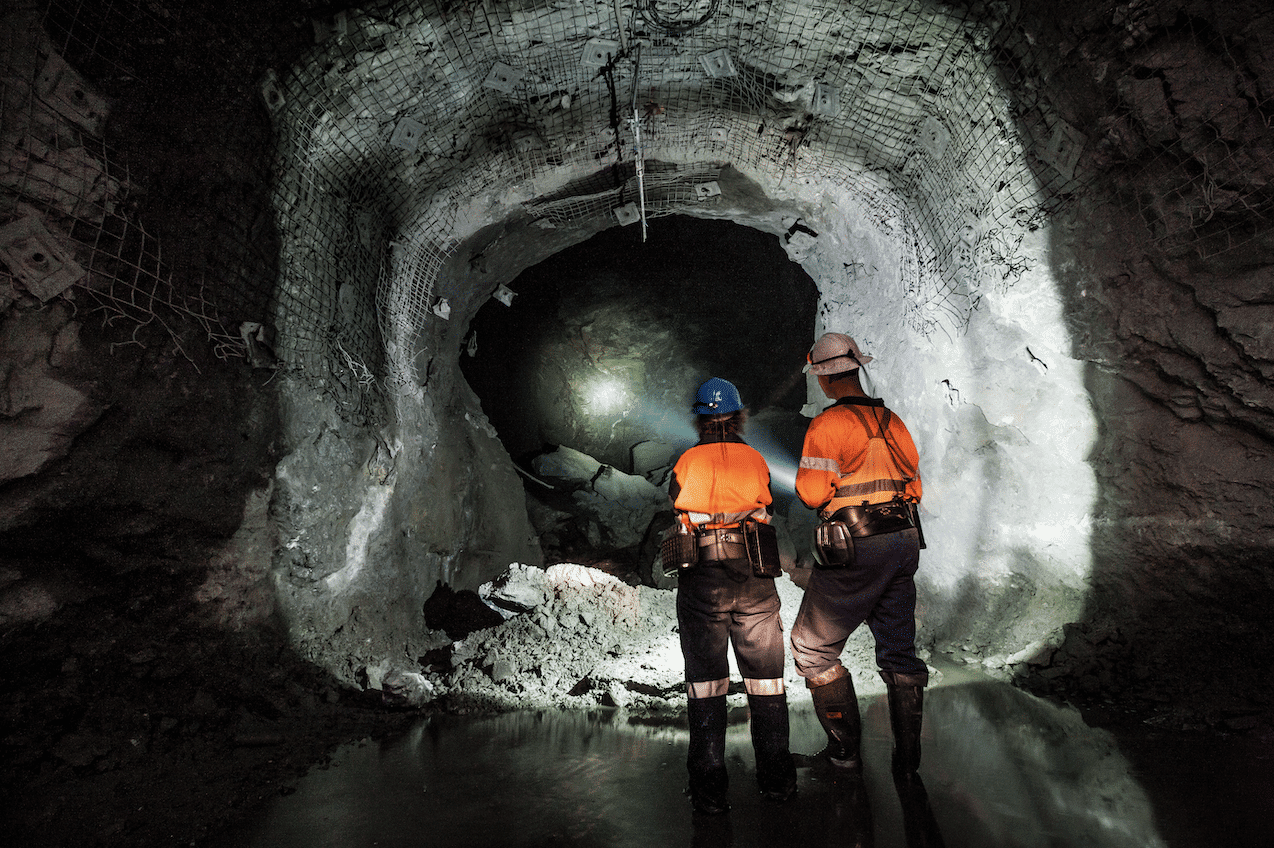
Why Underground Mine Support Cannot Rely on Rock Bolts Alone
A single rock bolt can reinforce a local section of rock, but its performance depends on the anchorage mechanism, anchorage length, rock-mass integrity, and installation quality. In roofs with developed joints, pronounced bedding, or a wide shallow loosened zone, discrete anchorage points may not adequately control rock falls near the excavation surface or separation between rock layers.
From an rock bolt mining perspective, a support system must address two issues at the same time: improving the integrity and bearing capacity of the rock mass, and restraining rock blocks that have become, or may become, loosened near the excavation surface. Focusing only on the rated capacity of a single rock bolt, while overlooking surface restraint, connection quality, and load distribution, may still leave the overall mine roof support system unreliable.
What Ground Control Problems Must an Underground Support System Address
Controlling Roof Separation, Crack Propagation, and Local Falls
Underground excavation changes the original stress equilibrium. Bedded roofs, joint planes, and fractured zones may develop roof separation, shear movement, or local loosening. Ground control is not to eliminate all deformation, but to keep deformation within the acceptable design range and prevent local instability from developing into a roof fall.
Rock bolt support can improve restraint between rock layers, while mesh, roof straps, and plates help control small rock falls and shallow surface loosening. Together, these functions create a continuous roof support load path.
Limiting Ground Deformation and Maintaining Roadway Profile
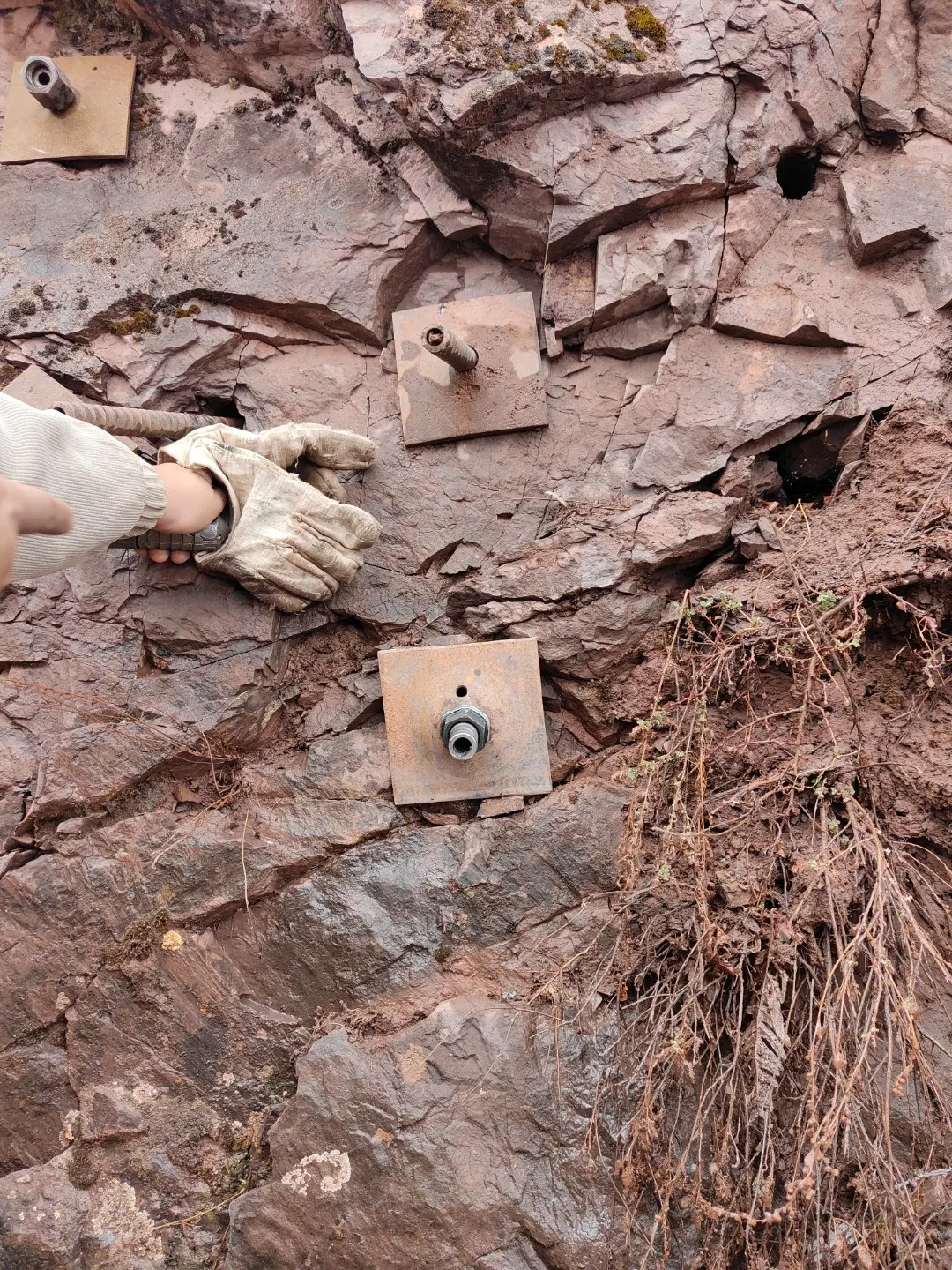
Roof sag, rib convergence, and floor heave can reduce the effective roadway profile and affect haulage, ventilation, and equipment operation. For long-life roadways, ground deformation should not be considered only during the initial installation stage; it should also be assessed through inspections, convergence observations, or other suitable ground monitoring methods.
The key is not simply to make the support system as stiff as possible. It also involves compatibility between support components and rock-mass deformation. Excessive reliance on a single rigid component, or failure to consider rock deformation characteristics, may not produce effective ground control.
Addressing High Stress, Repeated Mining Disturbance, and Long-Term Service Conditions
Deep mining and the advance of nearby workings can subject a roadway to repeated stress adjustments. Under these conditions, high-stress ground, dynamic disturbance, groundwater, and corrosive environments can all affect the long-term performance of an underground support system.
Engineering teams normally need to consider support capacity, ductility, durability, connection reliability, and maintenance access together, rather than attributing support performance to the strength of one material alone.
How Combined Support Forms a Complete Load Path
How Rock Bolts and Anchor Cables Transfer Loads to More Stable Ground
Rock bolts reinforce a defined zone of rock through mechanical anchorage, resin anchorage, grouted anchorage, or friction anchorage. Their actual performance depends on the anchorage zone, ground conditions, and whether load transfer remains complete.
Anchor cables are commonly made from high-strength steel strands and can be used for longer anchorage zones and deeper rock reinforcement. In cable bolts mining applications, loads are generally transferred through the interfaces between the cable, grout, and surrounding rock. Design and installation should therefore consider anchorage quality, rock conditions, and long-term loading together.
Why Surface Support Is an Essential Part of Underground Ground Support
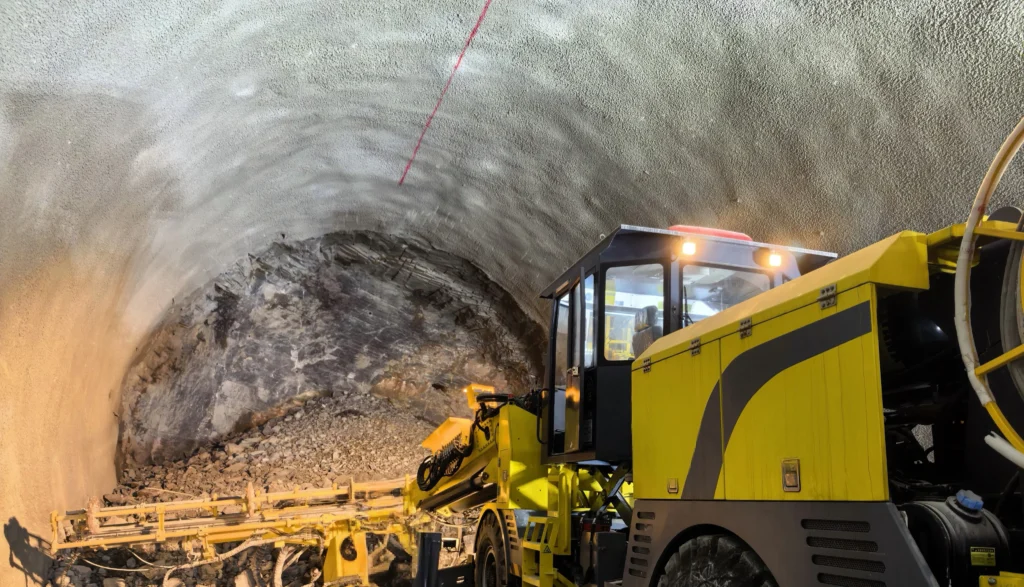
Internal reinforcement of the rock mass does not necessarily prevent rock falls near the excavation surface. The role of surface support is to restrain shallow loosened rock blocks, connect discrete anchorage points, and distribute localized loads over a wider area.
A surface system made up of roof straps, mesh, and plates can improve restraint continuity around rock-bolt heads. These materials are not independent replacements for rock bolts or anchor cables; they are part of a complete underground mining ground support system.
The Difference Between Active, Passive, and Combined Support
Active support generally improves the stress condition of the rock mass before significant deformation occurs through anchorage, preloading, or prestressing. Passive support more often restrains or carries rock that has already begun to move. In practical projects, both are frequently present in a combined support system.
For example, rock bolts and anchor cables can provide internal reinforcement; mesh and roof straps can control surface loosening; and plates can transfer rock-bolt-head loads more effectively to surface components. System performance should be judged by the complete load path rather than by any individual component alone.
The Role of Roof Straps, Mesh, Plates, and Anchor Cables in the System
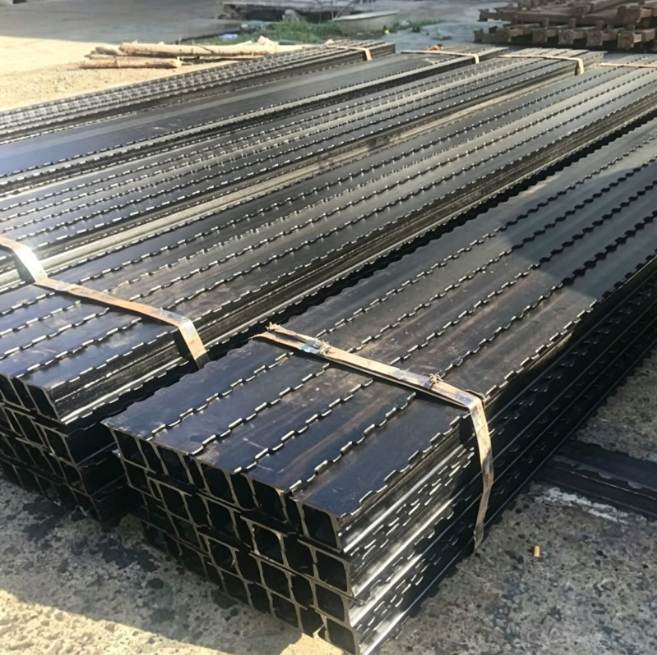
Roof Straps: Connecting Discrete Anchorage Points and Distributing Roof Loads
Roof straps can connect multiple anchorage points and create a more continuous surface load-bearing unit. In bedded roofs, jointed ground, or areas with poor roof-surface integrity, straps can help reduce local stress concentration around individual rock-bolt heads.
The practical function of a strap depends on its section form, hole alignment, installation position, and connection with plates and rock bolts. Its engineering value lies in improving system coordination, not simply in adding another component.
Mesh: Controlling Shallow Loose Rock and Small Rock Falls
Mesh is mainly used to restrain fractured rock near the excavation surface and reduce the risk of local falls affecting workers and equipment. In broken zones, weathered zones, or areas with poor rock-surface integrity, continuous mesh support can supplement the surface-control needs that internal anchorage cannot fully address.
However, mesh does not itself provide deep rock reinforcement. Its function relies on reliable fixing points, proper plate loading, and coordinated use with other mining support materials.
Plates: Enlarging the Rock-Bolt-Head Bearing Area and Stabilizing Surface Support
Plates are positioned between the rock-bolt head and the rock surface or surface-support components. Their role is to enlarge the local bearing area and transfer the restraining action of the rock-bolt head to roof straps, mesh, or the surrounding rock surface.
If a plate is incompatible with the rock bolt, nut, or surface component, becomes deformed abnormally, or is installed improperly, the continuity of the entire surface support system may be weakened. Plates should therefore be treated as key points in the load-transfer chain rather than as ordinary accessories.
Anchor Cables: Providing Long Anchorage and High-Capacity Support for Deeper Ground
Where the loosened zone is deeper, the roadway span is larger, or potential deep roof separation exists, anchor cables can establish anchorage in deeper rock layers. Compared with standard rock bolts, anchor cables are more suitable for conditions requiring longer anchorage, greater capacity, or reinforcement across locally unstable strata.
However, whether to use anchor cable support, and in what form, should be based on engineering design, rock structure, and load analysis. Anchor cables are not universal replacements for all roadway support requirements; they are important components in combined support for specific support objectives.
Why These Materials Must Work with Rock Bolts Instead of Being Used Independently
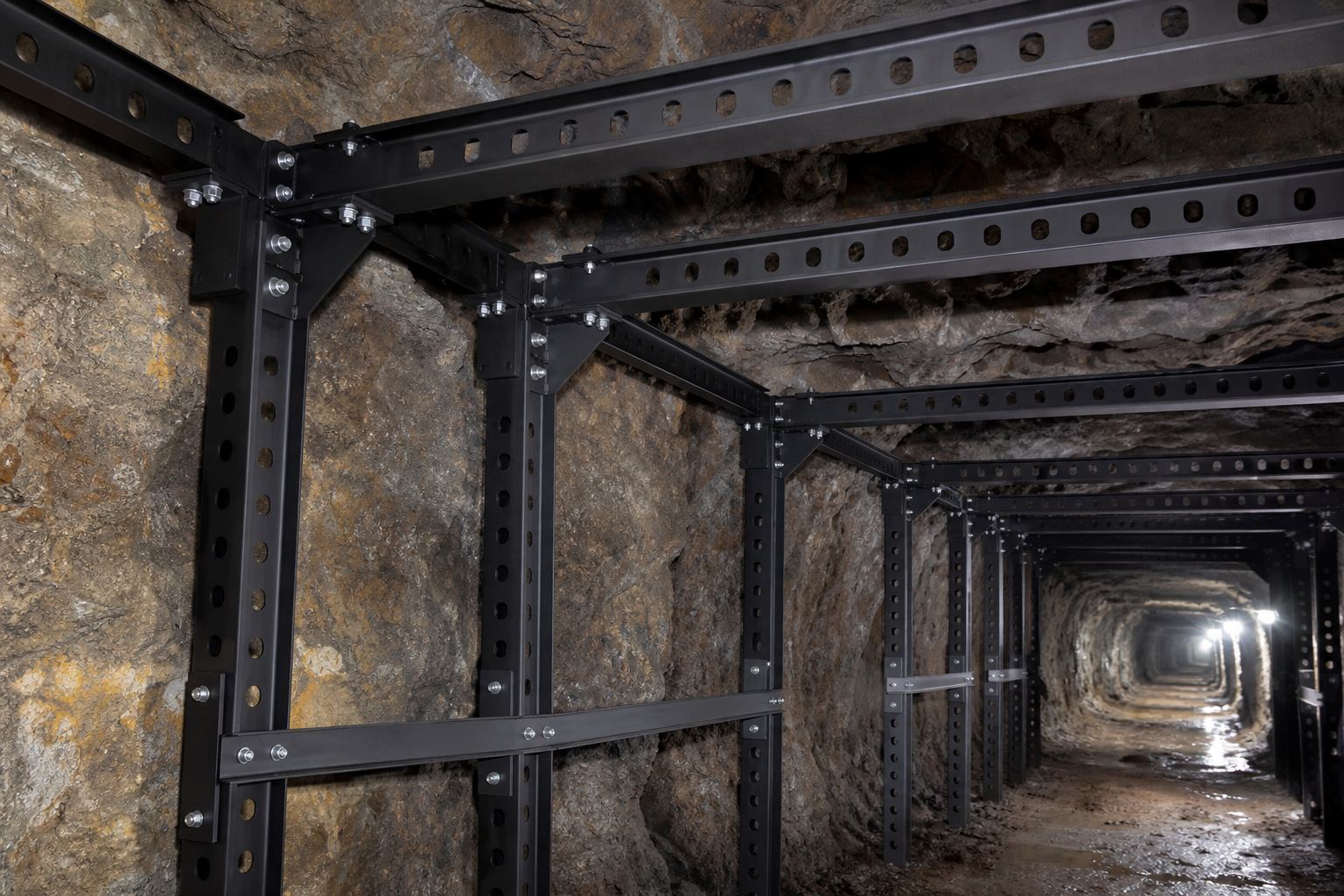
Roof straps, mesh, plates, rock bolts, and anchor cables each perform different functions in deep reinforcement, surface restraint, load distribution, and connection transfer. Once they form a complete load path, they can serve mine roof support more effectively.
This is the core value of mining support materials: their value is not limited to individual component performance, but to whether they can be incorporated into a system design suited to actual ground conditions.
Typical Combined Support Approaches in Different Underground Conditions
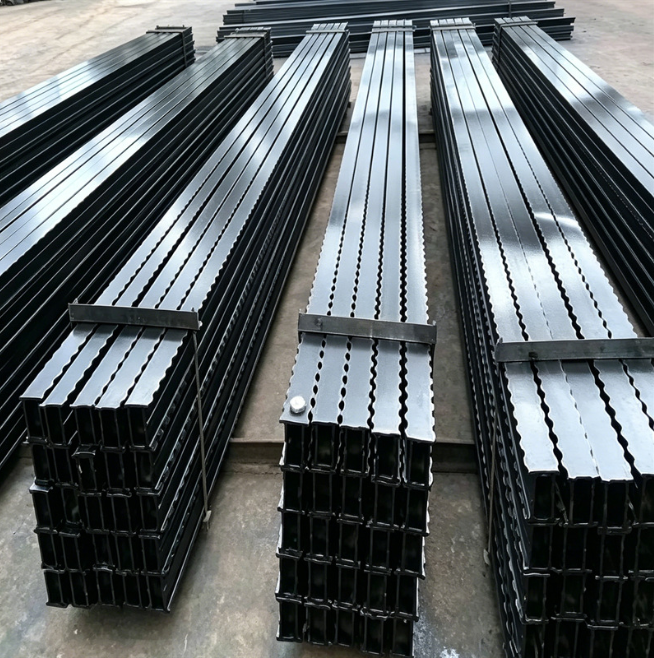
Roof Support in Conventional Mine Roadways
In roadways with relatively intact ground and controllable deformation, rock bolts used with plates, roof straps, or mesh can form a basic roof support system. The key in such conditions is to ensure that anchorage layout, component connections, and installation quality meet the design requirements.
Surface Control in Fractured Ground and Bedded Roofs
In areas with developed joints, weak bedding interfaces, or rock surfaces prone to small falls, the continuous surface restraint provided by mesh and roof straps is particularly valuable. The support focus is not only to improve internal anchorage, but also to prevent shallow loosened rock from moving into the roadway opening.
Large Chambers, Intersections, and Deep Mining Areas
Large chambers and roadway intersections often experience more complex stress redistribution. In practice, rock bolts, anchor cables, and surface-support components may be combined to form a layered and zoned combined support approach that addresses stability requirements at different depths and locations.
Common Principles for Combined Support in Mining and Tunneling
Whether in underground mining or tunnel excavation, ground control should be based on ground-condition identification, clear support objectives, component coordination, and field verification. Material layouts must not be separated from actual geological conditions, and no support arrangement should replace the project-specific design and safety-management requirements.
Key Engineering Factors Affecting Underground Support System Reliability
Ground Conditions, Joints, and In-Situ Stress
Ground conditions are the foundation of support design. Rock-mass integrity, joint orientation, bedding characteristics, groundwater, original stress, and mining influence can all change the loading environment of a support system.
For an underground support system, identifying potential failure modes is more important than simply comparing material strengths. Depending on the conditions, key risks may include shallow rock falls, roof separation, shear movement, deep deformation, or localized stress concentration.
Compatibility and Connection Quality of Support Components
Rock bolts, anchor cables, plates, roof straps, mesh, nuts, and connecting components together form one system. Incompatible sizes, incomplete connections, or inappropriate material substitution can interrupt the continuity of load transfer.
For this reason, component compatibility is not only a procurement issue; it is also a support installation quality and long-term reliability issue. Field teams should verify connection relationships against design and system requirements, rather than simply confirming that materials are present on site.
Installation Sequence, Field Inspection, and Quality Records
Support performance is closely related to installation timing, construction sequence, and field conditions. Abnormal drilling, ground changes, damaged components, connection deviations, or material substitutions may all affect final anchorage quality.
Establishing traceable quality records helps identify differences between actual installation and design requirements, and provides a basis for subsequent ground monitoring, maintenance, and support optimization.
Post-Support Deformation Observation and Maintenance Management
Completion of support installation does not mean that ground control work has ended. For long-life roadways, roof sag, component loosening, rock-surface crack changes, and corrosion indicators all warrant continued attention.
Through suitable deformation monitoring, field inspections, and maintenance management, engineering teams can identify abnormal system behavior earlier and take actions permitted by the project before risks expand.
Trends in Mining Support Materials
High Strength, Corrosion Resistance, and Long Service Life
Moisture, corrosive media, and long-term loading in underground environments have made corrosion-resistant support materials and service life important issues. Evaluation of mining support materials is expanding from initial bearing capacity to overall performance during transport, installation, long-term exposure, and maintenance.
Greater Focus on System Compatibility Rather Than Single-Component Strength
The industry is gradually moving away from the simplified view that a stronger individual component automatically produces more reliable support. A more appropriate underground mining ground support evaluation should consider ground conditions, component coordination, load paths, installation quality, and deformation compatibility.
Ground Monitoring and Data-Based Support Management
Ground monitoring, roadway convergence observation, and digital quality records are moving support management from experience-based judgment toward information-supported decision-making. By continuously obtaining data on ground and support-system conditions, project teams can assess ground control performance with a stronger technical basis.
The Requirements of Automated Mining for Support Efficiency and Consistency
Automated and mechanized mining depend on stable roadway conditions and place higher demands on consistency in rock bolt mining, cable bolts mining, and surface support. Future development will place greater emphasis on stable material quality, component standardization, traceable installation, and overall system efficiency.
Conclusion: Safer Underground Support Comes from System Coordination
More reliable underground support does not depend on one material alone. It depends on whether rock bolts, anchor cables, roof straps, mesh, and plates form a continuous and compatible load-bearing system under the correct ground conditions.
For underground mining, effective mine roof support should consider deep reinforcement, surface restraint, installation quality, long-term durability, and deformation feedback. Understanding mining support materials within a systematic ground control framework makes it possible to evaluate their role in roadway safety and long-term stability more objectively.
Related News
Other news you might be interested in

Coal Mine Roadway Support Systems: How Rock Bolts, W-Straps, Mesh and Cable Bolts Work Together
Coal mine roadways are essential to safe, continuous underground operations. Their stability can be affected by changing geological conditions, mining-induced stress and excavation activity. As ground-control research increasingly focuses on the overall coordination and monitoring of support systems, rock bolts, W-straps, mesh and cable bolts should not be viewed as isolated components, but as elements that work together under site-specific mine conditions. This article explores their complementary roles in coal mine roadway support, while recognizing that support designs must be based on the conditions of each mine.

Five Major Advantages of Self-Drilling Anchors in Engineering Applications
In weak ground, fractured rock, loose soil, or rock masses with numerous joints, boreholes may narrow, shed material, or collapse. This can make it difficult to insert the anchor bar and may also affect subsequent grouting. Groundwater and changing strata add further uncertainty to construction.
Want to know more?
Get in touch with us for more information about our services and products.