

Coal Mine Roadway Support Systems: How Rock Bolts, W-Straps, Mesh and Cable Bolts Work Together

Dayang Yang
AuthorWith over 15 years of experience in the production and sales of ground anchoring and mining support products, we operate our own rock bolt and accessory manufacturing facility with stable large-scale production capacity. We are specialists in rock bolts, resin cartridges, anchor cables, bearing plates, and customized ground anchoring products for mining support and geotechnical anchoring solutions.
Coal mine roadways are essential to safe, continuous underground operations. Their stability can be affected by changing geological conditions, mining-induced stress and excavation activity. As ground-control research increasingly focuses on the overall coordination and monitoring of support systems, rock bolts, W-straps, mesh and cable bolts should not be viewed as isolated components, but as elements that work together under site-specific mine conditions. This article explores their complementary roles in coal mine roadway support, while recognizing that support designs must be based on the conditions of each mine.
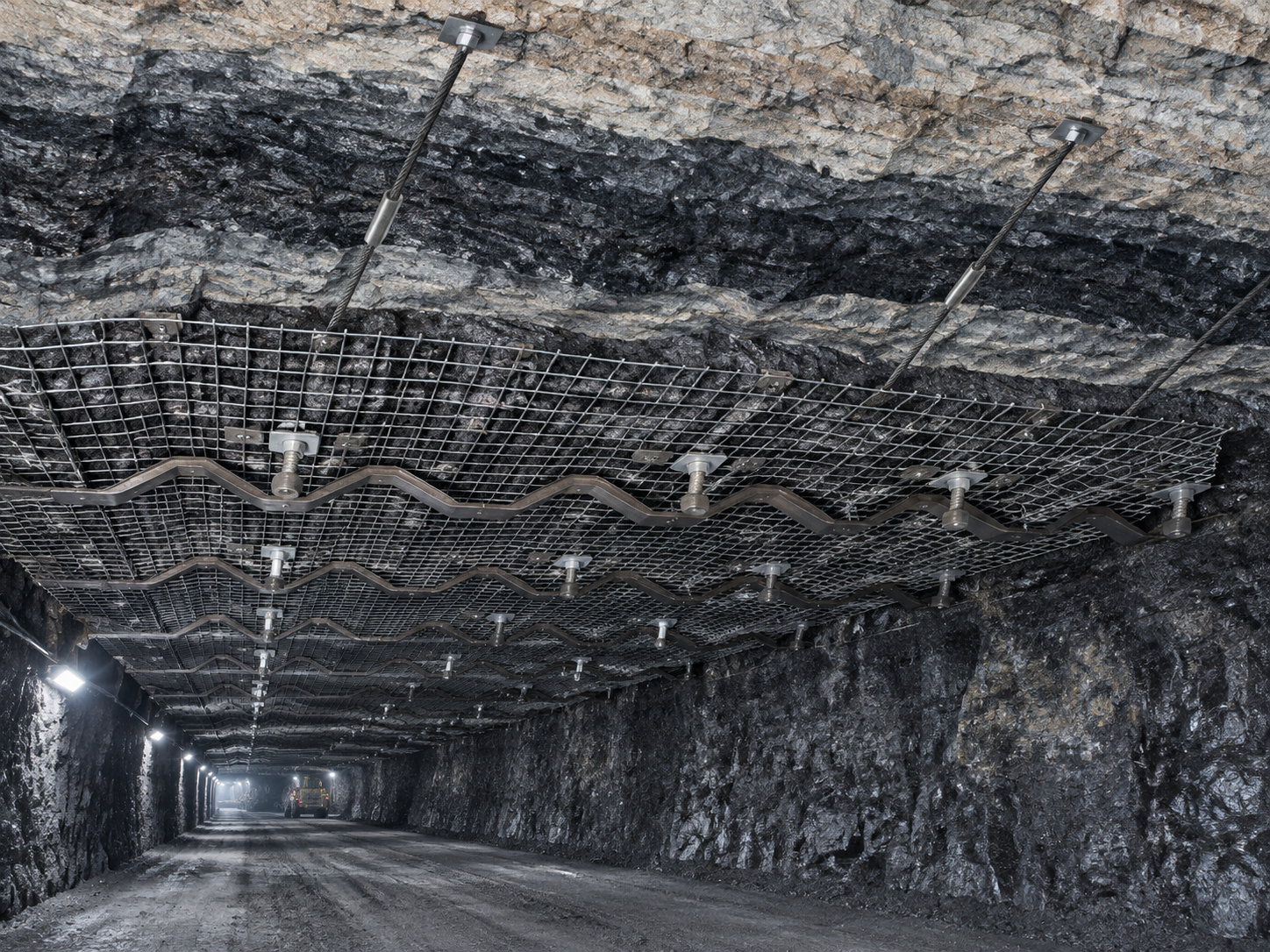
Why Coal Mine Roadway Support Needs to Shift from “Individual Components” to “System Coordination”
How Roadway Deformation and Instability Affect Safety, Access and Continuous Production
Coal mine roadways provide access for personnel, equipment and materials, and support ventilation, transportation and production. Significant deformation or localized instability of the roof, ribs or floor may affect roadway clearance and working conditions. Ground control is therefore an ongoing concern in roadway planning, development and maintenance.
Meeting Individual Component Requirements Does Not Guarantee a Reliable Support System
The strength or quality of an individual component alone cannot determine how the entire support system will perform in actual ground conditions. Support performance also depends on ground conditions, component layout, connections, installation quality and mining activity. Recent studies of deep coal mine roadways have evaluated combined bolt-and-cable support under specific geological conditions using numerical analysis and field monitoring, rather than judging the merits of an individual component outside its application context.
Scope of This Article: Ground Control and System Coordination, Not Individual Product Selection
This article discusses the functions and coordination of different components within a coal mine roadway support system, focusing on how rock bolts, W-straps, mesh and cable bolts contribute together to ground control. It does not provide support parameters applicable to all mines or replace engineering design based on geological data, field monitoring and applicable requirements.
Which Geological and Mining Conditions Affect Roadway Support Requirements
Roof Lithology, Bedding, Joints, Fractures and Weak Interlayers
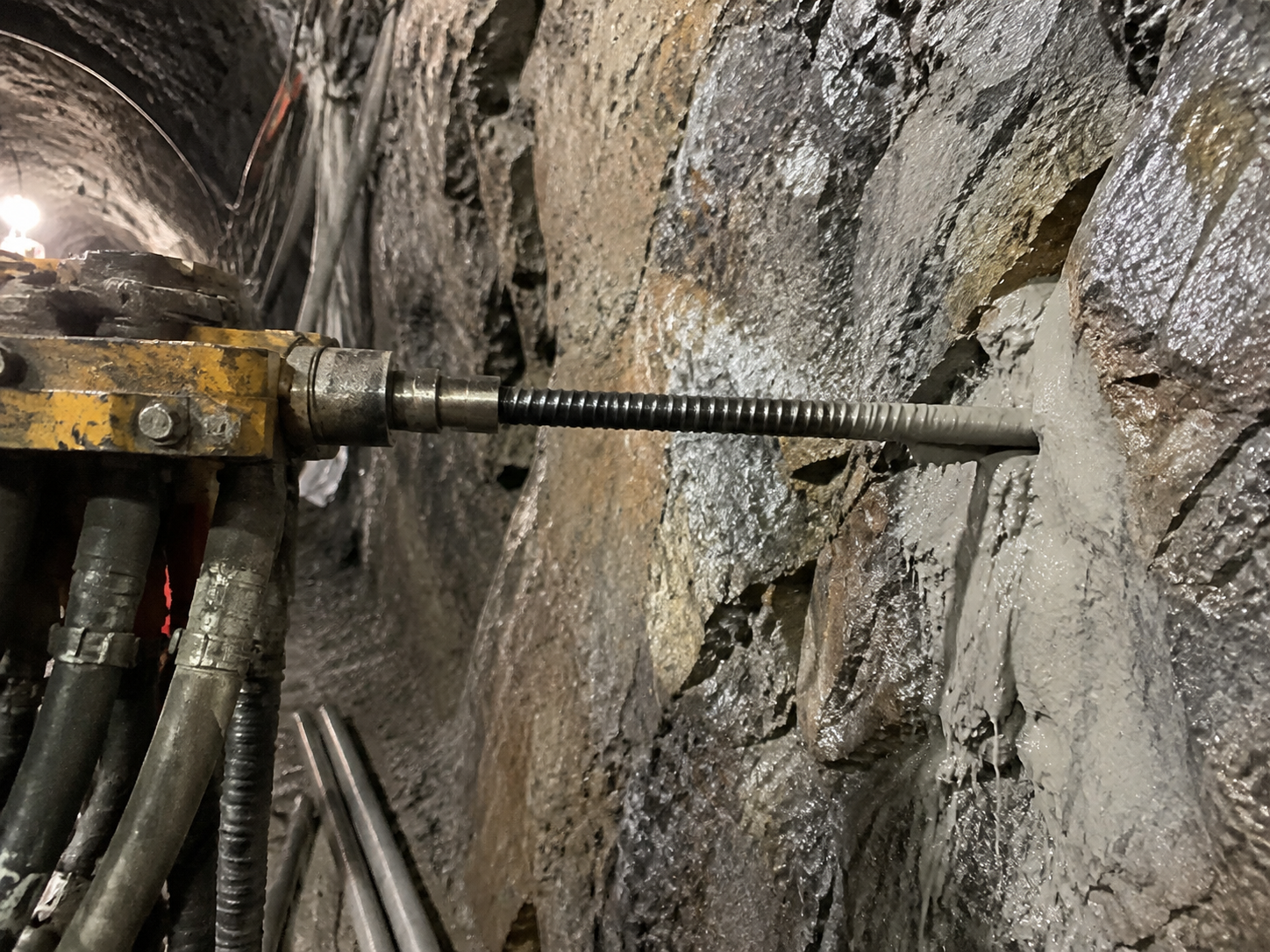
The roof lithology, bedding, fractures and weak interlayers can affect ground deformation and potential failure modes. For example, bedded roofs may experience separation or localized block movement. The stability of weak or fractured ground cannot be assessed by visual observation of the roadway surface alone. Relevant studies generally identify roof structure and ground classification before evaluating a support scheme.
Mining Depth, In-Situ Stress and Mining-Induced Effects
Mining depth, the in-situ stress state and mining activity can all affect the stress distribution and deformation around a roadway. In deep mining, areas with significant tectonic stress or roadways near mined-out areas, for example, the effects may vary with roadway location and mining stage. Field investigations and monitoring in different mines can help identify site-specific control factors; support designs from individual case studies should not be directly applied to other mines.
Groundwater, Weathering and Ground-Softening Factors
Groundwater, weathering and ground softening may affect rock-mass integrity and support interfaces, but the specific impact depends on hydrogeology, lithology and mining conditions. These factors should be addressed using site-specific investigations and field observations, rather than drawing conclusions from a single description such as “wet conditions” or “soft rock.”
Roadway Location and Function: Development Roadways, Longwall Roadways and Intersections
The mining location and stress environment may differ between development roadways, longwall roadways and roadway intersections. Conditions within the same roadway may also change as the face advances or mining activity progresses. Support assessments therefore need to account for roadway location, service stage and surrounding mining activity, rather than relying only on the roadway’s name or a particular component configuration.
Why the Same Support Scheme Cannot Be Directly Applied to Every Mine or Roadway Section
Ground structures, mining depth, stress environment and mining layout vary between mines. Different sections within the same mine may also have different ground classifications and failure mechanisms. Existing research has used ground classification, zoning analysis and field monitoring to develop support concepts for specific mining areas. This reinforces the need to base support schemes on site conditions rather than treat a case-study layout as a universal template.
The Roles of Rock Bolts, W-Straps, Mesh and Cable Bolts in a Support System
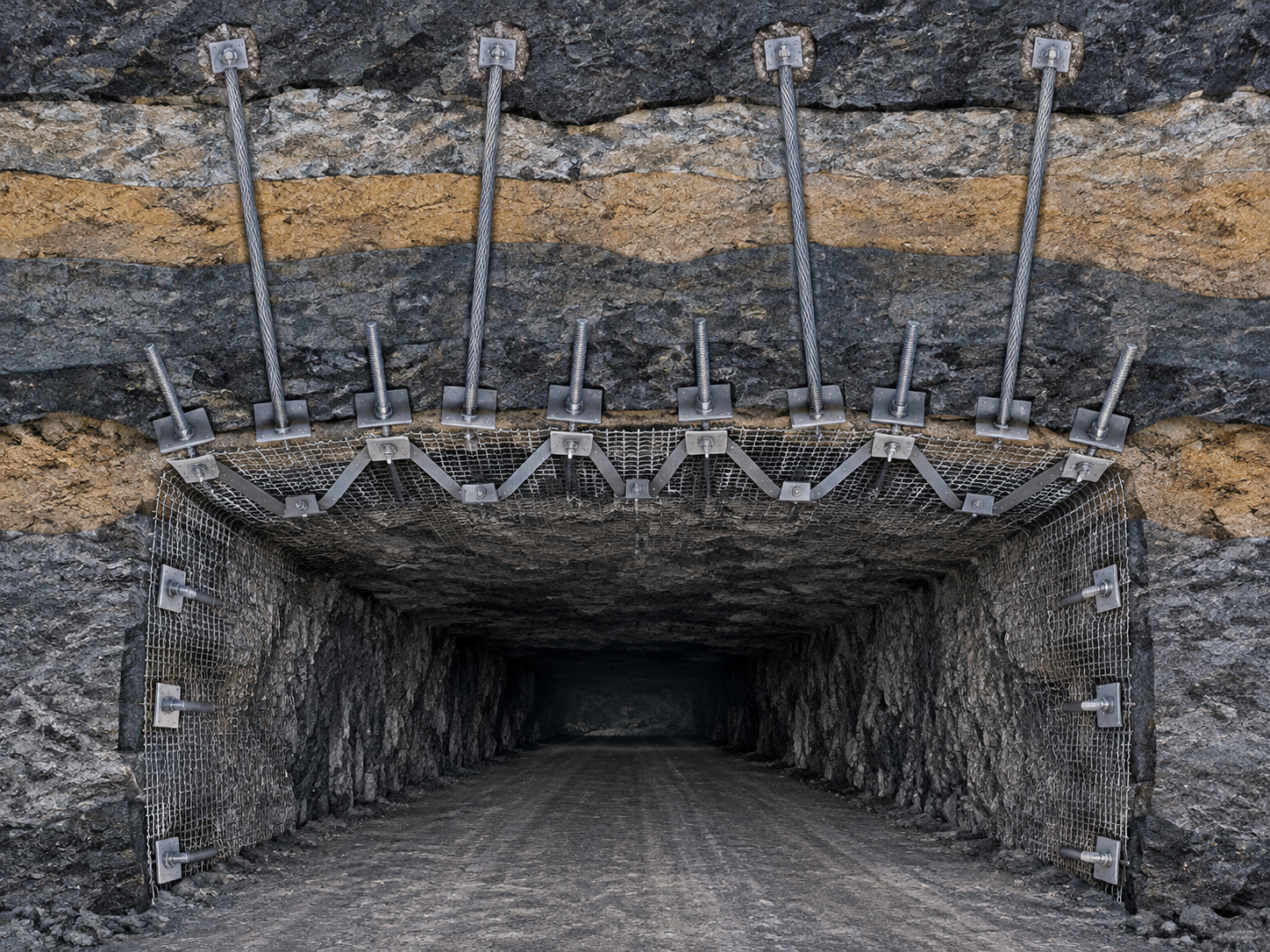
Rock Bolts: Ground Reinforcement and Restraint of Near-Surface Strata
In rock bolting, bolts are anchored into the surrounding ground to help restrain and reinforce the rock around the roadway. Their actual function depends on anchorage location, strata structure, installation quality and support design. The bolt type or nominal strength alone cannot establish its ground-control performance in a particular roadway.
W-Straps: Connecting Support Points, Distributing Local Effects and Strengthening Surface Support
W-straps are generally used with rock bolts and other surface-support components to connect adjacent support points and help transfer and distribute support effects along the roadway surface. Research on strap mechanics has examined their interaction with bolts and other components, but actual performance depends on strap design, layout and ground conditions.
Mesh: Restraining Loose Rock and Controlling Surface Falls
Mesh can cover sections of the roadway surface and work with bolts to restrain loose rock. NIOSH research materials on mine roof screening note that roof screen can cover areas between bolts and help control localized falls of loose rock. However, mesh does not replace the entire ground reinforcement system, and its effectiveness also depends on installation and site conditions.
Cable Bolts: Extending Support into Deeper Ground Where Required
Cable-bolt support can extend support into deeper ground and may supplement near-surface support. Whether it is appropriate, how it should be installed and how it should work with rock bolts depend on roadway conditions and support design. Deep-roadway studies often assess combined rock bolt and cable-bolt support as a system through modelling and field monitoring, but findings are case-specific and should not be directly generalized.
Component Functions Depend on Ground Conditions, Installation Location and Overall Design
The functions of these components are not fixed in every application. For example, the layout of mesh and straps, rock-bolt anchorage conditions and cable-bolt support objectives need to be considered alongside roadway geometry, roof structure, construction methods and monitoring results. The aim is not to include every component in a scheme, but to determine whether the system appropriately addresses the identified ground-control problem.
How These Support Components Work Together: Load Transfer from the Ground Through the Support System
Rock Bolts and the Ground: Reinforcing the Near-Surface Strata
The anchorage relationship between rock bolts and the surrounding ground is an important part of an integrated support system. Support design needs to identify ground structure, potential separation zones and anchorage conditions before determining how bolts can help control the near-surface strata. In an actual roadway, anchorage performance cannot be inferred from a product name alone or assessed without considering installation and monitoring.
Rock Bolts, Bearing Plates and Straps: Forming Connected Support Units
Rock bolts, bearing plates and W-straps are connected within the support system. Research indicates that straps can transfer effects along their length, linking the behaviour of adjacent support points. This means that support assessment should consider not only individual bolts but also the overall performance between support points. Actual loading and deformation still depend on the design and site conditions.
Mesh and Straps: Strengthening Surface Restraint and Reducing Local Weak Areas Between Support Components
Mesh covers the roadway surface, while straps and support points form part of the surface-support structure. Used with bolts, they may help control localized areas between bolts. However, their effectiveness cannot be assessed separately from installation quality, connections and ground conditions. NIOSH materials on roof screening also focus on its role in covering roof areas between bolts.
Cable Bolts and Near-Surface Support: Providing Deep-and-Shallow Support Coordination Where Needed
When engineering analysis indicates that support needs to extend into deeper ground, cable bolts may be used in combination with rock-bolt support. Some studies of weak coal seams and deep roadways have examined the combined effects of bolts, mesh and cables through numerical analysis or field monitoring. However, the results depend on the geological and design conditions of each case and should not be used directly as a design basis for other mines.
Strength, Stiffness, Deformability and Connections Must Be Compatible Across Components
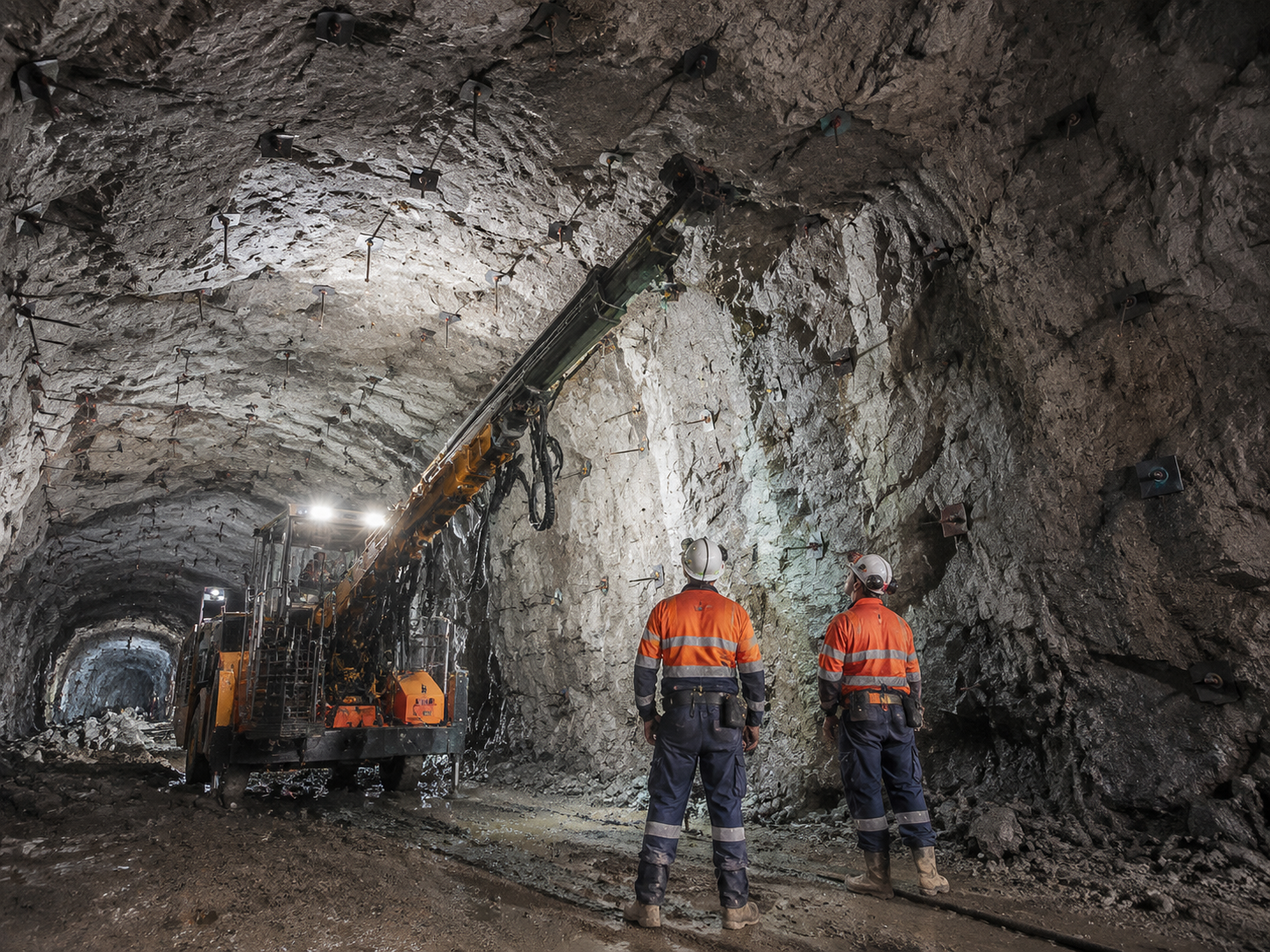
A support system needs to account for connections, loading and deformation compatibility between its components. Comparing only the strength or specifications of individual components—while overlooking how they connect, how the ground deforms or whether installation is feasible—does not establish whether a system is suitable. Case studies examining combined bolts, straps, mesh and cables also reflect the importance of system coordination in ground-control research.
System Performance Cannot Be Calculated by Simply Adding the Performance of Individual Components
The performance of a system cannot be determined by simply adding the individual performance values of rock bolts, straps, mesh and cable bolts. Ground response, component connections, installation quality and mining stage may all affect actual system performance. Design and assessment therefore need to consider the roadway support system as a whole, rather than only the material specifications of individual components.
Why Support-System Priorities Differ Under Different Roadway Conditions
Roadways in Relatively Stable Ground: Focus on System Integrity and Installation Quality
Even in relatively stable ground, support-system integrity and installation quality remain important. Anchorage, component connections, mesh coverage and field inspections should comply with the approved support scheme. A temporarily stable-looking roof does not remove the need to follow design requirements, maintain installation records or conduct routine observations.
Weak, Fractured or Bedded Roof: Focus on Ground Deformation, Surface Restraint and Anchorage Conditions
In weak ground, fractured ground or bedded roof, attention should be given to potential deformation and failure mechanisms, as well as whether support components are compatible with site anchorage conditions. Research into roadways in extremely soft coal seams has analysed bolt-mesh-cable support as a combined system and reported ground and support responses under the case-study conditions. These results can inform an understanding of system coordination, but they do not replace mine-specific design.
Deep, High-Stress or Mining-Influenced Areas: Focus on Support Loading, Deformation Compatibility and Ongoing Monitoring
In deep roadways, high-stress areas or mining-influenced zones, ground deformation and support loading may change with mining activity. A recent study of three deep coal mine roadways used numerical modelling and field monitoring to assess combined rock bolt and cable-bolt support. Its findings show that support performance needs to be analysed in the context of each roadway’s stress and geological conditions. The case-study results should not be treated as schemes that can be directly applied to other mines.
Intersections, Changes in Roadway Geometry and Other Locally Complex Areas: Focus on Local Risk Identification
Roadway intersections, changes in cross-section and areas with local geological structures may have different geometries and ground conditions from typical roadway sections. Support assessment should first identify the actual geological and mining influences in these areas, then determine whether different support arrangements are needed under the mine’s design requirements. A feature should not be assigned a universal support configuration based on its name alone.
Special Conditions Such as Rockburst: Follow Mine-Specific Design and Applicable Requirements
For rockburst and other special dynamic hazards, the support system needs to be incorporated into the mine’s specific risk-control measures and management requirements. This article does not provide a universal scheme or parameters for such conditions. Risk identification, support design and site management should be handled by the responsible qualified team in accordance with mine-specific conditions.
System-Level Factors to Consider When Designing a Support Scheme
First Identify the Ground Structure and Main Failure Mechanisms
Before developing a support design, information on ground structure, strata, fractures and roadway deformation should be collected and analysed to identify the main problems that need to be controlled. Ground-classification and field-investigation methods used in research demonstrate the importance of geological identification in support planning. Classification results and design methods still need to be adapted to local conditions.
Define the Ground to Be Controlled and the Anchorage Objectives
The support system needs to define the ground it is intended to control and the structures or strata targeted for anchorage, based on roadway conditions. This assessment relates to roof structure, ground strength and roadway function, and should be supported by engineering analysis rather than inferred from the typical use of a particular component.
Consider Component Layout, Installation Timing and Construction Feasibility
Design needs to consider not only component layout but also the construction environment, equipment and feasibility of installation. Coordination among rock bolts, straps, mesh and cable bolts needs to suit the roadway cross-section, construction sequence and site-management conditions. Any specific layout or installation parameters must be determined by the project design and applicable documents.
Check Component Connections and System Compatibility
Support-system compatibility includes component connections, surface coverage, installation methods and expected load coordination. For any combined scheme, it is important to check whether components can be connected and installed as designed. Product specifications that appear to match do not, by themselves, demonstrate that the overall support system is suitable.
Include Risk Assessment, Field Monitoring and Support-Scheme Review in the Design Loop
The design process should also consider how risks will be assessed, how support performance will be observed and who is responsible for reviewing or responding to changing conditions. Some deep-roadway studies combine numerical analysis, geological testing and field monitoring, illustrating the need to connect support design with field feedback rather than treating it as a one-time decision.
How Installation Quality Affects Coordination Among Bolts, Straps, Mesh and Cable Bolts
Drilling, Anchorage and Component Installation Must Follow the Approved Support Scheme
Drilling, anchorage and support-component installation should follow the mine’s approved construction requirements. This article does not provide drilling, mixing, pretensioning or tensioning parameters for direct application. Those requirements should be based on the specific support scheme, product documentation and applicable rules. MSHA roof-control-plan review materials in the United States also include support plans, support materials and related requirements in mine review procedures; requirements differ by jurisdiction.
Check Contact and Connections Between Rock Bolts, Bearing Plates, Straps and Mesh
Field inspections should check whether rock bolts, bearing plates, W-straps and mesh are connected as designed, and whether there is obvious misalignment, damage or uncovered areas. NIOSH mine roof-screening materials emphasize coverage of the areas between bolts. This also means that inspecting surface-support components cannot be replaced by checking the bolts alone.
Control Anchorage, Tensioning or Pretensioning as Required by the Applicable Scheme
Requirements for anchorage, tensioning or pretensioning should be carried out in accordance with the mine’s approved support scheme and site procedures. Different bolt and cable systems may use different installation methods; parameters from an individual case should not be treated as universal standards.
Record Materials, Installation Inspections and Corrective Actions
Records of materials, installation inspections, identified anomalies and actions taken support traceability and later evaluation of support performance. The specific records required should follow mine-management procedures and applicable rules. Anomalies should be recorded with their location, observations and actions taken, rather than simply marked “normal” or “abnormal.”
Use Project Documents and Applicable Standards for Construction Parameters and Acceptance Requirements
Construction parameters and acceptance requirements may vary according to national or regional rules, the mine’s approved plan, product specifications and site conditions. This article discusses system-coordination principles only; it does not present review procedures, case studies or supplier documentation from any one jurisdiction as globally applicable requirements.
How Monitoring Can Be Used to Assess Support-System Performance
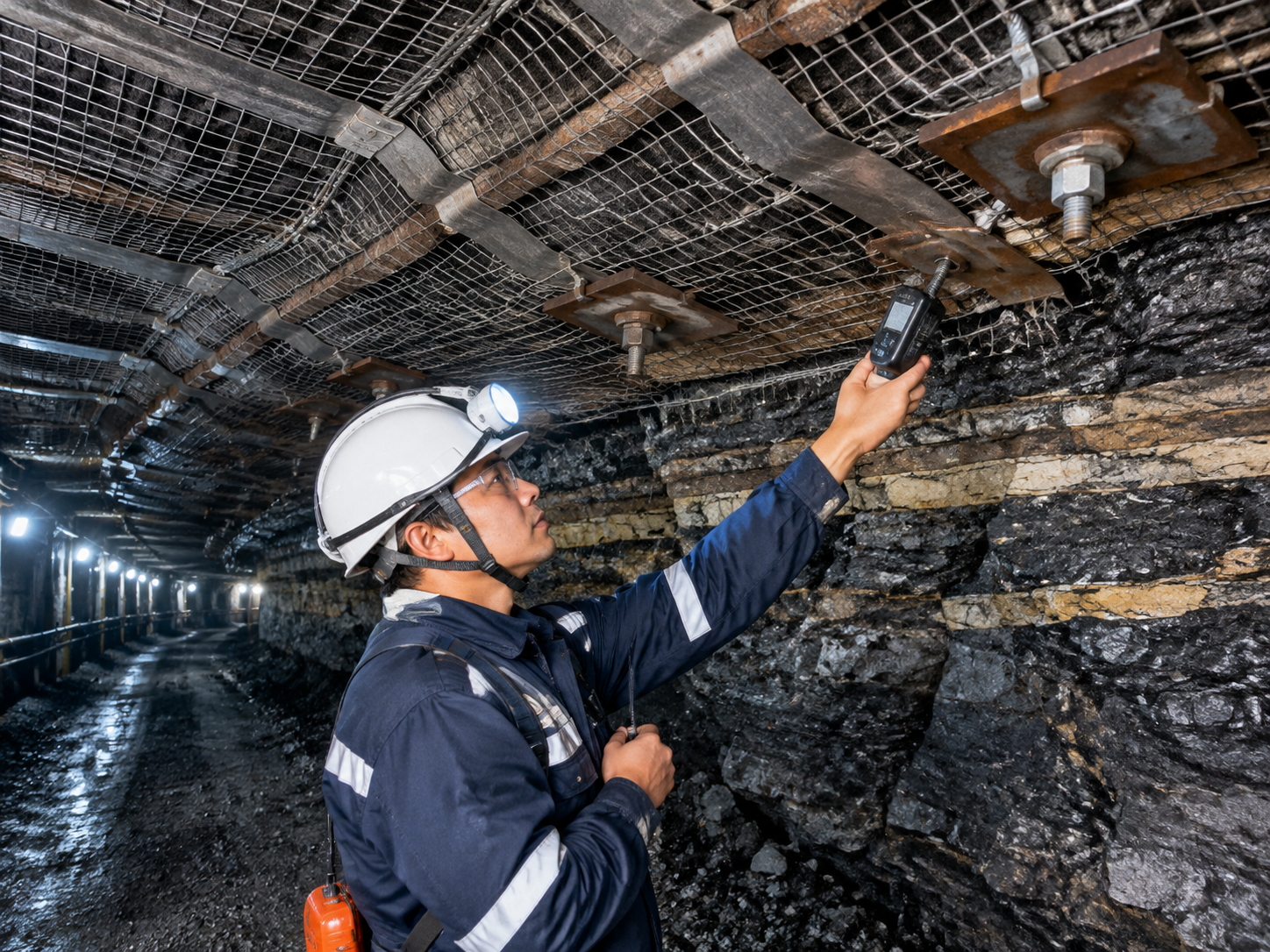
Observe Roadway Convergence, Roof Separation and Ground Deformation
Roadway convergence, roof separation and other ground-deformation data can be used to observe changes over time and during mining activity. Monitoring locations, frequency and assessment criteria should be established according to mine design and management requirements. Individual readings should not be interpreted in isolation from their location, timing and site conditions.
Assess Changes Alongside Bolt and Cable Loading and Surface Conditions
In addition to ground deformation, bolt loading, cable-bolt loading and roadway surface conditions can be monitored as specified by the design. Research on bedded-roof roadways indicates that combining observations of roof sag, separation and bolt or cable loading can provide a more complete assessment of support and ground stability.
Establish a “Monitor—Assess—Review—Adjust” Feedback Process
The value of monitoring lies in identifying changes and supporting professional assessment. Under their management procedures, mines can have monitoring data, field observations and mining-stage information reviewed together by responsible personnel. If anomalies are identified, the support scheme should be reviewed and appropriate measures taken according to approved procedures. Monitoring indicators and thresholds from case studies should not be transferred directly to other mines.
Interpret Monitoring Results in the Context of the Support Design and Site-Management Requirements
Monitoring results need to be interpreted alongside the original design, geological information, installation records and site conditions. Low deformation or low component loading at a single point in time does not, by itself, prove long-term stability. Conversely, an individual abnormal reading needs to be checked against instrument condition and field observations.
Which Signs May Indicate That the Support System or Installation Needs Review
Ongoing Roof or Rib Deformation
If roof sag, rib convergence or changes in roadway clearance continue to develop, they should be reported and reviewed under mine procedures. Their significance depends on monitoring location, trend and support-design criteria; a single observation is not enough to conclude that support has failed.
Loose or Damaged Mesh, or Localized Ground Falls
Loose or damaged mesh, localized ground falls and surface loosening between bolts may indicate that the surface support, connections and ground conditions need to be checked. NIOSH materials on roof screening note its use in covering the areas between bolts and helping control loose rock. Any actual finding should be investigated by site personnel under mine procedures to determine its cause and risk.
Abnormalities in Bearing Plates, Straps or Connections
If bearing plates, W-straps or connections show obvious deformation, damage or looseness, they should be inspected and recorded according to mine requirements. Strap research has analysed loading under different combined-support arrangements, but appearance alone cannot establish internal loading or the load-carrying condition of the whole support system.
Signs of Abnormal Bolt or Cable Loading or Anchorage
If monitoring records show an unusual change in bolt axial load, cable-bolt loading or anchorage condition, they should be reviewed alongside instrument reliability, ground deformation and mining activity. A change in a single reading cannot, by itself, determine the failure mode or risk level; the responsible engineering personnel should make that assessment.
Site Anomalies Should Be Investigated by Qualified Personnel; a Single Sign Is Not Enough to Determine the Cause of Failure
Support-system anomalies may involve the ground, components, installation, connections or monitoring. Site personnel should report anomalies, protect the area and assist with the investigation in accordance with mine safety procedures. Mesh damage, deformation of one component or a single monitoring reading should not be used alone to determine why an entire system has failed.
Research Case: Coordination and Monitoring of Bolt-Mesh-Cable Support in a Soft Coal Seam Roadway
Geological and Roadway Background of the Case
A study of a roadway in an extremely soft coal seam analysed bolt-mesh-cable support using a case from a specific mine, numerical modelling and field measurements. It examined ground stress, displacement and support effects under soft-coal-seam conditions, illustrating that the findings were based on a particular roadway.
How the Study Observed Ground Deformation and the Interaction Between Support Components
The study compared ground responses under different support schemes and used field observations to assess support performance. Another study of deep coal mine roadways combined numerical modelling, ground testing and field monitoring to analyse combined rock bolt and cable-bolt support under different roadway conditions. Both illustrate a research approach that evaluates support systems using engineering conditions and monitoring data.
Monitoring or Assessment Methods Used in the Case
The case studies used methods such as ground-deformation measurements, field monitoring and numerical analysis. The specific methods depended on the research objectives and mine conditions. Research on deep coal mine roadways reported monitoring roof sag, rib convergence and support-system performance, but those indicators, monitoring locations and assessment criteria should not be regarded as universal practices for all mines.
Limits of the Case Findings: Individual Results Cannot Replace the Design of Other Mines
The soft-coal-seam case helps illustrate research into the coordination of rock bolts, mesh and cable bolts, but its ground conditions, roadway function and support layout were specific to that case. Applying it to another mine requires a fresh review of geology, stress, mining layout, construction conditions and applicable requirements. Research findings cannot replace local professional design and approval procedures.
Key Takeaways About Coal Mine Roadway Support Systems
Support Performance Depends on Ground Conditions, Design, Component Compatibility and Installation Quality
The performance of coal mine roadway support depends on ground conditions, support design, component connections, installation quality and site management. The material properties of individual components are only one part of the assessment; conclusions should not be drawn without considering actual roadway conditions.
Rock Bolts, Straps, Mesh and Cable Bolts Should Be Understood as Part of a System
Rock bolts, W-straps, mesh and cable bolts may have different but complementary roles. System performance depends on how they are combined to suit the ground and engineering conditions. Support components should be understood through the overall coordination of the support system and its response to the surrounding ground, rather than as isolated products.
Field Monitoring and Ongoing Review Are Important Parts of Support Management
Field monitoring helps track changes in roadways and support systems over time, but it should be integrated with mine support designs, records and management procedures. For each mine, professional assessment, field review and compliance with applicable requirements are essential to translating support principles into safe practice.
Related News
Other news you might be interested in

Five Major Advantages of Self-Drilling Anchors in Engineering Applications
In weak ground, fractured rock, loose soil, or rock masses with numerous joints, boreholes may narrow, shed material, or collapse. This can make it difficult to insert the anchor bar and may also affect subsequent grouting. Groundwater and changing strata add further uncertainty to construction.

What Is the Difference Between Rock Bolts and Cable Bolts, and When Is Each Used in Mining?
In underground mining, excavating a roadway or stope may cause the surrounding rock mass to loosen, separate, or deform. Both rock bolts and cable bolts can be used for ground support, but they differ in construction, load transfer, and engineering role. The key is not simply to ask “which one is stronger,” but to consider the extent of the rock that needs to be controlled, the available anchorage locations, and the conditions at the worksite.
Want to know more?
Get in touch with us for more information about our services and products.