

Why Your Split Set Bolts Deform at the Collar & How to Fix It

Dayang Yang
AuthorWith over 15 years of experience in the production and sales of ground anchoring and mining support products, we operate our own rock bolt and accessory manufacturing facility with stable large-scale production capacity. We are specialists in rock bolts, resin cartridges, anchor cables, bearing plates, and customized ground anchoring products for mining support and geotechnical anchoring solutions.
If you manage underground mining operations or supply ground support materials, you have likely encountered this exact problem: During installation, the jumbo drill pushes the split set friction bolt into the rock, but before it is fully inserted, the collar (the trailing end) deforms, folds over, or completely splits open.
When the collar deforms, the welded ring flange fails, and the dome plate cannot sit flush against the rock surface. The result is a wasted rock bolt, a delayed installation cycle, and a potential safety hazard.
Many operators immediately blame the drill operator or the jumbo rig pressure. While incorrect thrust pressure can be a factor, the root cause usually lies in a mismatch of dimensions or the structural integrity of the steel itself. Here is a grounded, technical look at why collar deformation happens and how to prevent it on your site.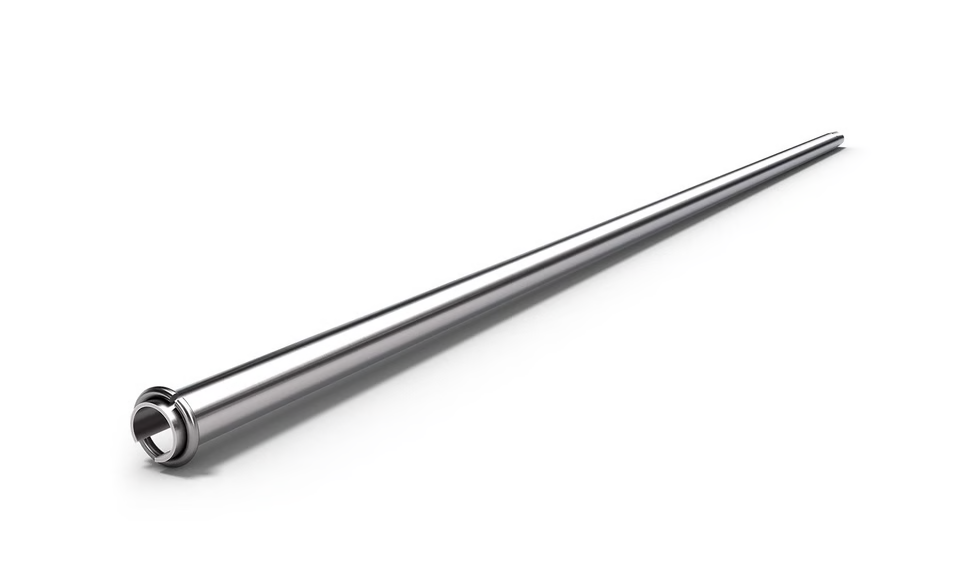
Root Cause 1: Mismatched Borehole Diameter
The most common reason for split set deformation is trying to force the bolt into a hole that is too small.
Split set bolts rely on friction. They are manufactured with an outer diameter slightly larger than the drilled hole. As the bolt is driven in, it compresses, and the outward radial force creates the anchoring grip. However, there is a strict limit to how much the high-strength steel can compress.
The Problem: If a 39mm split set is driven into a hole that was drilled with a worn-out bit (reducing the actual hole diameter to, for example, 35mm instead of the recommended 36-37mm), the resistance becomes immense.
The Result: The percussive force from the drill no longer pushes the bolt forward; instead, the energy is absorbed entirely by the tail end of the tube, causing the collar to crush under the impact.
The Solution: Regularly measure the actual diameter of your drill bits. A bit that has lost its gauge due to wear in abrasive rock will drill an undersized hole. Ensure strict dimensional matching between the bolt diameter and the drill bit according to ISO standards.
Root Cause 2: Inferior Steel Elongation and Material Quality
Not all steel is suited for friction bolts. A split set must possess high yield strength to support the rock mass, but it must also retain enough elongation (ductility) to compress and withstand the high-impact percussion of a rock drill.
The Problem: Some suppliers use brittle, lower-grade steel strips to cut costs. When this cheap steel is roll-formed into a tube, it lacks the necessary ductility.
The Result: When the drill strikes the collar, the brittle steel cannot absorb the impact energy. Instead of compressing slightly, the collar cracks or splits down the seam.
The Solution: Source from a manufacturer that uses genuine high-strength structural steel with verified elongation properties. A reliable factory will provide transparent Mill Test Certificates (MTC) proving the mechanical properties of the raw material.
Root Cause 3: Poor Manufacturing at the Collar End
The physical design and factory processing of the collar itself play a critical role in how it handles impact.
The Problem: In facilities with poor quality control, the ends of the steel tubes are cut roughly without proper chamfering (tapering of the edge). Furthermore, if the welded ring flange is not fully seam-welded around the circumference, it creates weak points.
The Result: The uneven edge catches the drill adapter awkwardly, concentrating the percussive force onto a single weak point on the rim, leading to immediate deformation.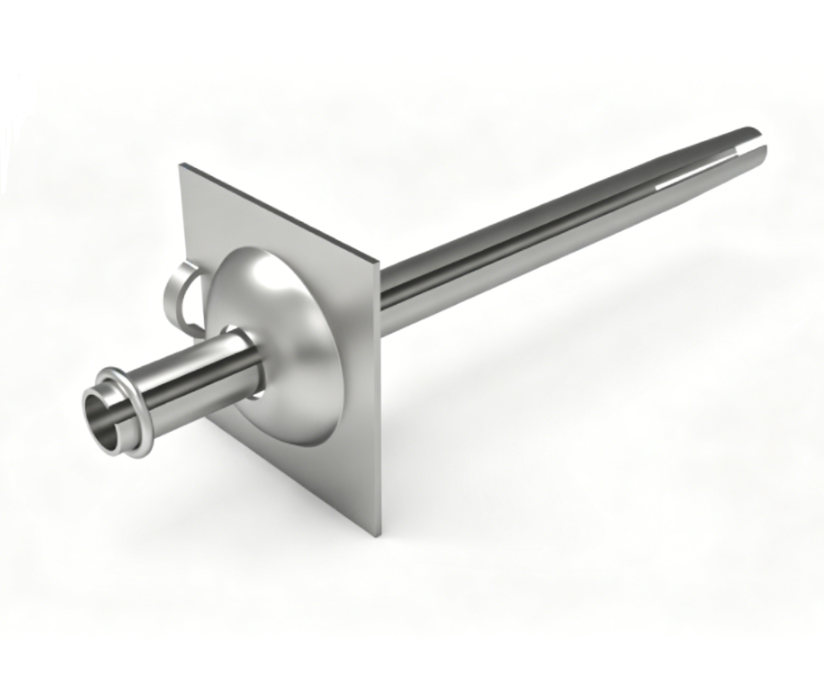
How to Eliminate Collar Deformation
To resolve this issue and reduce material waste, focus on both operational discipline and procurement standards:
- Standardize Drilling Pressure: Ensure drill operators adjust the feed pressure and percussive force of the jumbo drill according to the rock hardness. Excessive hammering on a jammed bolt will always destroy the collar.
- Verify Hole Tolerances: Institute a routine check of drill bit wear. A simple gauge check before a shift can save dozens of ruined rock bolts.
- Audit Your Supplier's Manufacturing Process: You need a supplier who understands the realities of underground installation. Ask your manufacturer how they treat the collar ends and what grade of steel they use.
At CQ Rockbolt, our manufacturing process is grounded in the reality of heavy mining environments. Our team tightly controls the dimensional tolerances of our split set bolts and ensures every collar is properly finished to withstand the severe impact of modern rock drills. By maintaining strict control over steel sourcing and welding integrity, we help our clients minimize on-site failure rates and keep their tunneling projects moving forward efficiently.
Related News
Other news you might be interested in

Ground Support in Weak and Fractured Rock: How to Select Rock Bolt Systems for Mining and Tunneling
In underground mining, tunneling, slope excavation, and foundation pit construction, ground stability does not depend only on the strength of an individual rock bolt. Where the ground contains developed joints and fractures, loose rock, unstable boreholes, significant groundwater, or strong excavation disturbance, a single rock bolt support measure may not provide every required support function. A reliable ground support system must consider ground conditions, support objectives, equipment capacity, borehole stability, grouting procedures, system accessories, and long-term durability. Project teams can review the available systems in the CQ Rockbolt product center before selecting a solution that matches the actual site conditions, rather than choosing only by product name or rated capacity.

Why Does the Mining Industry Use Self-Drilling Anchors?
As underground mining moves into deeper and more complex areas, ground stability has become a critical factor affecting both safe production and development efficiency. Fractured rock, fault zones, high in-situ stress, groundwater, and ongoing mining-induced disturbance can all cause deformation or loosening at roadway roofs, sidewalls, and intersections. The objective of modern mining ground support is not simply to address local instability, but to create a stable working environment for mining, haulage, and ventilation through reliable rock reinforcement solutions.
Want to know more?
Get in touch with us for more information about our services and products.