

Solving Ground Support Challenges: Advanced Rock Bolting Solutions for Mining and Tunneling

Dayang Yang
AuthorWith over 15 years of experience in the production and sales of ground anchoring and mining support products, we operate our own rock bolt and accessory manufacturing facility with stable large-scale production capacity. We are specialists in rock bolts, resin cartridges, anchor cables, bearing plates, and customized ground anchoring products for mining support and geotechnical anchoring solutions.
Introduction: The High Stakes of Underground Excavation
Underground mining and tunneling operations face a relentless trifecta of challenges: unchecked corrosion eating through traditional fasteners, the weight penalties of conventional steel components slowing cycle times, and insufficient site investigations resulting in catastrophic failures that compromise both safety and project economics. When a threaded steel rebar bolt corrodes prematurely or an expansion shell anchor slips in fractured ground, the consequences ripple through the entire operation—delayed production, ballooning remediation costs, and in worst cases, loss of life.
As documented in recent applied research (Appl. Sci., Volume 14, Issue 5), fully grouted rebar rock bolts remain a widely deployed solution. Yet evolving ground conditions—from high-stress seismic zones to water-bearing strata—demand more sophisticated systems. The industry can no longer afford to rely on generic, one-size-fits-all approaches. That's why leading engineers now turn to full-scale shear test data to optimize mine support design, moving beyond guesswork to achieve predictable strata control outcomes. The data tells a clear story: integrated ground support systems that marry high tensile strength with site-specific adaptability outperform legacy methods every time.
This article examines how modern rock bolt technologies—ranging from friction anchors and strand cable bolt installations to high-strength meshes and precision tensioning equipment—address these persistent pain points while delivering superior load bearing capacity and genuine seismic resistance.
Trends in Ground Support: Strength, Durability, and Adaptability
The underground construction sector is undergoing a quiet revolution in materials science and installation methodology. Leading the charge are composites and advanced coatings that combine exceptional yield strength with long-term corrosion resistance. Glass Fiber Reinforced Polymer (GFRP) bolt technology, for instance, offers tensile capacities rivaling steel at a fraction of the weight, while galvanized and epoxy-coated steel options provide robust defense against aggressive groundwater chemistry. The selection of a dome plate, butterfly plate, or spherical washer is no longer an afterthought—these components directly influence how ground loads transfer from rock mass to reinforcement.
Standards governing strata control are tightening globally. Dynamic loading scenarios—think rockbursts in deep-level gold mines or seismic events in tunneling—now drive specification requirements. A dome nut or hex nut must perform under shock loads that would shatter brittle alternatives. Parallel innovations in consumables are accelerating installation efficiency: resin capsule formulations, precisely metered injection grout, and quick-setting mortar systems reduce cure times while improving bond strength across the full length of a sleeve or borehole. Resin cartridge technology has matured to the point where consistent, verifiable anchorage is achievable even in wet, fractured conditions.
Looking ahead, in the coming years, experts anticipate widespread adoption of self-drilling anchors (SDA), strand cable bolt arrays for large-span chambers, and combo bolt configurations that blend the immediate grip of a mechanical anchor with the long-term reliability of full-column grouting. Smart anchoring systems are already enabling 33% trade growth through automated factories, signaling a future where precision-manufactured ground support components arrive on site ready for rapid deployment—no field fabrication, no guesswork, no compromise.
Core Product Solutions for Reliable Reinforcement
Meeting today's ground support challenges requires a curated toolkit, not a scattered inventory. The following solutions represent the front line of underground and slope reinforcement, each engineered to deliver specific performance characteristics under demanding conditions.
Mining Wire Mesh and Mine Support Mesh: High-strength welded wire mesh and woven configurations, including chain link mesh and steel wire mesh, form the surface control layer that contains loose rock between bolts. Custom coatings combat corrosion in humid shafts and acidic groundwater environments. When paired with shotcrete reinforcement, these meshes create a composite liner capable of sustaining substantial deformation without losing confinement. W-strap elements and T-section steel purlins further distribute loads across the mesh plane, preventing localized punch-through failures.
Friction Anchor Bolt (Split Set Bolt): C-shaped steel tubes—available in diameters from 33 to 47 mm and lengths from 0.6 to 3 meters—generate full-length radial friction against the borehole wall. This immediate, chemical-free ground support delivers high pull-out and shear resistance the moment it's driven. In squeezing ground conditions, the bolt's ability to yield without losing anchorage makes it indispensable. The anchor plate completes the system, ensuring surface restraint matches the bolt's internal capacity.
Pipe Seam Anchor / Friction Anchor: An enduring workhorse for roof support in coal, copper, and gold mines, this anchor type has proven itself across decades of international mining. Its simplicity—a slotted tube deformed upon insertion—belies its effectiveness in rapidly stabilizing blocky or layered strata immediately after excavation.
Anchorage Agent and Grouting Systems: High-performance adhesives for post-tensioned concrete and prestressed steel bars ensure long-term durability in bridges, tunnels, and structural reinforcement. The prestressing anchorage system provides reliable anchorages for PT bars and steel strands, delivering consistent bond strength through carefully formulated injection grout and chemical anchor bolt adhesives. For hollow grouting bolt applications, these agents flow through the bolt's core, filling annular space and fissures simultaneously—critical for water-bearing or highly fractured rock masses. A coupler extends bolt lengths without sacrificing tensile capacity at the joint.
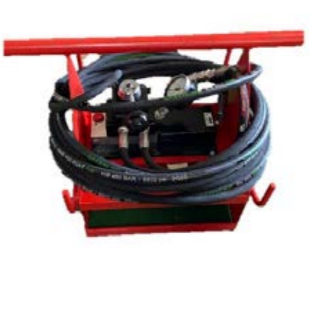
Rocbolt Tensioning Equipment for CableLok Anchors: Hydraulic tensioning kits equipped with interchangeable jaws and calibrated shear rings deliver precise tonnage for pre-loading anchors in the 100 to 250 kN range. Accurate pre-tension eliminates slack from the system and immediately engages the load bearing capacity of the reinforcement, preventing early-stage deformation that can compromise long-term stability.
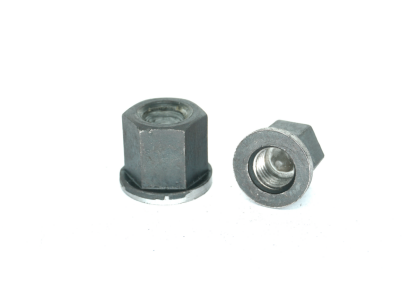
Mining Nut: High-strength mining nuts for heavy-duty applications are available with custom thread profiles and corrosion-resistant coatings. Whether paired with a hex nut for standard bolted connections or a dome nut for protruding bar ends in confined headings, these components maintain clamping force under vibratory and impact loading common in hard rock operations.
Case Study: Rock Slope Stabilization at a Former Quarry
A decommissioned quarry in geologically complex terrain presented a formidable stabilization challenge: a 30-meter-high rock face riddled with intersecting joint sets, persistent seepage, and evidence of past wedge failures. The slope's load bearing capacity had degraded to the point where adjacent infrastructure was at risk. Conventional benching and meshing would have required extensive earthworks, prolonged the schedule, and failed to address deep-seated instability planes.
The engineering response combined self-drilling anchors installed through the most severely jointed zones, high-tensile welded wire mesh with integrated W-strap reinforcement, and a shotcrete reinforcement facing that locked the entire surface into a cohesive shell. Spherical washer and butterfly plate combinations at each anchor head accommodated surface irregularities without inducing bending moments in the bar. Where groundwater complicated grout curing, quick-setting mortar sealed the borehole collar while resin cartridge anchors provided immediate point fixity at depth. Strand cable bolt tendons, tensioned using calibrated hydraulic equipment, tied the shotcrete facing back into competent rock well behind the weathered face.
Key outcomes from this integrated approach: strata control improved measurably—post-installation monitoring recorded zero displacement across critical joints during the first wet season. Installation progressed 40% faster compared to traditional passive bolting and meshing methods, largely due to the elimination of separate drilling and grouting passes. Long-term maintenance costs dropped significantly as the yield strength of each component—from dome plate to anchor plate—exceeded the predicted demand loads with comfortable margins. The success underscores a principle that applies equally to underground headings and surface excavations: proper product selection, informed by geological reality rather than catalog assumptions, enhances overall performance and project economics simultaneously.
Conclusion: Partner for Customized Ground Support
Effective ground support cannot be reduced to a shopping list of part numbers. It demands a holistic approach—one that begins with rigorous site investigation, continues through engineering analysis of seismic resistance requirements and tensile strength specifications, and culminates in the selection and proper installation of compatible components. From chain link mesh and T-section steel to CT bolts and chemical anchor bolt systems, every element must work in concert. A threaded steel rebar bolt is only as reliable as the expansion shell or resin capsule that anchors it, and a strand cable bolt requires the correct coupler and dome nut to function as designed. Similarly, Glass Fiber Reinforced Polymer (GFRP) bolt solutions demand compatible anchor plate geometries and sleeve specifications to realize their full potential.
Whether your project involves a deep shaft requiring steel wire mesh and hollow grouting bolt arrays, a tunnel portal needing shotcrete reinforcement and welded wire mesh, or a slope stabilization calling for butterfly plate and W-strap configurations, the solution exists—and it warrants expert specification. Our comprehensive product range is built to be tailored, not simply shipped. Contact our engineering team today for a consultation and discover how our ground support solutions can improve your rock mass stability and project economics.
Related News
Other news you might be interested in

Ground Support in Weak and Fractured Rock: How to Select Rock Bolt Systems for Mining and Tunneling
In underground mining, tunneling, slope excavation, and foundation pit construction, ground stability does not depend only on the strength of an individual rock bolt. Where the ground contains developed joints and fractures, loose rock, unstable boreholes, significant groundwater, or strong excavation disturbance, a single rock bolt support measure may not provide every required support function. A reliable ground support system must consider ground conditions, support objectives, equipment capacity, borehole stability, grouting procedures, system accessories, and long-term durability. Project teams can review the available systems in the CQ Rockbolt product center before selecting a solution that matches the actual site conditions, rather than choosing only by product name or rated capacity.

Why Does the Mining Industry Use Self-Drilling Anchors?
As underground mining moves into deeper and more complex areas, ground stability has become a critical factor affecting both safe production and development efficiency. Fractured rock, fault zones, high in-situ stress, groundwater, and ongoing mining-induced disturbance can all cause deformation or loosening at roadway roofs, sidewalls, and intersections. The objective of modern mining ground support is not simply to address local instability, but to create a stable working environment for mining, haulage, and ventilation through reliable rock reinforcement solutions.
Want to know more?
Get in touch with us for more information about our services and products.