

Maximizing Strata Control and ROI: High-Performance Rock Bolt Solutions for Underground Operations

Dayang Yang
AuthorWith over 15 years of experience in the production and sales of ground anchoring and mining support products, we operate our own rock bolt and accessory manufacturing facility with stable large-scale production capacity. We are specialists in rock bolts, resin cartridges, anchor cables, bearing plates, and customized ground anchoring products for mining support and geotechnical anchoring solutions.
Introduction: The Hidden Cost of Compromised Ground Support
Every underground operation knows the sinking feeling when a bolt fails. Low-quality bolts or improper installation—like ignoring torque specs or allowing dust contamination in glue-in bolts—don't just cause delays; they trigger catastrophic rock falls, costly downtime, and unacceptable safety risks. Whether you're a climbing route developer or a mine operator, the warning signs are clear: hydraulic expansion bolts must solve 2024's critical strata control challenges to keep operations running. This article explores how advanced rock bolt systems—from friction anchor bolts to prestressing anchorage—boost safety, load bearing capacity, and ROI while addressing corrosion resistance and seismic resistance.
Understanding Modern Ground Support Systems: Key Components and Terminology
A reliable ground support system comprises several core elements: rock bolts (like threaded steel rebar bolt, hollow grouting bolt, and strand cable bolt), surface fixtures (including dome plate, dome nut, hex nut, spherical washer, anchor plate, butterfly plate, and flat steel plate), and reinforcement meshes (chain link mesh, welded wire mesh, steel wire mesh, and plastic mesh). Selecting the right bolt involves evaluating yield strength and tensile strength to ensure rock mass stability. Specialized products like the Friction Anchor Bolt (Split Set Bolt)—high-tensile C-shaped steel tubes (33–47 mm, 0.6–3 m) providing full-length radial friction—and the Swellex Rock Bolt—water-inflatable anchors for immediate support—are transforming underground reinforcement. For a deeper dive into optimizing support design, read our article on beyond guesswork optimize mine support design with full scale shear test data.
Addressing Critical Pain Points: From Installation Errors to Strata Control

Installation errors remain a leading cause of ground support failures. Misuse of a torque wrench, dust contamination in resin capsules and quick-setting mortar, and improper tensioning with a tensioning nut or coupler can compromise even the best bolts. For underground roadway reinforcement, reliable expansion shell bolts, self-drilling anchors (SDA), and combo bolts are essential to prevent rock falls. A Prestressing Anchorage System for PT bars and steel strands ensures reliable load transfer in post-tensioned concrete and geotechnical anchoring. When paired with injection grout or cementitious grout, these systems dramatically improve load bearing capacity. Explore our range of rocbolt accessories for rock and roof bolts to ensure every installation meets specification.
Industry Trends and Market Growth: Why 2026 Matters
The Rock Bolting Market Research Report 2033 projects $1.58 billion in growth, driven by mining, tunneling, and infrastructure demands. By 2026, innovations in step rebar bolt, lattice girder, and W-strap will redefine ground support standards. Key trends include the adoption of glass fiber reinforced polymer (GFRP) bolt for superior corrosion resistance, the CT bolt for enhanced seismic resistance, and advanced injection grout systems. These developments are not just theoretical—they're already reshaping operations. Learn how smart anchoring systems enable 33 trade growth automated factories to stay ahead of the curve.
Proven ROI: Success Stories and Data-Driven Results
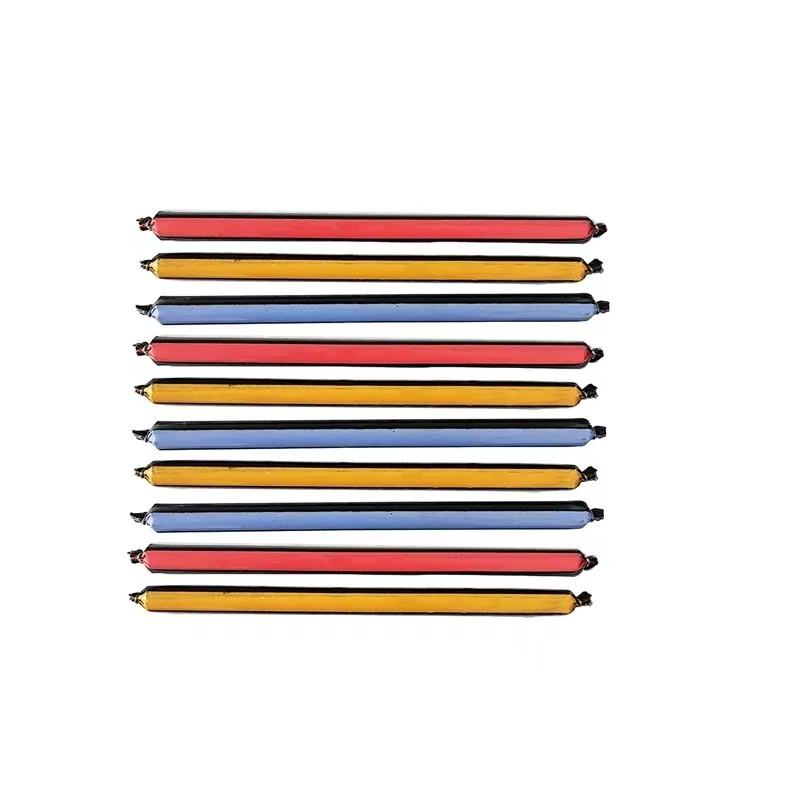
Consider the stabilization of a rock slope at a former quarry using hydraulic expansion rock bolts and shotcrete reinforcement—downtime dropped by 40% while safety metrics improved. Mining industry testimonials consistently highlight how high-performance anchorage agents (like resin cartridge and chemical anchor bolt) and Rocbolt Tensioning Equipment for CableLok anchors deliver accurate tonnage (100–250 kN) and long-term durability. Enhanced seismic resistance and rock mass stability translate directly to lower maintenance costs and higher operational ROI. For heavy-duty connections, our mining nut high strength nuts for mining heavy duty applications ensure every bolt holds under extreme conditions.
Selecting the Right Solution: Product Recommendations for Your Operation
For immediate support, the Friction Anchor Bolt (Split Set Bolt) is ideal for underground metal mining, offering high pull-out and shear resistance with black or HDG finish, bearing rings, and plates. For high-load applications, a Prestressing Anchorage System with anchorage agent (high-performance grout/adhesive) excels in post-tensioned concrete and structural reinforcement. Specialized needs call for the Swellex Rock Bolt (custom lengths/diameters), mining nut (high-strength nuts for bolted connections), and Rocbolt Tensioning Equipment (hydraulic kit with stressing jack and cable cropper). Surface reinforcement should combine chain link mesh, welded wire mesh, or steel wire mesh for comprehensive strata control. Our mining wire mesh mine support mesh welded woven mesh for underground slope support 1 provides the durability needed for long-term stability.
Conclusion: Future-Proof Your Ground Support Strategy
Investing in high-quality rock bolts, proper installation (using a torque wrench and resin capsules), and advanced systems (expansion shell, hollow grouting bolt) ensures both safety and ROI. With market growth accelerating toward 2026 and evolving standards, now is the time to upgrade to solutions offering superior load bearing capacity, corrosion resistance, and seismic resistance. Contact our team for a free consultation on your ground support system at cq-rockbolt.com/en/contact.
Related News
Other news you might be interested in

Active vs. Passive Anchors: How to Choose the Right Ground Support System
A ground support system can fail for a simple reason: the team selected a product by name before deciding how the load should develop. Two anchors may look similar in a catalog, use the same diameter, and carry the same nominal steel grade, yet behave very differently underground. One is tensioned against the rock immediately after installation. The other begins to carry load only when the rock mass starts to move.That difference is what "active" and "passive" should describe. It is not a quality ranking. It is not a choice between modern and old-fashioned support. It is a choice about timing, displacement and load path.

How do concrete anchor bolts improve foundation stability?
A concrete anchor bolt is a small part of a foundation, but it decides whether the foundation and the structure above it behave as one system. The bolt does not make the concrete stronger or the soil stiffer. It provides a controlled load path between the steel structure, the base plate, the concrete, and—when the anchor is designed to reach it—the deeper ground.In this article, the term covers cast-in anchor rods, post-installed mechanical or adhesive anchors, and post-tensioned bars or strand anchors used to tie a structure or foundation element into concrete.That distinction is the key to answering the question. Anchor bolts improve foundation stability by resisting uplift, shear and overturning, maintaining clamping force, helping to distribute concentrated loads, and tying the foundation to a competent bearing stratum. They cannot compensate for an undersized footing, a poor subgrade, or a missing reinforcement detail.
Want to know more?
Get in touch with us for more information about our services and products.