

Maximizing Safety and ROI in Underground Reinforcement with Advanced Rock Bolting Solutions

Dayang Yang
AuthorWith over 15 years of experience in the production and sales of ground anchoring and mining support products, we operate our own rock bolt and accessory manufacturing facility with stable large-scale production capacity. We are specialists in rock bolts, resin cartridges, anchor cables, bearing plates, and customized ground anchoring products for mining support and geotechnical anchoring solutions.
The Challenge of Strata Control in Modern Mining and Tunneling
Underground operations today are squeezed between the need for uncompromising worker safety and a mandate to cut cycle times and support costs. Every foot of advance in high-stress, deep, or seismic-prone ground demands strata control systems that deliver more than simple holding force. Traditional supports built around threaded steel rebar bolts and mechanical expansion shells often fall short exactly where it matters most—insufficient tensile strength, poor seismic resistance, and a load bearing capacity that degrades in fractured or corrosive environments. Meanwhile, the market for intelligent ground support is accelerating rapidly; rock bolt monitoring systems alone are projected to reach $1.12 billion by 2033. To escape reactive repair cycles and truly protect your workforce, you need a strata control strategy that balances immediate reinforcement with long-term yield strength. Forward-thinking mines are already moving beyond guesswork and optimizing mine support design with full-scale shear test data to select systems that match real ground behavior.
Key Innovations Driving Performance in Rock Bolting Systems
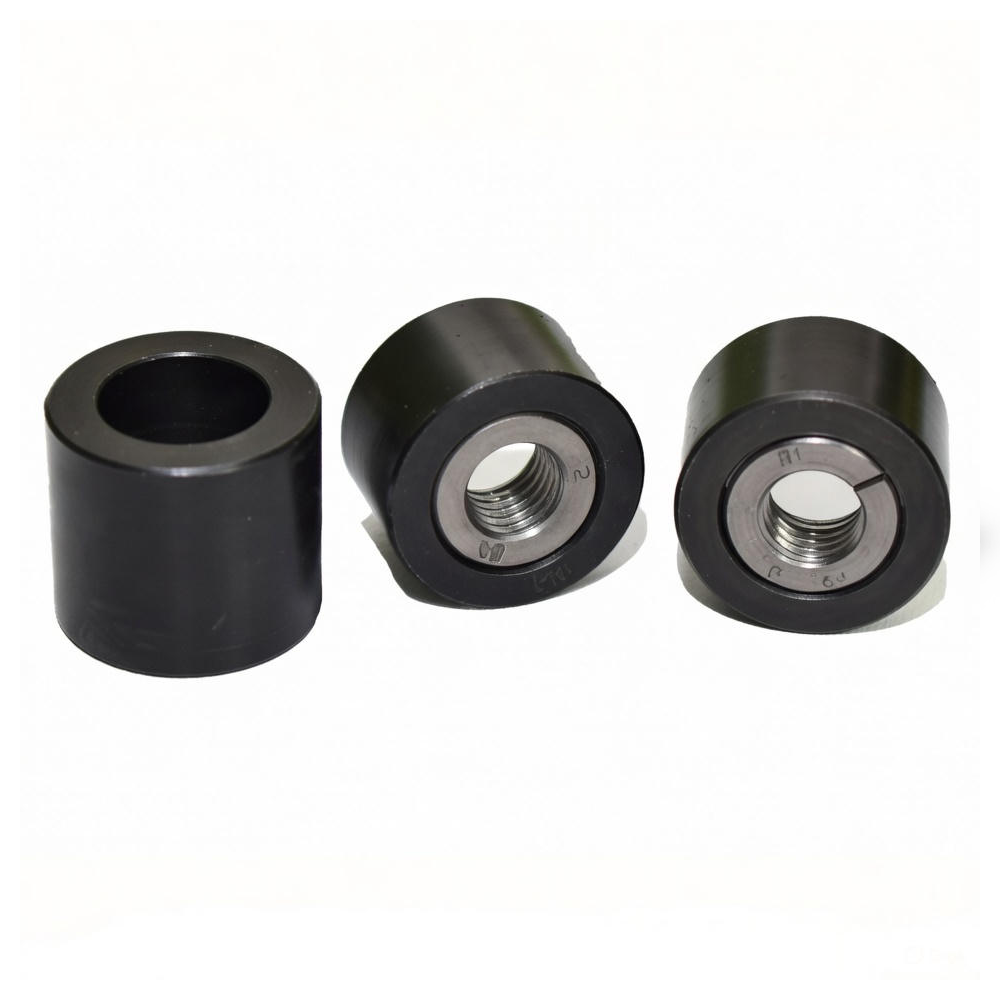
Modern rock bolting has moved far beyond a generic rebar and grout approach. Friction anchor bolts (Split Set) provide immediate, full-length radial contact with the borehole wall, delivering high pull-out and shear resistance right after installation—no curing wait, no wasted downtime. Available in diameters from 33 to 47 mm, they are compatible with both handheld and mechanized rigs, slashing cycle times. For variable geology, water-inflatable Swellex rock bolts conform to borehole irregularities, generating consistent anchorage in anything from soft mudstone to blocky hard rock. When the application demands post-tensioning, strand cable bolts combined with resin capsules or injection grout give you tens of tons of active support instantly. Chemical anchor bolts and resin cartridges fill the gap for fast-setting, high-bond solutions, while hollow grouting bolts let you place quick-setting mortar through the bolt itself for water-bearing or cavity-prone ground. For corrosive environments, glass fiber reinforced polymer (GFRP) bolts eliminate rust concerns altogether.
But a bolt is only as effective as the surface it supports. That’s why advanced systems integrate chain link mesh, welded wire mesh, and steel wire mesh sized to the specific drift or stope. Our mining wire mesh range distributes load evenly and contains loose rock between bolt heads—critical for load bearing capacity and seismic resistance. Complement these with precision accessories: a dome plate or butterfly plate to create a stiff, high-angle contact surface; a W-strap to span larger gaps; and a spherical washer under the dome nut or hex nut to accommodate misalignment without compromising tension. Even the sleeve and coupler connections in a tensioned rock bolt system are engineered to preserve tensile strength across the full string. These elements, together with prestressing anchorage systems and shotcrete reinforcement, form an integrated shell that actively manages ground deformation.
Selecting the Right Ground Support System for Your Application
No two underground excavations are alike. The starting point is a sober assessment of rock mass quality, joint spacing, and in-situ stress. These define the minimum yield strength and energy absorption your bolt must deliver to resist both static sag and dynamic seismic resistance events. From there, you match the bolt type to the ground and the operational constraints:
- Mechanical expansion shell anchors excel in competent, dry rock where immediate point anchorage is needed.
- Threaded steel rebar bolts with resin capsules provide full-column bond and high tensile strength in routine to moderately stressed ground.
- Strand cable bolts and hollow grouting bolts allow tensioning and grouting in deep or fractured zones, often paired with anchor plates and weldable couplers for length flexibility.
- GFRP bolts are non-corrosive and cuttable, ideal for TBM tails or temporary faces.
Surface support must match. In blocky ground, chain link mesh and steel wire mesh are combined with butterfly plates to tame wedge failures; high-stress conditions demand welded wire mesh overlaid with shotcrete reinforcement and robust dome plates. For post-tensioned concrete and permanent structures, our prestressing anchorage system delivers certified, durable holding power for PT bars and steel strands, backed by full traceability. And when ground patterns suggest active convergence, incorporating T-section steel arches with bolted W-straps can double the system stiffness.
Proven Results: ROI and Safety Improvements from Advanced Rock Bolting
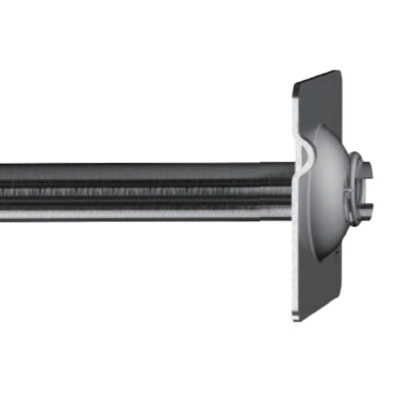
The numbers from active mine sites and tunnels don’t lie. Operations that transitioned from conventional grouted rebar to high-strength, corrosion-resistant systems saved an average of 5.87% on total ground support costs while accelerating project timelines by up to 14.2%. Why? Split Set and Swellex bolts install at multiples faster than a traditional threaded rebar and resin operation, cutting drill-and-blast cycles without sacrificing pull-out strength. One coal mine eliminated roof falls in a longwall tailgate by switching to a patterned array of strand cable bolts with resin capsules and injection grout, achieving a 90% reduction in re-support hours over a year. Chemical anchor bolts with quick-setting mortar turned a three-shift rockfall cleanup into a one-shift safe re-entry. All of this directly reduces exposure hours and keeps workers safe under a supported roof. Mines targeting 2026 operational excellence benchmarks are already rewiring their ground support specifications to capture these gains—lower consumables, faster cycles, fewer injuries, and unbroken production.
Future-Proof Your Underground Operations with Expert Solutions
From the face to the portal, your ground support system must adapt to deep stress, water, and seismic demands while remaining cost-predictable. That’s why our inventory isn’t a catalog of piece-parts—it’s an engineered platform: friction anchor bolts, Swellex water-inflatable bolts, Rocbolt hydraulic tensioning equipment, mining wire mesh, and Rocbolt accessories—every dome nut, hex nut, spherical washer, anchor plate, and W-strap is dimensioned to transfer load without failure. We supply the full range of resin capsules, injection grout, and quick-setting mortar to match bolt chemistry. For large-scale slopes and portals, our prestressing anchorage systems and strand cable bolts pair with steel wire mesh and shotcrete reinforcement to lock in permanent stability. Even specialised connectors like couplers, sleeves, and T-section steel arch segments are kept in stock to keep your crews moving. The result: a unified, high-yield strength ground reinforcement ecosystem that raises seismic resistance and load bearing capacity site-wide.
Contact our specialists at /en/contact to request a catalogue or a data-driven ground support proposal tailored to your mine or tunnel project.
Related News
Other news you might be interested in

Coal Mine Roadway Support Systems: How Rock Bolts, W-Straps, Mesh and Cable Bolts Work Together
Coal mine roadways are essential to safe, continuous underground operations. Their stability can be affected by changing geological conditions, mining-induced stress and excavation activity. As ground-control research increasingly focuses on the overall coordination and monitoring of support systems, rock bolts, W-straps, mesh and cable bolts should not be viewed as isolated components, but as elements that work together under site-specific mine conditions. This article explores their complementary roles in coal mine roadway support, while recognizing that support designs must be based on the conditions of each mine.

Five Major Advantages of Self-Drilling Anchors in Engineering Applications
In weak ground, fractured rock, loose soil, or rock masses with numerous joints, boreholes may narrow, shed material, or collapse. This can make it difficult to insert the anchor bar and may also affect subsequent grouting. Groundwater and changing strata add further uncertainty to construction.
Want to know more?
Get in touch with us for more information about our services and products.