

Maximizing Safety and ROI in Underground Ground Support: Advanced Rock Bolting Solutions for 2026

Dayang Yang
AuthorWith over 15 years of experience in the production and sales of ground anchoring and mining support products, we operate our own rock bolt and accessory manufacturing facility with stable large-scale production capacity. We are specialists in rock bolts, resin cartridges, anchor cables, bearing plates, and customized ground anchoring products for mining support and geotechnical anchoring solutions.
Strata Control Challenges: Balancing Safety and Profitability
As mining and tunneling operations push into deeper, more complex geotechnical environments, strata control solutions can no longer afford to treat safety and profitability as separate priorities. Every decision—from bolt selection to installation protocol—directly impacts both the load bearing capacity of your ground support system and your operational bottom line. In 2026, the stakes are higher than ever: regulatory scrutiny is intensifying, and the cost of unplanned downtime continues to climb.
Seismic events and rock bursts present a particularly unforgiving challenge. In these conditions, your rock bolts must deliver exceptional seismic resistance and high energy absorption. A bolt that merely holds static rock is no longer sufficient; the system must dynamically yield and redistribute stress without catastrophic failure. This is where the yield strength and deformation capacity of your chosen bolt type becomes the critical differentiator between a controlled event and a costly collapse. Bolts such as Threaded Steel Rebar Bolts and specialized Strand Cable Bolts have proven their worth in seismically active mines precisely because they combine high tensile strength with controlled elongation characteristics.
Yet even the best-specified bolt fails if installation quality is compromised. Common pitfalls in construction—incorrect water-cement ratios, improper grouting techniques, and inadequate mixing of resin capsules—systematically undermine both safety and return on investment. A resin cartridge that doesn't fully mix, or an injection grout applied with the wrong viscosity, creates hidden weaknesses that no amount of surface inspection can detect. For hollow grouting bolts and chemical anchor bolts, the bond strength between the bolt, grout, and surrounding rock is only as reliable as the installation discipline behind it. When these fundamentals are overlooked, the result is premature bolt failure, increased maintenance costs, and a compromised safety envelope that no mine can afford.
Advanced Rock Bolt Systems for Demanding Conditions
Modern ground support demands a nuanced approach to bolt selection, matching the anchoring mechanism to the specific ground behavior you're managing. The friction anchor bolt—often referred to as the Split Set bolt—remains one of the most versatile tools in the strata control arsenal. Manufactured from high-tensile C-shaped steel tubes ranging from 33 to 47 mm in diameter and 0.6 to 3 m in length, these bolts deliver immediate full-length support through radial friction. Available in black or hot-dip galvanized finishes, they excel in conditions where rapid installation and instant load transfer are non-negotiable. The absence of curing time means your crews can advance faster without compromising ground stability.
For variable and fractured strata where conventional mechanical anchors struggle, Swellex rock bolts offer a compelling alternative. These water-inflatable bolts conform intimately to the borehole profile, creating a high-strength mechanical interlock across the entire bolt length. The rapid anchorage capability—combined with availability of custom lengths and diameters—makes Swellex systems particularly effective in squeezing ground and highly fractured rock masses where borehole collapse would otherwise prevent proper installation. When paired with an expansion shell at the collar for immediate plate contact, the hybrid system provides both instant support and long-term reliability.
High-load scenarios demand a step up in anchoring technology. Strand cable bolts offer the deep anchorage and high load capacity essential for large-span excavations and heavily stressed abutments. Complementing these, Threaded Steel Rebar Bolts—including CT and Step Rebar Bolt variants—address dynamic and seismic loads with their superior combination of stiffness and ductility. For specialized applications in corrosive environments or where electromagnetic transparency is required, Glass Fiber Reinforced Polymer (GFRP) Bolts provide an advanced alternative with excellent tensile strength-to-weight ratios and inherent corrosion resistance. The key to maximizing ROI lies not in defaulting to the cheapest bolt, but in precisely matching the bolt's mechanical properties to the anticipated ground behavior and service life requirements.
Precision Tensioning and Anchorage Systems for Maximum Reliability
A rock bolt is only as effective as the tensioning and load transfer components that complete the system. Inadequate pre-loading leaves the rock mass unsupported during the critical early deformation phase, while over-tensioning can induce fractures that compromise long-term anchorage. The Rocbolt Tensioning Equipment for CableLok anchors eliminates this guesswork, delivering accurate pre-loading in the 100–250 kN range with user-friendly gauging and integrated safety slings. For operations serious about ground control, precision tensioning isn't optional—it's the difference between a support system that actively reinforces the rock and one that passively waits for failure.
Complementing the bolt itself, prestressing anchorage systems for PT bars and steel strands extend reliable anchoring capability into structural reinforcement applications beyond conventional rock bolting. These systems are engineered for geotechnical anchoring scenarios where long-term load retention and corrosion protection are paramount. The integration of high-capacity anchor plates and precisely machined bearing surfaces ensures that pre-load is transferred efficiently into the rock mass without stress concentrations that could initiate progressive failure.
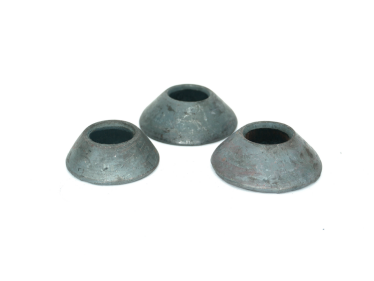
Load distribution hardware plays an equally critical role. High-strength mining nuts—available in dome nut, hex nut, and specialized tensioning configurations—provide the threaded interface that converts bolt tension into plate compression. The dome plate and spherical washer combination accommodates up to 18° of angular misalignment between the bolt axis and the rock surface, a common condition in irregular excavation profiles. This articulation prevents bending stresses in the bolt shank and ensures uniform load distribution across the bearing plate. When combined with a butterfly plate design for enhanced surface contact in soft ground, these seemingly minor components collectively determine whether your support system performs as designed or fails prematurely at the connection points. Explore the full range of Rocbolt accessories for rock and roof bolts to complete your ground support specification.
Proven Performance: Dynamic Response and Return on Investment
The gap between theoretical bolt capacity and actual in-situ performance has historically been wide—and expensive. Moving beyond guesswork, full-scale shear test data now enables engineers to optimize mine support design with confidence rather than conservatism. Dynamic response analysis consistently confirms that properly installed resin-grouted and mechanical bolts significantly enhance both rock mass stability and seismic resilience. The data shows that well-designed bolting patterns can reduce seismic-induced drift closure by 40–60% compared to underspecified systems, directly translating to safer working conditions and fewer production interruptions.
Success stories from CQ Rockbolt installations across multiple operating mines demonstrate the tangible financial impact of investing in high-performance strata control. Mines that transitioned from basic mechanical bolts to integrated systems featuring Strand Cable Bolts, precision-tensioned rebar, and full-surface shotcrete reinforcement reported measurable reductions in unplanned downtime, lower rehabilitation maintenance costs, and extended roadway service life. In one case, a longwall operation documented a 28% reduction in gate road rehabilitation costs over an 18-month period following the upgrade to an advanced bolting and mesh system. These aren't incremental improvements—they're step-change gains that directly strengthen the balance sheet.
The outlook for 2026 reinforces this trajectory. Smart anchoring systems, enabled by automated manufacturing, are projected to drive a 33% growth in trade performance as mines adopt data-verified support designs and quality-controlled components. Regulatory frameworks are evolving to require demonstrable dynamic performance rather than static pull-test results alone. High-performance bolting systems that combine proven tensile strength with documented dynamic response characteristics will be essential not just for meeting compliance thresholds, but for achieving the operational efficiency targets that define competitive advantage in the modern mining sector. The mines that invest in this technology in 2026 are positioning themselves for a decade of safer, more profitable operations.
Complete Ground Support with the Right Accessories and Integration
Rock bolts function as part of an integrated system, and the surface support elements are equally critical to overall performance. W-straps and steel straps bridge between bolt locations, distributing load across the rock surface and preventing small-scale raveling from escalating into larger structural failures. Mining wire mesh—whether welded or woven—provides comprehensive surface coverage for underground slope and roadway support, containing loose rock between bolts and protecting personnel from falling debris. For maximum durability in aggressive environments, welded wire mesh offers superior stiffness and cut resistance, while chain link mesh and steel wire mesh options provide the flexibility needed in heavily deforming ground. When combined with shotcrete reinforcement, these mesh systems create a composite liner capable of sustaining significant deformation without losing containment capacity.
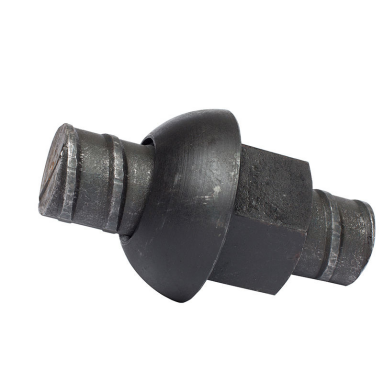
The connection between bolt and surface support demands careful engineering. Couplers and sleeves enable reliable extension and connection of bolt segments in long-hole applications, maintaining load transfer integrity across the entire anchored length. Anchor plates and spherical washers—including the versatile dome plate configuration—ensure that bolt tension is converted into uniform surface pressure rather than concentrated point loads. For specialized applications, T-section steel members provide robust longitudinal reinforcement in conjunction with bolting patterns, particularly effective in intersections and wide-span areas where conventional plate-and-mesh systems reach their practical limits.
Ground conditions vary dramatically across a single mine, let alone across projects, which is why versatility in anchoring solutions matters. Self-drilling anchors (SDA) and combo bolts eliminate the need for separate drilling and installation passes in collapsing ground, while hollow grouting bolts enable simultaneous drilling and grout injection for rapid consolidation of fractured rock. The choice of grouting medium—whether cementitious injection grout for permanent installations or quick-setting mortar for immediate support in water-bearing ground—determines both installation speed and long-term durability. High-strength mining nuts, engineered for heavy-duty applications, complete the assembly with thread forms and material grades that match the bolt's capacity without becoming the weak link in the system. Every component, from the deepest resin capsule to the surface butterfly plate, must be specified as part of an integrated design if the full potential of your ground support investment is to be realized.
Partner with Us for Optimal Ground Support
Effective ground support design begins with a thorough understanding of site-specific geotechnical conditions. Our engineering team works directly with your ground control specialists to analyze rock mass characteristics, stress regimes, and operational constraints, translating this data into a specification that balances immediate safety requirements with long-term economic performance. Whether your operation requires the instant anchorage of friction bolts in development headings, the deep reinforcement of Strand Cable Bolts in production stopes, or the comprehensive surface support of welded wire mesh and shotcrete reinforcement, the solution must be tailored—not templated.
Customization is central to our approach. We supply bolts with custom lengths, thread specifications, and protective coatings matched to your environmental conditions. Tensioning solutions are calibrated to your required pre-load ranges, and accessories—from dome nuts and hex nuts to spherical washers and anchor plates—are selected to ensure complete system compatibility. For projects requiring specialized anchoring, chemical anchor bolts, Glass Fiber Reinforced Polymer (GFRP) Bolts, and comprehensive injection grout solutions are available with full technical documentation and installation support.
To begin your ground support design review, request our product catalogues covering Friction Anchor Bolts, Rocbolt Accessories, and Prestressing Anchorage Systems. These detailed technical resources provide the dimensional data, mechanical properties, and application guidance needed to evaluate options against your specific ground control challenges. Request your custom ground support specification now — speak with our engineers today.
Related News
Other news you might be interested in

Coal Mine Roadway Support Systems: How Rock Bolts, W-Straps, Mesh and Cable Bolts Work Together
Coal mine roadways are essential to safe, continuous underground operations. Their stability can be affected by changing geological conditions, mining-induced stress and excavation activity. As ground-control research increasingly focuses on the overall coordination and monitoring of support systems, rock bolts, W-straps, mesh and cable bolts should not be viewed as isolated components, but as elements that work together under site-specific mine conditions. This article explores their complementary roles in coal mine roadway support, while recognizing that support designs must be based on the conditions of each mine.

Five Major Advantages of Self-Drilling Anchors in Engineering Applications
In weak ground, fractured rock, loose soil, or rock masses with numerous joints, boreholes may narrow, shed material, or collapse. This can make it difficult to insert the anchor bar and may also affect subsequent grouting. Groundwater and changing strata add further uncertainty to construction.
Want to know more?
Get in touch with us for more information about our services and products.