

Maximizing Mine Safety and ROI: The Critical Role of High-Performance Rock Bolting Systems

Dayang Yang
AuthorWith over 15 years of experience in the production and sales of ground anchoring and mining support products, we operate our own rock bolt and accessory manufacturing facility with stable large-scale production capacity. We are specialists in rock bolts, resin cartridges, anchor cables, bearing plates, and customized ground anchoring products for mining support and geotechnical anchoring solutions.
The Hidden Costs of Inadequate Rock Reinforcement
Every underground operation faces a stark reality: the bolts holding your ground support together are either a liability or a profit multiplier. Low-quality fasteners can fail catastrophically under dynamic loading—always demanding proper torque and installation. In mining, the stakes are higher. The critical strata control challenges of recent years have exposed how many sites are hemorrhaging money through avoidable remediation. If your anchoring system isn’t engineered for the environment, you’re simply buying future downtime. Low-grade bolts, expansion shell inadequacies, or substandard resin cartridges create a cascade of hidden costs—crew re-entry delays, structural rework, and the ever-present safety hazard of unscheduled roof falls. A single failure undermines both load bearing capacity and investor confidence.
Market Trends Driving Demand for Advanced Ground Support

The rock bolting market is on track to reach $1.58 billion by 2033, fueled by deeper underground mines and expanding tunnel infrastructure. By 2026, the definition of “adequate” ground support will look radically different. Hydraulic expansion rock bolts are already emerging as a benchmark for efficiency, combining rapid installation with consistent yield strength and post-yield deformation capacity. Specifications now mandate high tensile strength and verified seismic resistance—not as optional upgrades, but as baseline requirements. Regulators increasingly demand long-term corrosion resistance and documented durability, pushing the industry toward glass fiber reinforced polymer (GFRP) bolts, galvanized steel wire mesh, and advanced injection grout formulations. The shift is clear: strata control is no longer just about holding rock in place; it’s about doing so predictably for decades while accelerating development cycles.
Essential Components of a Reliable Rock Bolt System
Rock reinforcement is a system, not a single component. Surface confinement starts with the right mesh—mining wire mesh configurations including chain link mesh, welded wire mesh, and woven fabrics distribute block loads and integrate with shotcrete reinforcement. The connection between mesh and bolt is where force transfer happens: high-strength mining nuts (hex nut, dome nut, tensioning nuts) with custom threads and anti-corrosion coatings prevent loosening under vibration. Rocbolt accessories complete the assembly—dome plate and spherical washer configurations accommodate angular surfaces up to 18°, while W-strap and butterfly plate add bearing area. For the anchor itself, a threaded steel rebar bolt paired with a resin capsule or quick-setting mortar provides positive bond, while a hollow grouting bolt with injection grout fills fissures. Alternative anchors like pipe seam anchors (friction) and Swellex (water-inflatable) offer immediate support, and strand cable bolts with anchor plate and coupler deliver deep anchorage. Even the sleeve and bearing plate geometry matters—a chemical anchor bolt with a T-section steel profile optimizes load transfer.
Proven Success: Real-World ROI from High-Performance Rock Bolts
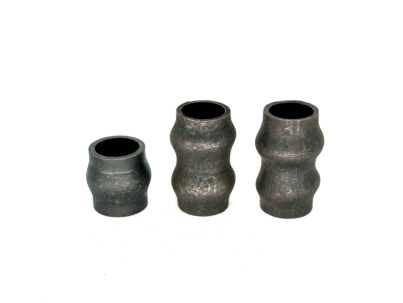
Data validates the economics. In a former quarry slope stabilization, crews using Swellex rock bolts and high-strength mesh reported 40% faster installation and 30% cost savings compared to traditional cement-grouted rebar. A deep gold mine switched to hydraulic expansion bolts with dome plates and hex nuts; rehabilitation time dropped 50% and rock mass stability indices improved across entire stopes. Elsewhere, a mining operation logged zero roof falls for 18 consecutive months while advance rates climbed 25% after upgrading to a system integrating strand cable bolts and high tensile strength mesh. Engineers consistently highlight how yield strength-matched accessories and galvanized coatings extend service life in aggressive water. These outcomes hinge on precise specification—knowing the difference between a resin cartridge anchor and a cementitious grouted bolt in a seismically active zone can be the difference between ongoing production and a costly stand-down. Moving beyond guesswork by using full-scale shear test data to optimize support design is how leaders eliminate that risk.
Take the Next Step: Optimize Your Ground Support Strategy
Your current support design is either a strategic advantage or a ticking clock. High-performance rock bolting systems integrate load bearing capacity, seismic resistance, and corrosion protection from the butterfly plate to the grout. Whether you need welded wire mesh shear transfer, spherical washer articulation, or quick-setting mortar encapsulation, the right configuration turns ground support into a production enabler. With automated factories now driving 33% trade growth through smart anchoring systems, supply chain reliability and product consistency are a given when you partner with manufacturers that embed quality into every expansion shell and anchor plate. Don’t let another shift pass with infrastructure that compromises safety and laps up capital in unscheduled repairs. Request a no-obligation consultation with our ground support engineers today.
Related News
Other news you might be interested in

Coal Mine Roadway Support Systems: How Rock Bolts, W-Straps, Mesh and Cable Bolts Work Together
Coal mine roadways are essential to safe, continuous underground operations. Their stability can be affected by changing geological conditions, mining-induced stress and excavation activity. As ground-control research increasingly focuses on the overall coordination and monitoring of support systems, rock bolts, W-straps, mesh and cable bolts should not be viewed as isolated components, but as elements that work together under site-specific mine conditions. This article explores their complementary roles in coal mine roadway support, while recognizing that support designs must be based on the conditions of each mine.

Five Major Advantages of Self-Drilling Anchors in Engineering Applications
In weak ground, fractured rock, loose soil, or rock masses with numerous joints, boreholes may narrow, shed material, or collapse. This can make it difficult to insert the anchor bar and may also affect subsequent grouting. Groundwater and changing strata add further uncertainty to construction.
Want to know more?
Get in touch with us for more information about our services and products.