

How to Choose the Right Rock Bolt for Underground Mining and Tunnelling: Split Set, Swellex, or Self-Drilling Anchors?

Dayang Yang
AuthorWith over 15 years of experience in the production and sales of ground anchoring and mining support products, we operate our own rock bolt and accessory manufacturing facility with stable large-scale production capacity. We are specialists in rock bolts, resin cartridges, anchor cables, bearing plates, and customized ground anchoring products for mining support and geotechnical anchoring solutions.
Choosing the right rock bolt is not simply a matter of selecting the strongest steel bar or the lowest unit price. In underground mining and tunnelling, a successful ground support system must match the rock mass condition, excavation sequence, borehole quality, available installation equipment, and the project’s support design.
A support element that performs well in competent rock may be unsuitable in highly fractured ground. A solution intended for immediate restraint may not be the right choice where long-term grouted reinforcement is required. For mine operators, tunnel contractors, distributors, and engineering buyers, the practical question is not “Which rock bolt is best?” It is: “Which rock bolt system is appropriate for this ground condition and support objective?”
This rock bolt selection guide compares three common solutions for underground ground support: Split Set friction bolts, water-expandable rock bolts commonly known as Swellex bolts, and self-drilling anchor bolts. Understanding their working principles and installation boundaries helps buyers prepare a more accurate RFQ and avoid selecting a product based on name recognition alone.
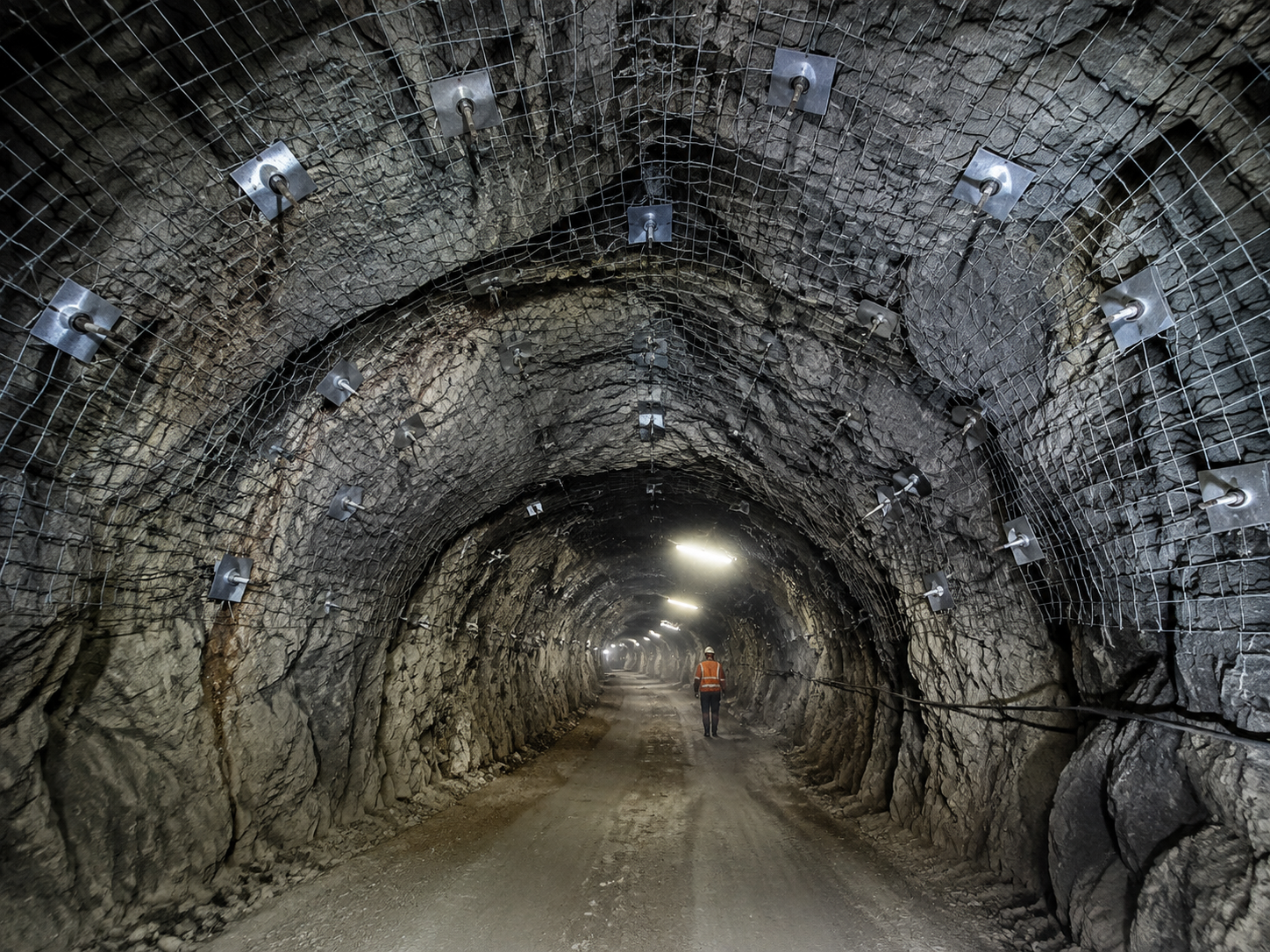
Start With the Ground Condition, Not the Product Name
Every rock bolt selection process should start with the excavation environment. The surrounding rock affects borehole stability, anchorage behavior, installation speed, and the type of mine support that can be installed reliably.
Before choosing a mining rock bolt or tunnel rock bolt, the project team should clarify:
- Is the rock competent, jointed, weathered, fractured, or highly fractured?
- Does the drilled hole remain open, or is borehole collapse likely?
- Is immediate ground support required after blasting or excavation?
- Is the support temporary, permanent, or part of a staged reinforcement plan?
- Are groundwater, corrosion, vibration, seismic activity, or limited access expected?
- What bolt length, bolt spacing, plate arrangement, and design load are required?
These questions matter because a rock bolt does not work alone. Its effectiveness depends on how the bolt, borehole, bearing plate, mesh, grout or resin, and installation procedure act together as a complete underground ground support system.
Five Factors That Determine the Right Rock Bolt
1. Rock Mass and Borehole Stability
Competent rock with a stable drilled hole may allow rapid installation of a friction bolt or expandable rock bolt. Weak, broken, water-bearing, or collapse-prone ground often requires an anchoring method that can drill and reinforce in one sequence.
Where boreholes close soon after drilling, a conventional bolt that must be inserted into an open hole can be difficult to install. In these conditions, a Self-drilling Hollow Grouting Rock Bolt may be considered because its hollow threaded bar can drill, carry grout, and remain in place as reinforcement.
2. Required Timing of Ground Support
Some underground projects need immediate restraint after blasting or excavation. Others can allow time for grout or resin to cure before the full design load is required.
Split Set Friction Anchor Bolts and Swellex Rock Bolts are often evaluated for applications where fast installation and early support are important. Self-drilling anchor bolts are typically selected when the installation process must also solve difficult drilling and grouting conditions.
3. Design Load and Rock Bolt Spacing
A higher nominal bolt strength does not automatically create a better support outcome. Rock bolt load capacity depends on the interaction between the bolt, anchorage method, surrounding rock, bolt length, plate, spacing, and installation quality.
The project design should define the required support pattern, expected load, deformation tolerance, and inspection method. Procurement teams should collect these inputs before comparing rock bolt suppliers or quotations.
4. Installation Equipment and Site Conditions
Available drilling rigs, water supply, grout pumps, access constraints, and crew experience directly affect product selection. A rock bolt system that requires specialized installation equipment may not be the most efficient option for every mine or tunnel project.
For example, a water-expandable rock bolt requires a compatible inflation method and controlled installation procedure. A self-drilling anchor system requires compatible drill bits, couplers, grouting equipment, and installation practices. Product selection should therefore match the actual site process, not only the catalog description.
5. Corrosion Protection and Service Life
Where support is intended for long-term use, environmental exposure must be considered. Groundwater, chemical conditions, corrosion risk, drainage, surface treatment, and project-specific durability requirements may all influence the selection of a mining rock bolt.
For permanent or long-duration support, the engineering team should evaluate the full support assembly, including the bolt body, rock bolt plate, nut, washer, grout or resin, and exposure conditions.
When to Choose Split Set Friction Bolts
A Split Set bolt, also called a friction bolt or friction stabilizer, is a slotted steel tube installed into a drilled hole with a diameter smaller than the tube’s outside diameter. When driven into the borehole, the tube compresses and develops frictional resistance along its length.
This makes the Split Set friction bolt a familiar option where rapid installation and immediate mine roof support are important.
Typical applications include:
- Underground mining development headings
- Mine roadway support
- Tunnel ground support
- Early-stage or temporary rock reinforcement
- Support arrangements used with Mining Wire Mesh and bearing plates
The principal benefit is installation speed. Because the support mechanism relies on friction between the compressed tube and the borehole wall, the bolt can provide restraint without waiting for grout to cure.
However, Split Set bolts depend on borehole quality and adequate wall contact. They may be less suitable where holes are severely enlarged, highly irregular, collapsible, or unable to provide sufficient frictional engagement. Buyers should provide the borehole diameter range, expected bolt length, and ground condition when requesting a Split Set bolt quotation.
When to Choose Swellex Rock Bolts
A Swellex rock bolt, also described as an expandable rock bolt or water-inflatable anchor, uses a folded steel tube that expands when pressurized water is introduced. The expanded tube conforms to borehole irregularities and develops anchorage through contact with the surrounding rock.
These expandable bolts are commonly evaluated where immediate ground support is needed but borehole geometry is less uniform than ideal conditions for a standard friction bolt.
Typical applications include:
- Underground mining support
- Tunnel support in variable rock conditions
- Installations requiring rapid load transfer
- Boreholes with moderate irregularity
- Projects with suitable water supply and controlled installation equipment
Compared with a standard Split Set friction bolt, an expandable rock bolt can adapt to certain borehole irregularities. However, it still requires suitable equipment and an installation process that controls water pressure and verifies proper expansion.
For SEO, use both the product-specific term Swellex rock bolt and broader buyer search terms such as expandable rock bolt and inflatable rock bolt. These terms address buyers who understand the application but may not search by a particular market name.
When to Choose Self-Drilling Anchor Bolts
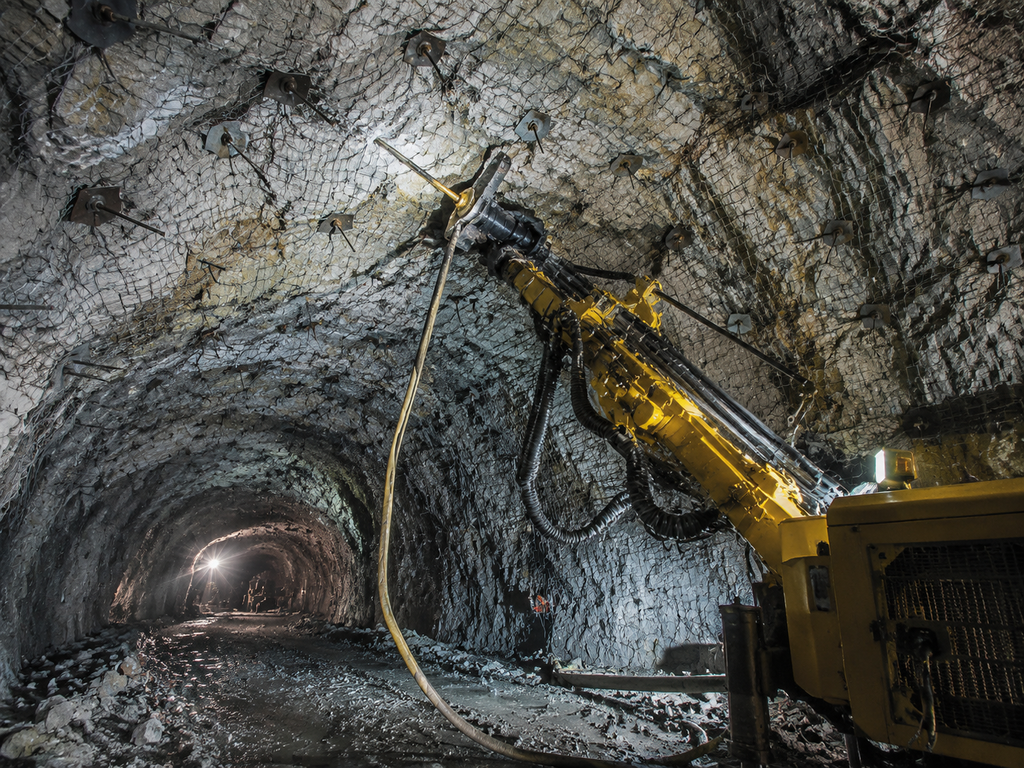
A self-drilling anchor bolt, also called an SDA bolt, hollow bar anchor, or self-drilling hollow grouting rock bolt, integrates drilling, reinforcement, and grouting functions. The hollow threaded bar can be installed with a drill bit, while grout is delivered through the bar during or after drilling according to the installation method.
Self-drilling anchor bolt applications are especially relevant where conventional drilling followed by bolt insertion is difficult.
Typical applications include:
- Highly fractured or weak rock mass
- Boreholes at risk of collapse
- Tunnel forepoling and face stabilization
- Advance tunnel support
- Slope stabilization
- Geotechnical anchoring
- Mine tunnels, foundation pits, and difficult ground conditions
The key benefit is not only speed. It is the ability to install reinforcement where maintaining an open borehole is difficult. This makes the self-drilling anchor system particularly relevant for complex geotechnical conditions.
A complete SDA bolt system should be considered as an assembly: hollow bar, drill bit, coupler, nut, plate, grout, drilling equipment, and installation sequence. Buyers should evaluate component compatibility rather than sourcing individual parts without verifying the connection system.
Split Set vs Swellex vs Self-Drilling Anchors
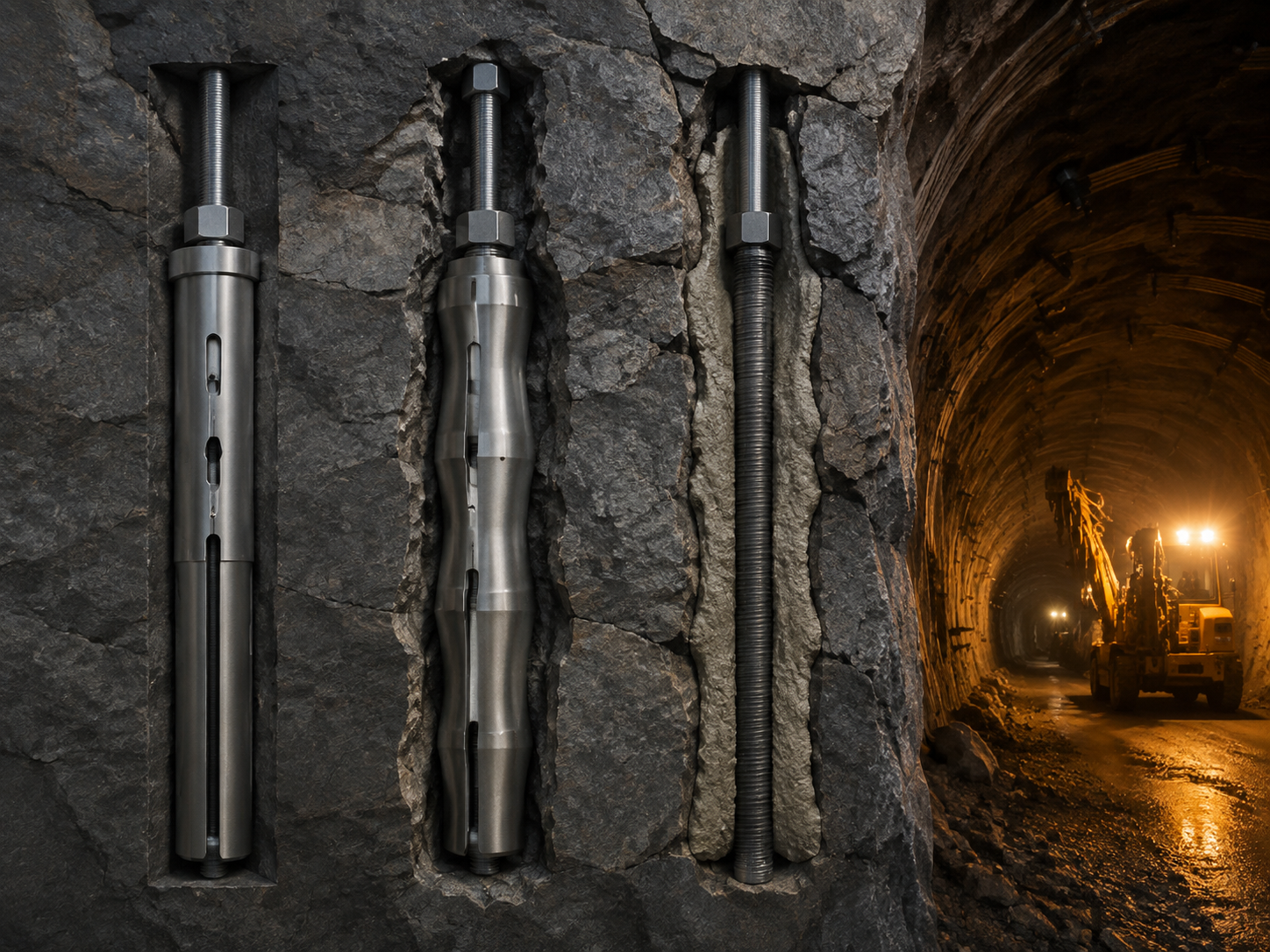
| Selection factor | Split Set friction bolt | Swellex rock bolt | Self-drilling anchor bolt |
|---|---|---|---|
| Primary anchorage method | Friction against the borehole wall | Expansion and contact with the borehole wall | Grouted hollow-bar reinforcement |
| Typical support objective | Rapid, immediate ground support | Rapid support in irregular boreholes | Reinforcement in weak or unstable ground |
| Borehole requirement | Relatively controlled hole diameter | Can adapt to some irregularity | Useful where boreholes may collapse |
| Grout requirement | Usually not the primary mechanism | Usually not the primary mechanism | Core part of the anchoring system |
| Typical applications | Mine roadways, development headings, mesh support | Mining and tunnelling support | Tunnels, slopes, fractured ground, advance support |
| Key RFQ input | Borehole diameter, bolt length, plate, quantity | Borehole condition, water system, installation equipment | Bar type, drill bit, coupler, grout method, drilling equipment |
This comparison is a practical starting point. Final rock bolt selection should follow the approved support design, project requirements, and applicable local standards.
Build a Complete Ground Support System
A rock bolt is rarely the only support element needed in an underground excavation. Depending on the project, the full ground support system may include:
- Rock Bolt Accessories, including bearing plates, nuts, washers, and couplers
- Mining Wire Mesh for surface restraint between bolts
- Straps or channels for wider rock-surface control
- Grout, resin, or approved anchoring materials
- Compatible drilling and installation tools
- Site inspection and rock bolt quality control procedures
A common procurement mistake is to order only the rock bolt body and consider plates, nuts, couplers, and mesh later. A better approach is to request a complete bill of materials for the required rock support system.
What to Include in a Rock Bolt RFQ
A detailed RFQ improves quotation accuracy and helps a rock bolt manufacturer recommend the right system. Include:
- Application: underground mine, tunnel, slope, shaft, or other excavation
- Ground condition: competent, fractured, weak, weathered, or water-bearing
- Required rock bolt type: Split Set, expandable rock bolt, self-drilling anchor bolt, or another system
- Required bolt length and bolt diameter
- Borehole diameter and drilling method
- Bolt quantity, rock bolt spacing, and installation pattern
- Required plate, nut, washer, coupler, and mesh
- Corrosion protection or surface-treatment requirement
- Required inspection documents, test requirements, or project standards
- Destination country, packaging preference, and delivery schedule
Frequently Asked Questions
Is a stronger rock bolt always the better choice?
No. Rock bolt performance depends on the interaction between the bolt, anchor mechanism, surrounding rock, bolt length, plate, spacing, and installation quality. The right choice is the support system that matches the project’s ground condition and design requirements.
Can Split Set bolts be used in all mine tunnels?
No. Split Set friction bolts are widely used in underground mining, but their suitability depends on borehole condition, rock quality, design load, and support objective. Highly unstable or collapsible ground may require an SDA bolt or another engineered support solution.
When is a self-drilling anchor bolt preferred?
A self-drilling anchor bolt is commonly considered where ground is weak, fractured, or prone to borehole collapse, and where drilling and grouting need to be integrated into one installation process.
What is the difference between a Swellex bolt and a Split Set bolt?
Both can provide rapid ground support, but their anchorage mechanisms differ. A Split Set bolt relies on friction from a compressed slotted tube, while a Swellex rock bolt uses pressurized expansion to conform to the borehole.
Request a Project-Specific Rock Bolt Recommendation
Choosing the right rock bolt for underground mining and tunnelling begins with accurate project information. Share the ground condition, borehole diameter, required bolt length, support pattern, quantity, and delivery destination to receive a project-specific recommendation for Split Set friction bolts, Swellex expandable rock bolts, self-drilling hollow grouting rock bolts, rock bolt accessories, and mining support mesh.
Related News
Other news you might be interested in

Coal Mine Roadway Support Systems: How Rock Bolts, W-Straps, Mesh and Cable Bolts Work Together
Coal mine roadways are essential to safe, continuous underground operations. Their stability can be affected by changing geological conditions, mining-induced stress and excavation activity. As ground-control research increasingly focuses on the overall coordination and monitoring of support systems, rock bolts, W-straps, mesh and cable bolts should not be viewed as isolated components, but as elements that work together under site-specific mine conditions. This article explores their complementary roles in coal mine roadway support, while recognizing that support designs must be based on the conditions of each mine.

Five Major Advantages of Self-Drilling Anchors in Engineering Applications
In weak ground, fractured rock, loose soil, or rock masses with numerous joints, boreholes may narrow, shed material, or collapse. This can make it difficult to insert the anchor bar and may also affect subsequent grouting. Groundwater and changing strata add further uncertainty to construction.
Want to know more?
Get in touch with us for more information about our services and products.