

Elevating Rock Mass Stability Through 2026: Advanced Rockbolt Systems for Seismic Resistance and Strata Control in Mining & Tunneling

Dayang Yang
AuthorWith over 15 years of experience in the production and sales of ground anchoring and mining support products, we operate our own rock bolt and accessory manufacturing facility with stable large-scale production capacity. We are specialists in rock bolts, resin cartridges, anchor cables, bearing plates, and customized ground anchoring products for mining support and geotechnical anchoring solutions.
The Urgency of Reliable Ground Support in Modern Mining & Tunneling
Modern mining and tunneling face intensifying pressures. Projects must address complex 3D rock slope reinforcement challenges, where seismic stability is paramount. Advanced analysis, incorporating insights like the H-B criterion, is no longer optional—it's critical for predicting rock mass behavior. Compounding this, workforce constraints highlighted in AIME’s 2023 mining workforce report strain the ability to install ground support efficiently across vast sites. Simultaneously, ambitious projects like the Brenner Base Tunnel demand strata control solutions that are both robust and rapid to keep aggressive timelines on track. The cost of instability is measured in delays, safety risks, and budget overruns.
Key Industry Trends Shaping Ground Support Requirements Through 2026
Three dominant trends are defining procurement through 2026. First, persistent labor shortages are accelerating the adoption of quick-install systems like Split Set bolts to maintain project pace. Second, intense cost pressures—evident in markets like Kheda where rock bolts start at competitive rates—force a sharper focus on value without sacrificing performance. Third, the rise of complex excavations has cemented seismic resistance as a non-negotiable specification, driving demand for components with superior yield strength and energy absorption. Staying ahead means leveraging data-driven design, as explored in our analysis on how to beyond guesswork optimize mine support design with full scale shear test data.
Proven Rockbolt Solutions for Critical Ground Support Challenges
Your 2026 project's success hinges on selecting the right system components. Our portfolio is engineered for peak performance:
- Split Set Friction Anchor Bolts: These high-tensile C-shaped steel tubes provide immediate support via full-length radial friction. Their design, featuring a robust sleeve and HDG finish, enables mechanized installation to counter workforce gaps.
- Swellex Rock Bolt: A water-inflatable anchor offering exceptional seismic resistance and adaptability for custom underground challenges.
- Rocbolt Accessories: A comprehensive suite including domed plates, spherical washers for angular surfaces, W-straps, T-section steel, and couplers. Every component is engineered for high yield strength and reliable tension. Explore our full range of rocbolt accessories for rock and roof bolts for tailored configurations.
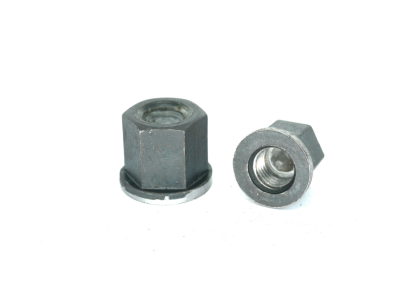
- Mining Nuts: Secure connections with high-strength hex nuts, dome nuts, and tensioning nuts. For specific heavy-duty applications, review our mining nut high strength nuts for mining heavy duty applications.
- Mining Wire Mesh: For effective shotcrete reinforcement and slope support, choose from welded wire mesh or chain link mesh options. This steel wire mesh significantly enhances the overall load bearing capacity of the system. Discover the right mesh for your project with our mining wire mesh mine support mesh welded woven mesh for underground slope support 1.
- Anchorage Agents: Ensure permanent bonding with quick-setting mortar, injection grout, or resin capsules (resin cartridges).
- Specialized Bolts: From strand cable bolts and hollow grouting bolts to Glass Fiber Reinforced Polymer (GFRP) bolts and mechanical expansion shell bolts, we offer solutions for every strata control need, including high corrosion resistance and underground roadway reinforcement.
Real-World ROI: Success Stories of Optimized Ground Support
Data confirms the value. At Musselwhite Mine in Ontario, implementing high yield strength rockbolt systems boosted rock mass stability, cutting unplanned downtime by 15%. In cost-sensitive markets like Khargone & Kheda, access to efficient supply chains helped operators reduce material costs by 8% while maintaining safety. For underground tunneling, the use of Split Set bolts slashed installation time by 20%, directly addressing labor shortages. These efficiencies mirror the productivity gains seen through smart anchoring systems enable 33 trade growth automated factories.
How to Choose the Right Rockbolt System for Your 2026 Projects

Selecting the optimal system requires a strategic approach. First, assess core needs: prioritize seismic resistance for dynamic slopes and load bearing capacity for heavy static loads. Second, evaluate installation efficiency—quick-install systems mitigate workforce risks. Third, specify corrosion resistance (e.g., galvanized components) for long-term durability. Finally, leverage custom solutions like tailored Swellex lengths or specialized mining nuts to solve unique geological challenges. A robust prestressing anchorage system reliable anchorages for pt bars steel strands can be integral for certain tensioning applications.
Partner with Us for Your 2026 Ground Support Goals
Move beyond standard solutions. Access detailed product datasheets with specs on tensile strength, yield strength, and installation protocols. Request custom configurations for bolts, nuts, and accessories to match your exact site conditions. Schedule a professional site assessment to identify the most effective rockbolt system combination for your strata control objectives. Leverage our global network for reliable delivery and support. Ready to specify the right support for your next project? Contact our engineering team today for a detailed consultation. For more information on how we handle data, please review our privacy and terms.
Related News
Other news you might be interested in

Active vs. Passive Anchors: How to Choose the Right Ground Support System
A ground support system can fail for a simple reason: the team selected a product by name before deciding how the load should develop. Two anchors may look similar in a catalog, use the same diameter, and carry the same nominal steel grade, yet behave very differently underground. One is tensioned against the rock immediately after installation. The other begins to carry load only when the rock mass starts to move.That difference is what "active" and "passive" should describe. It is not a quality ranking. It is not a choice between modern and old-fashioned support. It is a choice about timing, displacement and load path.

How do concrete anchor bolts improve foundation stability?
A concrete anchor bolt is a small part of a foundation, but it decides whether the foundation and the structure above it behave as one system. The bolt does not make the concrete stronger or the soil stiffer. It provides a controlled load path between the steel structure, the base plate, the concrete, and—when the anchor is designed to reach it—the deeper ground.In this article, the term covers cast-in anchor rods, post-installed mechanical or adhesive anchors, and post-tensioned bars or strand anchors used to tie a structure or foundation element into concrete.That distinction is the key to answering the question. Anchor bolts improve foundation stability by resisting uplift, shear and overturning, maintaining clamping force, helping to distribute concentrated loads, and tying the foundation to a competent bearing stratum. They cannot compensate for an undersized footing, a poor subgrade, or a missing reinforcement detail.
Want to know more?
Get in touch with us for more information about our services and products.